

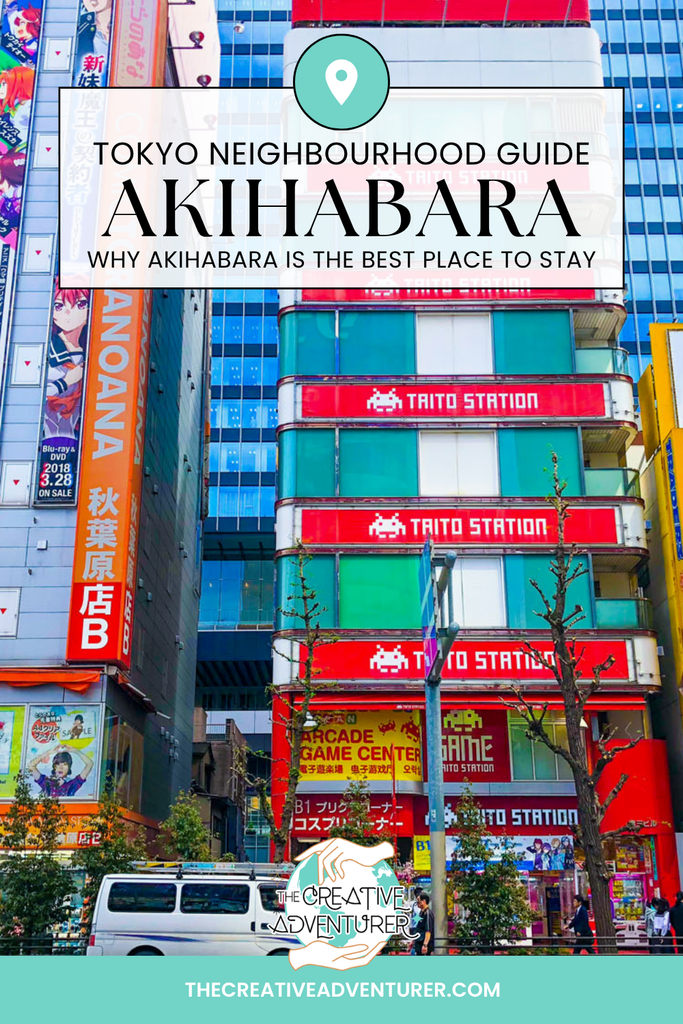
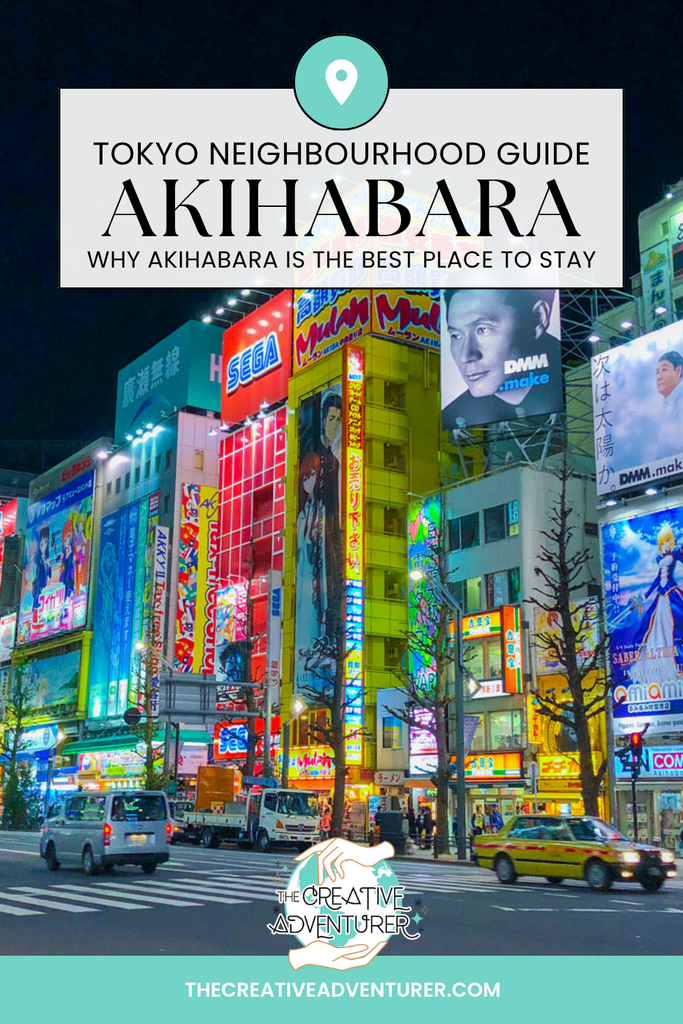
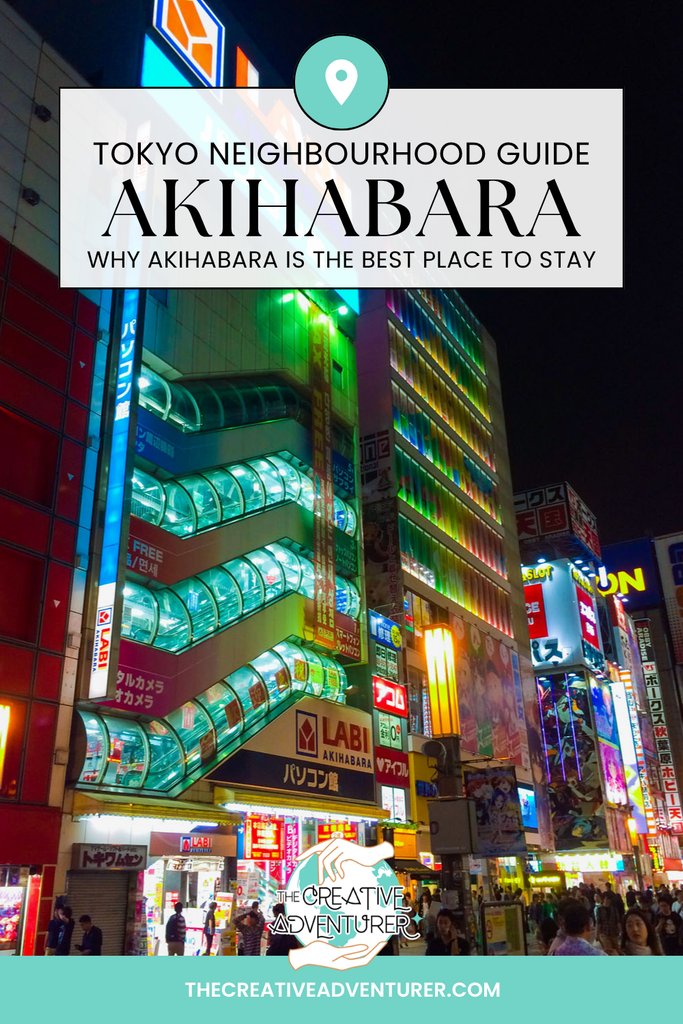
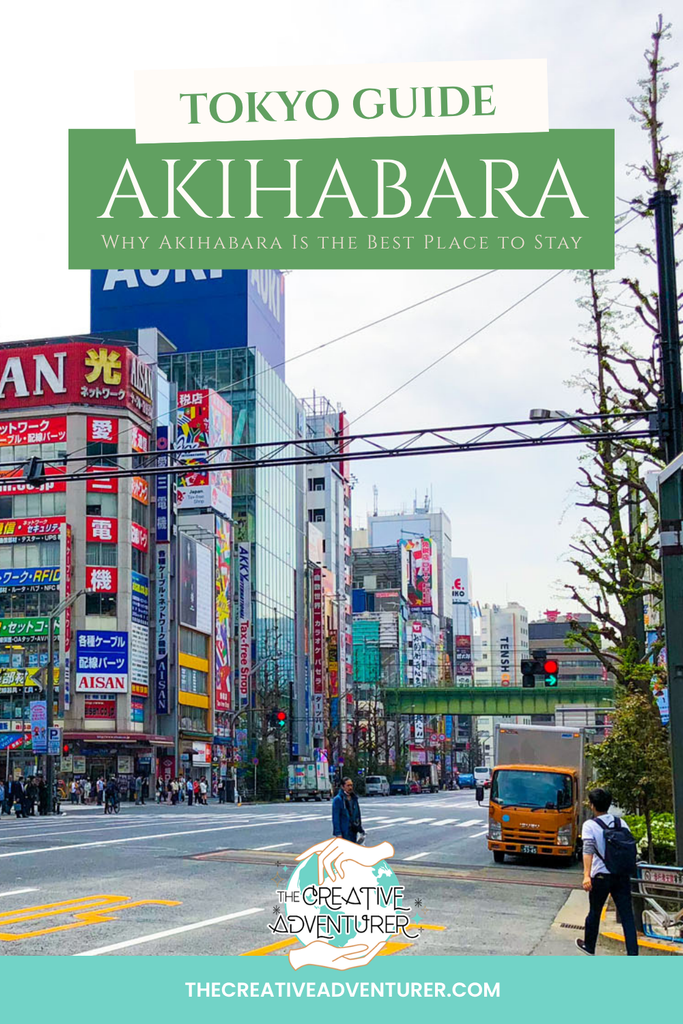
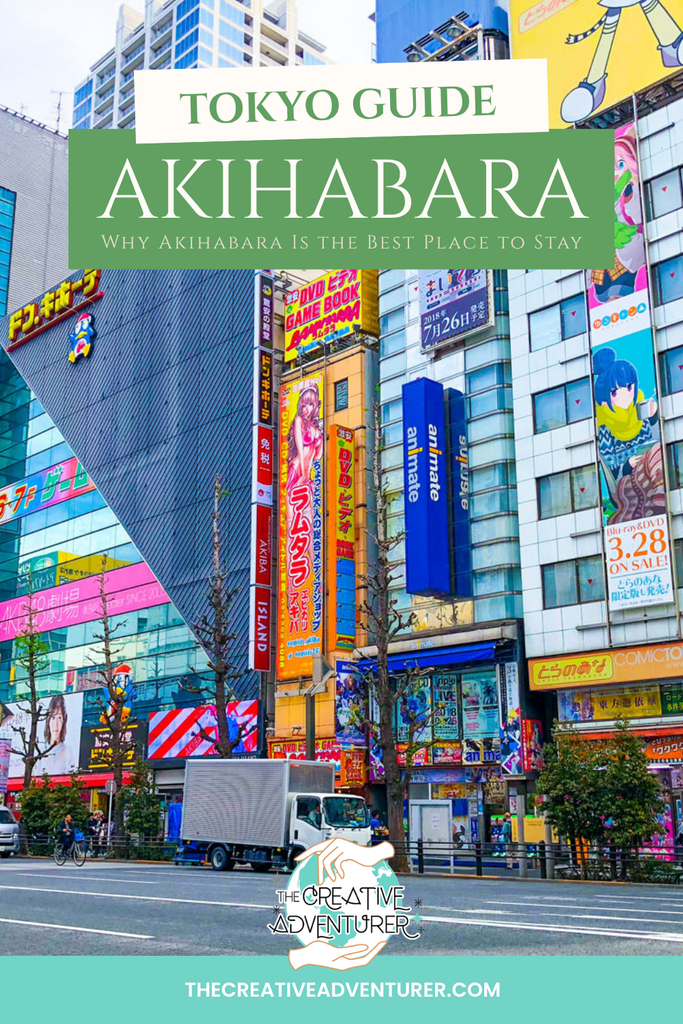
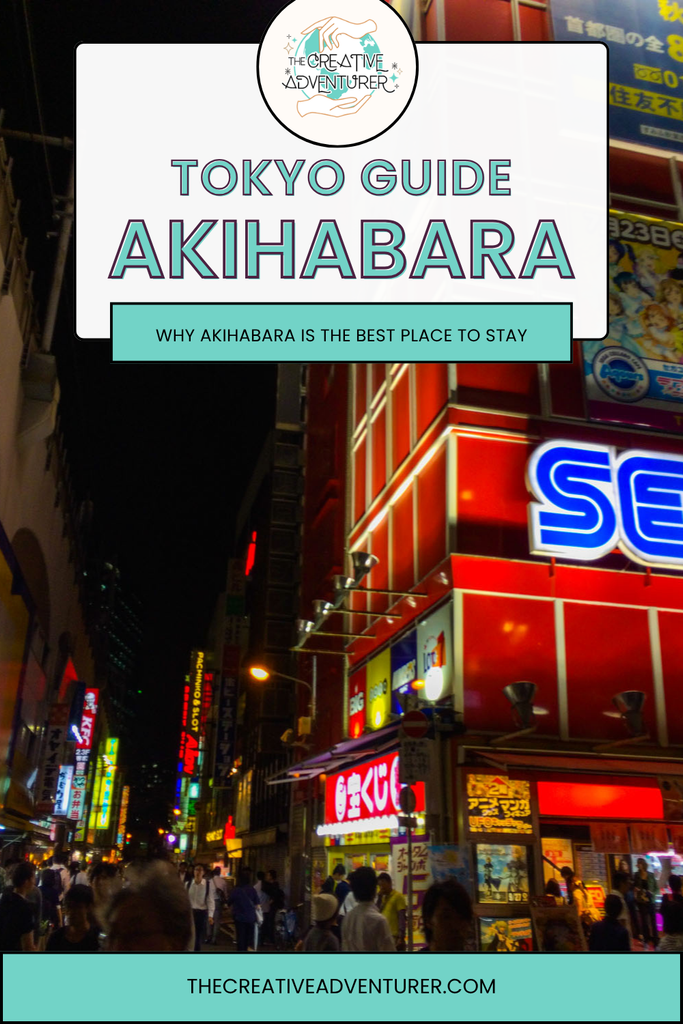
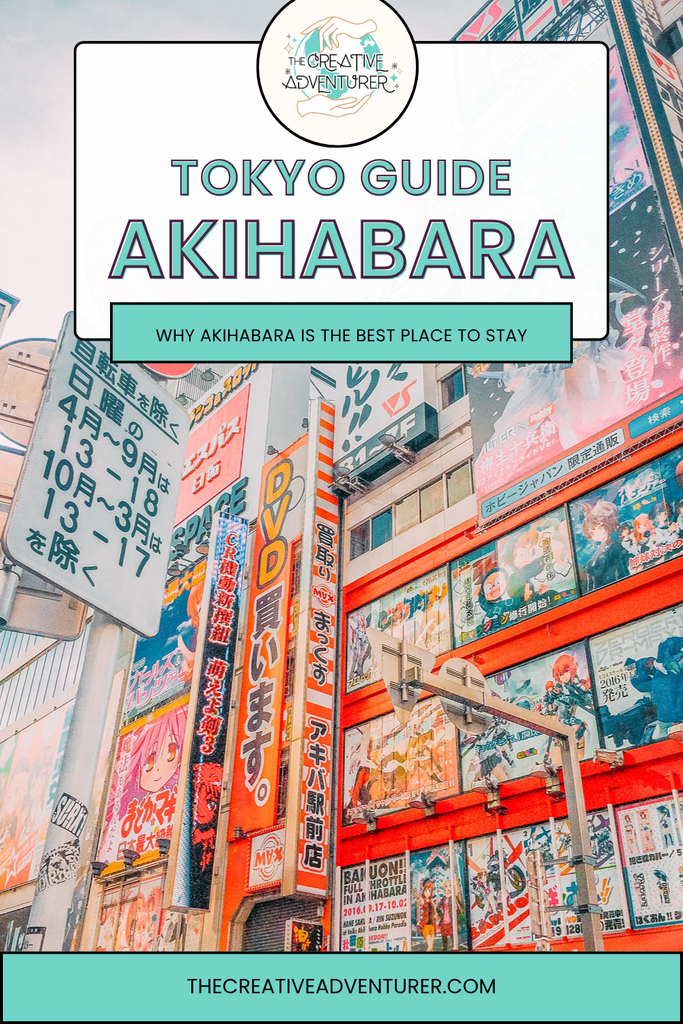
Akihabara has always been our favourite neighbourhood to stay in when we travel to Tokyo. We’ve tried other areas over the years, but our hearts keep pulling us back. After a long day of walking, we’d dump our stuff and head into the neon streets to find something delicious. Then we’d play games, explore endless floors of shopping malls that always seemed open at all hours, and finish the night singing karaoke and dancing in the streets with salarymen on their way home from the bars. Akihabara never lacks excitement, good food or entertainment, and unlike Shinjuku, it still has a neighbourhood feel and doesn’t overwhelm you.
Who this guide is for: First-time visitors to Tokyo, gamers, anime fans, and anyone who likes a city neon-lit and a little weird. Akihabara is geek- and gaming-heavy, so if arcades and collectibles aren’t your thing, you might prefer a quieter base.

Otaku Akihabara
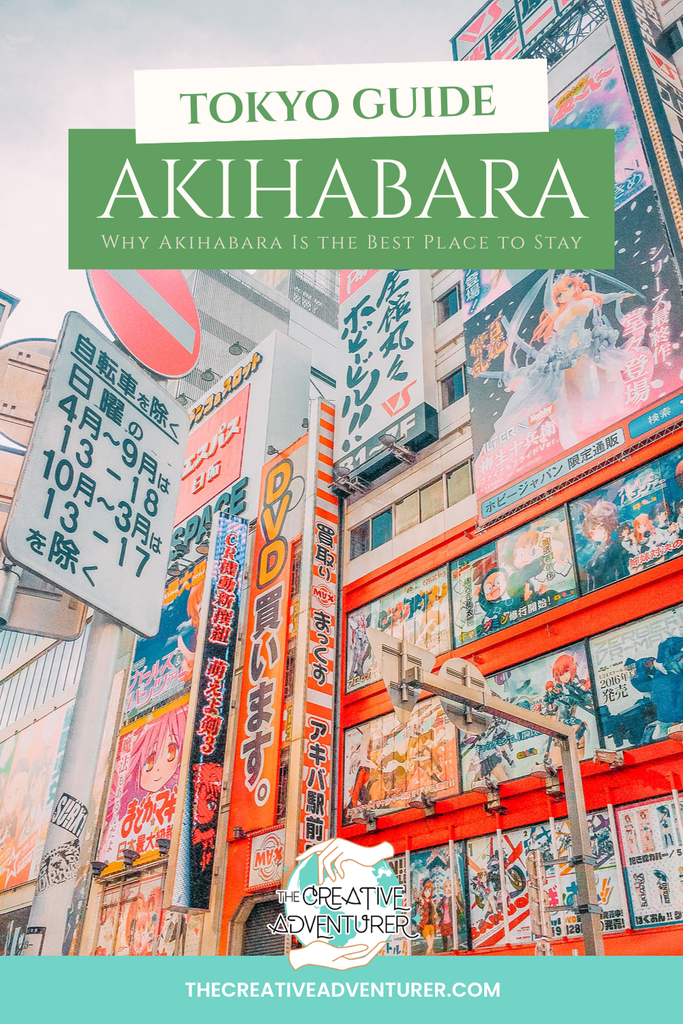
Akihabara is often called the “otaku” centre of Tokyo. In Japan, otaku refers to someone obsessed with computers or particular parts of pop culture, and the word has historically carried a stigma about social skills. It’s kind of like our “geek” or “nerd.” In North America those labels have lost most of their sting, and fantasy comics and movies aren’t just for nerds anymore; they’re Hollywood blockbusters. In Japan the stigma hasn’t completely disappeared, though plenty of people now wear the label proudly, and Akihabara is where they gather.
Akihabara started as a technology hub nicknamed “Electric Town.” The name is generally traced to the black market for radio and electronic parts that grew up under the train tracks in the years around and just after WWII, when such parts were hard to get legally. You can still find these shops, though they no longer have to hide. From old wires to new robotics, the area grew into a gathering place for the city’s geeks, and today it’s a centre of pop culture and one of the liveliest areas in Tokyo. If you’ve never been, I hope this guide helps you explore everything Akihabara has to offer!


Getting There and Getting Around
Akihabara Station is on several lines, including the JR Yamanote, Keihin-Tohoku and Chuo-Sobu lines, the Tokyo Metro Hibiya Line and the Tsukuba Express. The Yamanote loop connects you to Ueno and Tokyo Station, and the Chuo-Sobu line runs out to Shinjuku. From Narita or Haneda, the usual route is a train into central Tokyo and one transfer, but the best option depends on your airport and luggage.
Budget and payment: Capsule hotels are the cheapest bed, Hotel Mystays was great value, conveyor belt sushi is cheap, and purikura is a small spend. Many small restaurants and arcades are still cash-friendly, so carry some yen alongside your card.
Best times to visit: Weekday evenings are generally calmer than weekends. For the spots with lines (Kikanbo, Gyukatsu Ichi Ni San), arriving before the lunch or dinner rush saves time. The arcades fill up in the evenings and on weekends.
Where to Stay?
Glansit Akihabara Capsule Hotel
Glansit Akihabara Capsule Hotel
Capsule hotels are one of Japan’s most unique forms of accommodation. They’re a cool experience and a great way to save money, which makes them perfect for solo travellers. Floors are divided by gender, and you get a capsule all to yourself. The Glansit capsules are modern and clean, with an onsen attached to the shower area, the perfect way to unwind after a long flight or a long day of walking.
Each capsule is a large rectangle, more spacious than you’d imagine, with its own light, TV, bedding, outlets for your devices, air conditioning and a fan. It feels like sleeping in a spaceship. Outside your capsule, you can use all the hotel’s amenities.
Washington Hotel
If you want a hotel steps from the action, the Washington Hotel is your place. It’s within most travellers’ budgets and has everything you need in a great location, right across the street from the train station, so you can get anywhere in the city in minutes. Rooms are spacious by Japanese standards, but couples should skip the “economy double.” The bed is little more than a large single, and you’ll be squished.
Hotel Mystays Ochanomizu
Hotel Mystays Ochanomizu is a few minutes from the nearest JR station, across the river from Akihabara. That means you’re not right in the centre of the action, which might be a plus for some travellers. Across the river, the hotel feels like part of Akihabara’s quieter, less touristy side. The streets are calm, but five minutes down the road you’re among the neon skyscrapers the neighbourhood is famous for.
The hotel bills itself as a conference centre/business hotel, but I found it perfect for tourists. The price was great, the amenities were excellent, and since many guests were businessmen, it was very quiet, which is ideal after a long night. Book a twin room for two: it was the same price as the standard when we stayed, but you get two beds and more space.
Where to Eat?
Dietary note: Many of these spots are heavy on meat, fish and wheat. Ramen broths, soba dipping sauces and tempura often contain pork or fish stock, so vegetarians, vegans and anyone with allergies should ask before ordering. The cafés and dessert spots (Blue Bottle, Mister Donut, Honey Toast Café, Fruits de Saison) are easier options, though they still use wheat, dairy and eggs. Halal options aren’t guaranteed at any of these places, so check directly.
Kikanbo
Kikanbo is my ABSOLUTE favourite restaurant in the entire city. It holds a sentimental place in my heart, but even without that, this ramen shop is fantastic. It’s known for its red-pepper spicy ramen. Spiked demon masks greet you outside, but don’t let them scare you off. You control the spice level, so even if you don’t like hot food, the rich miso broth and gorgeous toppings make for a spectacular meal.
Kikanbo also uses three different noodles to give you a variety of textures, which makes it unusual among ramen restaurants. There’s always a line out the door, but it moves quickly. The staff are friendly and happy to help you order, even without a shared language.


Toraji
Toraji is a yakiniku (“grilled meat”) restaurant at the top of the Remm tower, where you cook the meal yourself at the table. The style has Korean roots and was adopted in Japan. There’s something enjoyable about cooking to your own taste, without shopping for ingredients, and knowing everything is prepped for you.
Toraji keeps some Korean touches, serving kimchi and cold noodles alongside the meats and steamed vegetables. You might be thinking, “Korean food? In Tokyo?” but it’s popular here for good reason. You choose a set menu, and the meat and veggies arrive all-you-can-eat style. When a dish is finished, ask for another and it comes fresh from the kitchen. Perfect for hungry eaters.

Gansozushi
Conveyor belt sushi has popped up around the world, but it started in Japan, and Gansozushi is a great place to start if you’ve never tried it. (You can’t really go wrong with any of the conveyor belt places in Tokyo.) The fish may not match upscale restaurants, but in my experience it’s still far better than what we get at home in North America. You sit around a moving belt of sushi plates.
The restaurant is so small that the chef is right behind the counter, and you can watch him make sushi throughout the meal. Plate colours and patterns show the price, often listed on small signs. Grab what you want and keep the empties at your table, since they’re tallied for your bill. The sushi is cheap and delicious, and seeing something new right in front of you makes you more likely to try it.
Kanda Yabusoba
Across the river is another favourite, Kanda Yabusoba, which has been serving soba since 1880. I LOVE cold soba. Soba, or buckwheat noodles, are a traditional Japanese food dating to the Edo period. You dip them in a tasty broth and enjoy them with crispy shrimp and vegetable tempura. I also love the decor: all wood panels and a peaceful zen garden at the entrance, like a traditional tea house.

Blue Bottle Coffee Kanda Cafe
Another popular riverside spot is Blue Bottle Coffee. Japan is obsessed with coffee, and even more with brewing it perfectly. The pour-overs here are superb, with beans roasted to suit their profile. Seats along the river make it a peaceful place for a morning brew before heading into the clamour of downtown Akihabara.
Mister Donut Akihabara
I know recommending Mister Donut is like telling visitors to America to try Dunkin’ or those in Canada to try Tim Hortons. But I’d do that too. They’re classics for a reason. Japanese donuts have a different texture and flavour from North American ones, so give them a try. There are always seasonal flavours and designs for events in Japan, so there’s something new every visit.

Honey Toast Cafe Akihabara
If donuts aren’t for you but you have a sweet tooth, check out Honey Toast Café. It starts with a brick-sized slab of bread, as fluffy as Wonder Bread, smothered in whipped cream, ice cream, honey and fresh fruit. It’s as decadent as it gets. Plastic models of the desserts sit in the window displays, and they’re hard to resist.
Honey toast has a reputation as a first-date treat for teens, and you’ll see groups of kids heading to Akihabara just to eat it and blush in front of their crushes. Sharing a slice with your true love makes you feel like two kids again.
Gyukatsu Ichi Ni San
One of the best places to eat in Akihabara is Gyukatsu Ichi Ni San. Get there early or prepare to wait for a spot in this bite-sized restaurant. Gyukatsu is a breaded, deep-fried beef cutlet. Here, the slices arrive fried outside but still raw inside, and you grill them yourself on a tiny pan to your liking. Staff are kind and will help if you’re new to it. There’s an English menu, so tourists are welcome. Meals come with rice, soup, sauces and a mountain of veggies.
Taiyaki
Taiyaki is a street food on almost every traveller’s list: a fish-shaped cake with your choice of sweet filling, typically red bean paste, custard, chocolate, cheese or sweet potato. Magikarp Taiyaki is like most other stands, except the cakes are shaped like the Pokémon Magikarp, which suits Otaku Akihabara.

Fruits de Saison
For another sweet treat, head to Fruits de Saison, which specializes in fruit parfaits, iconic in Japan. Made with the best seasonal Japanese fruit, they’re sculptural mounds topped with homemade whipped cream. But the best thing here is the fruit and cream croissant. Fruit cream sandwiches are a trendy convenience-store food in Japan, and stuffing the filling into a fresh, buttery pastry takes the dessert to another level.
What to do?
Walk along Chuo Dori
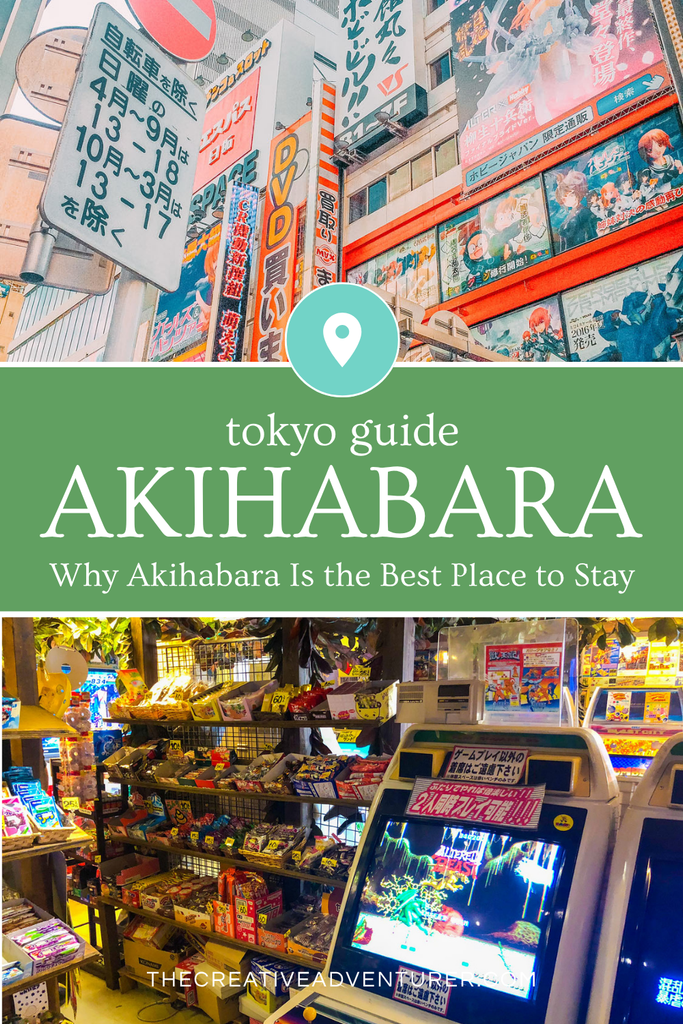
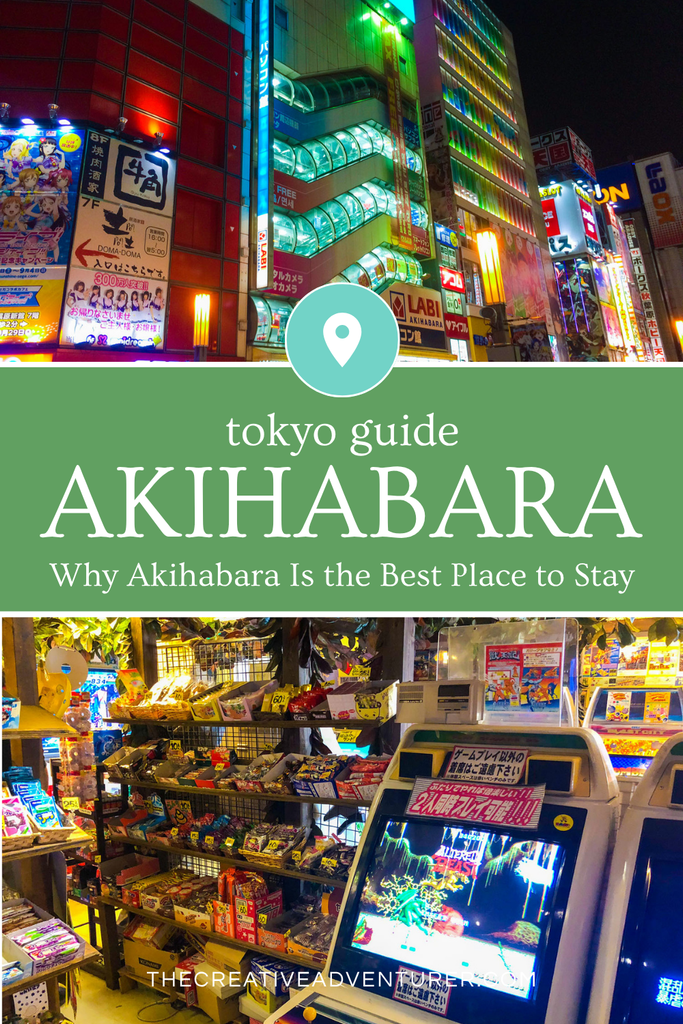
A walk down the main street Chuo Dori is one of the best ways to not only get your bearings upon landing in Japan but also a vibrant way to explore Akihabara. Everywhere you look, especially at night, you’ll find the most amazingly designed signage, neon lights, blaring music and excited people ready to hit the town. Chuo Dori is where you’ll be able to get some fantastic, iconic photographs of Tokyo so its a photographer’s dream.

What to Do?
Photography: Rules vary by shop and floor. Look for no-photo signs, ask staff if you’re unsure, and avoid photographing other customers, especially in arcades and purikura areas.
Tax-free shopping: Bring your passport if you’re shopping at participating stores. From November 1, 2026, Japan’s tax-free system for visitors becomes refund-based. You’ll pay the full price at the till and claim the refund at customs when you leave. Goods must be taken out of Japan within 90 days of purchase. www.japan.travel +2
Walk along Chuo Dori
Walking the main street, Chuo Dori, is one of the best ways to get your bearings and see Akihabara at its liveliest. Especially at night, you’ll find amazingly designed signage, neon lights, blaring music and people ready to hit the town. It’s also the place for iconic Tokyo photos. The street has traditionally closed to cars on some weekend afternoons, which is a great time to wander down the middle of the road, so check before you go.
Arcades
Japan pioneered video gaming, so arcades are everywhere. Kids and adults alike came to play the newest coin-operated games like Street Fighter and Pac-Man. Today’s games are more sophisticated, and many exist only in arcades because they’re designed for that space, not home consoles. Think racing games, dance competitions and VR headsets that jet you off into space.
Our favourite was the crane games. Not the UFO catchers, which in my experience don’t involve any skill, but the arm cranes, which are actually winnable. The drama of playing, or watching someone win, is a suspenseful good time, and everyone cheers for other players. The prizes are strange too, like a stuffed bear with a bloody arm or scandalously clad anime figurines.
Taito and Sega Arcades
Each arcade brand has its own look and feel, and you’ll quickly find your favourite. We prefer Taito for its crane-game prizes, but others love SEGA for its larger range of modern games on the upper floors.


Purikura
In the basement of these arcades are dozens of purikura cubicles, each from a different company. Purikura are the classic Japanese printed photos where you add text and stickers and give your face the “anime” treatment. It costs about 500 yen. Unlike North American photo booths, these use a green screen, and the camera moves to give you portrait, full-body and sometimes animated GIF options.
After the shoot, you move to a second booth to decorate your photos with filters and text. They’re then arranged in a collage (often your pick) and printed. We had great fun trying different poses and spending as long as we were allowed decorating them into something absolutely ridiculous. Some booths restrict men from entering without women, so check the sign at the entrance.
Super Potato
For retro gaming, visit Super Potato. This little arcade, hidden upstairs in a commercial tower on a side street, has some of the most nostalgic games in the city. SEGA and Taito have the newest tech, but Super Potato still serves up Pong, Super Mario and the original Street Fighter. The first floor also sells retro games if you want to complete a collection, but I prefer heading upstairs to play the day away on consoles that didn’t require a Ph.D. to understand.

Don Quijote
A fantastic late-night activity, for those of us not interested in drinking the night away, is shopping at Don Quijote. The Akihabara branch is open 24 hours and has over six floors, so there’s always something new to discover. My favourite part was the cosmetics. Japanese and Korean cosmetics are some of the best in the world, and I found hundreds of products I’d never seen, including anime-themed ones. Some featured Sailor Moon, my favourite cartoon character growing up.
There’s something for everyone, plus things no one would want but are hilarious to look at (animal-shaped men’s underwear, anyone?). Even if you buy nothing, you’ll have hours of fun browsing the oddities.


Akihabara Gachapon Hall
Gachapon are little vending machines that dispense capsule toys. The name is onomatopoeia for the sound of the crank. Each machine holds a different set of toys, and what you get is totally random. Most sets include rare items that become collector treasures, and sets change often, so there’s always something new. We found little plastic cats sitting on rice cookers, tiny replicas of vintage buckets, Pokémon-shaped cookies, and lots of Japanese characters themed to holidays.
They make cheap, wonderfully weird souvenirs for friends and family. Spotting machines around the city is a fun game, but if you want something in particular, Akihabara Gachapon Hall puts hundreds in one place.

Akihabara Karaoke
The best way to end a night in Akihabara is a karaoke room. You can walk in at any time of day, with any size group (or even solo!). You choose your room type, how long you want to sing, and even which karaoke system to use. We had no idea what the difference was, but staff are there day and night to help, and in tourist-heavy Akihabara they can help even without much English. Walk-ins are usually fine, but it’s worth asking about reservations for busy weekend nights.
Karaoke additions: Most karaoke places require you to buy one drink on top of the karaoke fee, and there’s often an all-you-can-drink option, which is worth it if you’ll be there a while. Common areas have drink machines serving coffee, soda, juice and sometimes even soft-serve ice cream. Most rooms have coat hooks, phone chargers and mirrors, and some have tambourines and cowbells.
I was shy about singing at first, but my husband wasn’t, and he belted out his favourites. It got me in the mood, and soon we had “Phantom of the Opera” and New Order blasting down the halls. It was honestly the best night out ever! KaraokeKan has a wide variety of English songs, and it even rents costumes for a very unique night out.

Akiba Cultures Zone
Akiba Cultures Zone is a one-stop shop for anime and otaku goods. Its seven-plus levels are packed with themed stores selling everything from sweets to figurines, cosplay costumes, wigs and accessories. There’s even a theatre on the top floor with daily performances.
Mandarake
If you didn’t find what you wanted at Akiba Cultures Zone, head to Mandarake. Its selection leans toward collectors of trains, Godzilla, manga and Hello Kitty rather than pure anime. It’s more than a store: eight floors of collectibles feel like a museum. If you want something more accessible, I’d choose it over Akiba Cultures Zone, which can feel too specialized. Between them, you’ll see what otaku culture is all about.
Yodobashi Camera
If tech is your thing, make a trip to Yodobashi Camera Akihabara. The ground level is like a trip to CES, the tech convention held every year in Las Vegas, with all the newest gadgets Japan has to offer. You’ll find cameras, robotic toilets, even specialized drawers for roasting fish. Under almost blinding white lights, you’ll find the oddest things, which makes it one of the most enjoyable stops.
CHABARA
Chabara is a grocery store and so much more. It sells artisanal and traditional Japanese foods, both to take home as souvenirs and to enjoy back at your hotel. If you want to sample the best Japanese food and don’t know what to try, come here. It even has a gourmet instant-ramen section, curated to feature only the very best at-home noodles.
The sake selection is also stellar, with varieties from all over Japan and several you can try in store if you’ve never had true Japanese sake. Sake is a great gift, and they’ll wrap it carefully so it makes it home safe and sound.
Akihabara Radio Center
If you’re an electronics tinkerer, head to Akihabara Radio Center, which still sells cheap parts for absolutely everything. Need a weird battery for something you bought 35 years ago? Chances are you’ll find it here. Entire shops are dedicated to screws or wire, and some sell only types of metal. It’s not for everyone, but it’s kind of cool to wander the weird hallways and see the kind of shops that put Akihabara on the map.
Akihabara Vending Machines
Vending machines are on every street corner, down every alley and on every floor in Japan. Most sell food and drinks, but some sell genuinely bizarre items, and there’s no better place to explore them than Akihabara. There are no sodas here. Instead you’ll find rhinoceros beetles, scented candles, wind chimes and mystery boxes with stories written on the outside. Don’t be fooled by those: apart from the strange stories, the prizes inside the blank boxes aren’t worth the price. Still, browsing the selection is something you’ll only find in Akihabara.
Maid Cafés and Street Touts
Maid cafés are a big part of Akihabara’s culture. Staff in maid costumes serve food and drinks, and many cafés add games or performances. Expect a seating or cover charge, and ask before taking photos, since rules are usually strict. On the main streets, people hand out flyers and invite you into cafés. It’s fine to politely say no and keep walking.
Nearby Pairings
Akihabara pairs easily with other parts of Tokyo. Ueno is a short train ride away, with a large park and museums. Ochanomizu, across the river, is where Kanda Yabusoba is. Kanda Myojin Shrine is a short walk and a calm contrast to the neon. Asakusa and Yanaka offer older, more traditional streets for a different side of the city.
For anyone visiting Tokyo for the first time, my suggestion is always to stay in and see Akihabara first. It’s the perfect introduction to the city because it has a bit of everything: great food, endless games, and a neighbourhood that stays fun long after dark without overwhelming you. Let me know your favourite neighbourhood in Tokyo, or what you love about Akihabara!
Happy Travels, Adventurers!



Leave a Comment