
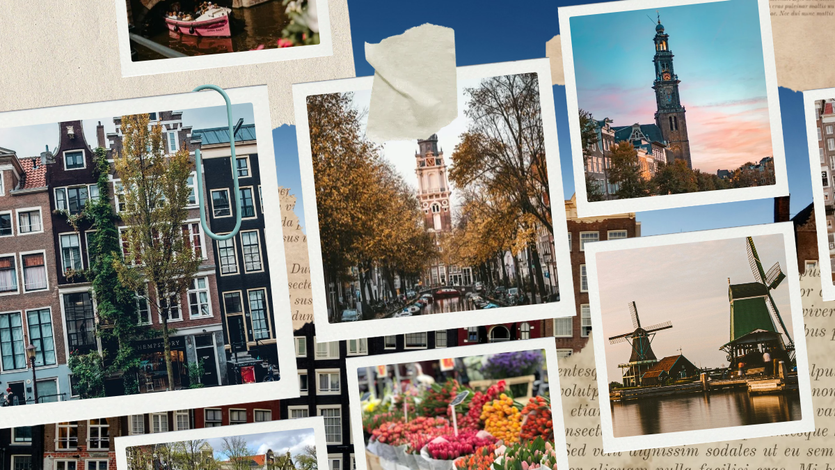
If you’re visiting Amsterdam for the first time, it’s important to know where to find the best Instagram-worthy locations! From canals lined with tall, narrow buildings to sunny bridges overlooking picturesque waterways, Amsterdam has something for everyone, and every spot in this guide comes with a story: of merchants and guilds, of painters and architects, of a city built on wooden piles and water. With roughly 90 islands and more than 1,200 bridges, it’s important to know where to look! Follow our guide to the best Instagram spots in Amsterdam to find the perfect photo-op, with a little history behind every frame.
#1 Damrak Dancing Houses
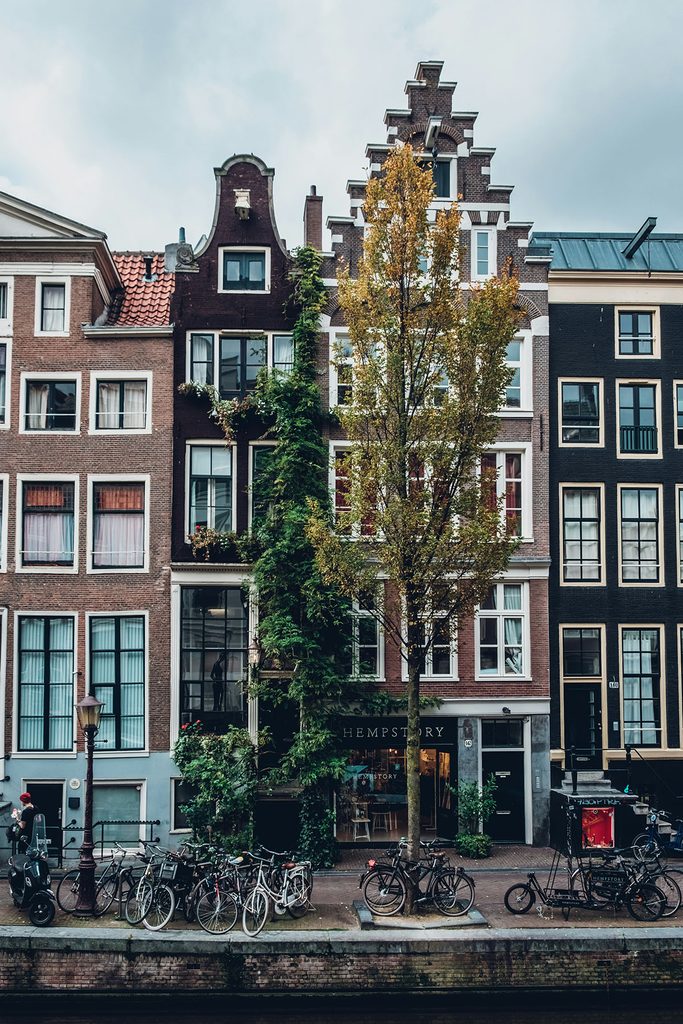
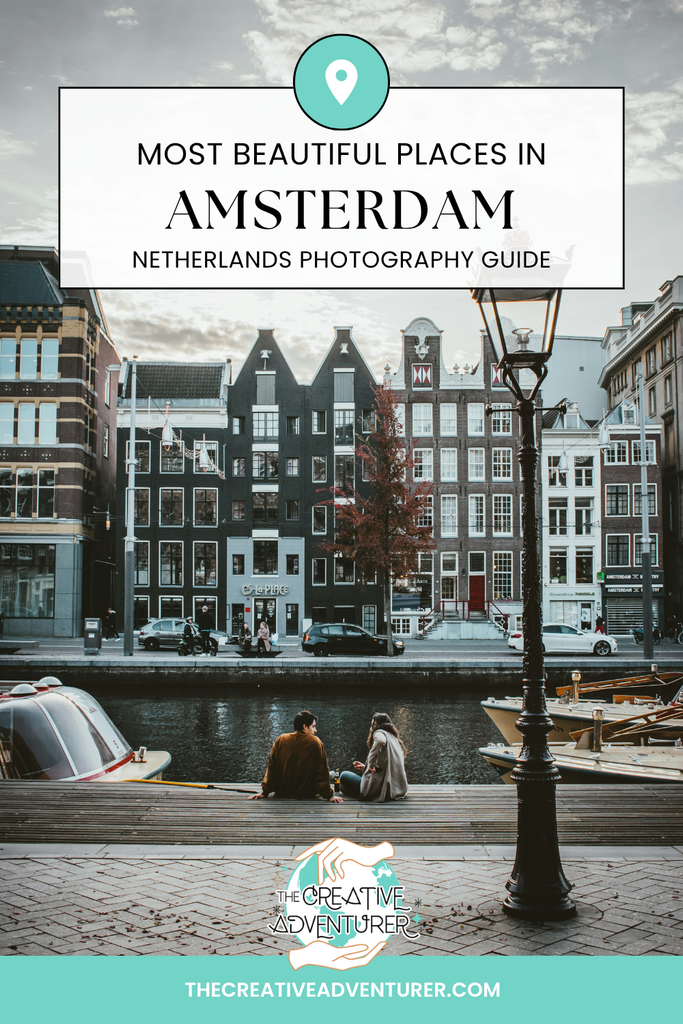
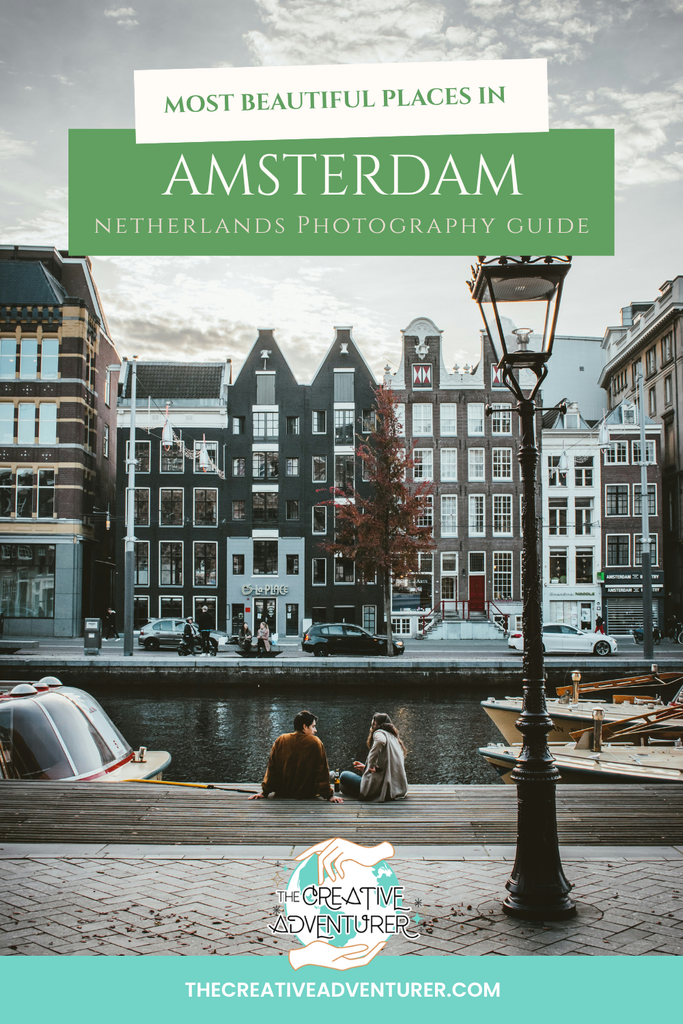
The Dancing Houses are one of the most iconic images of Amsterdam. Everything from postcards to clay magnets, ceramics and textiles is covered in pictures of these historic houses. Their narrow, gabled façades line the Damrak canal, just minutes from Amsterdam Centraal. The design of these grachtenpanden, or canal houses, was developed in the 17th century for wealthy merchants, who worked and stored goods on the lower floors, lived in the rooms above and used the attic as a warehouse.
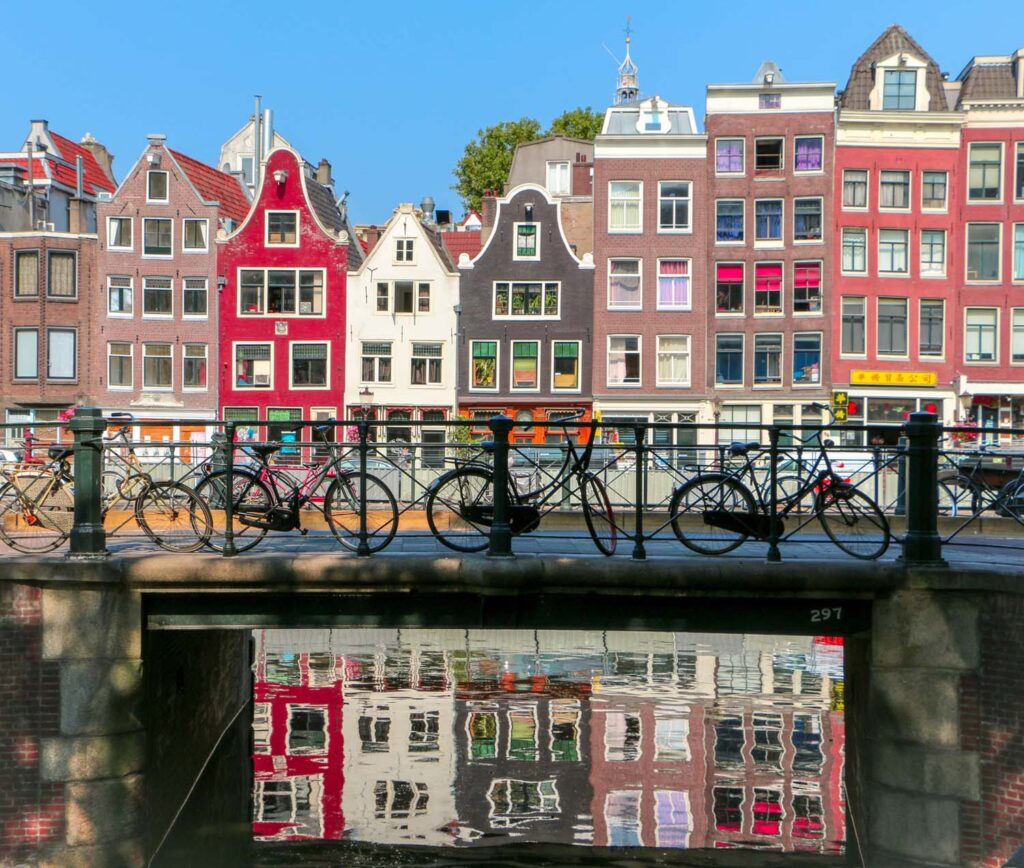
The tall, narrow shape was not originally an aesthetic choice. According to the popular explanation, canal-side taxes were calculated on the width of a house rather than its height, so the answer to building a large house without a large tax bill was to build upward.
The houses are called the Dancing Houses because of their uneven, crooked look, as if they were dancing about. Amsterdam’s soil is soft and wet, so builders drove piles, huge wooden poles, deep into the ground until they reached sand. Over the centuries the piles have settled unevenly, and the houses have taken on their quirky tilt.
#2 Openbare Bibliotheek Amsterdam Rooftop Terrace
The Openbare Bibliotheek Amsterdam (OBA) is the city’s public library system, and its flagship location sits on the waterfront just east of Amsterdam Centraal. The OBA Oosterdok, or Central Library, opened in 2007 and is one of the most amazing modern libraries in Europe. The light-filled building covers some 28,000 square metres, and in addition to a collection of around 1.5 million books and other media, it includes a theatre, an exhibition space, the Library Museum and parking for around 2,000 bicycles.

But the best place for visitors is Babel, the restaurant on the library’s 7th floor, which has a terrace of its own. From up here you have a magnificent view over the whole of Amsterdam, and it is one of the best panoramic views in the city. Best of all, many people don’t even know it’s here! Because it caters to lots of students who come to study, the restaurant is reasonably priced. It’s an ideal place to grab lunch and enjoy a drink in the sunshine while looking out over the city, though the terrace is open only in the warmer months.


#3 Keukenhof
Keukenhof is known as the Garden of Europe, and if you’ve ever had the chance to walk through its green fields, you will understand why. Each spring, from mid-March to the second week of May (18 March to 9 May in 2027), around seven million hand-planted bulbs bloom across 32 hectares of gardens, including some 800 varieties of tulip. Keukenhof lies in Lisse, about 35 kilometres from Amsterdam, and the rainbow-coloured blooms create a blanket of fantastical aromas and ethereal colours over the Dutch countryside.
This kind of spectacle is unmissable if you’re visiting Amsterdam in spring. I would even say you should plan your trip around the bloom timeline. Tulips are perhaps one of the most famous icons of the Netherlands, and seeing them in person, in such incredible variety, is a once-in-a-lifetime experience. The flowers came to Europe from the Ottoman Empire in the 16th century and caught on in the Netherlands, where the cold winters suit them.
In the 17th century tulips became a status symbol, and at the peak of tulip mania in 1637 a single bulb could sell for more than ten times a skilled craftsman’s annual income. A picture with these once-priceless flowers is still one of the best ways to show off your visit to Amsterdam!


#4 Rijksmuseum Bike Under Pass
The Rijksmuseum is the crowning glory of the museum square district and is home to some of the Netherlands’ greatest artists. The national museum first opened in 1800 as the National Art Gallery in The Hague, and in 1808, on the orders of King Louis Bonaparte, it moved to Amsterdam. Its current home was designed by Pierre Cuypers, who won a design competition, and opened in 1885. His richly decorated Gothic- and Renaissance-inspired building was criticized at first, with many finding it too medieval, too Catholic and not Dutch enough, but today it is one of the city’s most celebrated landmarks.
Sadly, 20th-century alterations, including filling in the two original courtyards for more gallery space, stripped the building of much of its original character. So in 2003 a ten-year renovation began to restore the museum to Cuypers’ original plan. That plan included a street-level passage running through the middle of the building, where a castle gate would stand, and after a long campaign by cyclists the passage reopened to bikes in May 2013. It now allows pedestrians and cyclists to enjoy the splendours of the building, and visitors can enter the museum straight from it. The underpass is a stunning location to see for yourself, and if you can avoid the traffic early in the morning, it makes for a great photo spot!

#5 Cuypers Library
The Rijksmuseum is a captivating place to visit, but for me the real star of the show is the library! The Cuypers Library inside the museum is one of the most fantastical libraries in the world. Stepping in here feels like walking onto a movie set or into the Wizarding World of Harry Potter. Stacks and stacks of books climb the walls, a spiral staircase curls up through the levels, and beams of sunlight spill through the windows. It is the largest and oldest art history library in the Netherlands, and it has been preserved to feel like a slice of history. Thankfully, the library welcomes students, art historians and curious visitors alike. There is no bad spot to take a picture here, as the towering bookshelves make the perfect backdrop.

Alkmaar
If you’re into cheese, you must head to Alkmaar. Every Friday morning from late March to late September, the Waagplein hosts the cheese market, a tradition that traces its roots to 1365, when the town first held the right to weigh cheese. Alkmaar is only 35 minutes from Amsterdam by train and well worth the short journey.
The market opens at 10:00 with the ringing of a bell, and rows of cheese wheels are sampled, priced through hand-clapping negotiations, weighed and sold. Cheese carriers in white uniforms haul the GIANT wheels around the square for the marvel of onlooking visitors, but not by hand. Instead, they balance the mammoth wheels on wooden stretchers, two carriers to a stretcher, and move in a quick trot, known as the cheese carriers’ dribble, that makes them look as if they’re gliding around the market. Who doesn’t love a photo against the great wall of cheese?!
The Jordaan Neighbourhood
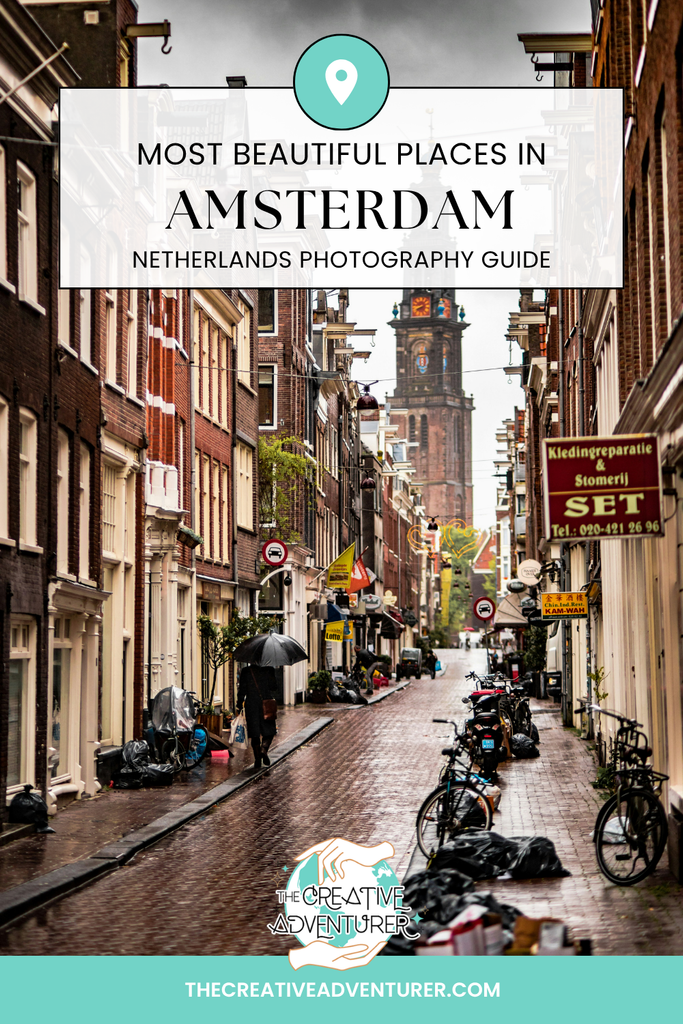
The Jordaan was built in the early 17th century to house the city’s working class, and it has since become one of the most expensive and desirable neighbourhoods in the Netherlands. Its streets are home to upscale art galleries, fanciful boutiques and bustling marketplaces. The area has long drawn artists, and Rembrandt himself spent the last years of his life, from 1656 until his death in 1669, in a house on the Rozengracht, a canal that was filled in during the 19th century. Rows and rows of tightly packed houses make for a fantastic patterned backdrop! The houses and canals here are less frequented by tourists, so it’s a great spot to get away from the crowds.

Staalmeestersbrug Bridge
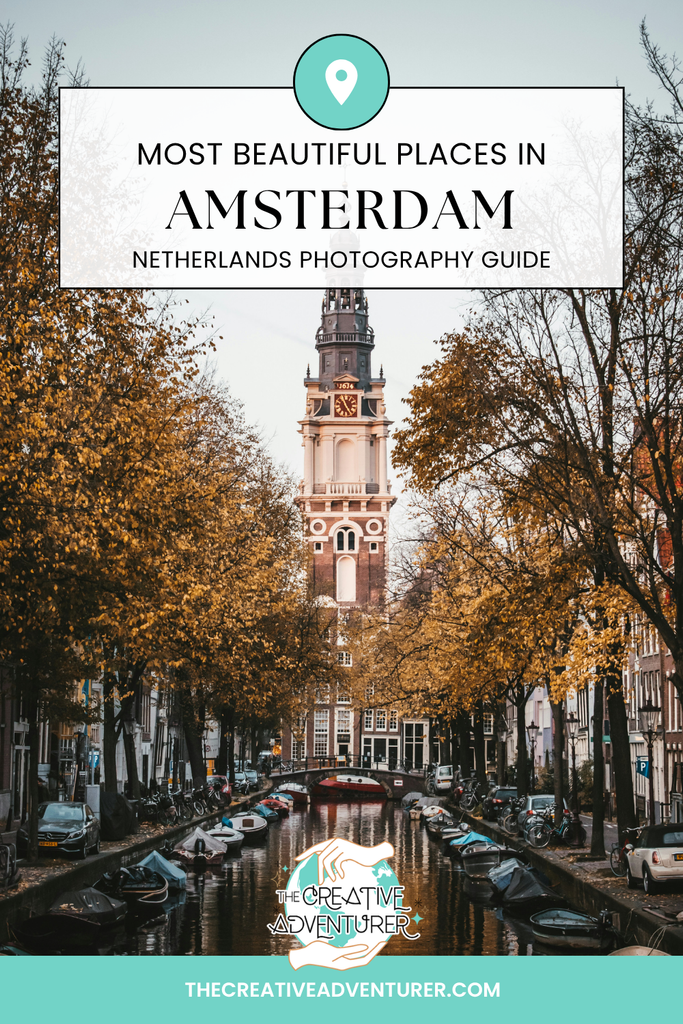
Standing on the Staalmeestersbrug, you have one of the best views in Amsterdam! This wooden drawbridge looks out over the canal toward the tower of the Zuiderkerk, and it is the view Claude Monet painted around 1874 in The Zuiderkerk, Amsterdam (Looking up the Groenburgwal). The bridge crosses the Groenburgwal, which connects the Raamgracht with the Amstel. Until the late 16th century this area lay outside the fortress on the Amstel, and it was added to the city in 1593. It became a textile district where wool was washed, carded and spun, and cloth was woven and dyed. Along the Staalstraat stood the Staalhof, the drapers’ guild hall that Rembrandt’s Staalmeesters, his 1662 portrait of the guild’s cloth inspectors, was painted for. The bridge and its quay walls are due for replacement in the coming years, so check for closures before you go.

Bicycle racks
Cycling is the most popular way to get around Amsterdam, and more trips in the city are made by bike than by car. According to 2015 figures from Statistics Netherlands, the city’s households owned about 847,000 bicycles, or 1.91 bicycles per household. To store them all, the city has had to build colossal bicycle parking facilities, and you’ll find racks jumbled all over town. There is nothing more Dutch than a photo amongst hundreds of bikes! Head to Amsterdam Centraal for a bike photo with the magnificent train station in the background. The old Fietsflat beside the station has closed, and since 2023 the station’s parking has moved into two underwater garages with room for about 11,000 bikes, so the scene is tidier than it once was.

Prinsengracht Canal
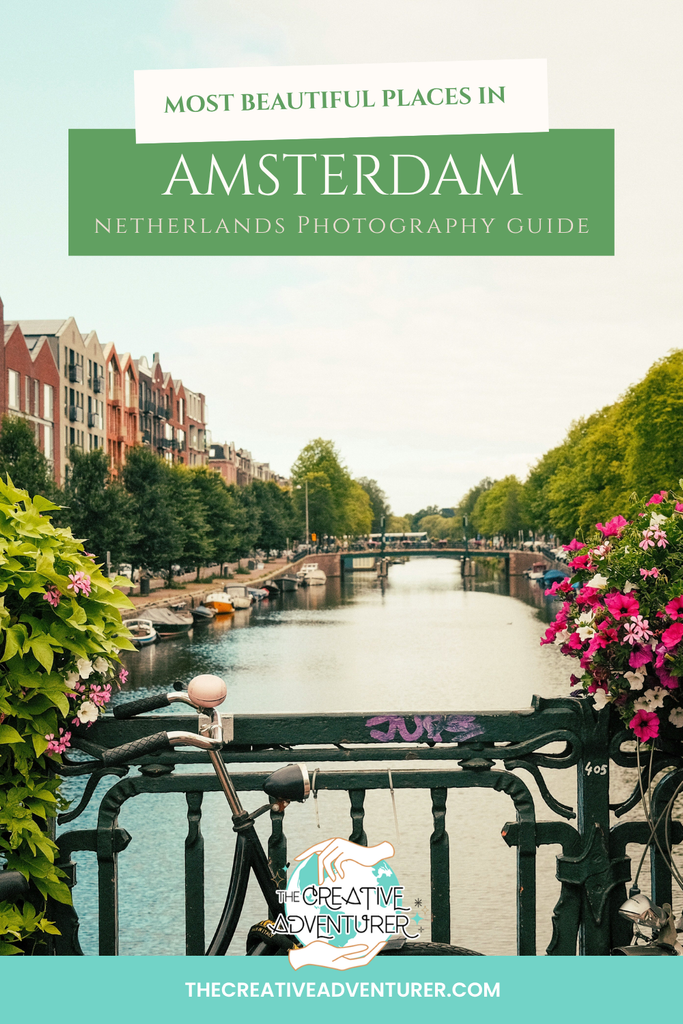
The Prinsengracht, or Prince’s Canal, is one of the main canals of Amsterdam’s 17th-century canal ring, which became a UNESCO World Heritage Site in 2010. Work on the canal began in 1612, and it was named after the Prince of Orange. My favourite spot for a photo op on the Prinsengracht is on one of its bridges, where you get a shot looking down the length of the canal. Quirky and charming houseboats float on either side of the water, and you can see the repeating bridges crossing far off in the distance.

Night on the canal
Nighttime in Amsterdam means all the canals come alive. The stars, street lights and reflections of the buildings dance on the surface of the water, and the night transforms the streets into a new cavalcade of excitement. Fairy lights trace the arches of many bridges to highlight their design, and the Magere Brug alone carries more than a thousand small bulbs. It feels as if no one area makes the best impression; simply wander around to find where your heart is calling! If you’re visiting this winter, the Amsterdam Light Festival turns the canals and bridges into a canvas for light art from 26 November 2026 to 17 January 2027, though the dates are subject to change.

De Negen Straatjes
De Negen Straatjes, or “Nine Little Streets,” is the nickname, coined in the 1990s, for nine side streets that cross the canals of the Canal Belt between the Prinsengracht and the Singel. Many of the names are significant. Reestraat (Roe Deer Street), Berenstraat (Bear Street), Wolvenstraat (Wolf Street) and Huidenstraat (Skins Street) recall the skin-tanning industry that once worked in this part of town, where animal hides were processed into leather goods and clothing. My favourite spot inside the nine streets is beside the bridge over the Singel. The view from here is so scenic, and best of all there are some lovely cafés along the side of the canal. Take a seat and enjoy some quality people-watching along with a beer or cup of coffee.

Herengracht
The Gouden Bocht, or Golden Bend, is the stretch of the Herengracht between Leidsestraat and Vijzelstraat. The Herengracht is the second of the four main waterways of the canal belt, and it takes its name from the city’s heren regeerders, or regents. The Golden Bend is trendy with photographers because it is known for its large, elegant canal houses. Many of them were built for some of the wealthiest and most prestigious inhabitants of Amsterdam, from regents to merchants. It was like Amsterdam’s Beverly Hills, and having a house here meant you were of the highest status!
Wind Mills
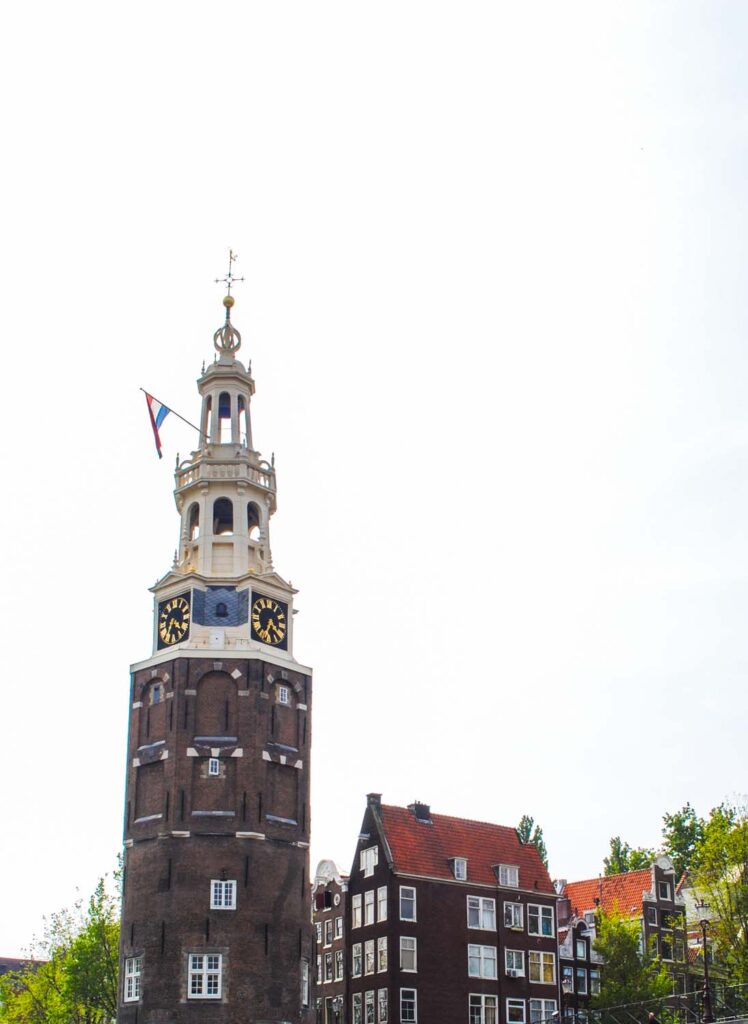
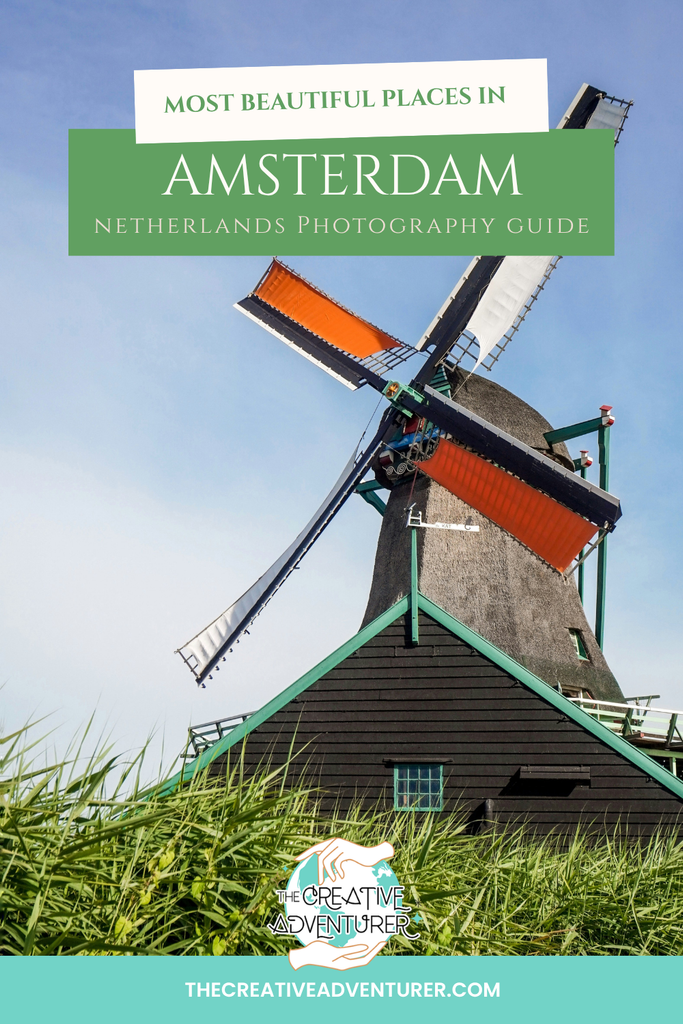
If you’re only in Amsterdam for a short time, you’ll want a picture with a windmill! Nothing is more iconically Dutch than a windmill. While most of them are found in the countryside, you can still spot a few within the city limits. In the east of the city, on the Funenkade, stands De Gooyer, the tallest wooden mill in the Netherlands at 26.6 metres high. Its origins go back to the 16th century, the present mill dates from 1725, and it has stood on its current stone base since 1814. The city owns the mill and it is not open to visitors, but you can photograph it from outside and have a beer on the terrace of Brouwerij ‘t IJ, which sits right beside it. It’s amazing to see the industrious nature of buildings designed hundreds of years ago!
There is so much more to see and do in Amsterdam, but this short guide is sure to help you find the most iconic locations to document your trip, from leaning canal houses on their wooden piles to library stacks, painters’ views and windmills. Wherever you end up, take a moment to look beyond the frame at the history behind it. Let me know in the comments what your favourite part of Amsterdam is, or where you are most excited to visit.
Happy Travels, Adventurers.



Leave a Comment