
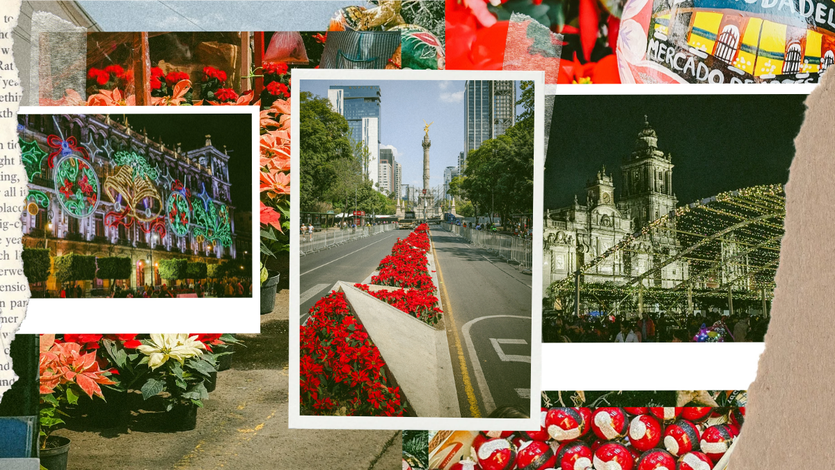
Most Christmas guides to Mexico City still point you to an ice rink in the Zócalo, set up in front of the cathedral and the National Palace. That rink was last installed in 2019, and city authorities have said it won’t return to the square. Still, older articles (and at least one event listing I found while planning) keep recommending it. What the square actually gets now is a free, city-run Christmas festival. It’s one of a dozen things worth building a December trip around: a flower market that turns wall-to-wall red, a folk ballet staged on the esplanade of a hilltop castle, a night of family-friendly lucha libre, and a former convent packed with prize-winning nativity scenes.
The official events calendar on Mexico City’s main tourism site wasn’t updated until almost the week the festivities began, so I spent two weeks last December collecting the details myself. This guide covers what each place is like, how it works, and how to plan around the one fixed point of a Mexican Christmas. December 24 belongs to families, and the whole city arranges itself around that night. Most of the baseline details below come from my 2025 trip, updated with confirmed 2026 schedules and marked where late-breaking dates still need a quick check before you book.


What Christmas in Mexico City is Like
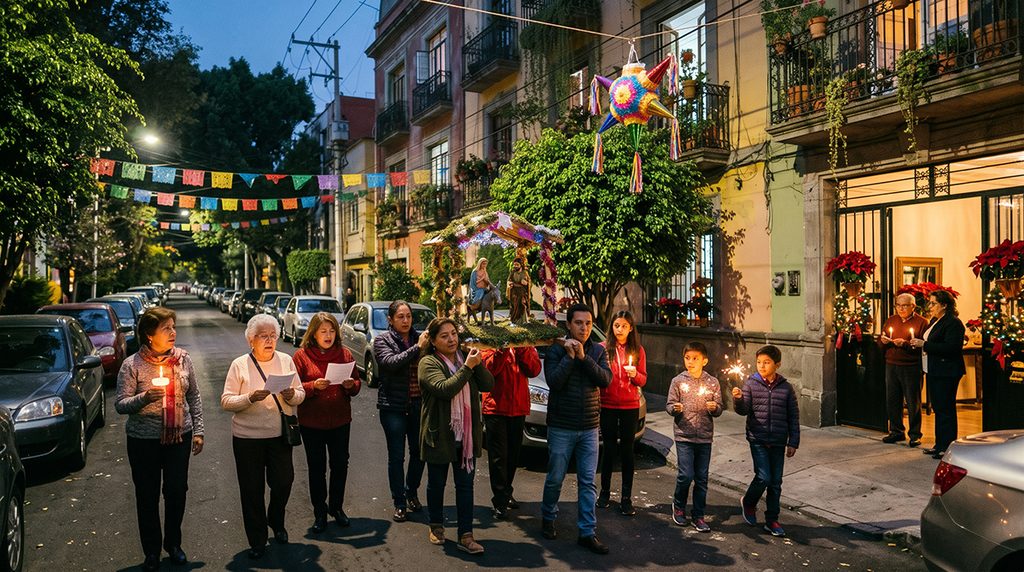
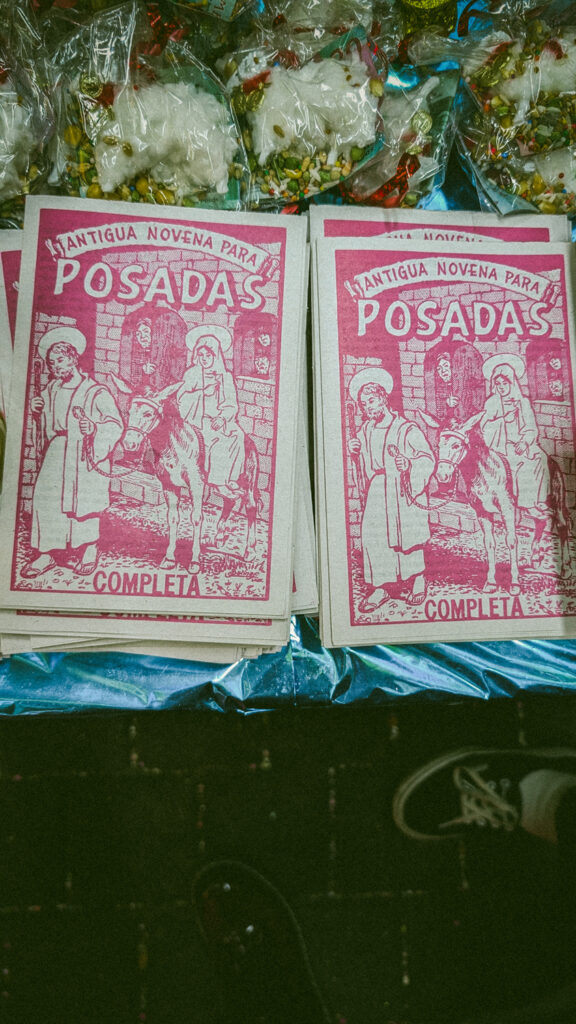
Mexico’s Christmas season starts earlier than you might expect. The posadas begin on December 16 and run for nine nights, reenacting Mary and Joseph’s search for lodging. You’ll hear them before you see them: processions of neighbours carrying candles, singing carols, and ending the night with a piñata. The city’s main lighting went on around the same date in 2025. The Zócalo lights switched on December 16, its festival opened on the 20th, and the displays stayed up into early January.
Most of the major 2026 events announced so far fall between December 12 and 23. They include a free medieval Christmas fair in the Bosque de Aragón, The Nutcracker at the Auditorio Nacional, and Candlelight string concerts in Xoco. After December 24, the city’s calendar thins out, though the lucha libre card at Arena México has sometimes landed on the 25th, and the folk ballet at Chapultepec Castle runs right through Christmas week.

For the fullest trip, arrive around Thursday, December 17. That gives you a full week to see the lights, catch evening performances, and shop for ornaments before everything shuts down on Nochebuena. If you can only manage a short stay, December 18 to 23 packs in the densest run of dated events. The trade-off with arriving on the 17th is missing the weekend of December 12 and 13. And since the Zócalo festival didn’t open until December 20 in 2025, check this year’s official start date if the plaza lights are your main priority.
The Historic Center
The Zócalo Christmas Festival
Officially named the Plaza de la Constitución, the Zócalo is one of the largest public squares in the world, measuring roughly 240 metres on each side. It sits directly over what was the ceremonial heart of the Aztec capital of Tenochtitlán. The cathedral on its north side was built over part of that sacred precinct, and the ruins of the Templo Mayor sit just a few steps away. Workers digging for an electrical line uncovered the site in 1978 when they struck a carved stone disc of the moon goddess Coyolxauhqui. You’re standing on three layers of history at once, and every December the city government covers the top layer in lights.
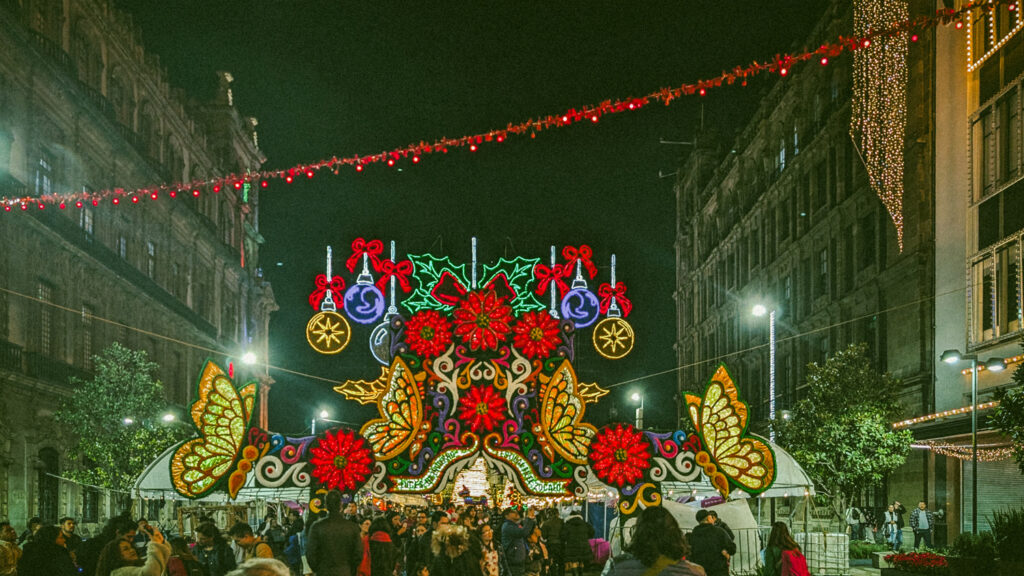
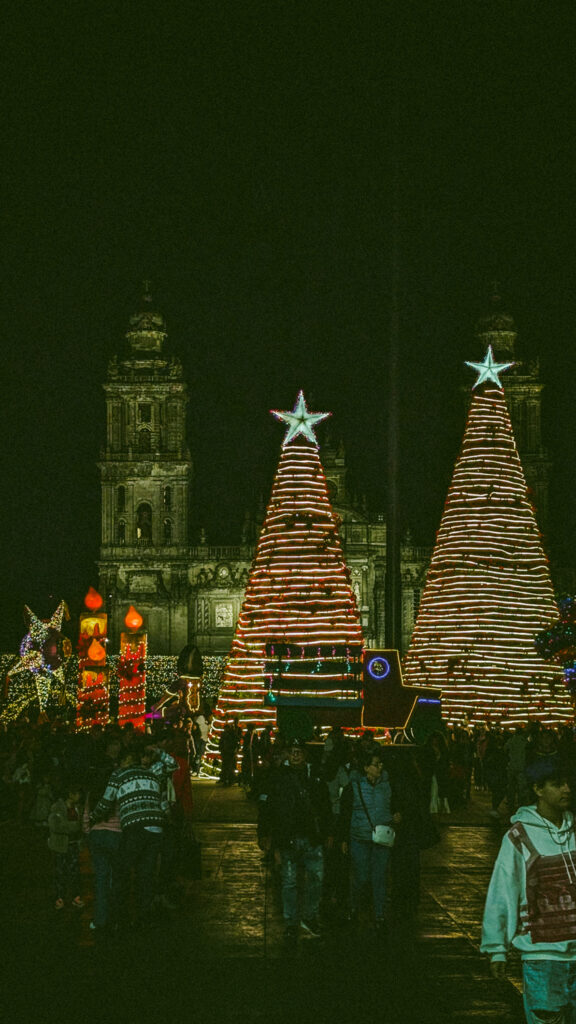
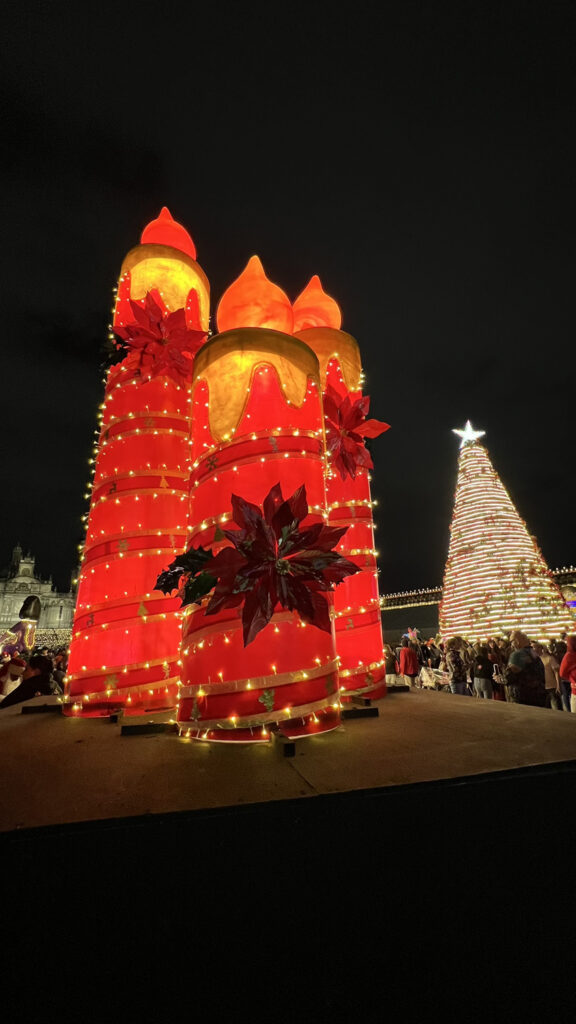
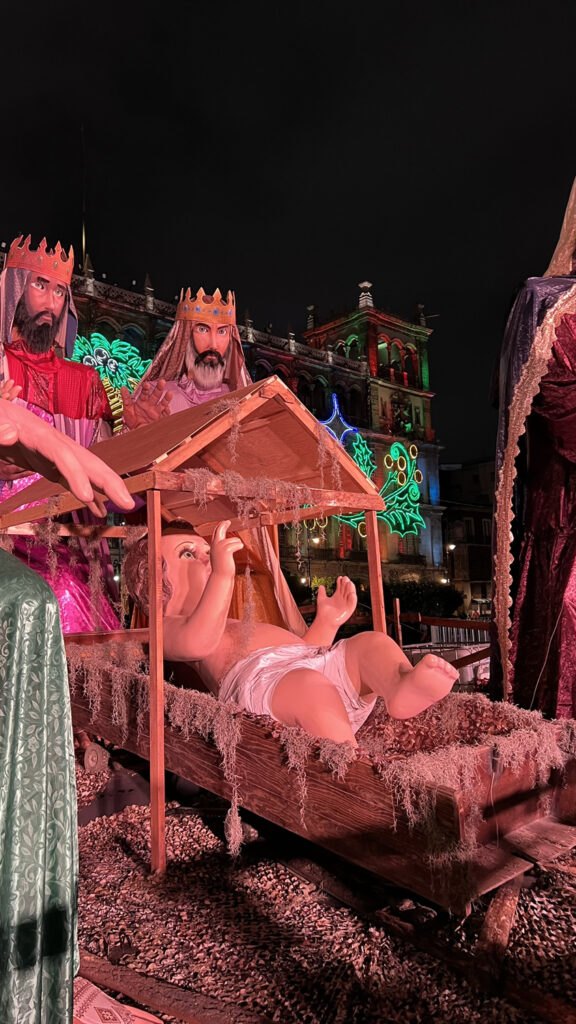
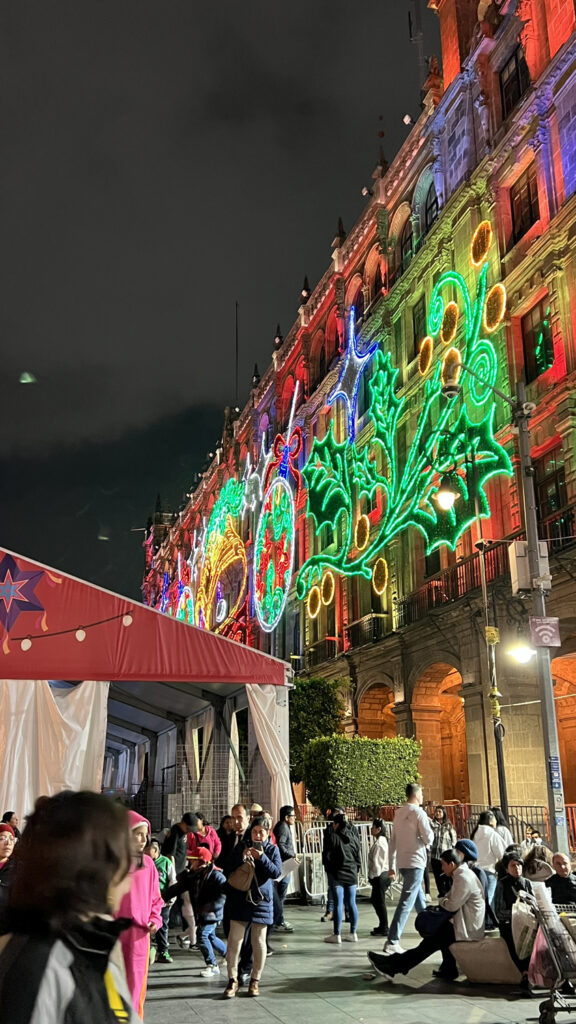
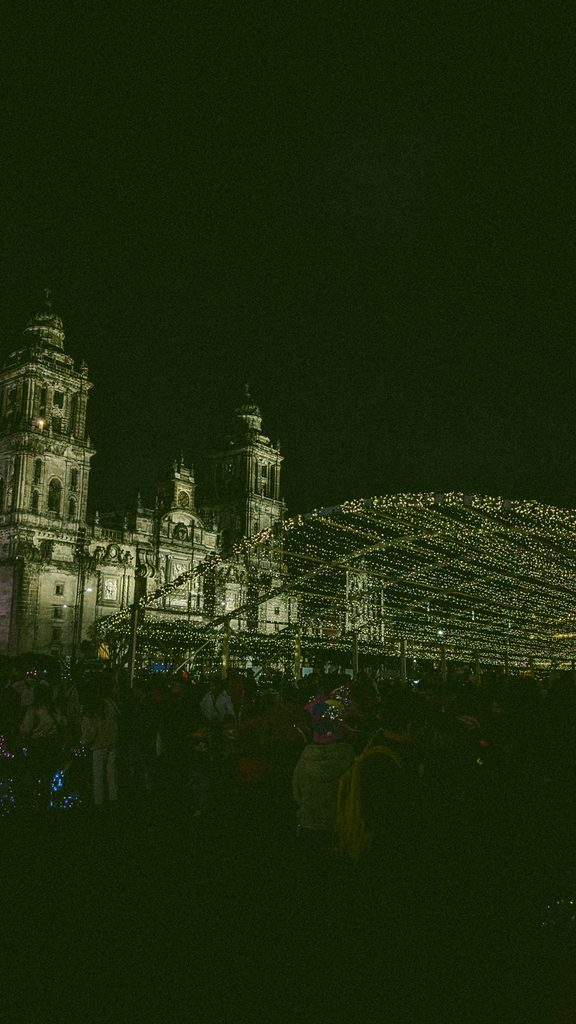
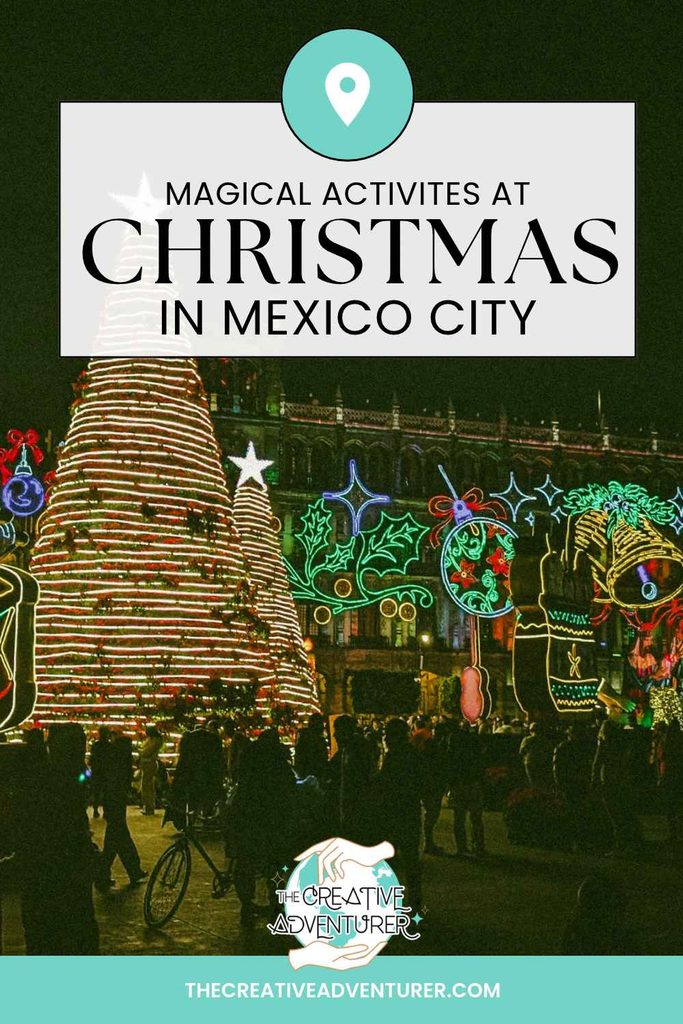
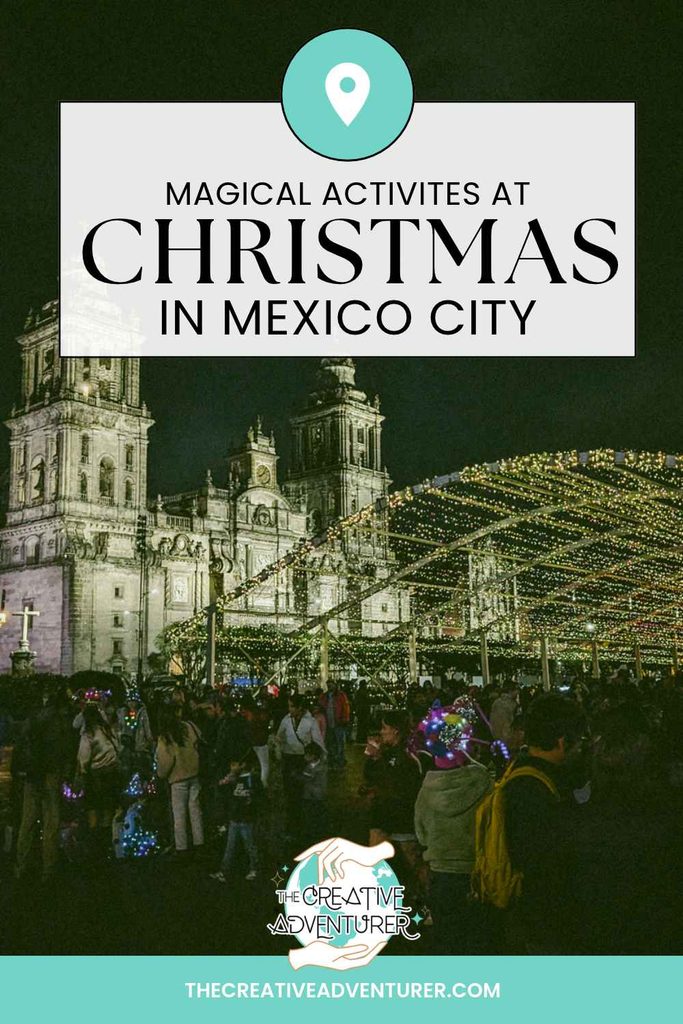
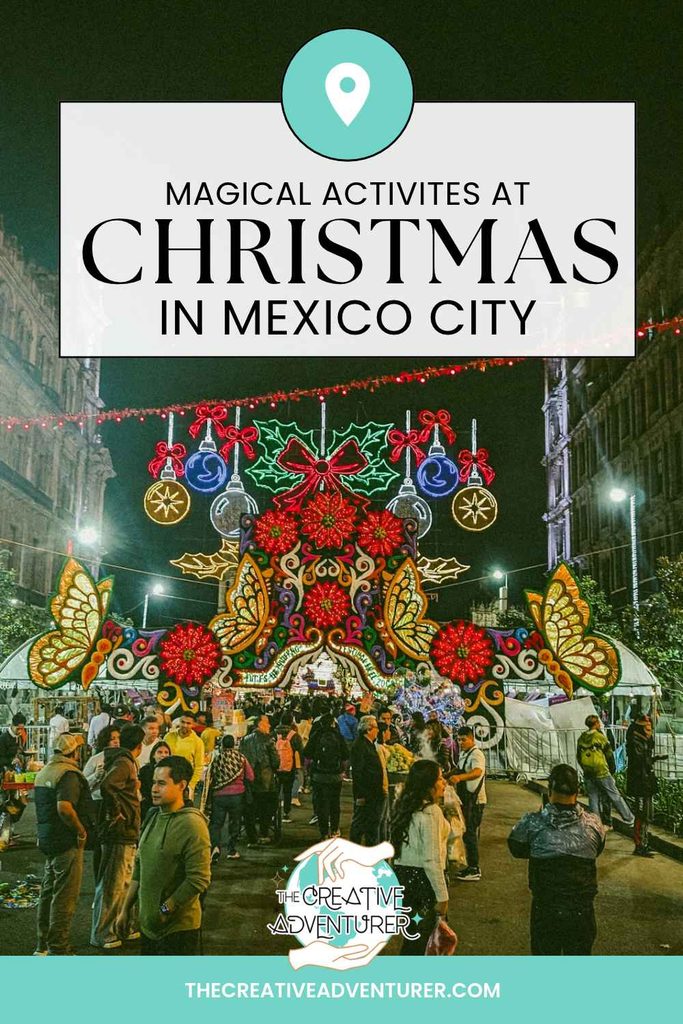
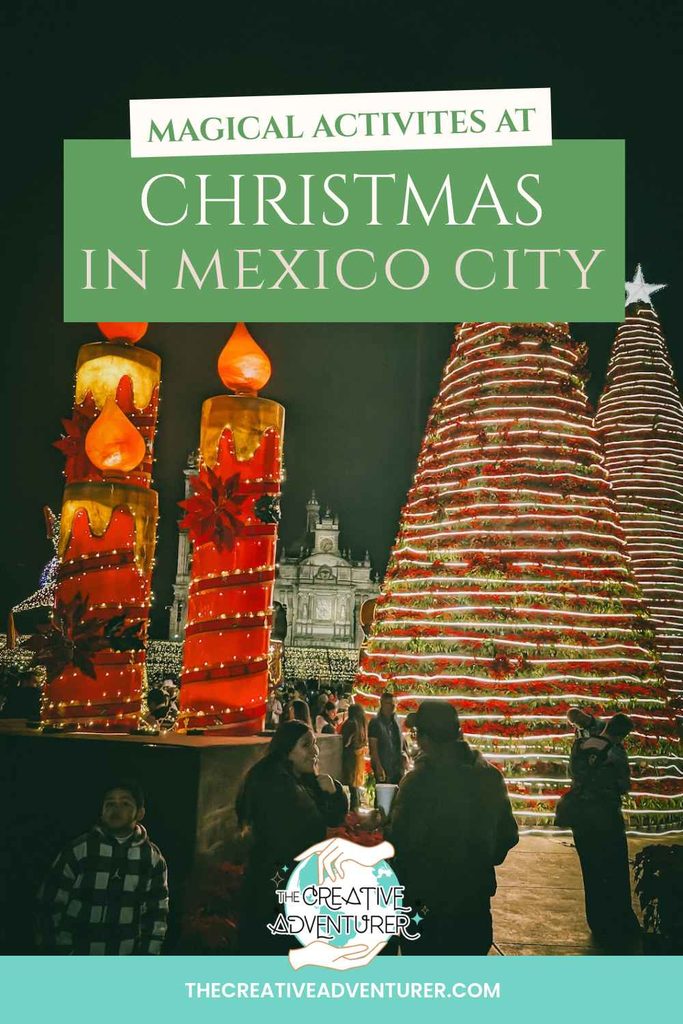
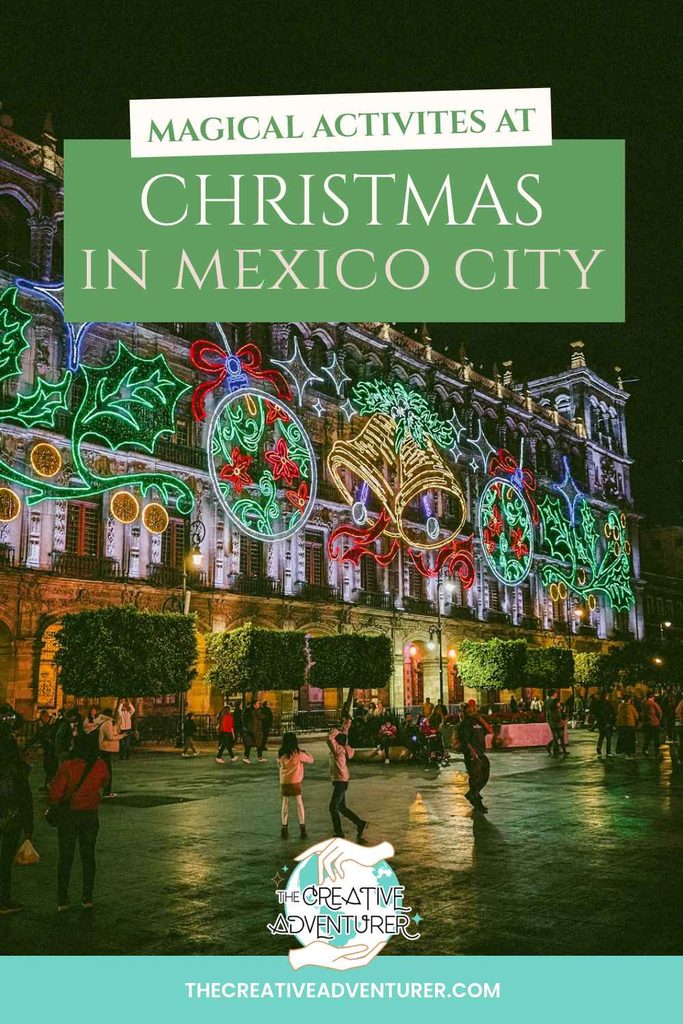
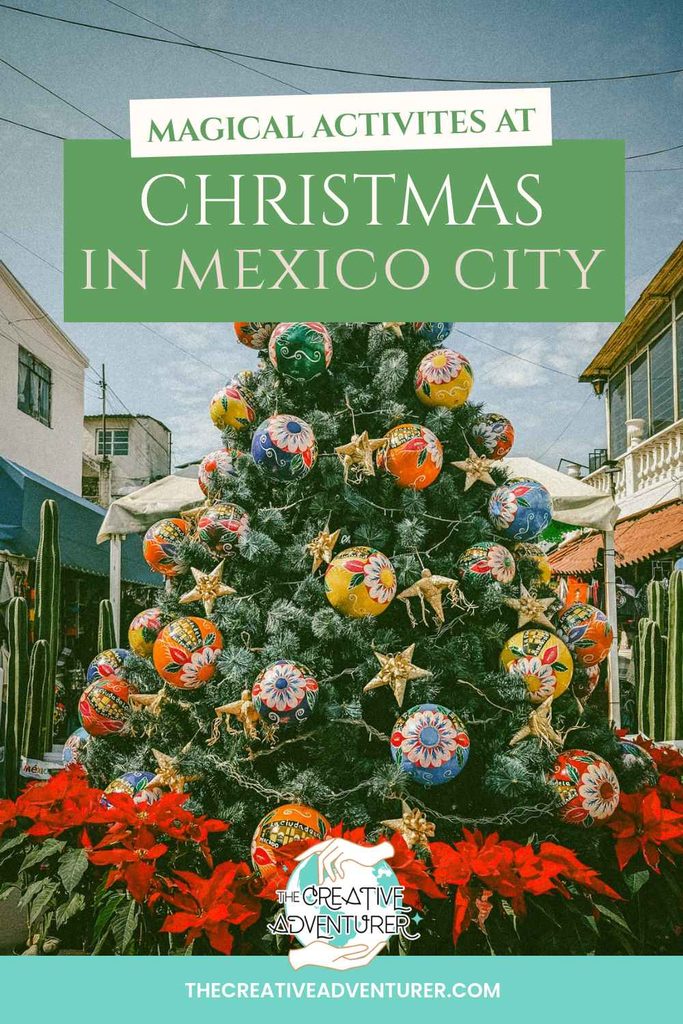
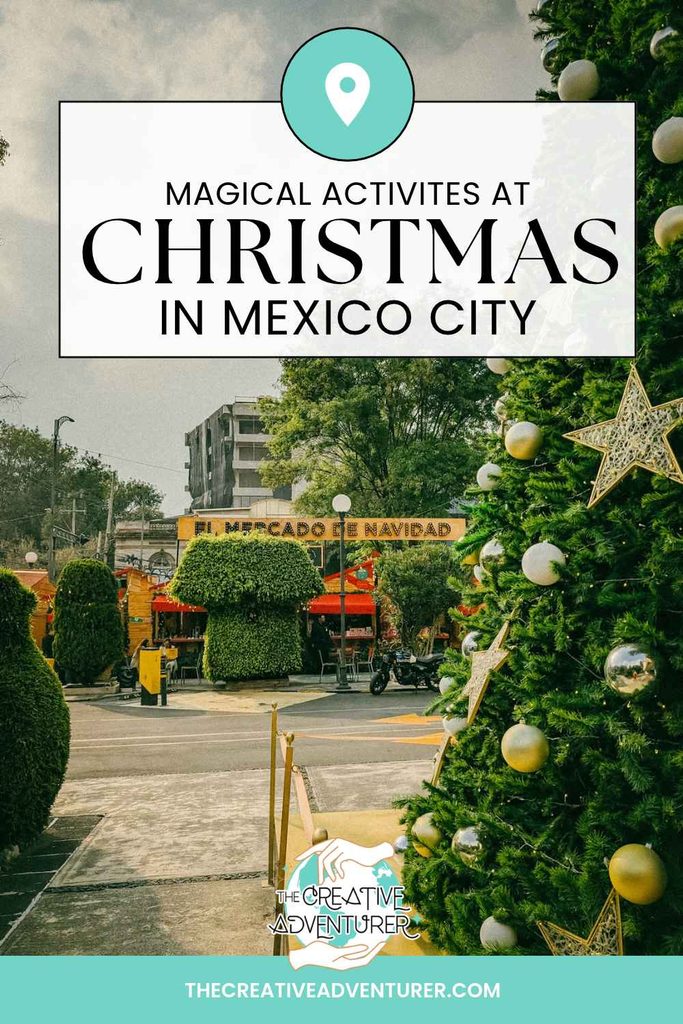
The city’s traditional Verbena Navideña (Christmas Festival) fills the square on a massive scale. It features three giant tree sculptures covered in poinsettias, 14 illuminated sculptures, a 150-metre Monumental Light Tunnel, and a giant nativity scene. A main stage hosted pastorelas (traditional comic Christmas plays) and storytelling, alongside 120 craft stalls under the banner Artesanos en el Corazón. More than 70 free concerts run through the season, mixed with circus acts and dance.
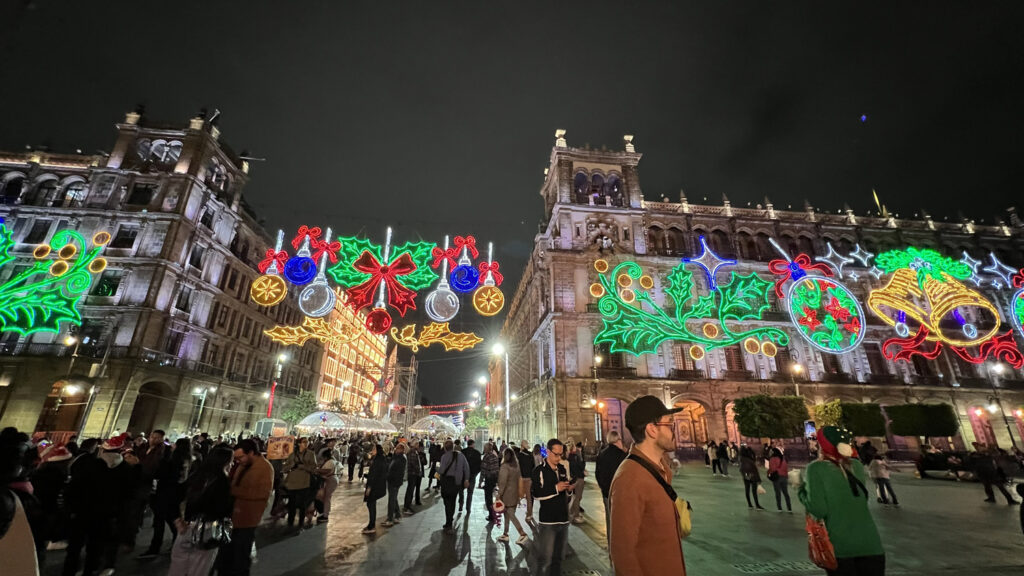
Go once, on a weekday near dusk. The nativity and the light tunnel need darkness to work, and a weekday keeps the crowds manageable. Give yourself a couple of hours, since there’s a lot of ground to cover. Local families treat an evening walk through the plaza as an annual ritual, so you’ll be joining thousands of residents doing the exact same loop.
Hours & Access
The Festival is open December 16 to 31 from 12 noon to 9 p.m., with certain days including special events. To get to the festival, take Line 2 to the Zócalo/Tenochtitlan Metro station.
The Metropolitan Cathedral
Construction on the Metropolitan Cathedral began in 1573 and took more than two centuries to finish, which explains its layered architecture. Baroque, Neoclassical, and older Renaissance lines all show up across the facade and interior. At Christmas, the church sets up nativity displays and seasonal decorations inside.
In past seasons, it has offered a dedicated Christmas tour covering the choir, the Altar of the Kings, and the Capilla de las Ánimas, where a nativity scene was displayed alongside the history of the tradition (check at the entrance whether tours are running this year). Masses take place on Nochebuena and Christmas Day, so check the timetable if you want to attend rather than sightsee, and dress accordingly.

The Gran Hotel Ciudad de México
Located at 16 de Septiembre 82, a short walk from the square, the Gran Hotel Ciudad de México is worth a stop for the building alone. It opened in 1899 as a luxury department store before converting into a hotel in 1968 to house visitors arriving for the Olympics. The lobby sits beneath a Tiffany-style stained-glass ceiling crafted by the French artist Jacques Gruber in 1908, spanning a five-storey Art Nouveau atrium ringed with wrought-iron balconies. Original wrought-iron birdcage elevators still run along the side. At Christmas, the whole atrium is dressed in seasonal garlands and lights, making it one of the most refined spots in the centre to stand with your head tipped back. Non-guests can generally step inside the lobby during daytime hours, though access can tighten in the evening or during private events. Go in daylight and check with the door staff on arrival.
Ponche
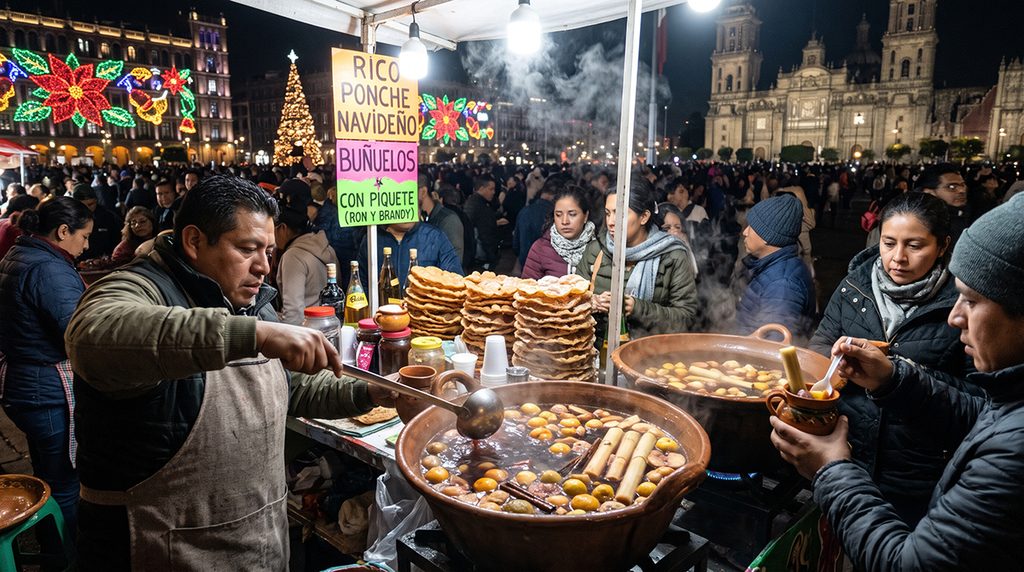
Ponche is the hot fruit punch of a Mexican Christmas, and food stalls around the Zócalo ladle it out by the cup. The base is water simmered with cinnamon sticks and raw sugar cane, loaded with tejocotes (a small, firm, slightly tart fruit that’s hard to find outside Mexico), guava, apple, tamarind, and dried fruit. The result is part drink and part hot fruit salad, with softened chunks to fish out with a spoon. Many vendors will add a splash of rum or brandy on request (called a piquete), so ask for it if you want it and speak up if you don’t. Standing in a cold plaza at night, it’s about as good as a hot drink gets. Those same stalls sell buñuelos (crisp fried dough discs dusted with sugar) and sparkling sidra, so you can easily piece together a casual street dinner.
Christmas Shopping at La Ciudadela
The Mercado de Artesanías La Ciudadela, on Balderas at the southwest edge of the historic centre, is where to shop if you want real craftwork rather than souvenir trinkets. Roughly 350 vendors sell handmade goods from 22 Mexican states, a short walk from the Balderas Metro stop. Aisles branch off in every direction, and the December inventory is worth a dedicated trip. I found seasonal pieces there that weren’t stocked during visits in other months. When you spot something you love, buy it on the spot, because stock shifts from day to day. Cash makes bargaining easier at most stalls and prices are firmer on small items than large ones, though many vendors now take cards.
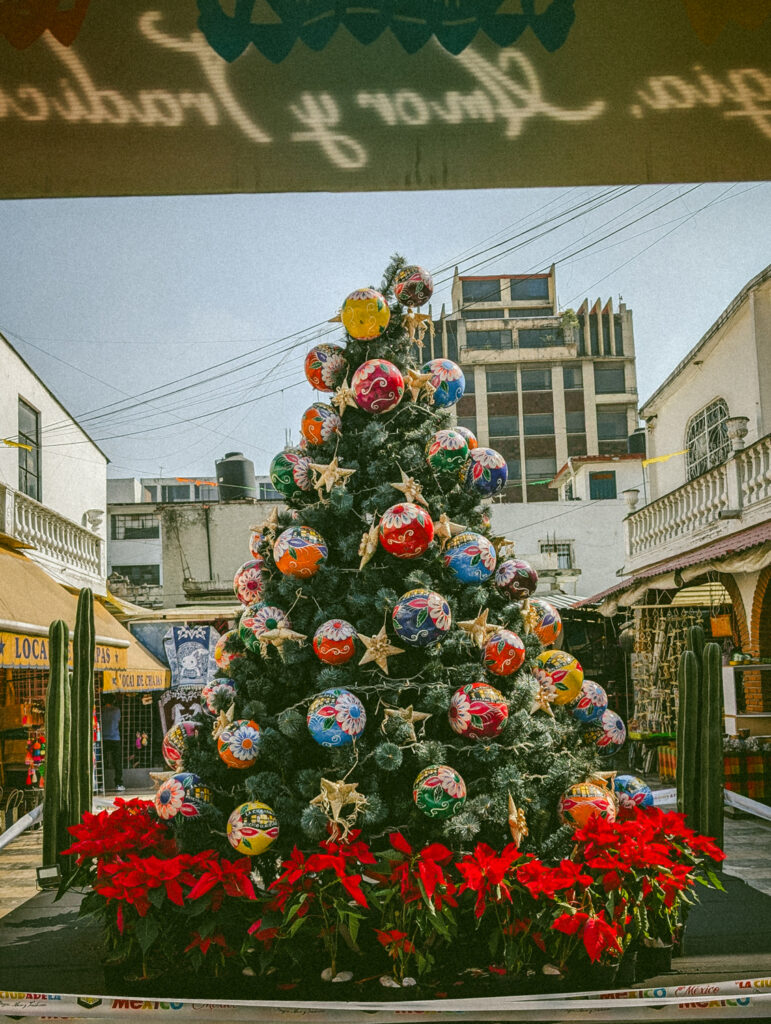
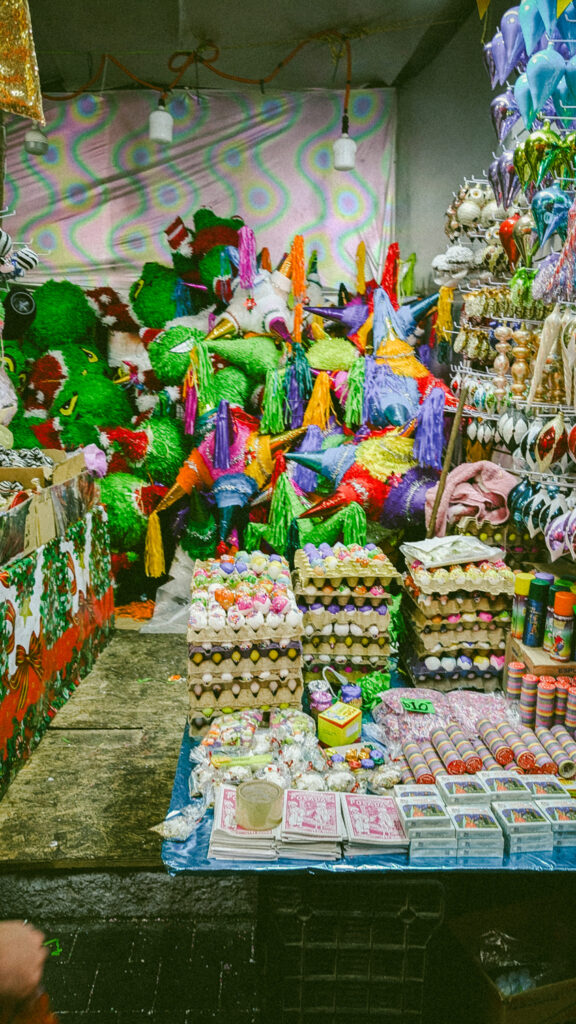
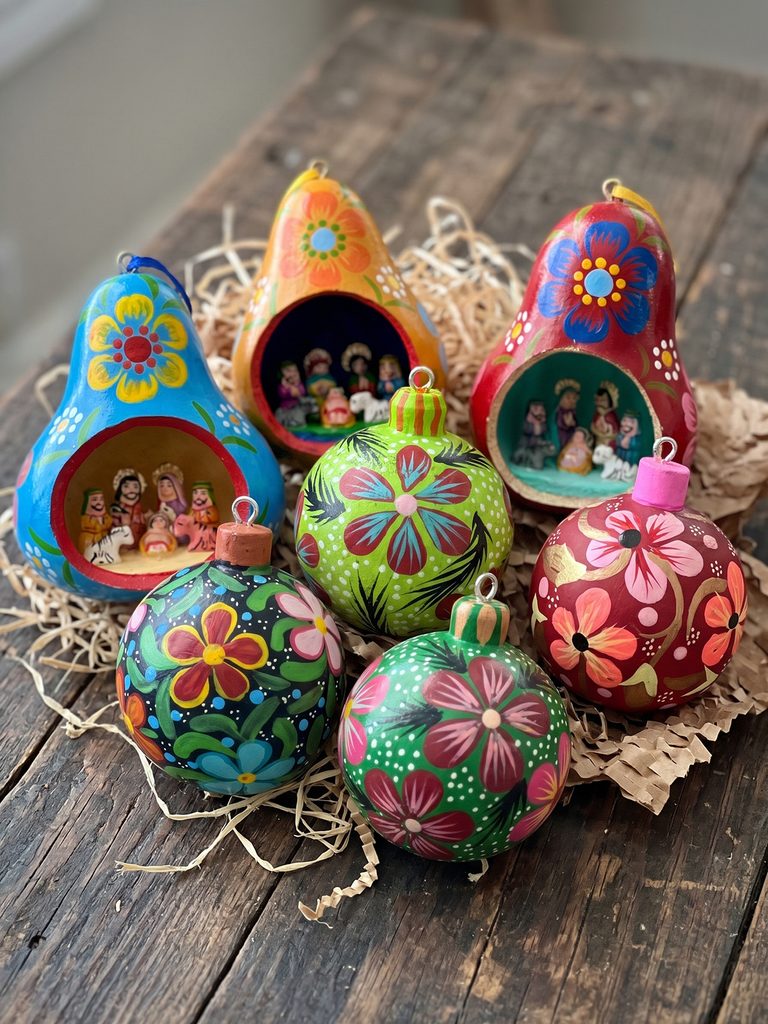
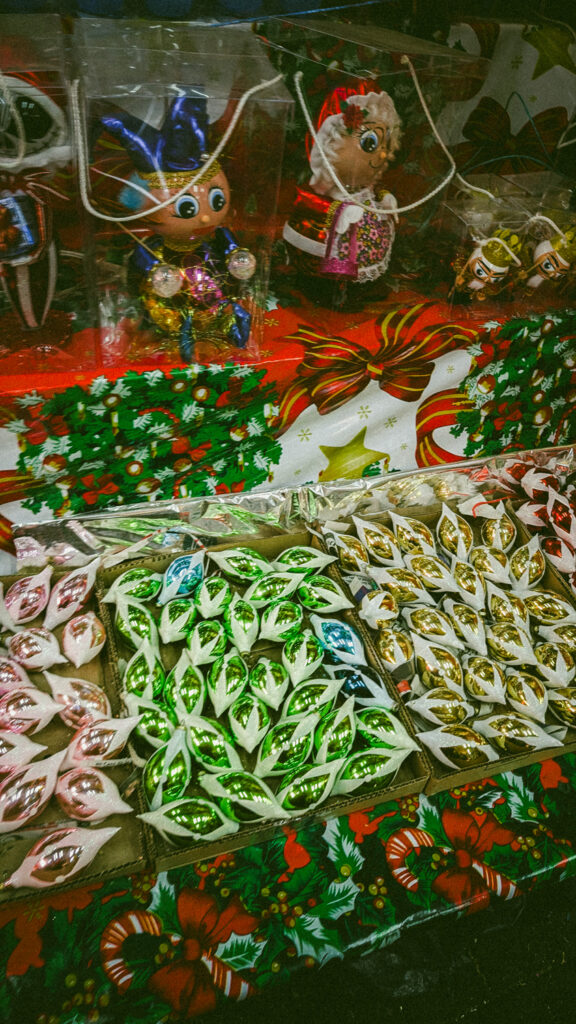
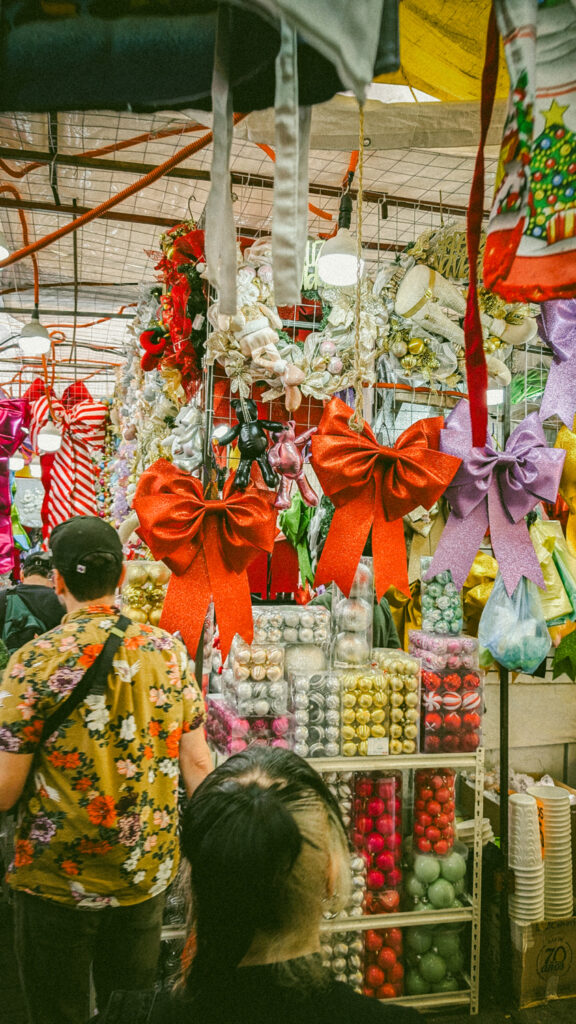
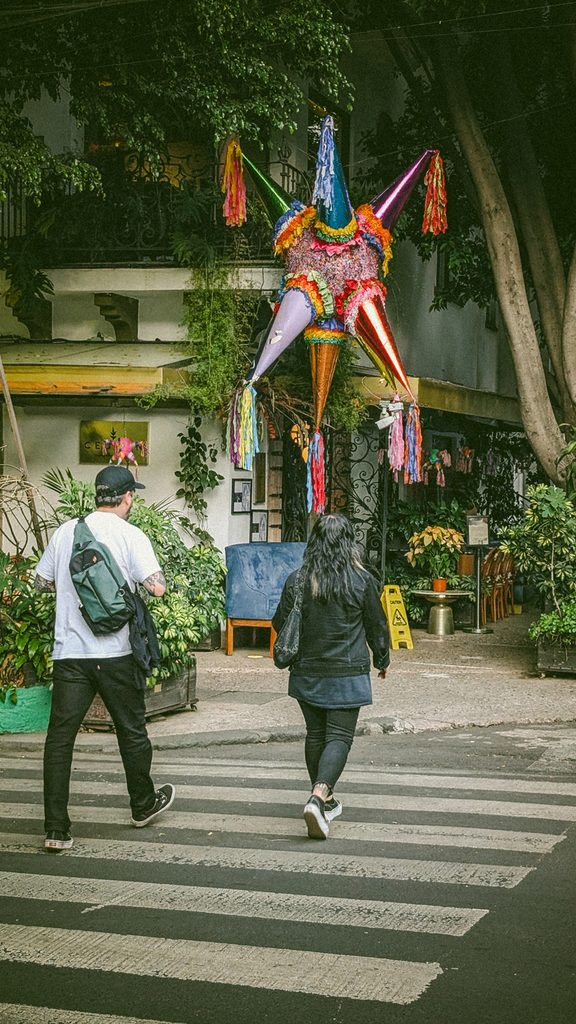
Focus on traditional ornaments rather than generic souvenirs. The classic choice is the blown-glass sphere, a Mexican Christmas specialty made in Chignahuapan and Tlalpujahua. Workshops there shape glass into spheres, spirals, icicles, and teardrops, then hand-paint them in sets ranging from plain white to intricate patterns. Clay nativity figures are the other major craft tradition. Artisan families in Metepec are famous for hand-moulded clay nativities, and workshops in Amozoc, Puebla have been sculpting clay figurines for more than a century. Smaller sets pack well and make great gifts. You’ll also see star-shaped piñatas made of cardboard and tissue paper, tying directly back to the posada tradition. Because La Ciudadela pulls makers from across the country, it lets you compare regional styles side by side before choosing what to bring home. Glass is fragile, so have the seller wrap each piece individually and pack the box in your carry-on.
Markets and Flowers
Mercado de Jamaica
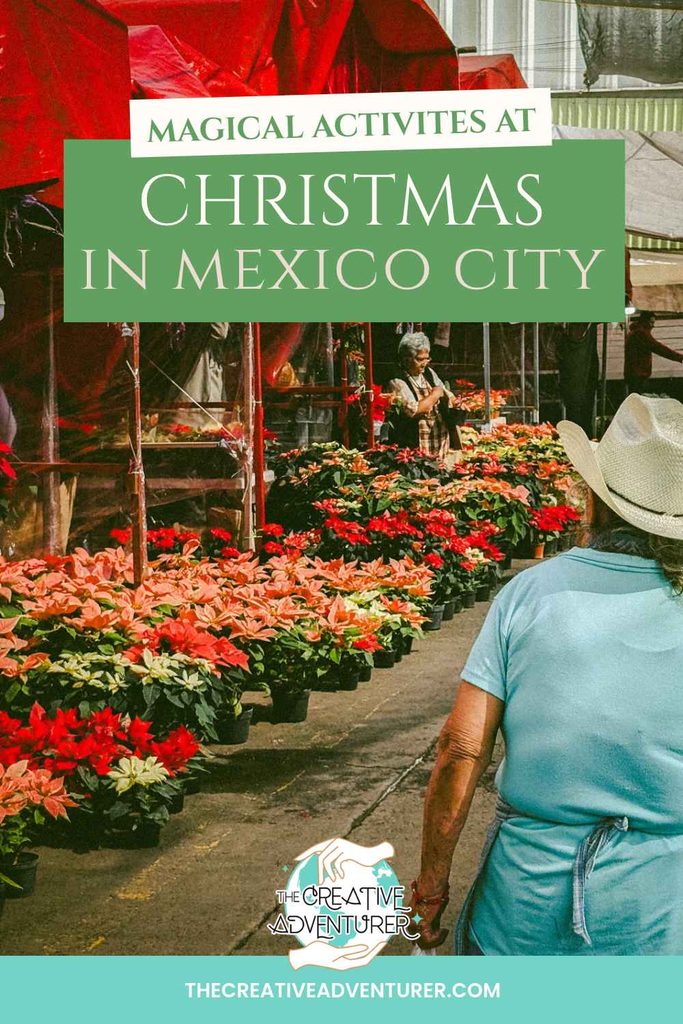
Set at Guillermo Prieto 45 beside the Jamaica Metro station, the Mercado de Jamaica is the largest flower market in Mexico. More than 400 producers and around 1,000 stalls operate here, a tradition running since the 1950s. In December, the entire market turns red. This is where the city comes to buy its nochebuenas, as poinsettias are known in Mexico. Inside the halls, potted plants sit stacked in dense banks, while the surrounding streets fill with cut Christmas trees, tangled strings of lights, and clay nativity figures. You can walk in for a single plant and leave with a full set of holiday decorations.
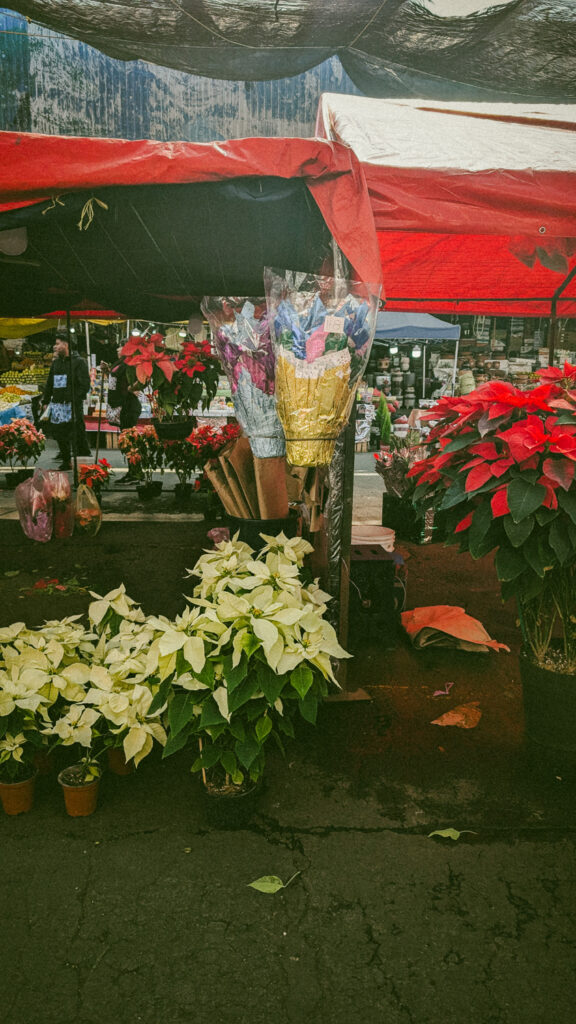
The poinsettia is native to Mexico, known to the Aztecs as cuetlaxóchitl. Its English name comes from Joel Poinsett, the first U.S. minister to Mexico, who sent cuttings home to South Carolina in the 1820s. Franciscan friars are usually credited with bringing the flower into Mexican Christmas traditions back in the 17th century. Mexico City treats the plant as a defining symbol of the season and ranks third nationally in production. In 2025, the city reported a record crop of 1.8 million plants grown by 216 producers across its conservation land. If you’re staying in a hotel or apartment rental, picking up a couple of potted nochebuenas and a string of lights makes your room feel part of the season rather than an outside observer (just ask your host before hanging anything on the walls).

Piñatas
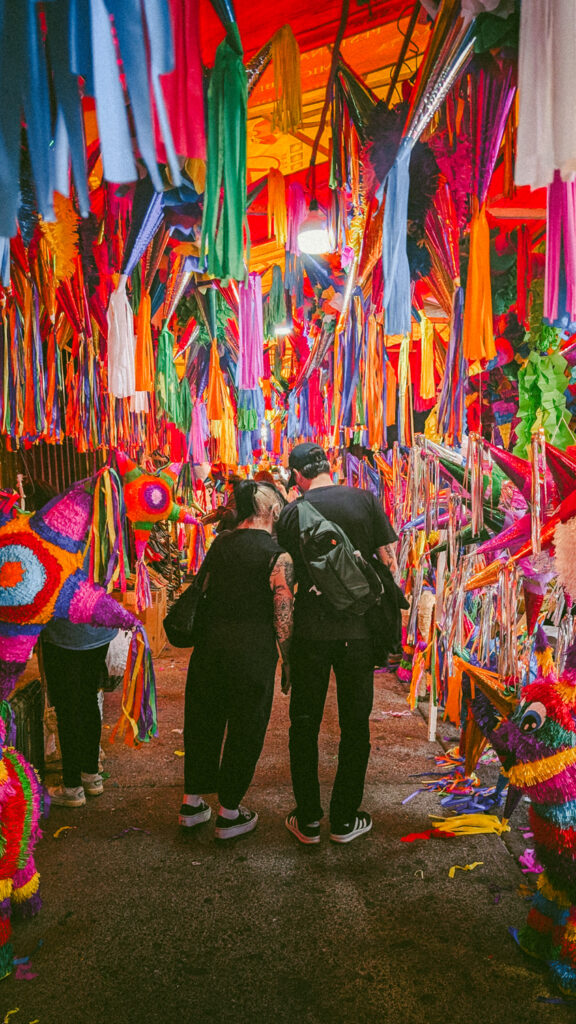
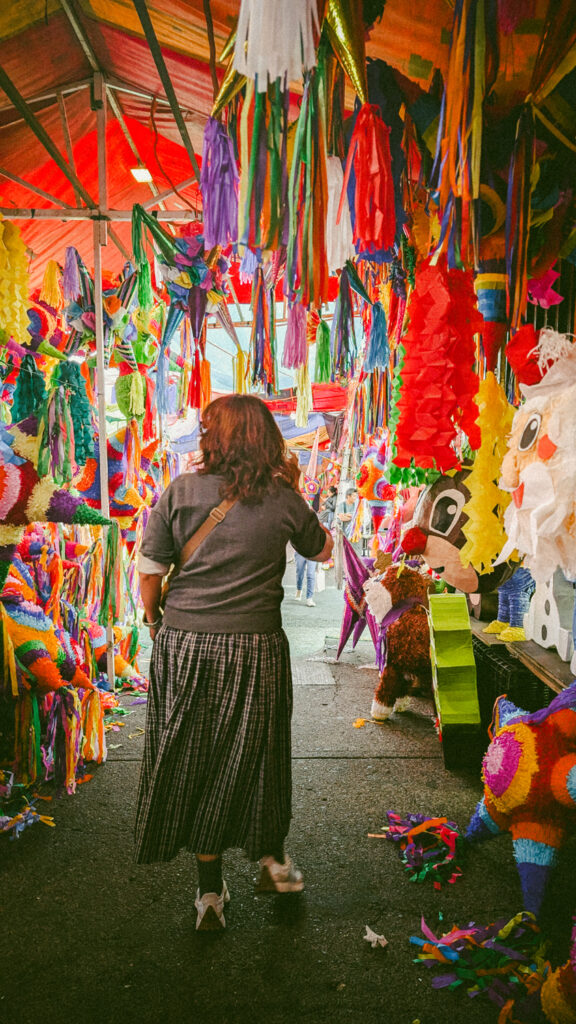
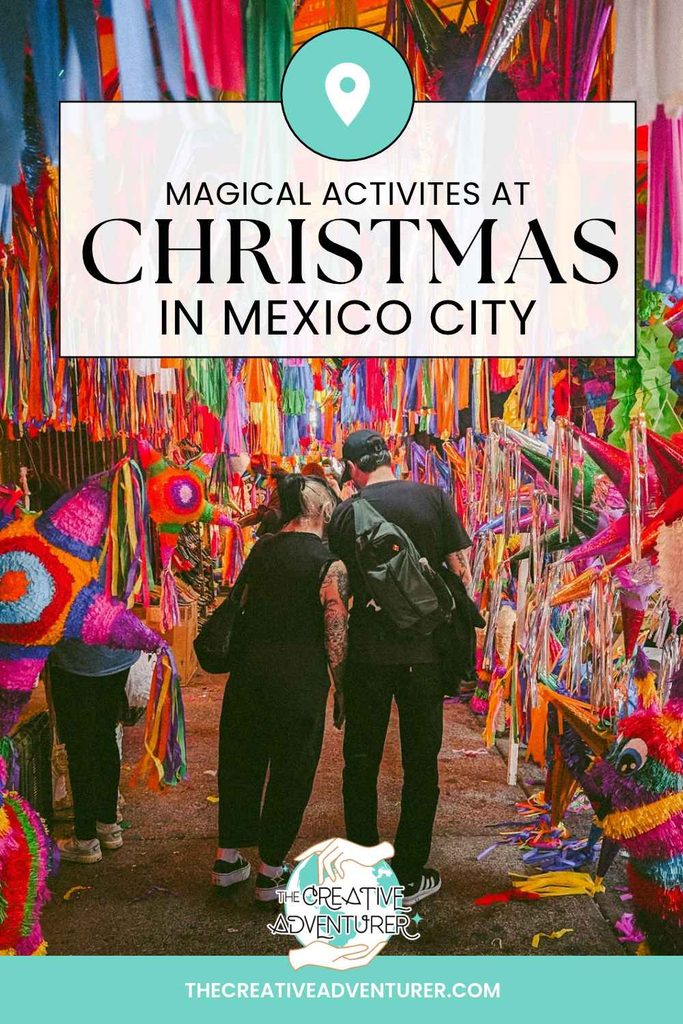
Before spending December in Mexico City, I thought of the piñata purely as a birthday party prop. The Mexican Christmas version is something else entirely, and it’s best understood by watching one being built. Mercado de Jamaica is the easiest place to watch makers at work and buy a traditional design. Looking closely at the stalls shows how much craft goes into layers of papier-mâché, paste, and patience.
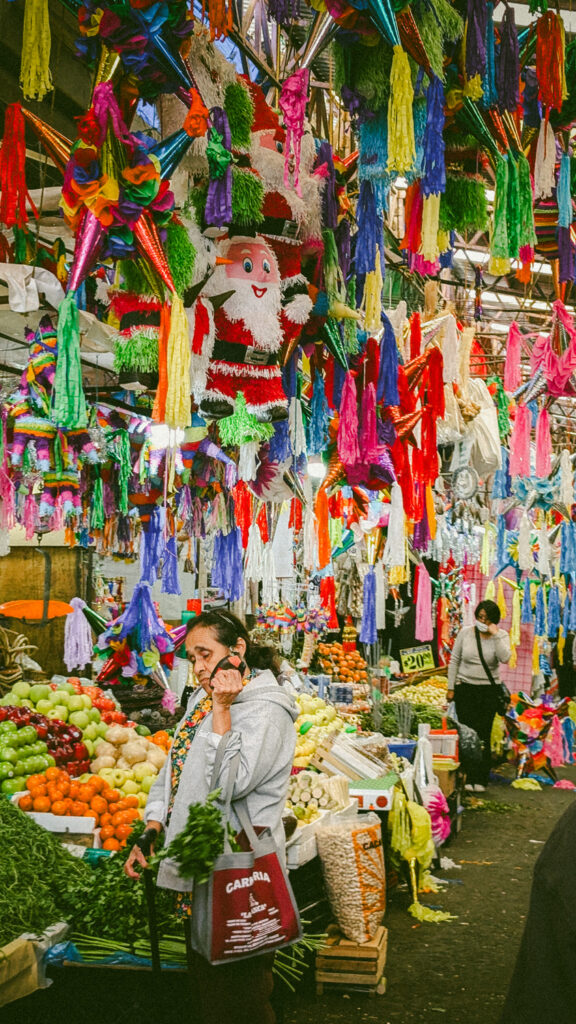
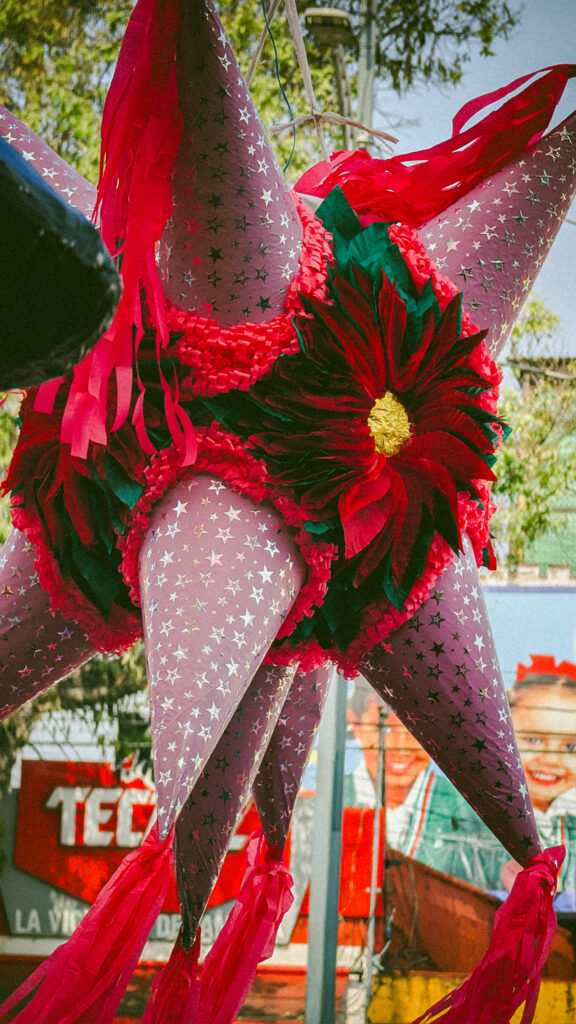
The classic Christmas piñata is a seven-pointed star, and the standard origin story goes back to the colonial era. In 1586, Augustinian friars at the convent of Acolman, northeast of the city, received authorization from Pope Sixtus V to hold the misas de aguinaldo, nine outdoor masses leading up to Christmas that evolved into modern posadas. According to tradition, the friars used the piñata as a teaching tool: the seven points represent the seven deadly sins, the bright colours stand for temptation, the blindfold symbolizes blind faith, the stick represents virtue, and the fruit and sweets inside are the heavenly reward. A traditional verse (“No quiero oro, ni quiero plata, yo lo que quiero es romper la piñata”) is sung while each blindfolded player swings. Treat the friars’ story as folklore rather than documented fact, since historians still debate the exact origins of the Mexican piñata.
Xochimilco
Jamaica is where the city buys its poinsettias, while Xochimilco, in the far south, is where most of them are grown. The Cuemanco plant and flower market brings together around 350 local producers and generally operates from 8:00 to 16:00. It’s a relaxed place to wander among rows of plants in something closer to their growing environment. The name Xochimilco translates from Nahuatl as “field of flowers.” Its canals are the last surviving remnant of the vast lake system the Aztecs farmed using chinampas, artificial garden plots built up from the shallow lakebed. After the Spanish conquest, most central canals were drained to build roads, but Xochimilco’s waterways endured, earning UNESCO World Heritage status in 1987.
Cruising the chinampas
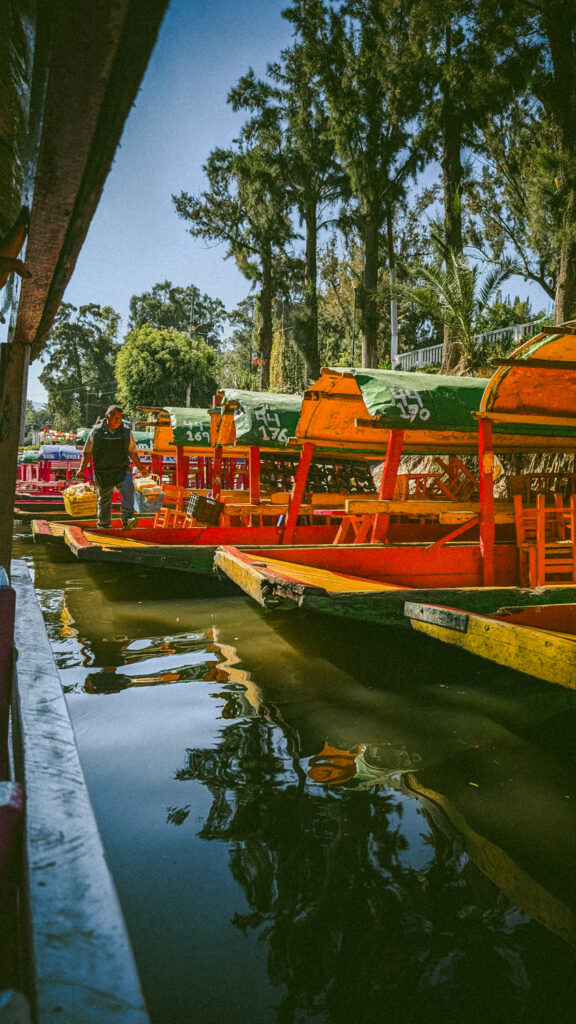
From the market, you can walk straight over to the canals. Nativitas and Zacapa are the classic tourist piers, while Fernando Celada, Cuemanco, and Puente de Urrutia lead directly into the quieter ecological zone and working chinampas. Cuemanco pairs naturally with a poinsettia run, and it’s also the pier closest to the Isla de las Muñecas (the Island of the Dolls). If you prefer livelier canals with floating food vendors and music, head to Nuevo Nativitas near the Madreselva flower market.
Trajineras, the flat-bottomed wooden boats painted in bright colours, are rented by the boat rather than per person. The official rate in 2025 was 750 pesos per hour for up to 15 passengers, and that same 750-peso hourly rate remained in place for 2026, making it easy for a group to split the cost. Most boatmen require a two-hour minimum because it takes time to pole clear of the docks. Live music is priced separately (a mariachi band cost around 300 pesos per song in 2025). If you’re travelling solo or as a pair, collective shuttle boats ran 50 pesos one way and 100 pesos round trip per person in 2025. Authorities set official rates and adjust them periodically, so check the posted tariff board at the pier before boarding.

Neighbourhoods to Walk
Paseo de la Reforma
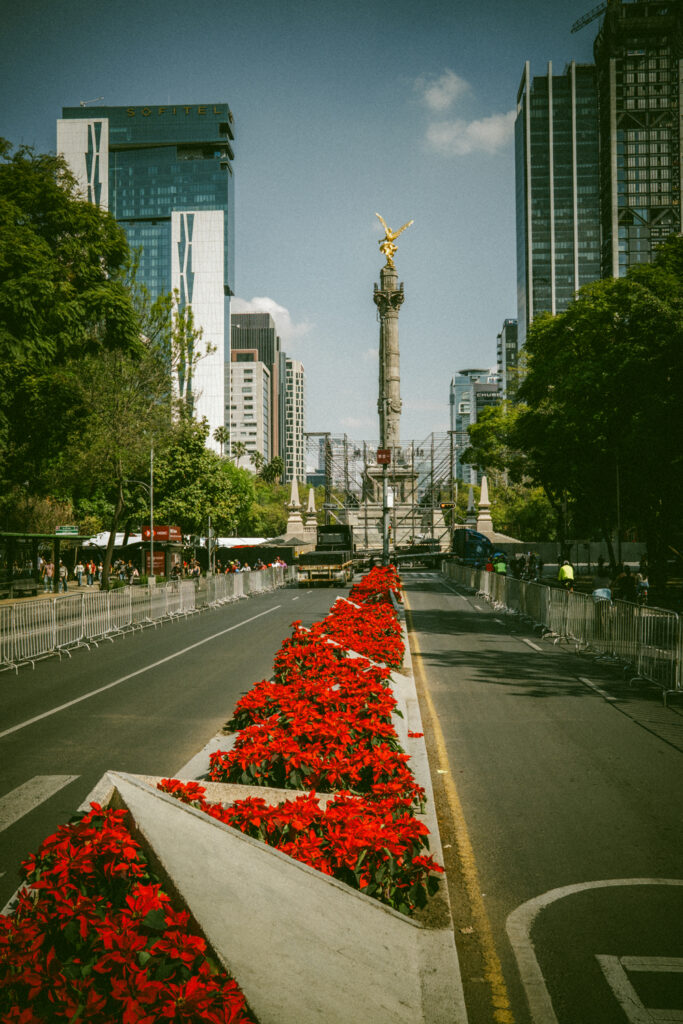
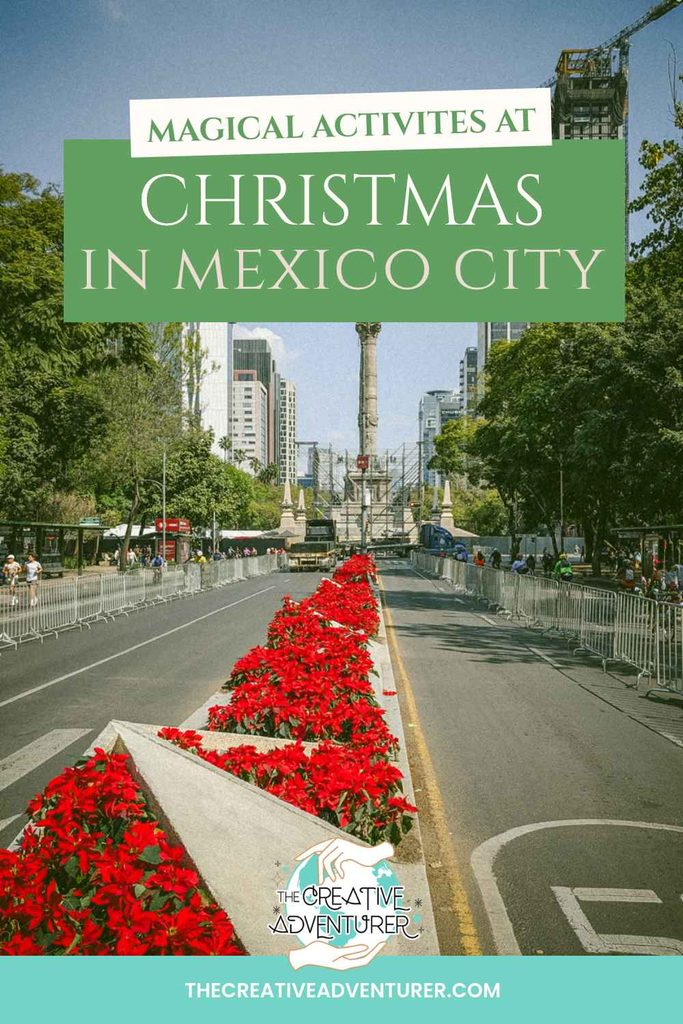
Paseo de la Reforma is the grand avenue cutting diagonally from Chapultepec toward the historic centre, laid out in the 1860s under Emperor Maximilian as a Parisian-style boulevard linking his castle to the National Palace. Its illuminated displays shift from year to year, but the street plantings are a constant: city crews plant more than 250,000 poinsettias along the medians and roundabouts, including the stretch from the Periférico to the Glorieta del Ahuehuete (still widely called the Glorieta de la Palma). Pop-up installations and light sculptures appear along the sidewalks too. Walk this stretch on a pedestrian Sundays morning, when the city closes Reforma to cars for cyclists and pedestrians, letting you stroll right down the middle of an avenue usually jammed with traffic.
La Condesa and Coyoacán
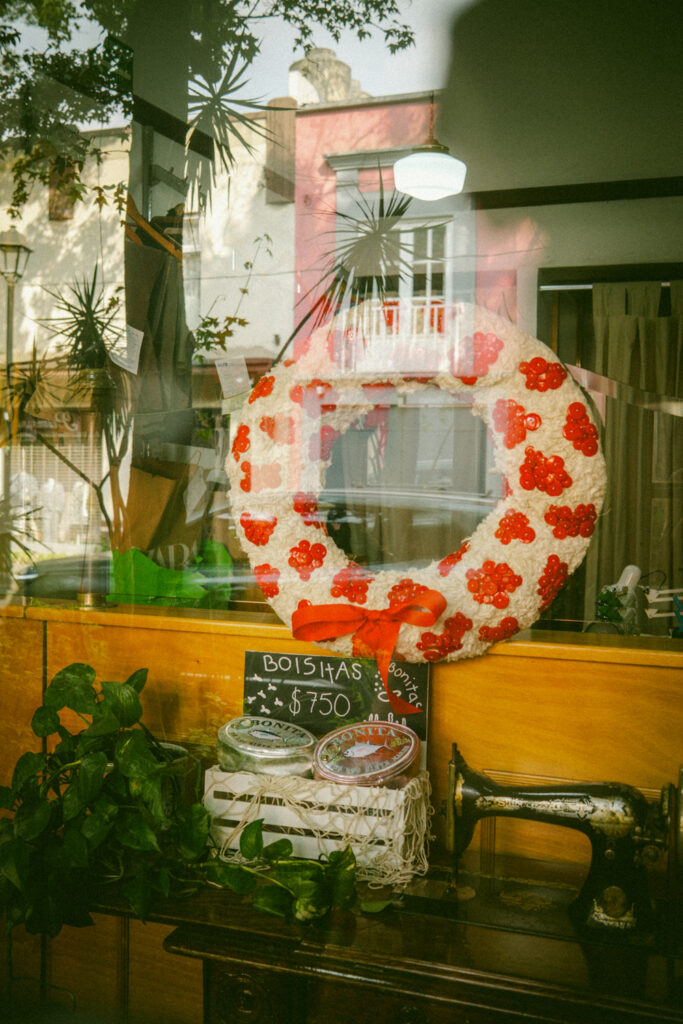
La Condesa is the Art Deco and neocolonial neighbourhood southwest of the centre, planned in the 1920s and 1930s around two leafy parks, Parque México and Parque España. It rewards wandering without an itinerary. Tree-lined streets curve past rounded apartment facades, and in December residents hang lights and wreaths across their own balconies and doorways. Unlike the city-run installations downtown, the charm here comes from the people who actually live on the block.
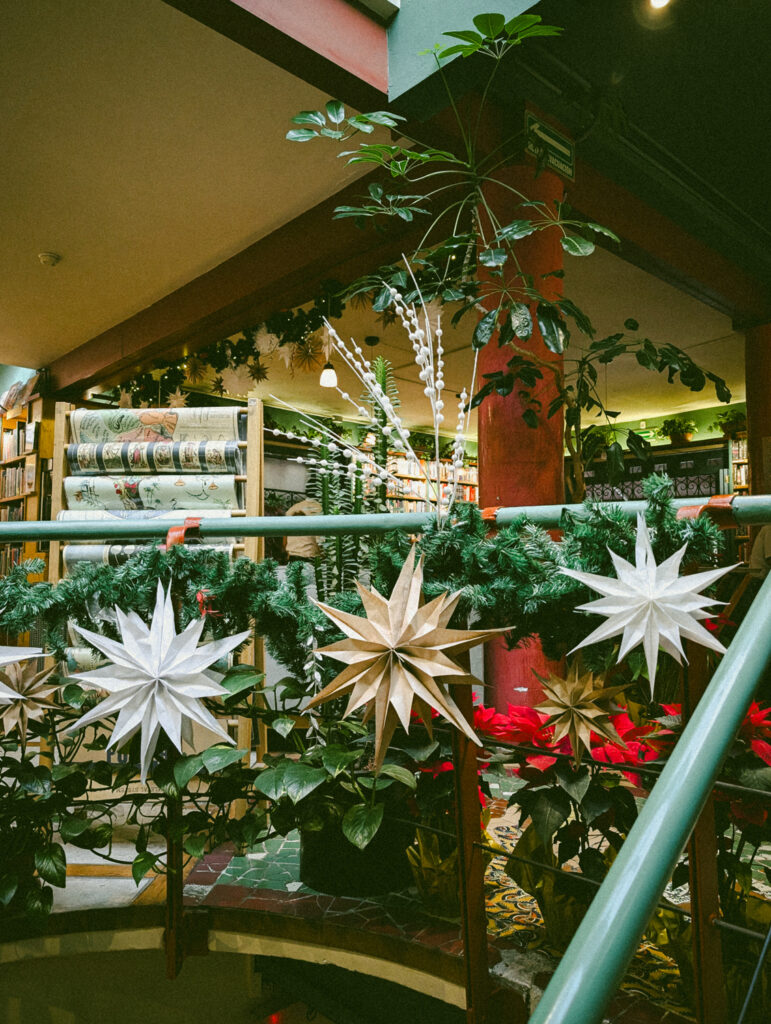
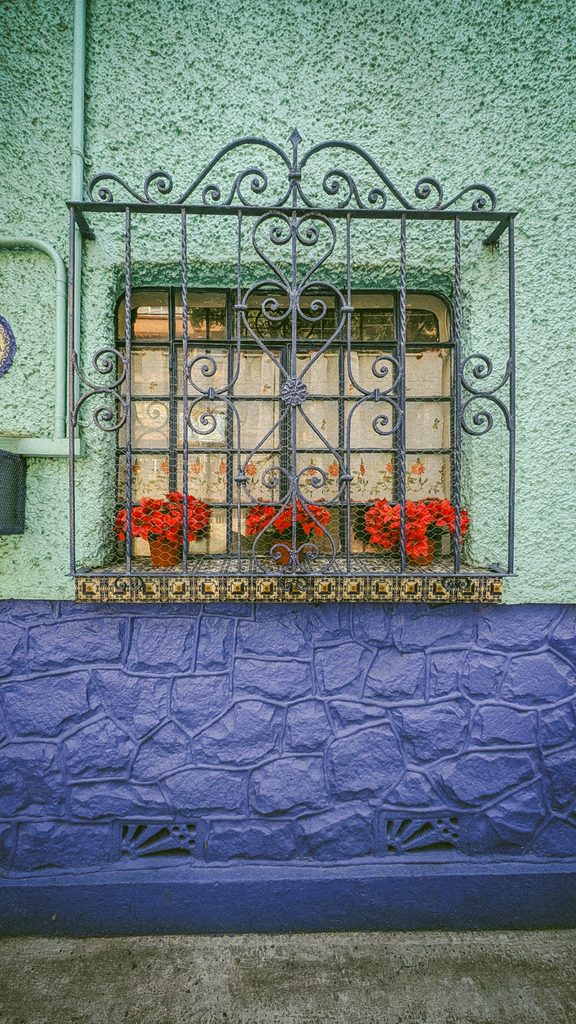
Further south, Coyoacán was an independent town before urban sprawl swallowed it, and its centre still feels separate from the rest of the capital. The main squares (Jardín Centenario and the adjoining Plaza Hidalgo) glow with seasonal lights, and surrounding streets fill with food and craft stalls. Just steps off the plaza, the Mercado de Artesanías de Coyoacán opens daily if you still need gifts, making it an easy final stop after an afternoon walk.
Polanco’s Department Stores
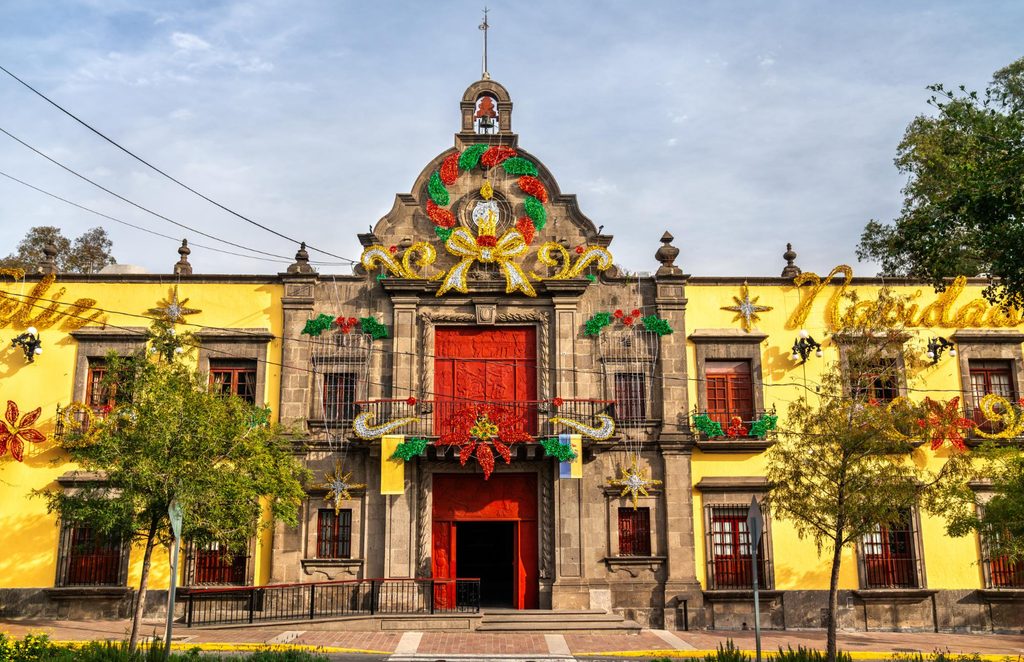
Polanco, the upscale district north of Chapultepec, offers a very different kind of holiday display: polished, commercial, and theatrical. Antara, an open-air shopping complex, sets up a sleek modern tree strung with warm lights. Over at El Palacio de Hierro Polanco (Moliere 222), a full Christmas bazaar and decorated holiday village take over the lower level, and in a recent season the atrium showcased a towering Dior tree billed as the largest in the world. Several malls in the area also run scheduled artificial snowfalls. If you’re travelling with kids, or simply enjoy classic department store window dressing, it makes for an easy indoor afternoon.
San Ángel and the Nativity Scenes
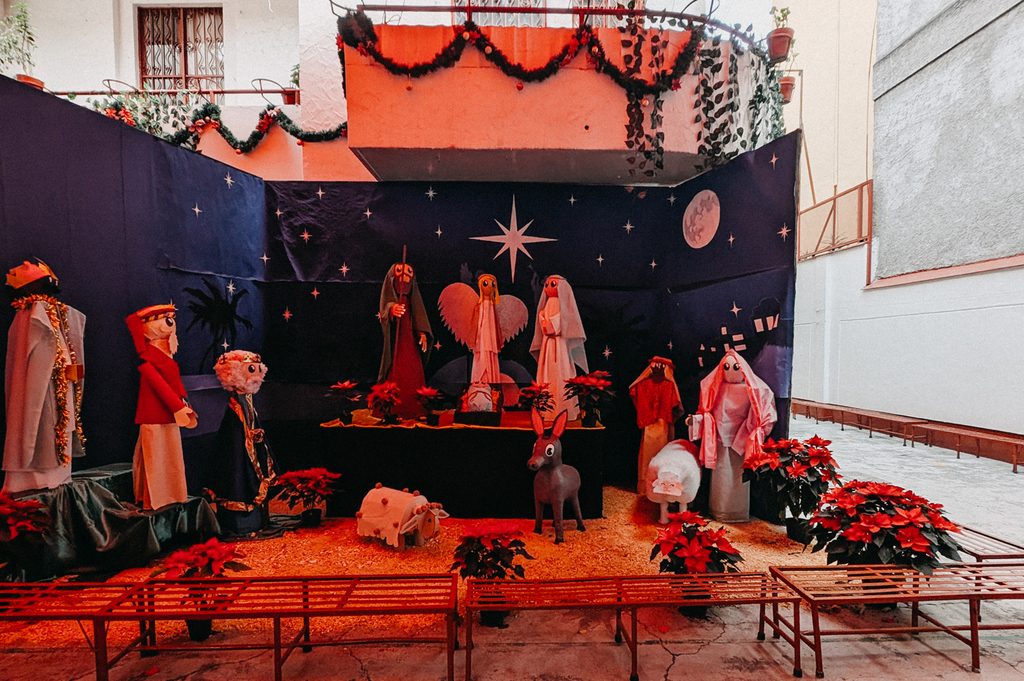
The nacimiento (nativity scene) arrived in Mexico with Spanish missionaries and evolved into a distinct folk art form. Mexican versions frequently feature the Three Kings riding donkeys, miniature adobe houses made of clay, and the Virgin Mary dressed in traditional regional clothing. Families build their scenes gradually at home over several days, adding new figures as Christmas approaches.
To see this craft at its highest level, visit the Museo de El Carmen in San Ángel (Avenida Revolución 6), housed inside a former Carmelite convent. Every winter, the museum hosts the winners of the national Nacimientos Mexicanos competition. Its 29th edition ran from November 26, 2025 to February 2, 2026 (confirm the 30th edition dates once announced). Artisans build these entries from clay, carved wood, woven textiles, blown glass, basketry, and amate bark paper, and admission to the exhibition is included with your regular museum ticket. Seeing dozens of winning entries together shows how differently each region of Mexico interprets the exact same story.
Evening Entertainment
Ballet Folklórico at Chapultepec Castle
Seeing the Ballet Folklórico de México perform its holiday production, Navidades en México, outdoors on the esplanade of Chapultepec Castle was one of the highlights of my trip. The 2025 season marked the company’s 18th year staging the show. The castle itself began as a viceroyal summer residence in the 1780s, later served as a military academy, and became the imperial home of Emperor Maximilian and Empress Carlota in the 1860s. Today it houses the National Museum of History, so you’re watching a Christmas performance framed by a building that has been a palace, a fortress, and a museum.
The production runs in three acts. Act one recreates the Annunciation with a live nativity complete with farm animals, while the final act stages a traditional posada with candlelit pilgrims, sung litanies, and a piñata. In between come some of Mexico’s best-known regional dances, including the Jarabe Tapatío, the Danza de los Viejitos from Michoacán, and the Devil dances of Guerrero. The whole performance lasts about 90 minutes and starts at 19:00. Organizers ask guests to arrive 45 minutes early, because latecomers aren’t admitted once the show starts. While the 2025 season opened on Christmas Day, the 2026 run at Chapultepec Castle takes place earlier, from December 17 to 27. Tickets start at 1,180 pesos plus service charges, a noticeable jump from earlier seasons. Use the Pasillo Metro or Acceso Gandhi park entrances, and give yourself extra time for the steep walk up the hill to the castle.
An open-air venue at 19:00 gets genuinely cold. We were surprised by how sharply the temperature dropped, though as Canadians we had packed proper layers. Many of the locals sitting around us hadn’t, and you could see them shivering through the second act.
Lucha Libre at Arena México
Mexico City declared lucha libre intangible cultural heritage in July 2018, and the holiday card at Arena México (which has hosted matches since 1956) is a fun seasonal tradition, even if it isn’t guaranteed every single year. The CMLL promotion staged a Christmas Day show on December 25, 2024 and ran a holiday card in 2025. I went and found it a much better introduction to lucha libre than a regular weekly card. The arena fills up with multi-generational families, giving you all the masks, theatrical rivalries, and crowd chants at a slightly gentler pitch than usual.
Whether CMLL schedules a Christmas Day card in 2026 comes down to their December calendar. December 25, 2026 lands on a Friday, which is Arena México’s flagship weekly show night, though that isn’t an automatic confirmation. Check CMLL’s official channels in early December and buy tickets as soon as they go on sale, because holiday cards sell fast.
Concerts and the Nutcracker
Several 2026 holiday concerts are already on the calendar, mostly clustered in the weeks before Christmas. The Minería Symphony Orchestra opens the season with its Navidad Sinfónica program at Sala Nezahualcóyotl on November 30, December 1, and December 7, 2026, with all three performances at 20:00. The orchestra also plays Minería Symphony Orchestra at the Auditorio Nacional on December 5, 2026, at 19:30, blending carols, jazz, and orchestral standards (tickets start at 682 pesos).
From December 18 to 23, 2026, The Nutcracker (El Cascanueces) returns to the Auditorio Nacional, pairing the National Dance Company with live music from the Teatro de Bellas Artes Orchestra. Regular tickets run from 485 to 3,125 pesos, though seasonal sales like Buen Fin drop the upper balcony seats to around 242.50 pesos. For a smaller venue, Candlelight: Christmas Classics brings a one-hour string quartet performance to El Cantoral in Xoco from December 18 to 20, 2026, with tickets starting at 300 pesos.
Christmas Eve and Christmas Day
Plan Around Nochebuena
December 24 isn’t an official statutory holiday in Mexico, but most restaurants and shops cut their hours or close early anyway. The family dinner (the cena) is the centrepiece of the entire holiday. On Nochebuena, we went out looking for dinner only to discover that almost the entire city had gone home to eat its own. Even McDonald’s was locked up, which I honestly hadn’t thought possible, and so was every neighbourhood pizza spot we tried. We ended up eating instant ramen inside a 7-Eleven whose staff, as far as we could tell, kept the doors open past closing once they realized we had nowhere else to go. It was a decent meal and a very clear lesson.
Ask your hotel concierge a few days ahead which restaurants are serving on December 24 and book a table in advance. If you’re staying in an apartment with a kitchen, major grocery chains stay open on shortened hours so you can stock up earlier in the day. Public transit also runs on reduced holiday schedules. In 2025, the Metro operated from 5:00 to 23:00 on Nochebuena, while the Metrobús stopped at 21:00. On Christmas Day, the Metro opened later at 7:00 and ran until midnight, and the Metrobús ran from 5:00 to midnight. Authorities set exact holiday hours each December, so check the Metro and Semovi announcements for 2026 before heading out late.
What’s Open on Christmas Day
Because December 24 and 25 function as de facto holidays, most museums close their doors, leaving long queues at the handful that stay open.
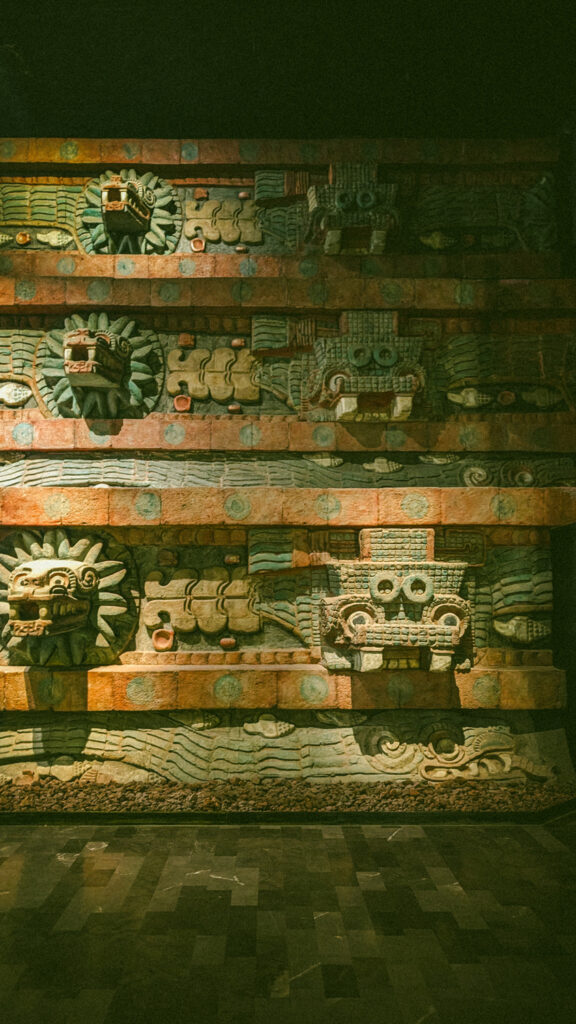
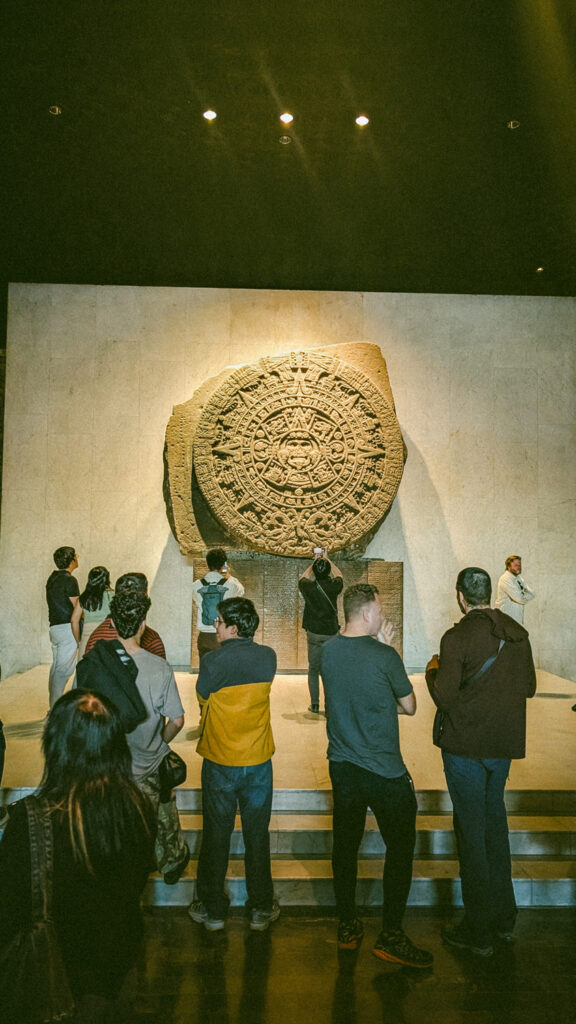
The Museo Nacional de Antropología is your strongest cultural option on December 25, and buying tickets online in advance is essential. When we went, timed slots sold out at the gate and people were turned away. Designed by architect Pedro Ramírez Vázquez and opened in 1964, the museum wraps around a vast central courtyard anchored by El Paraguas, an enormous concrete umbrella supported by a single bronze-clad column with water cascading off its rim. Inside the ground-floor Mexica hall sits the Piedra del Sol (often called the Aztec Calendar), unearthed in 1790 right beside the Metropolitan Cathedral. You can study the stone in the morning and walk past the exact spot where it was dug up later in the week.
The Museo Soumaya in Polanco also stays open on Christmas Day (10:30 to 18:30). Its queue was even longer than the Anthropology Museum’s when we visited, so arrive right before opening if you want inside without a wait.
Chapultepec Forest
Chapultepec Forest stays open too, offering the easiest way to spend Christmas Day outdoors. The park is divided into four sections, and the First Section is the oldest and best known, home to the castle, the boating lake, and the botanical garden. Even when interior museum buildings close, you can stroll the tree-lined paths past the Monumental Fuente de Nezahualcóyotl and the Fuente de las Ranas, pairing an afternoon walk neatly with an evening at the ballet.
If you want festive energy on December 25, head back to the Zócalo. Public transit runs less frequently on Christmas Day, but we found Uber and DiDi operating almost normally (with modest holiday surge pricing), so getting across town wasn’t an issue.
Weather and What to Pack
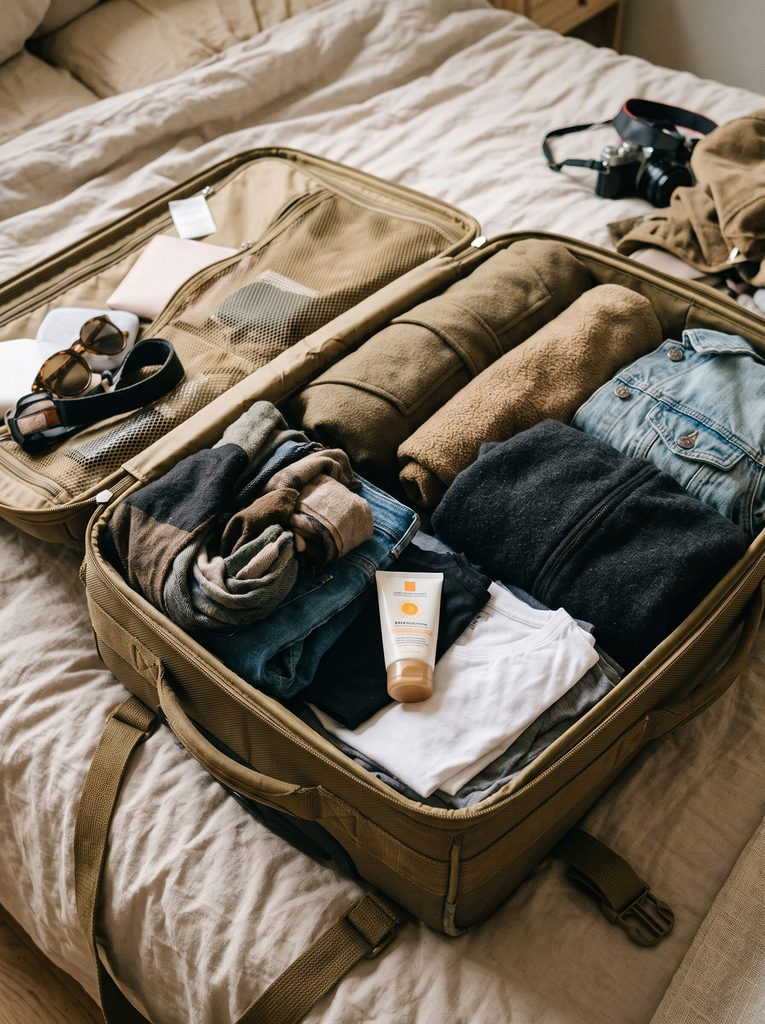
Mexico City sits at an elevation of roughly 2,240 metres (7,350 feet), and December falls squarely in the dry season. Daytime highs average 20 to 22°C (68 to 72°F) under bright sun, while nighttime temperatures drop to between 5 and 9°C (41 to 48°F). Monthly rainfall averages 10 mm or less, usually spread over a day or two at most, so you rarely need an umbrella. What you do need is a jacket you can easily layer. Midday sun feels warm while you’re walking, but the thin mountain air cools off fast the moment the sun drops. Evening plans in this guide, especially the Zócalo lights and the open-air ballet at Chapultepec Castle, get cold enough for a warm coat or fleece, and sunscreen is worth packing for bright afternoon walks.
Spending Christmas in Mexico City works best when you plan around that fixed anchor of December 24. Arrive around the 17th, wrap up your ornament shopping by the 23rd, and pack the concerts, flower markets, and Zócalo lights into the days before Nochebuena. Save Christmas Day for Chapultepec Forest, an open museum with pre-booked tickets, and the folk ballet on the castle terrace. Confirm the final 2026 city festival dates once December arrives, skip any outdated guide still promising an ice rink in the Zócalo, and keep our 7-Eleven ramen dinner in mind before assuming you can walk into a restaurant on Christmas Eve.
Happy Travels, Adventurers

Leave a Comment