
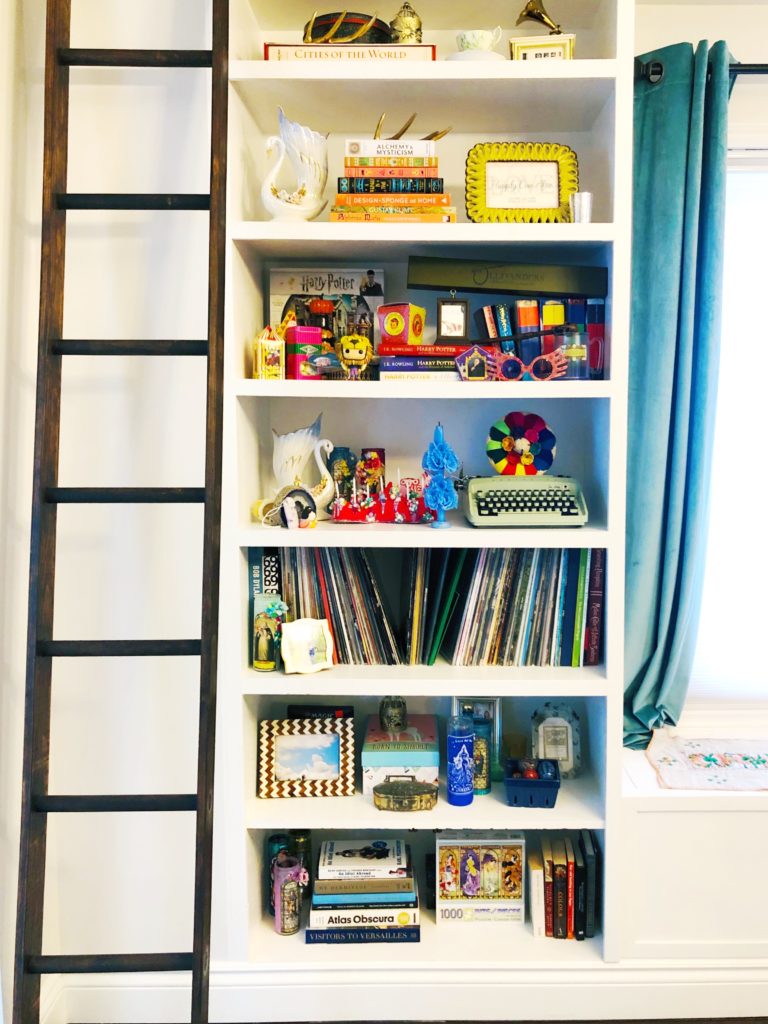
I first wrote this list in the spring of 2020, when every trip on my calendar had been cancelled and nobody could say when I’d be able to book another one. As someone who lives and breathes travel, that was very hard, and it got me down. What I was most thankful for was my home library: these travel books helped me escape my stressed-out brain and into another time and place. The lockdowns are long behind us, but the books haven’t dated, and they work just as well whenever the next trip is a long way off, or the budget says it isn’t happening at all. Between them they cover Venice and Versailles, the coast of New Zealand’s South Island, and fifty islands their author has never set foot on, and they work whether you’re reading for the art and history or just for company.
Most local libraries lend e-books and audiobooks free through apps like Libby, so if you have a library card you may be able to borrow several of these without leaving the couch (availability varies from library to library). And if you’d rather own a copy, your local independent bookshop is worth a look, since small shops can use the business.
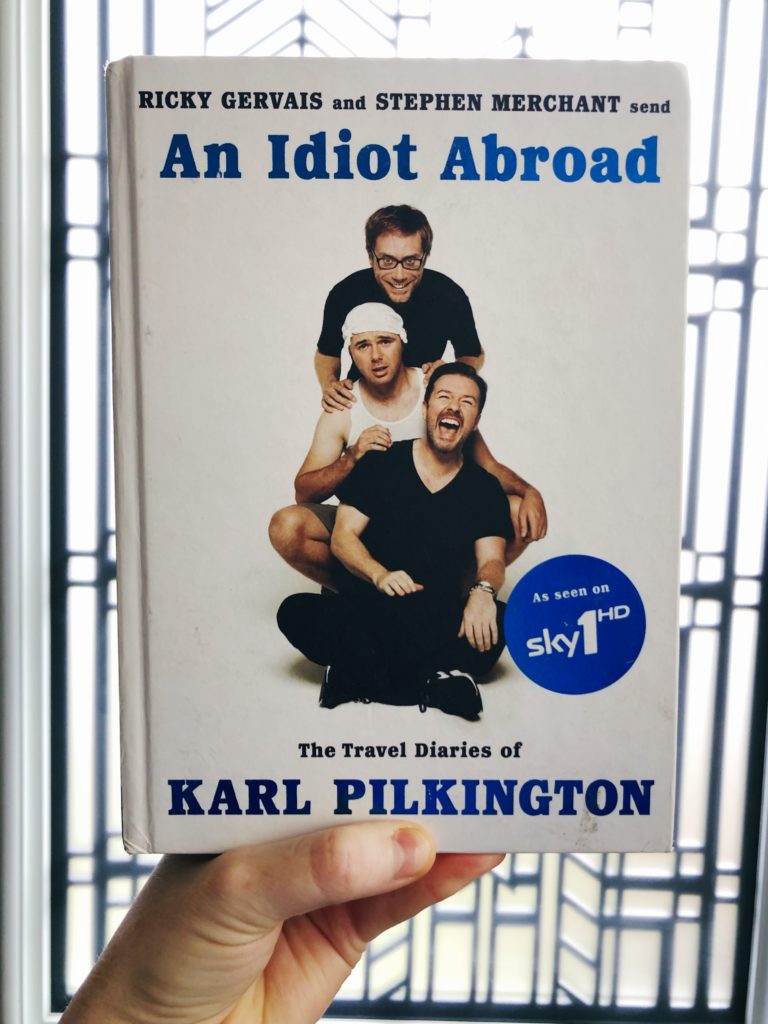
An Idiot Abroad: Travel Diaries by Karl Pilkington
Ok, I know this might be a silly one, but it is truly one of my favourite books. I grew up listening to the Ricky Gervais Show podcast, then went back to the XFM radio show archives and fell in love with Karl Pilkington. Karl is unknowingly hilarious, and his almost child-like view of the world is completely his own. Ricky Gervais and Stephen Merchant sent him around the world for a television series, also called An Idiot Abroad, to places he’d never dreamed of visiting. The book follows his tour of the Seven Wonders of the World, from the pyramids and the Taj Mahal to Petra and Machu Picchu. As a reluctant traveller, Karl has the opposite opinion to the rest of us in the travel blogging world, and that’s what makes it so funny. The show is great, but I loved the book for the extra insight into his mind and because it feels like his very own printed travel blog. There are also charming illustrations (by Dominic Trevett) and photos from his journeys, which add to the story.
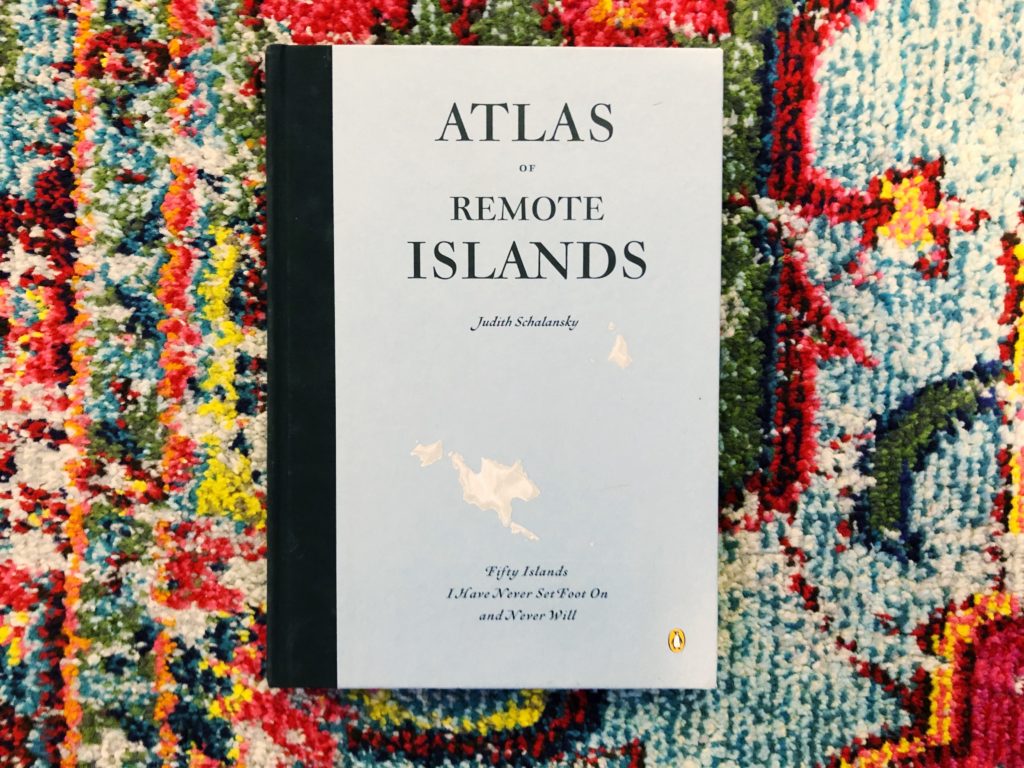
Atlas of Remote Islands by Judith Schalansky
Atlas of Remote Islands by Judith Schalansky is a charming and beautiful book (first published in German in 2009, with the English translation by Christine Lo following in 2010). When a trip feels out of reach, it brings a new perspective to visiting places in your mind. Judith’s book is all about fifty islands that she herself has never visited, and, as the subtitle promises, never will. By weaving together scientific studies and recorded historical events, she creates a snapshot of each island’s personality and character. Every island gets a gorgeously drawn cartographic view and a story to go with it. It’s a wonderful way to learn about these faraway lands from the comfort of your couch.
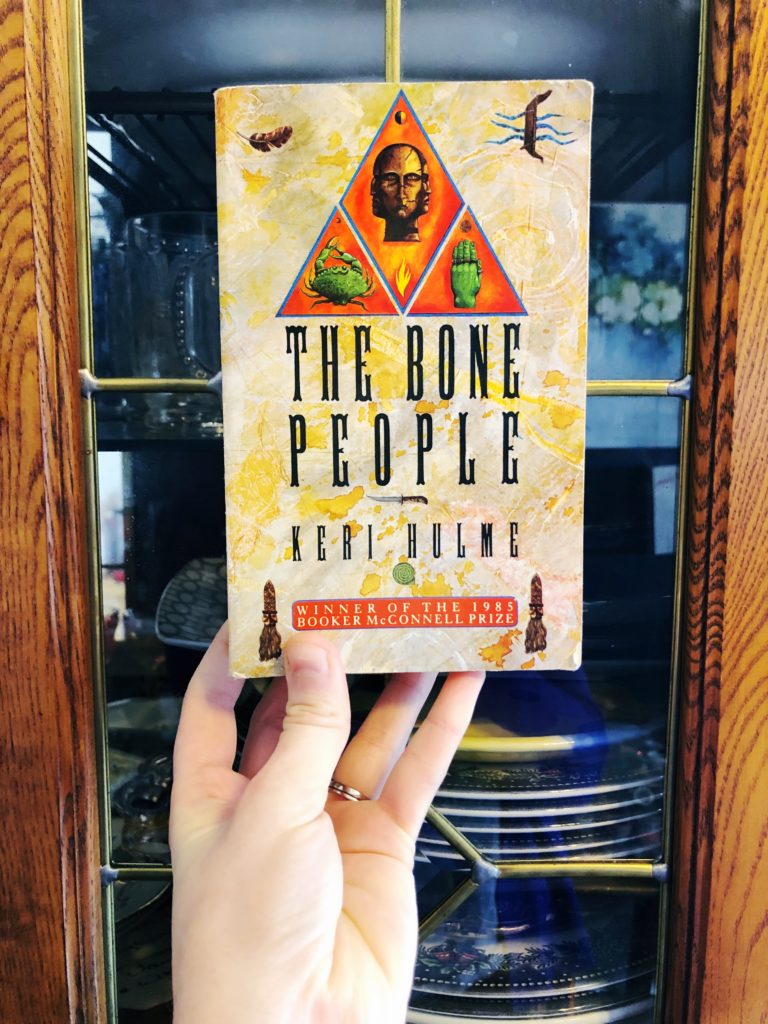
The Bone People by Keri Hulme
The Bone People is a book I read as an angsty teenager and still love to pick up. First published in 1984, it won the Booker Prize the following year, and its wildly descriptive pages transport you to the coast of New Zealand’s South Island. The story centres on Kerewin, a part-Māori artist who isolates herself in a tower by the sea, by choice, and loves the solitude. But her life is torn apart when she meets Simon, a mute child of six or seven, and his foster father, Joe. The book is emotional and riveting, and it is also a love story to the South Island and to the Māori myths that are so important to New Zealand and its people.
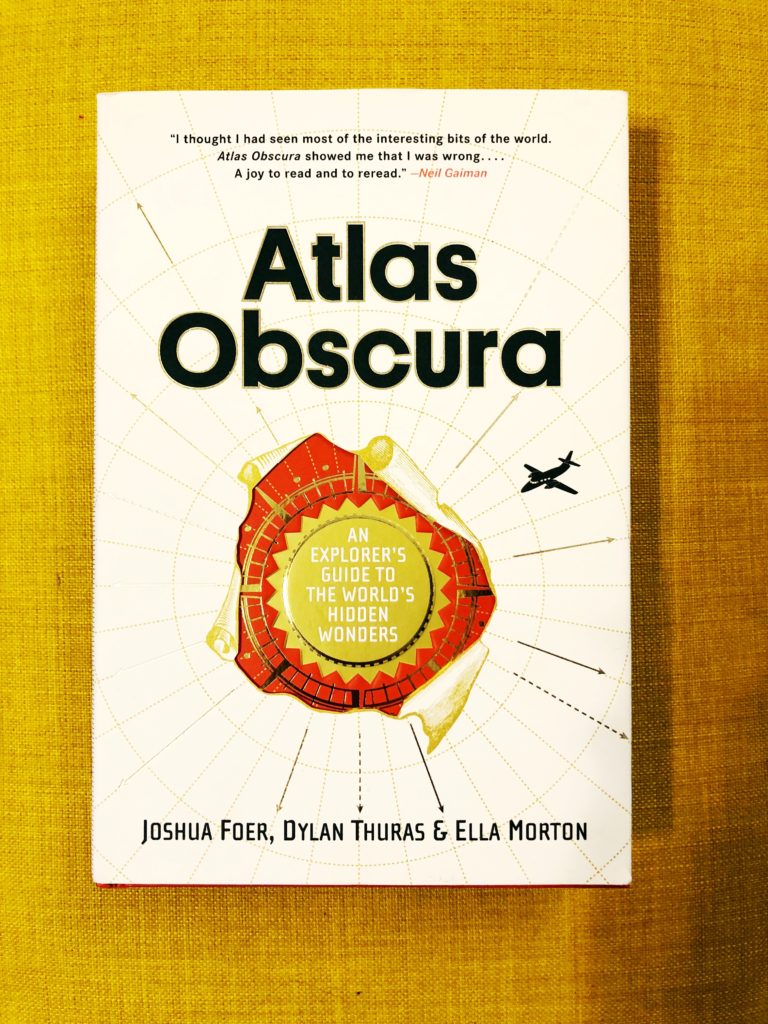
Atlas Obscura: An Explorer’s Guide to the World’s Hidden Wonders
If you’re looking for a book to pore over while you plan future travels, this is the one. Most travel books focus on the most popular and highly regarded destinations and attractions; this one catalogues the weird, wild and slightly odd experiences and collections around the world, and the 2019 second edition runs to more than 700 places. It inspired me to visit a few cities I would never otherwise have thought of travelling to, except for the one interesting exhibit or attraction to see there. And once you arrive, you find a myriad of other wonderful things as well. I treat it as a paper version of a cabinet of curiosities, with treasures from all over the world.
In A Sunburned Country by Bill Bryson
I think I left my copy of In a Sunburned Country in Australia, lost on a beach somewhere, no doubt. Luckily my library had a digital version I could borrow to get my Bill Bryson fix. Bryson is a comedic travel writer who brings his unusual personality to his travels and his writing, and I had read his other books, but this one, his 2000 book on Australia (published in the UK as Down Under), is the one I loved most. I treated it like my bible, poring over it before I moved to Australia for a year in my twenties. His descriptions of this country on the other side of the world are some of the best representations of what it is like to travel there, so if you can’t go yourself, this is the next best thing. (It’s more than two decades old, so read it for the portrait rather than as a current guidebook.)
DaVinci Code Series by Dan Brown
Almost everyone has a dog-eared Dan Brown somewhere in the house. Maybe your quirky aunt gave you a copy one Christmas and you never got around to reading it, but it’s never too late to pick it up. The overhype around these books in the media may have led a lot of people to expect more from them than they were ever meant to deliver, and I love them anyway, especially for their descriptions of art, history and the cities in which they are set. Don’t take them too seriously and you’ll have a great time. There are six Robert Langdon novels now, the most recent, The Secret of Secrets, published in 2025. My favourite is Inferno, not for the storyline but for its sumptuous descriptions of Florence, Venice and Istanbul.
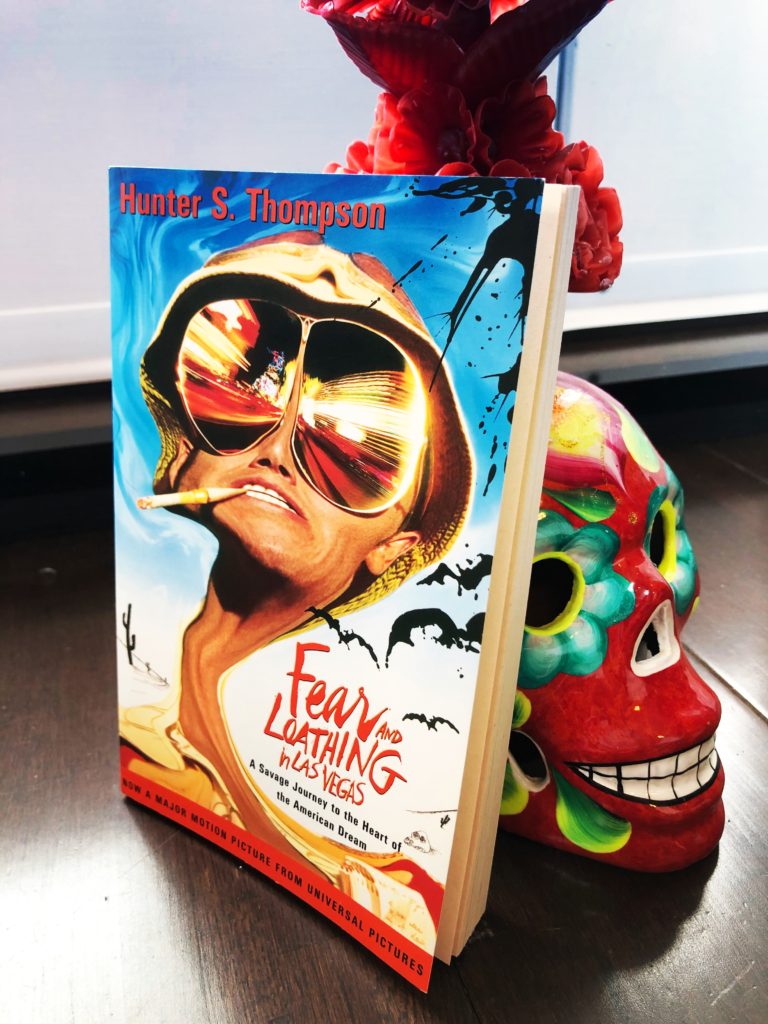
Fear and Loathing in Las Vegas by Hunter S. Thompson
Fear and Loathing in Las Vegas is one of those books you can easily read on the porch over a weekend. It’s a frantic and fantastical tale that appeared in Rolling Stone in 1971 and as a book in 1972, and it is a slightly fictionalized account of Thompson’s drug-fuelled trips to Las Vegas that spring, when he was trying to get a story, first on the Mint 400 desert race and then on a district attorneys’ narcotics conference. His descriptions are at times surreal, but I think they do a fantastic job of getting across the feeling of Vegas at that time and in that place.
A Year in Provence, Peter Mayle
This book was one of the inspirations for my trip to Provence. We rented a house in a small, non-touristy town, and although we were only there for two weeks, it was impossible not to imagine moving there for good. Mayle’s 1989 book follows his purchase of a 200-year-old stone farmhouse in the Luberon and the adventures he encounters throughout his first year of living there, month by month. As you can imagine, there is a fair share of mishaps and misadventures, but also so many joyful stories that they make you want to pack up and move to France.
The Year of Living Danishly by Helen Russell
Before a trip to Sweden, I reread this book. Although it isn’t set in Sweden, there is something fascinating about learning how Scandinavians live. The book follows British journalist Helen Russell through her year in rural Jutland, where she moved in 2013 when her husband took a job at Lego’s headquarters in Billund. Denmark was then topping the World Happiness Report rankings, so she gave herself a year to uncover the formula and see why it works, living Danishly in the meantime. It’s a great book about another country, and there are plenty of things in it that you can take and apply to your own life, wherever you happen to be.
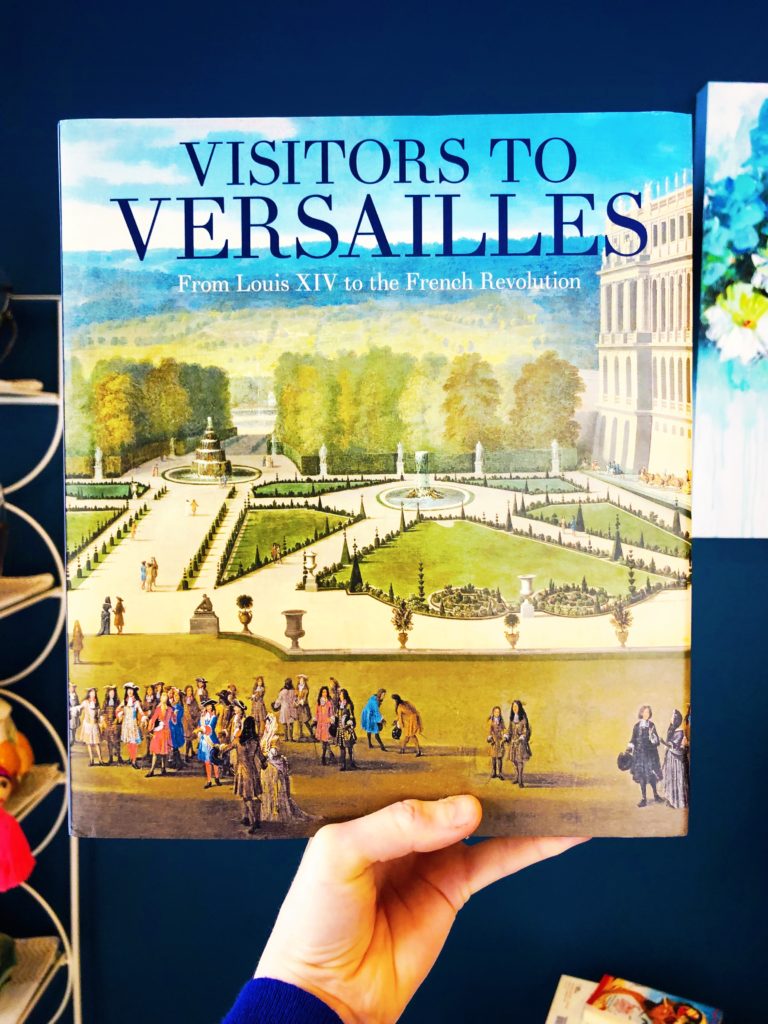
Visitors to Versailles
This was a new acquisition to my library in the spring of 2020, when I knew we would be going into self-isolation. I have a few books on the history, architecture and ornamentation of Versailles, but this one, the catalogue of a 2018 exhibition at the Metropolitan Museum of Art organized with the Palace of Versailles, focuses on the visitors who came to the palace between 1682, when Louis XIV moved his court there, and 1789. It follows the stories of ambassadors, princes and even eighteenth-century tourists as they came to see this architectural treasure for the first time, and it lets you see Versailles through their eyes at different moments in its history. It’s a gorgeous coffee-table book, full of rich photos of the clothing visitors would have worn and even (my favourite part) the souvenirs they took home, hundreds of years ago.
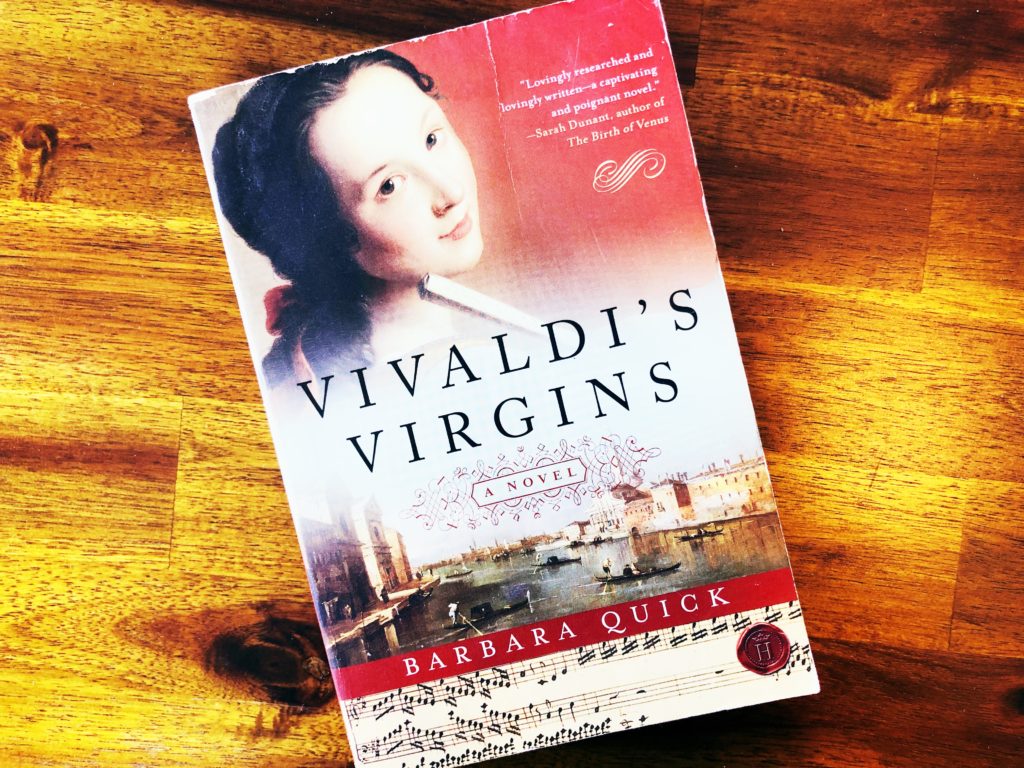
Vivaldi’s Virgins by Barbara Quick
When I was a little girl, I would fall asleep almost every night to a book on tape about Vivaldi and the school for girls in Venice where he taught. That story was meant for children; this 2007 novel follows the same theme in a much more grown-up fashion. It is rich with descriptions of eighteenth-century Venice at the height of its splendour and decadence, with art and music everywhere you turn.
The story is a fictional tale of an orphan abandoned at the Ospedale della Pietà (a convent, orphanage and music school where Antonio Vivaldi was the violin master) and her search for where she came from. The narrator, Anna Maria dal Violin, was a real violin prodigy at the Pietà, though the story here is invented. Throughout the book Anna Maria explores different parts of Venice, including a trip into the Jewish ghetto, which makes you feel you are on the journey with her and seeing these visions of Venice for yourself.
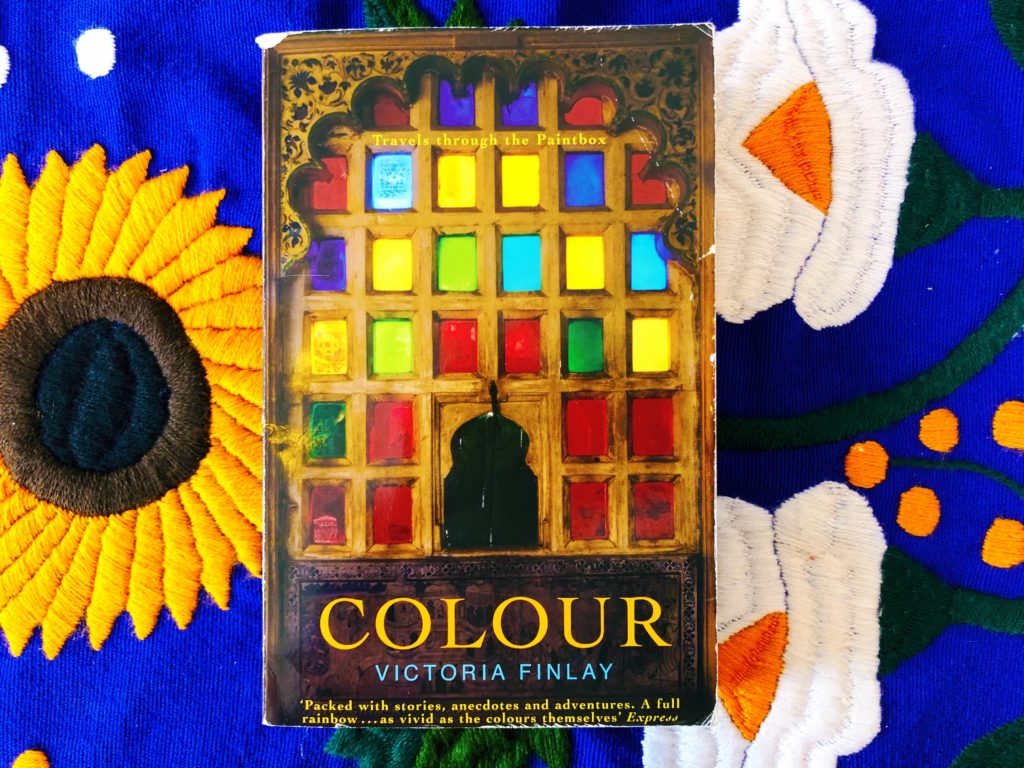
Colour: Travels Through the Paintbox by Victoria Finlay
My copy of Colour is so beat up from the many times I’ve read it, but I suppose that is the mark of a great book. Finlay’s 2002 book traces the history of colour through her travels, from Afghanistan to the Australian outback, to ancient caves in China and the saffron harvest in Spain. I first read it when I was studying the colour blue for a paper I was writing at school. The history of where colours come from, and what they have symbolized in different cultures, fascinates me, but her descriptions of the places she travels to track down these secrets are among the best parts of the book, and make it pure wanderlust.
I first put this list together in 2020, when my home library was the only way out of a stressed-out head and into somewhere else, and the books still work that way. Whenever the next trip is a long way off, they will put you in a Venetian orphanage, a seaside tower on New Zealand’s South Island, a 200-year-old farmhouse in the Luberon, or a convertible on the road to Las Vegas, all for the price of a library card. If you’ve read any of these, or have a travel book of your own that deserves a place on the shelf, I’d love to hear what it is.
Happy Travels, Adventurers

Leave a Comment