

When we bought our tickets to the Old Masters Gallery in Dresden, we noticed they also came with entry to the Mathematical-Physical Salon and the Porcelain Collection. Not wanting to miss a single thing in this spectacular city, we crossed the Zwinger to spend the rest of the afternoon in the sparkling galleries of The Porcelain Gallery. It is easy to find: the entrance sits in the Glockenspiel Pavilion, whose 40 bells chime every quarter hour and are made from the same famous porcelain on display inside.
This guide follows the story as I discovered it, through the obsession of Augustus the Strong, a king whose appetite for “white gold” built both a collection and a manufactory.

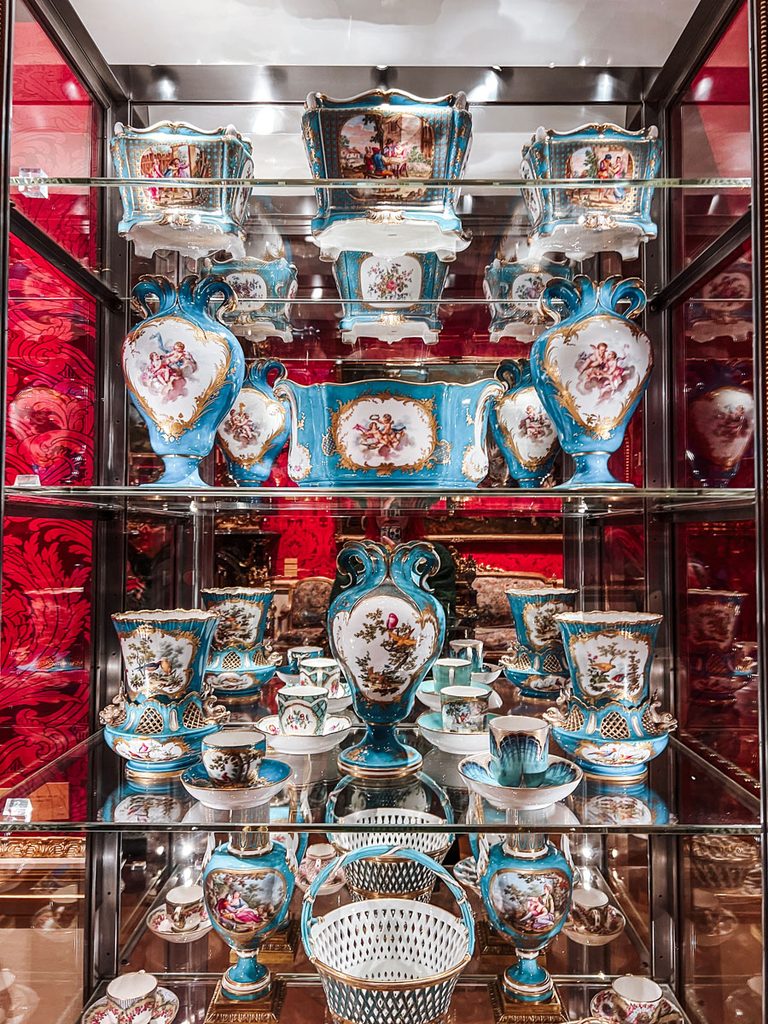
Tickets
To visit the Porcelain Collection, you will need either the Zwinger house ticket or a ticket for the collection alone. The house ticket covers the Old Masters Gallery and Sculpture Collection, the Mathematical-Physical Salon and the Porcelain Collection. It does not include the separately ticketed Zwinger Xperience exhibition or the Correggio special exhibition, which runs until 10 January 2027. The house ticket is €18 for adults and €13.50 at the reduced rate; pupils under 20 pay €2, and young children enter free. A ticket for the Porcelain Collection alone is €6 (€4.50 reduced). The collection is open daily from 11 a.m. to 5 p.m. and is closed on Mondays.
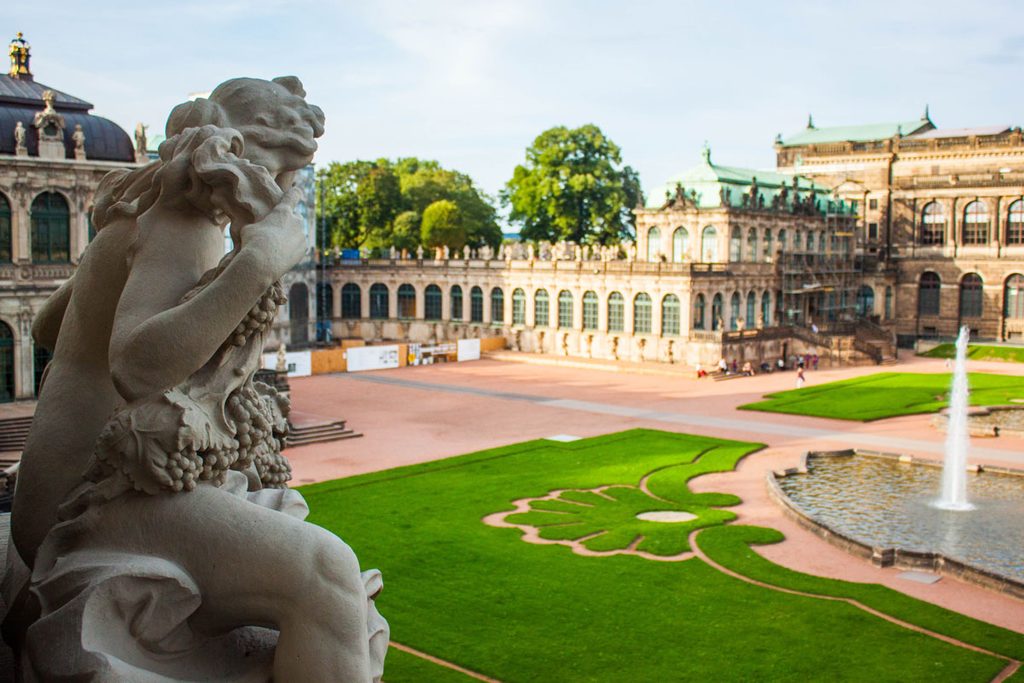
History of the Porcelain Gallery
The collection was established in 1715 by our favourite Dresden hero, Augustus the Strong. Augustus was a collector, and as the craze for all things Chinese swept across Europe, his fascination with porcelain grew into a full-blown passion. Today the Dresden collection is counted among the finest of its kind in the world. There are few places where you can stroll through galleries of world-class porcelain while looking out over the stunning baroque courtyard of the Zwinger.
About the Collection
The collection numbers around 20,000 porcelain pieces, though only a fraction is on display at any one time. Augustus the Strong was so obsessed that his passion was dubbed “maladie de porcelaine,” and the material itself came to be known as “white gold.” Long after his death, those who oversaw the collection guarded it with the same devotion. Evacuated for safekeeping during the Second World War, these delicate pieces largely survived the bombing of Dresden, and the collection has been housed in the Zwinger since 1962.
Highlights of the Collection
One of the most iconic pieces in the collection is the Dragoon Vases. They became famous in 1717, when Augustus the Strong traded a regiment of 600 dragoons to Prussia’s King Frederick William I in exchange for 151 pieces of Chinese porcelain, among them sixteen monumental blue-and-white vases from the Qing dynasty. They are classic white porcelain painted in vivid blue.
But Augustus wasn’t content to wait for his collection to be filled from China; he wanted a porcelain factory right there in Saxony. In 1708, Johann Friedrich Böttger and Ehrenfried Walther von Tschirnhaus succeeded in making the first European hard-paste porcelain, and in 1710 Augustus founded Europe’s first porcelain manufactory in Meissen. Meissen became one of the most sought-after porcelains in the world.
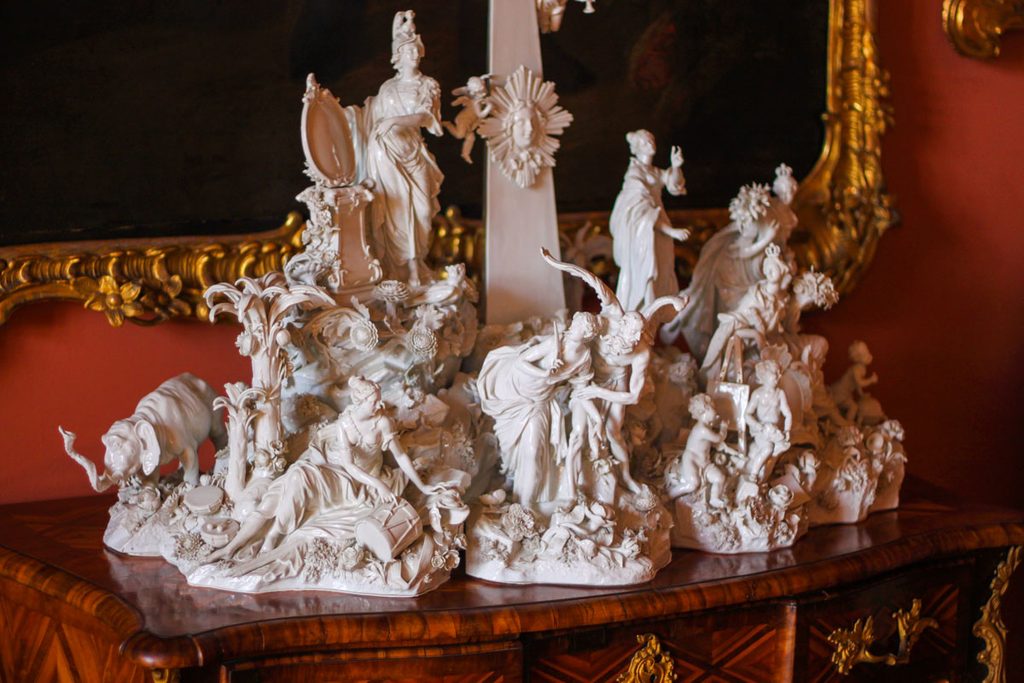
Dresden Style
Dresden never had porcelain factories of its own, but its decorating studios, which numbered around 200 before the Second World War, painted porcelain made elsewhere, often at Meissen. From these studios came a distinctive “Dresden” style of porcelain design, inspired by the figures of Meissen. Its signature touch was lace: designers added a small amount of lace around the collars or sleeves of porcelain figures, then went on to create elaborate skirts and dresses as well.
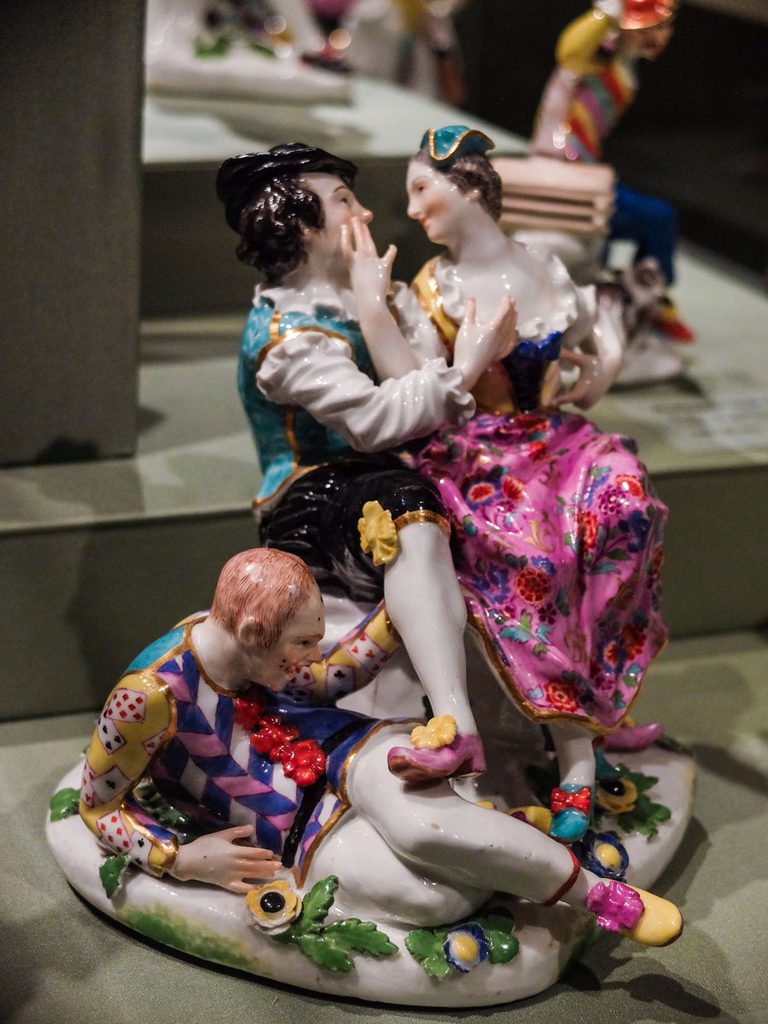
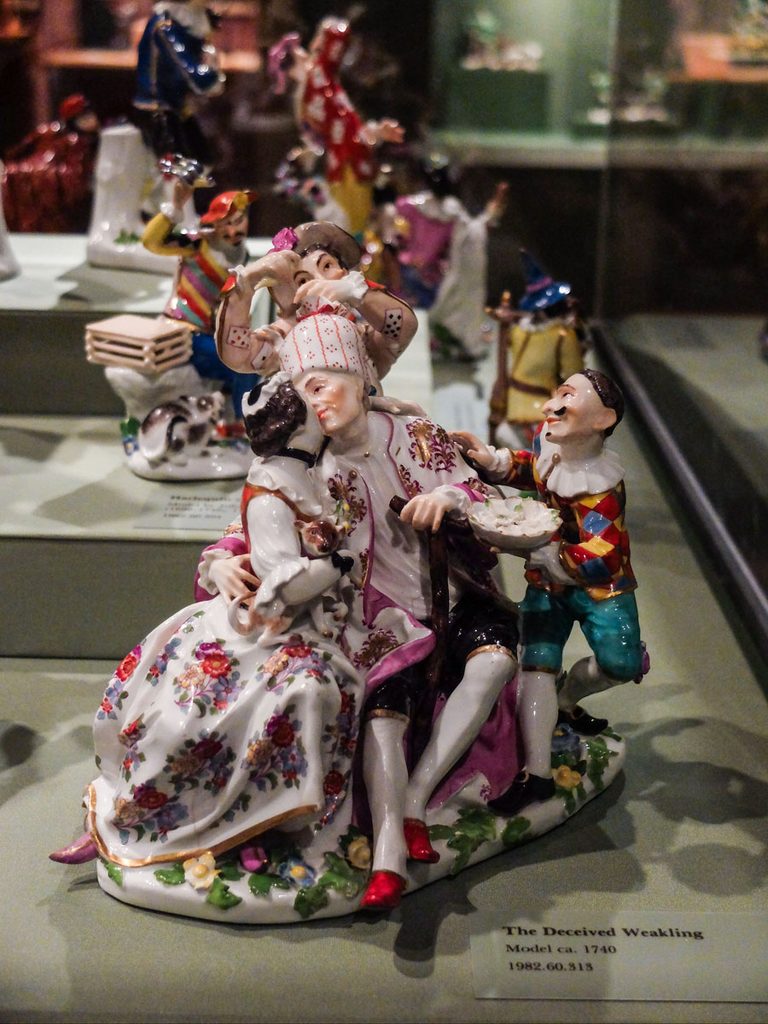
Dresden porcelain is also replete with flowers adorning gowns and hair. Its artists were known for large group scenes evoking life at court, in which elaborately dressed ladies dance with courtiers while musicians play alongside them.
Saxon Porcelain
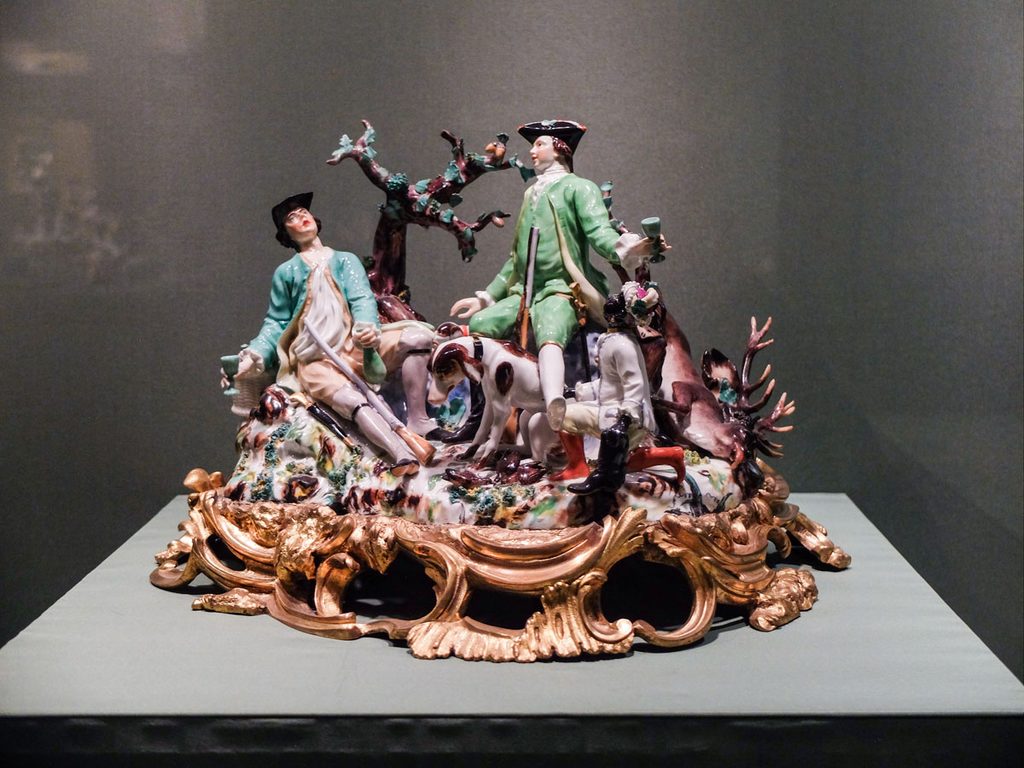
But Saxon porcelain wasn’t merely cute court scenes; Meissen also produced pieces decorated with mythology and rococo idylls. Its modellers loved sculpture too, which meant breaking out of simple vases and small figurines. The result was life-sized animals modelled after creatures owned by the Saxon king: lions and fighting dogs, peacocks and parrots, even a family of monkeys. They are now on display in a gallery dedicated to these creations.
One of my favourite pieces in the exhibit was an enormous gazebo scene. Its baroque roof, complete with cherubs peering down over the sides, is held up by little columns beautifully decorated with climbing vines and roses.
Vincennes porcelain bouquet
Another of the most interesting pieces in the collection for me was the Vincennes porcelain bouquet. The Vincennes manufactory was established in 1740 in the disused royal Château de Vincennes, east of Paris. In the spring of 1749, Maria Josepha, wife of the French heir to the throne, sent the bouquet to her father, Augustus III, Elector of Saxony and King of Poland, probably to showcase the artistry achievable at Vincennes.
The group of flowers is almost ethereal; it is astonishing that human hands could be so devoted to creating these undying blooms. Painters decorated what were originally some 470 blossoms, and the metal stems and foliage were crafted by a goldsmith. The flowers rise from a bright white porcelain base, where two little figures symbolize poetry and music. One can only imagine looking after such a precious piece of porcelain.
All in all, the Porcelain Collection is an excellent stop and a must-see for anyone visiting Dresden. If, like us, you don’t want to miss a single thing in this spectacular city, make time for the “white gold” of Augustus the Strong. It is not only a visual stunner but also tells you a great deal about the history of Dresden through porcelain.



Leave a Comment