

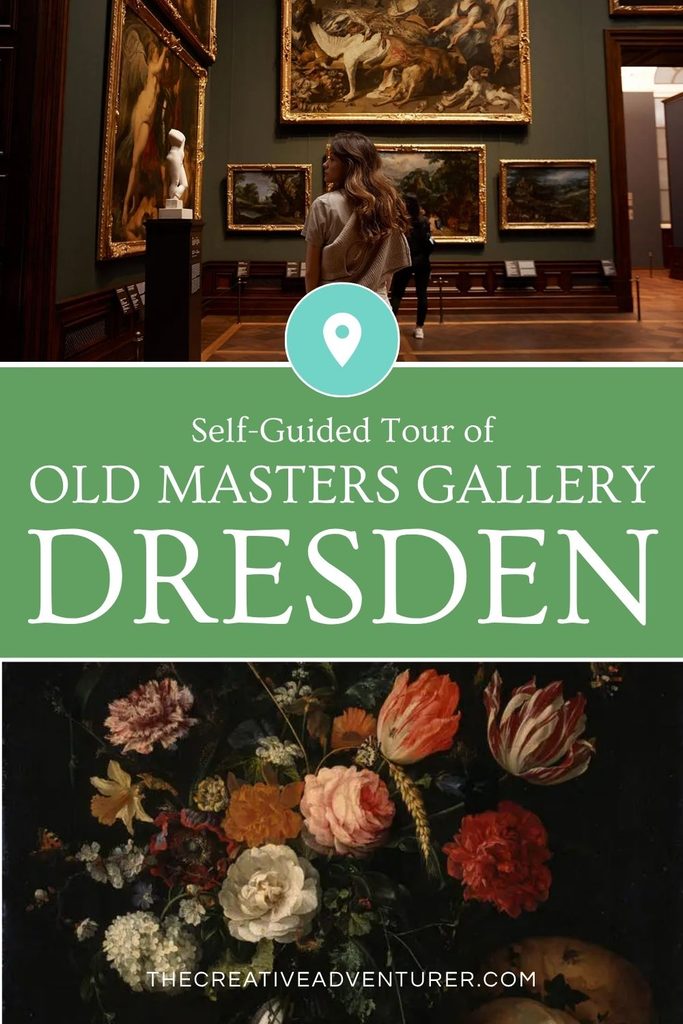
The Gemäldegalerie Alte Meister (Old Masters Picture Gallery) is one of, if not THE BEST art galleries I’ve ever visited. It doesn’t feel too big or too small. It’s like a grand old home that someone has decorated with exquisite, lovingly curated art. It may look modest beside the Louvre or the Prado, but around 750 paintings from the 15th to the 18th centuries hang here: Italian Renaissance treasures, Dutch and Flemish masters, and works by German, French and Spanish painters.


Access & Admission
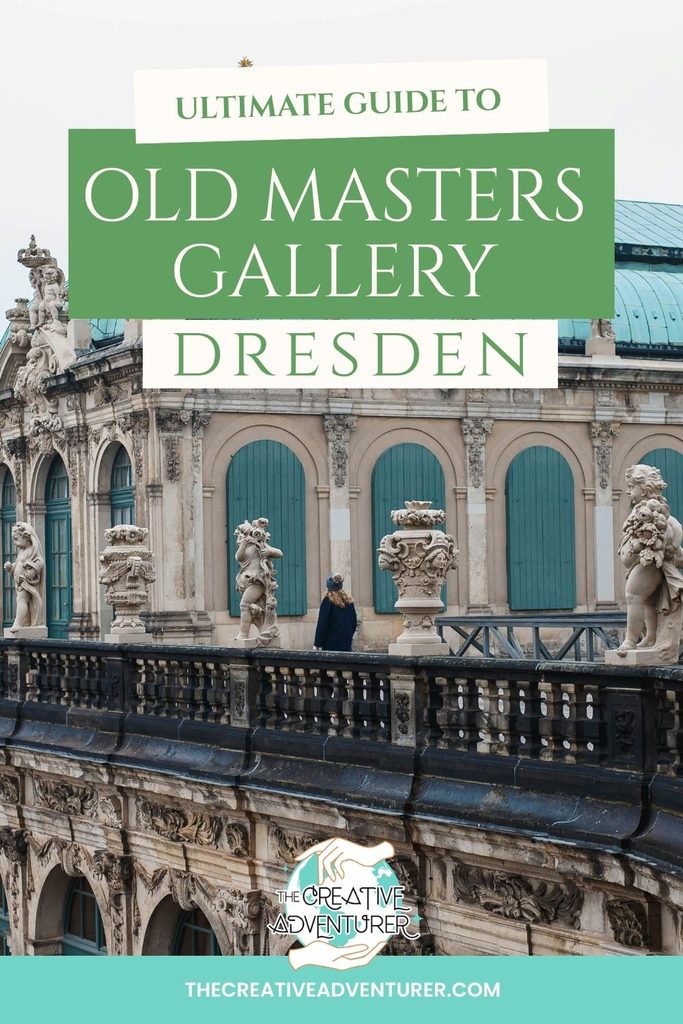
The Dresden Old Master’s Gallery is located in the heart of Dresden, Germany. It is situated in the historic center of the city, in the same building as the Royal Palace, which is now home to the state art collections of Saxony. The museum is easily accessible by public transportation, with several tram and bus lines stopping directly in front of the building. Visitors can also reach the museum on foot from the main train station, which is only a few minutes’ walk away.
| Hours | Tuesday to Sunday, 10 a.m. to 5 p.m.; closed Mondays |
| Holiday openings | Open Reformation Day (31 October) and Day of Repentance and Prayer (18 November), 10 a.m. to 5 p.m. |
| Advent hours | 27 November to 30 December 2026: Friday to Sunday, 10 a.m. to 6 p.m. |
| Closure | 22 February to 5 March 2027, for deep cleaning |
| Zwinger ticket | €18 adults, €13.50 reduced, €2 pupils under 20, free for children under school age |
| Ticket includes | Old Masters and Sculpture Collection, Mathematisch-Physikalischer Salon, Porcelain Collection |
| Special exhibition | Correggio. Movingly Human, 19 September 2026 to 10 January 2027 (combined ticket €23) |
| Accessibility | Step-free entrances via Theaterplatz and the Zwinger courtyard, with a lift beside the museum entrance |
Timing tips. Allow two to three hours for the highlights. Book online at the SKD shop to skip the ticket queue, especially in peak season. Guided highlights tours are listed at 2 p.m. on most days; check the language when booking.
Closures. The Porcelain Collection, included in the Zwinger ticket, is closed until 30 October 2026 for building work. Hours and prices change, so confirm on the gallery’s visitor page before you go.
History
The collection’s roots reach back to the Saxon electors’ Kunstkammer, founded in 1560, but its golden age came under Augustus II the Strong and his son, the aptly named Augustus III. Both had a deep appreciation for art, and their agents bought paintings from across Europe, especially from Italy, Paris, Amsterdam and Prague. By 1747, the collection had outgrown the palace and moved to the neighbouring electoral stables.
In 1838, a gallery commission invited architect Gottfried Semper, who also designed the Semper Opera House, to create a worthy home for it. Built between 1847 and 1854, the New Royal Museum opened on 25 September 1855.
The gallery closed in 1938 as war loomed. In 1945, the Red Army took most of the paintings to Moscow and Kyiv, returning them in 1955. Losses were still heavy: a 1963 inventory listed 206 paintings destroyed and 507 missing, and some 450 are still missing today.
After a seven-year renovation, the Semper Building reopened on 29 February 2020, displaying sculpture alongside the paintings for the first time since the 1880s.

Entering the Gallery
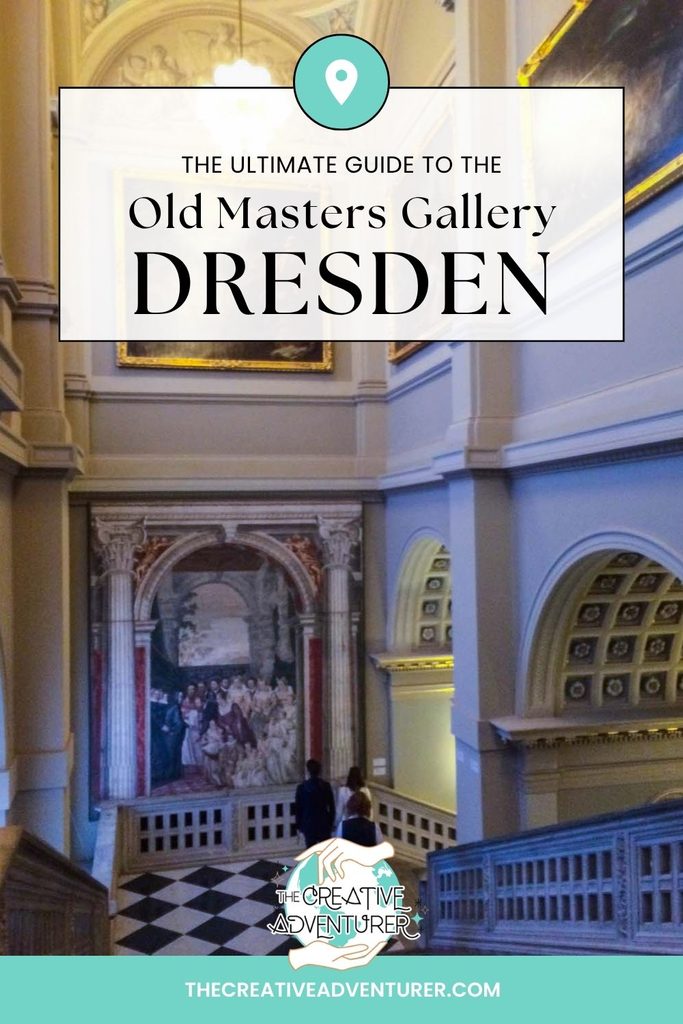
You enter through enormous carved wooden doors, three times the size of a regular door and heavy to push. Their iron handles creak as they open, and it feels like entering an old mansion rather than a modern museum. After buying your ticket, leave bags and coats in the lockers downstairs, then climb the ornate staircase to the galleries. The stairwell is painted in grisaille, a grey monochrome technique that imitates sculpture, so the plain plaster walls seem to come alive.
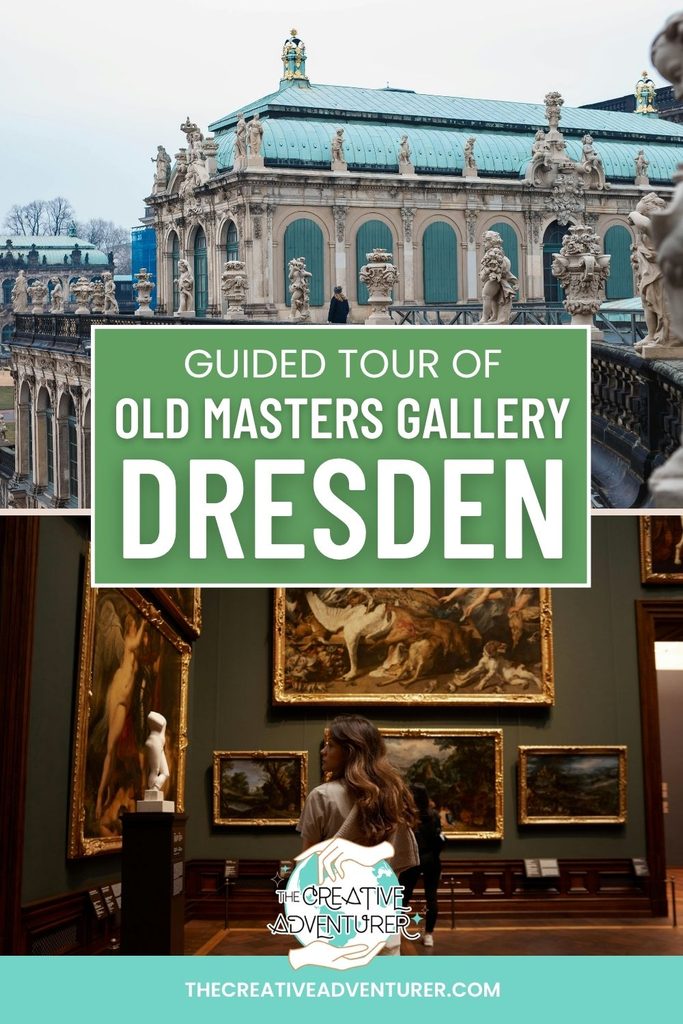
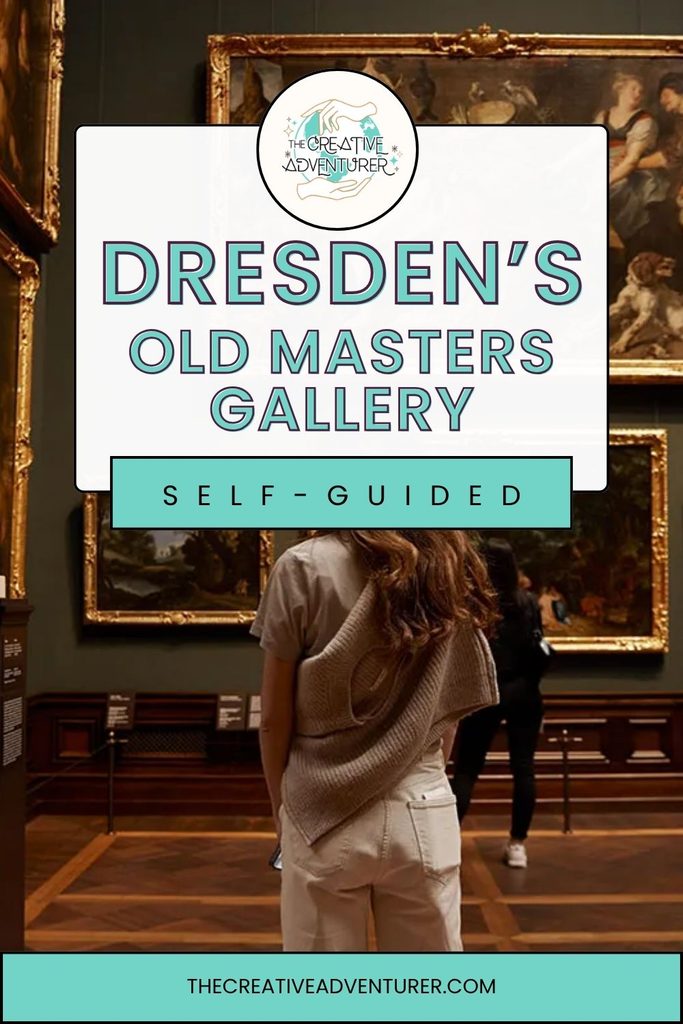
The first thing you’ll notice in the galleries is the colour of the walls. The display is chronological and colour-coded: Italian paintings hang against red, German, Dutch and Flemish works against green, and French and Spanish paintings against blue. Sculptures now stand among the paintings, inviting you to compare the two. The rooms hold far more than one visit can absorb, so here are the works whose imagery lingers longest.


The Italian Rooms
Portrait of a Boy
Bernardino Pinturicchio’s Portrait of a Boy is a fine example of Renaissance portraiture and a vivid image of childhood. The boy seems alive, his eyes meeting yours as if he had been looking away and turned, startled, to face you. He looks sad, almost annoyed: the epitome of youthful grumpiness.

The Sleeping Venus
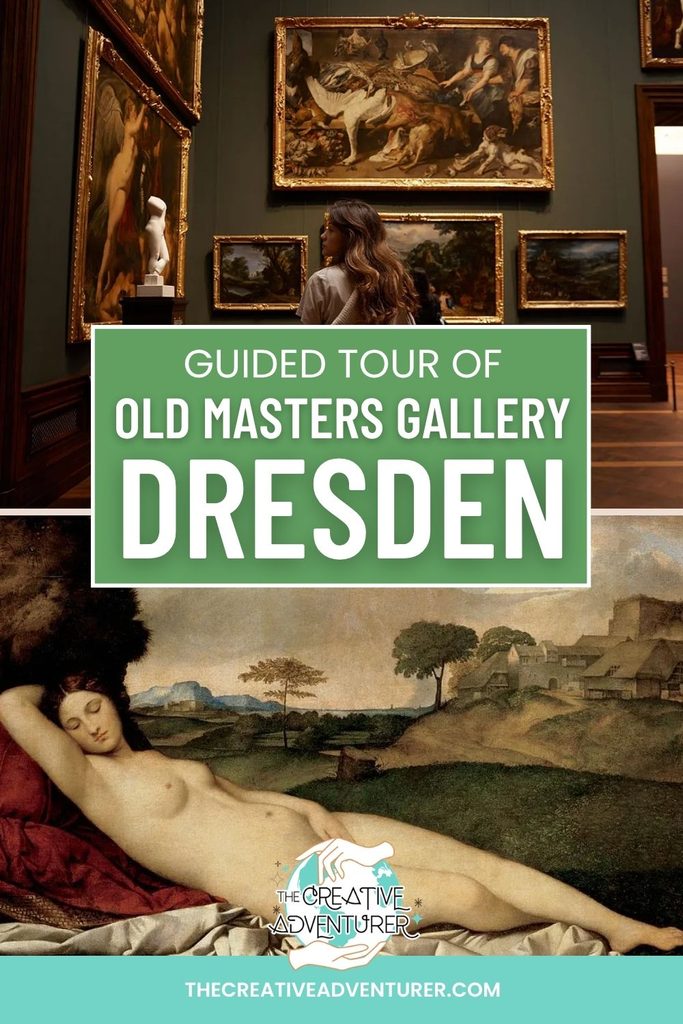
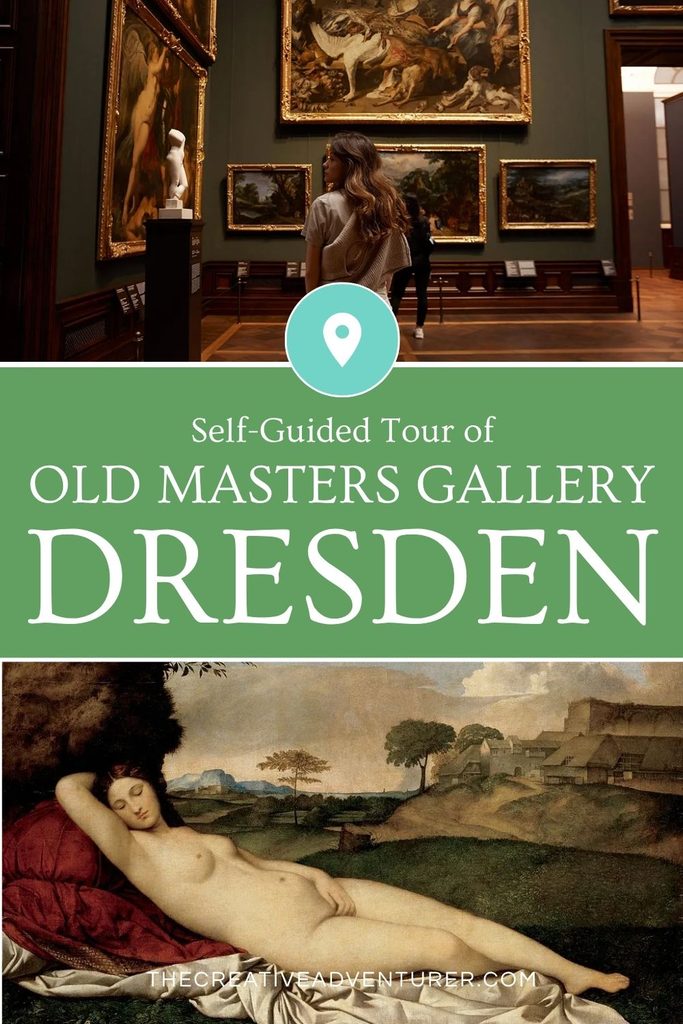
Giorgione’s Sleeping Venus, also known as the Dresden Venus, is one of the most erotic pictures in his work. In person, it’s unsettling. Her skin looks as if you could reach out and touch it, and she seems vulnerable, lying unclothed with every eye drawn to her. Giorgione died before he could finish it, and Titian completed the work.
Her nudity isn’t what makes the painting so sensual. She lies with one arm raised and her hand resting on her groin, and if you look closely, the landscape echoes the curves of her body. It feels as though she is shaping the world with the power of her body.

The Sistine Madonna
Raphael’s Sistine Madonna, also called the Madonna di San Sisto, was commissioned in 1512 for the high altar of San Sisto in Piacenza and painted around 1513–14. The red and blue of the Madonna’s robes seem to glow from across the room.
The painting was the crowning glory of the Saxon collection. Augustus III bought it in 1754, for a sum that remained the highest price paid for any painting for decades. Legend says he moved his throne so the painting would hang in the best light, though the story may be apocryphal.
The Cherubs
The most curious figures here aren’t the Madonna, the Child, St. Sixtus or St. Barbara, but the two little cherubs at their feet. They have become icons in their own right, copied on their own since about 1800 and printed on everything from posters to coasters. I’d seen these angels all over the place when I was younger and never knew they belonged to a larger painting.
According to legend, the children of Raphael’s model would come in to watch him work. He was so taken by the way they gazed up at their mother that he painted them in, staring up for eternity, awestruck at the mother of God.
The Tribute Money
Titian’s The Tribute Money shows the Pharisees’ attempt to trap Christ with a trick question: is it lawful to pay taxes to Caesar? Any answer would condemn him. Instead, Christ asks for a coin and replies, “Give to Caesar what is Caesar’s, and to God what is God’s.” You can almost feel the tension between the two men. Christ is calm, his hands relaxed despite the accusation; the Pharisee’s hands are dark and gnarled, his face wrinkled and menacing.

The Sacrifice of Isaac
Andrea del Sarto’s The Sacrifice of Isaac (c. 1527–29) is heartbreaking and full of action, as if you’ve caught the figures in the act. God tests Abraham’s faith by commanding him to sacrifice his only son, Isaac. Abraham is prepared to obey, but God sends an angel to stop him.
The faces make this painting. Look at the fear in Isaac’s eyes: he looks right at you, as if calling for help. Abraham has a tear in his swollen eye, and his mouth hangs open with relief as the angel proclaims that his son shall live.

The Archangel Michael Vanquishing the Devil
Tintoretto loved crowded, theatrical scenes, and this one is a brilliant example. Divine light saturates the scene as the angels drive away Satan, shown as a seven-headed dragon. One angel thrusts a lance to cast him back into hell, forming the diagonal that gives the painting its momentum.
The German, Netherlandish and Flemish Rooms
The Dresden Triptych
The early Netherlandish painter Jan van Eyck completed the Dresden Triptych, a tiny hinged altarpiece, in 1437. Given its size, it may have been used for private prayer at home or as a portable altar for a wealthy clergyman. A golden frame engraved with script surrounds the panels, protecting the painting as much as showing it off.
The central panel shows the Virgin and Child enthroned inside a magnificent church, beneath a canopy flanked by ornate columns in dark red, orange and grey. Mary wears a richly embroidered dark red gown, the most eye-catching part of the panel, and you are drawn straight to her. Against it, the naked Child stretches out his hands, as if inviting you to come to him.

St. Catherine
St. Catherine and the Archangel Michael stand on the wings. Compared with the shadowy church where the Virgin sits, both are bathed in holy light from the stained-glass windows behind them, and both have dressed in their finest to meet the Christ Child. Catherine appears as the princess she was before her martyrdom, her hair worn down and crowned with a tiara.
The blue of her dress seems to sparkle in the light, as if God were honouring her sacrifice by making her saintly form the height of her earthly beauty. But her trials are not forgotten. At her feet rests the wheel on which she was tortured, and against the wall rests the sword that beheaded her.

St. Michael
St. Michael wears brightly coloured armour studded with jewels, but his outrageously coloured wings are the real marvel. Almost bird-like, they make him all the more fantastical. He stands upright with lance and helmet in hand, in service to the Virgin and Child.
As in many devotional paintings, the donor appears too, with St. Michael’s hand resting on his shoulder. His hands are folded in prayer, and he wears a long green cloak like those of the Burgundian court, trimmed with fur and topped with a red velvet hood: clues to the kind of man he was. He gazes at the Christ Child with devotion, honoured to be in his presence.

Lucas Cranach the Elder
The gallery holds 58 works by Lucas Cranach the Elder, his son Lucas Cranach the Younger and their workshop, the world’s largest collection of Cranach paintings. Look for the Catherine Altarpiece of 1506, which tells the story of women martyred for their faith. The central panel shows the martyrdom of St. Catherine. On the left wing stand St. Dorothea, St. Agnes and St. Kunigunde; on the right, St. Barbara, St. Ursula and St. Margaret.
The Drunken Hercules
In contrast to the delicate beauty of the van Eyck, Peter Paul Rubens’ The Drunken Hercules is a rough portrayal of a fall from grace. Hercules, the hero of so many great stories, has succumbed to drink. The wine has robbed him of his strength, and he needs a satyr and a nymph to guide him safely through the forest. The moral seems clear: drinking too much can topple even the strongest of us. But the painting also suggests that even the powerful must fall, and that those close to us will carry us until we regain the strength to face a new day.

The Dutch Rooms
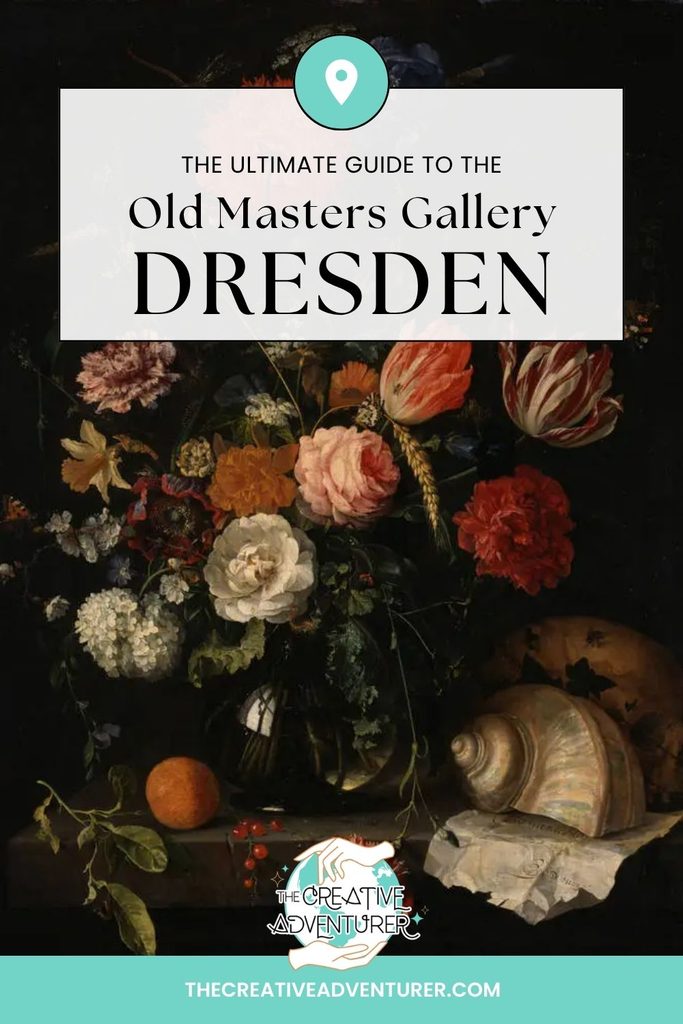
Memento Mori
Among the Dutch still lifes, look for Jan Davidsz. de Heem’s Memento Mori (c. 1655–60), Latin for “remember death.” Still lifes of this period arranged flowers, food, drink and objects in a balanced composition against a dark background. Study the symbolism of every grain of sand, rose petal and seashell, though, and you’ll find far more beneath the surface. Flowers in full bloom, their leaves eaten by insects and on the verge of death, remind us not to waste time on vanity and empty splendour, but to strive for virtue in all we do. The stalks of grain on the table symbolize the Resurrection.

The Procuress
Johannes Vermeer’s The Procuress (1656) is a frank, uncomfortable look at women’s plight in the 17th century. In the foreground, a man, perhaps a soldier, fondles a young woman’s breast in full view of the room as he drops a coin into her outstretched hand. The scene is thought to take place in a brothel. Behind them, the procuress, an older woman in black, smiles at the transaction. The grinning man at far left is often identified as a self-portrait of the 24-year-old Vermeer, though this remains speculative.
The young woman in yellow smiles meekly, her cheeks flushed red. The figures are pressed so close together that the scene feels claustrophobic. Much of the frame is taken up by an oriental rug painted almost to the point of photorealism, its beauty at odds with the scene above it. It is heart-wrenching, honest and beautifully painted.

Girl Reading a Letter at an Open Window
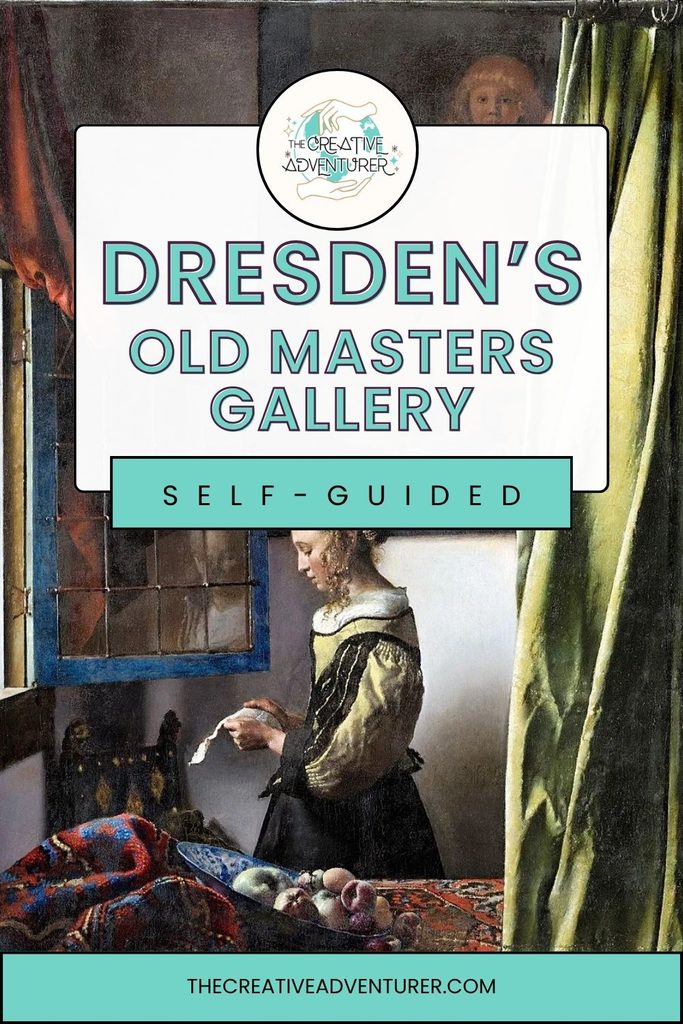
End your route with Vermeer’s Girl Reading a Letter at an Open Window (c. 1657–59), one of his earliest interiors with a single figure. It shows the intricate detail and realistic light he is celebrated for. A young woman stands at an open window, gently holding a letter.
The painting you’ll see today is not the one visitors knew for centuries. A 1979 X-ray revealed a full-length Cupid hidden on the wall behind her. Experts long assumed Vermeer had painted it out himself, but tests in 2019 proved another hand covered it decades after his death. The restoration, completed in 2021, uncovered the Cupid as a painting within the painting. He tramples a mask underfoot, often read as love triumphing over deception, which leaves little doubt that love is the letter’s subject. Is her lover promising to stay, or calling things off once and for all? Vermeer leaves that for you to decide.

Café Algarotti
If you need a break, stop at Café Algarotti in the Zwinger’s German Pavilion. Added during the renovation, it overlooks the Zwinger courtyard, the perfect place to rest, recharge and people-watch.
Like a grand old home, the Old Masters Gallery rewards an unhurried visit. Whatever draws you in, from Raphael’s cherubs to van Eyck’s jewel-like triptych to Vermeer’s newly revealed Cupid, these walls hold treasures you won’t find anywhere else. Don’t miss them on your next trip to Dresden.


Whatever you are drawn to within these walls, you’ll surely find something unique. This collection of artistic treasures is indeed a wonder and should not be missed on your next trip to Dresden.
From the red-walled Italian rooms to Vermeer’s quiet window, the Old Masters Gallery unfolds like a walk through a grand old home, each room revealing another treasure. Raphael’s cherubs, van Eyck’s jewel-like triptych and Vermeer’s newly revealed Cupid are reason enough to visit, but the works you discover on your own may linger longest. Give yourself a few unhurried hours here on your next trip to Dresden.
Happy Travels, Adventurers



Leave a Comment