
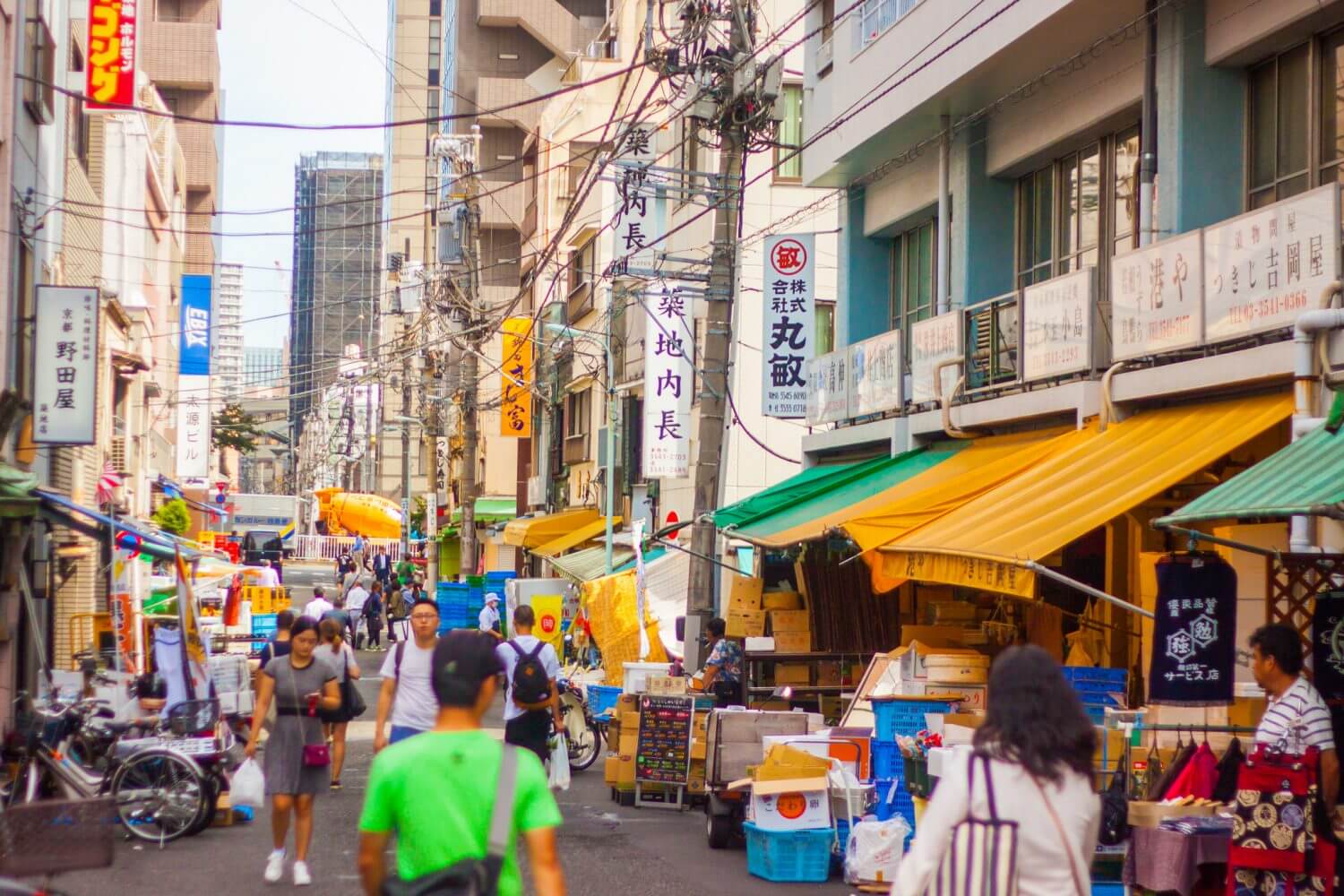
Since the early 19th century, visitors have come from all over Japan (and the world) to visit the famous Tsukiji Market. Crowds of people walked through aisles upon aisles of freshly caught seafood. They witnessed the buying and selling of seafood before it landed on their dinner plate in restaurants across Tokyo. But in 2018, the Tsukiji Market closed its doors as it had outgrown its warehouse in Tsukiji. It moved to a new custom-built building in Koto City and was renamed the Toyosu Fish Market. But despite the wholesale fish market moving out of the neighbourhood, the Outer Market in Tsukiji remains.

This outer market grew up around the Tsukiji Fish Market. It supported the local and tourist populations gathering in this part of Tokyo. The narrow streets and alleys around the market housed some of the best casual restaurants and tiny street food vendors that served fish straight from the market. It also was (and is) where you could find great shopping for kitchen and household goods! Contrary to popular thought, this part of town did not disappear along with the fish market’s move to Koto City. The Tsukiji Outer Market is still a bustling area of Tokyo, even without the fish market nearby. So don’t miss this amazing foodie paradise, and make sure you follow our guide to the best of the Tsukiji Outer Market.
This guide follows one perfect morning through its narrow alleys, from a sushi breakfast with the locals to grilled scallops, a bowl of strawberries and a painted plate for the shelf at home, and ends at a small shrine a short walk away. Come hungry, and bring an appetite for getting happily lost.

What is the Tsukiji Outer Market?
The Tsukiji fish market opened in 1935 to replace the Nihonbashi fish market, whose roots reach back to Edo-period Tokyo and which was destroyed in the 1923 Great Kantō earthquake. For more than eighty years, visitors came from all over Japan (and the world) to walk through aisles upon aisles of freshly caught seafood, witnessing the buying and selling before it landed on dinner plates in restaurants across Tokyo. In October 2018, the wholesale market closed its doors, its old facilities too aged and crowded, and moved to a new purpose-built home in Koto City, reopening as the Toyosu Market. But the neighbourhood around it did not disappear along with it.
The Outer Market grew up around the fish market, serving the local and tourist crowds who gathered in this part of Tokyo. Today it is a bustling tangle of roughly 460 shops, grocers and small restaurants squeezed into a few narrow alleys. Some of the city’s best casual restaurants and tiny street-food vendors serve fish delivered each morning from Toyosu, and it is also where you’ll find great shopping for kitchen and household goods. The streets explode with colour and excitement, and vendors call out to one another and to passers-by, making the place feel full of life even in the early hours of the morning.

How to Get to Tokyo’s Tsukiji Outer Market
The market is a short walk from Tsukijishijo Station (Toei Oedo Line, Exit A1), Tsukiji Station (Tokyo Metro Hibiya Line, Exits 1 and 2) and Higashi-Ginza Station (Hibiya and Toei Asakusa lines). From JR Shimbashi Station, allow 15 to 20 minutes on foot.

Hours
Hours: Each shop sets its own, but most open in the early morning and close by early afternoon. Shops that supply restaurants start at dawn and wind down around 9:00, so general visitors should arrive after 9:00. The market is liveliest from about 9:00 to 13:00.
Start with Breakfast
Tamagoyaki
Begin with tamagoyaki, the rolled, freshly made Japanese-style omelettes sold hot on skewers. At roughly ¥150 to ¥250 a skewer, they are a delicious way to start the day, or just a mid-afternoon snack. Whole blocks are sold too, and they’re great to share with friends.

Fresh Sushi
The outer market is the perfect spot to grab a bit of breakfast. Look for a sushi bar with a bunch of old locals eating inside, and know that a line out the door is a surefire sign of a good one. The fish may no longer arrive door to door from the market next door, but these counters still bring in the same selection, just from a little further afield.
Tsukiji Itadori Bekkan
Tsukiji Itadori Bekkan is one of the most popular spots in the outer market for sushi and sashimi. The chef prepares each piece to order at the counter, so you know it’s fresh. It’s on the more expensive side, but the made-to-order experience is part of the draw. The chef’s seasonal selection of ten pieces of sushi and a roll has run about ¥5,100, and the Nagomi plate of seven pieces and a roll about ¥3,600, so confirm current prices at the counter.
Maguro / Tuna
Tuna is one of the most famous fish of the old market, and its celebrated auction now takes place at Toyosu. Early risers can watch the bidding wars break out over the best fish of the day, roughly 5:30 to 6:30 a.m. on market days, from a free viewing area. To see what all the fuss is about, seek out some fresh maguro on sushi or as sashimi back in Tsukiji. Variety plates often feature bluefin in different cuts, such as fatty, medium fatty and lean, a great way to find your favourite so you know what to order next time. Tuna isn’t cheap, and a premium tasting can run to several thousand yen.
Kaisendon
Kaisendon is a favourite market breakfast: a bowl of rice (“donburi”) topped with a variety of raw, fresh seafood (“kaisen”) served as sashimi. You’ll find it throughout the market, and every shop has its own take on the dish. Expect a variety of fish, from fatty tuna and shrimp to egg and the day’s other fresh catches. Bowls range from roughly ¥1,500 to ¥5,000, depending on the toppings.
Graze Your Way Along the Lanes
Grilled Scallops & Fresh Oysters
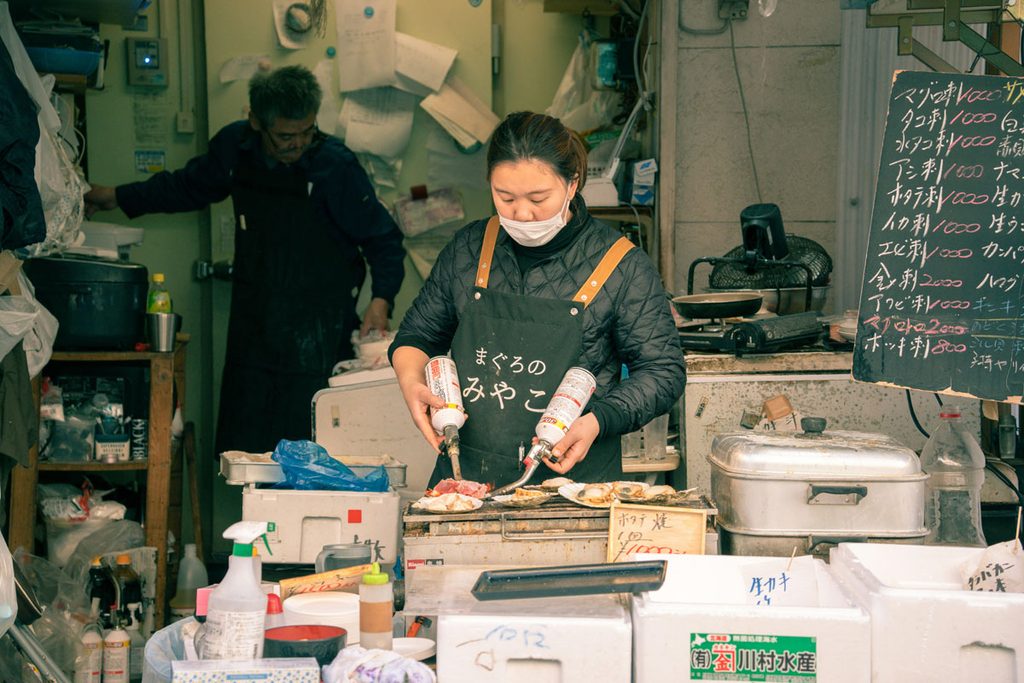
If you’re a seafood connoisseur and want the best of the best, plenty of shops here will be right up your alley. One of the most popular street foods in the Outer Market is a fresh scallop grilled to order. The grilling gives it a delicious smoky flavour that balances the scallop’s sweetness perfectly, and it generally runs ¥500 to ¥1,000 a skewer, more with toppings such as uni.

Another delight of the market is its larger-than-life oysters. Delicious, clean and fresh-tasting, they cost roughly ¥700 to ¥1,200 each.
Uni
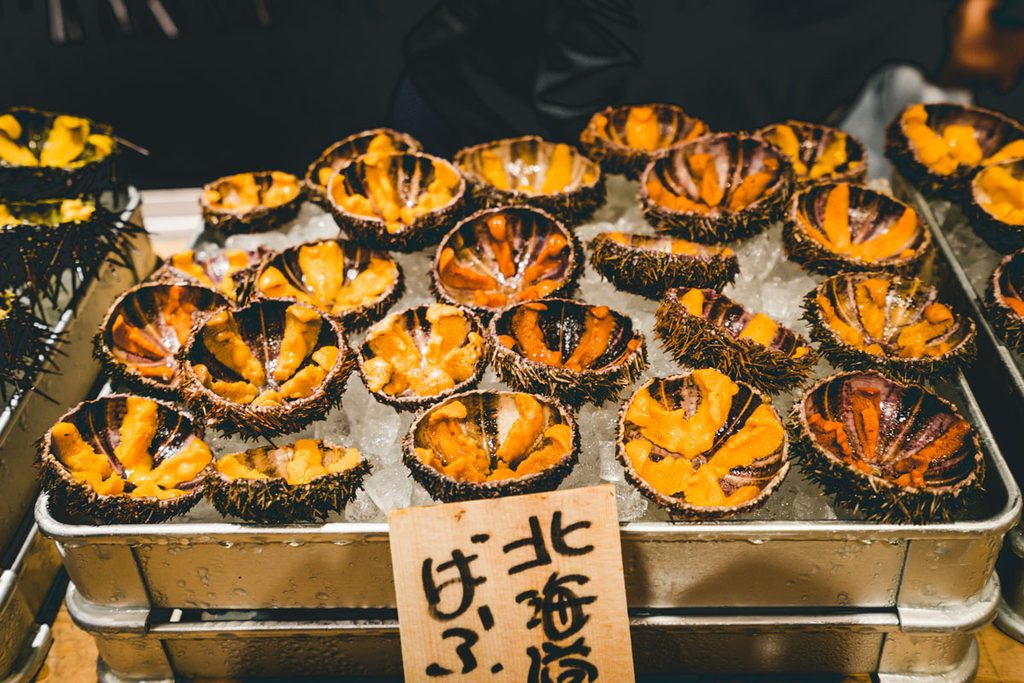
One of the most uniquely Japanese delicacies has to be fresh uni. Uni, or sea urchin, is the edible portion found inside the spiny shell. Its flavour is rich and almost buttery, with a briny taste of the sea, and the market is one of the best places to try it fresh. Several spots serve it on its own, or on sushi rice if you’d like to ease in. Uni is on the pricey side, with a portion generally starting around ¥1,500, but a single piece of uni sushi costs much less.
Unagi
Another traditional dish served in the market is unagi, freshly grilled eel slathered in a thick, sweet and savoury sauce that caramelizes over the fish as it cooks on a hot grill. You’ll find it on skewers around the market. If you’ve never had unagi, this is a great opportunity to try it.
Wagyu
Another item many visitors come looking for is wagyu beef. Wagyu is the name for four Japanese breeds of beef cattle (Japanese Black, Brown, Polled and Shorthorn), prized for tenderness and marbling. In Tsukiji you’ll see lots of stands selling skewers of wagyu, and some shops sell thinner slices you can pick out and have cooked right in front of you. A restaurant is the better place for a full serving, but if this is your only opportunity, pick out a small slice and taste this pedigree cut at least once.
Fresh Strawberries
Finish with something sweet, starting with fruit. Tsukiji has long had a wide selection of fresh fruit vendors, and is there anything more precious than the delicately wrapped fruits of Japan? The strawberries are the one to try, especially in season. Japan is well known for its perfectly grown strawberries, and while they may seem pricey, they are spectacular. Some vendors even sell white strawberries, which are unusual and sweet. Prices vary by variety and season.
Ice Cream
Soft-serve ice cream turns up along the streets in a range of flavours, with vendors ready to hand a sweet treat to anyone walking by, even on colder days.
Daifuku Mochi
Mochi is a favourite Japanese sweet, a chewy rice cake made by pounding steamed glutinous rice and often wrapped around fillings like matcha or sweet red bean paste. In Tsukiji you can find strawberry daifuku, with the mochi wrapped around a whole fresh strawberry that amps the flavour up to 100!

Shop for Souvenirs
Knife Shops
The Tsukiji Outer Market is home to many stores selling specialty chef’s knives and kitchen utensils. Most opened to serve the sushi chefs preparing their fish, but today they are a little broader and open to everyone. Inside you’ll find professional-grade knives, and Japanese knives are renowned around the world. If you’re looking to upgrade your kitchen collection, this is a wonderful souvenir to treat yourself to, something you’ll use for the rest of your life.
Ceramics
The ceramics were my favourite thing to browse in the market. They were inexpensive, and the designs were incredible, with vibrant colours and intricate painted patterns, each a little different from the next. Pick out your favourite pattern from each shop and, by the end of the day, you’ll have a little collection of perfectly mismatched pieces, which is exactly what makes it so charming.

Spices & Dried Goods
Tsukiji is also a wonderful place to shop for spices and dried goods. One of the best things to look for is furikake, a dry Japanese condiment of seaweed flakes, sesame seeds, dried fish and other seasonings. Furikake is sprinkled on top of rice, vegetables and anything else you like, and the bags you’ll find in the market’s dried-goods shops make a great gift to bring home.
End at Namiyoke Inari Shrine
A short walk from the market, the small Namiyoke Inari Shrine makes a quiet last stop. The shrine dates to 1659, and its name means “protection from waves,” a nod to its legendary origin: according to legend, the waves that had been washing away the reclaimed land calmed after the locals built a shrine for a sacred object seen floating on the water. After the fish market came to Tsukiji, the shrine became its unofficial guardian, watching over the marketplace and its traders. Although the wholesale market has moved on, the shrine remains. Its courtyard is dotted with memorial plaques and carvings donated by the market’s trade groups, and visitors still come to pray for safety at sea and prosperity.
Get Lost on Purpose
One of the best things to do at the Tsukiji Outer Market is simply to explore. Get lost, and you’ll always discover something fantastic. The smells change from alley to alley: sweet, sour, fishy, spicy and pungent, a feast for the senses.
Since the wholesale market left, the area has felt a little more local. It’s still immensely popular with tourists, but it’s equally a spot for locals to grab something to eat on their way to work. You’ll pass hundreds of people picking up a snack before they board the train, and mothers pushing prams as they do the morning shopping. I love watching locals do their thing, living in their city, and seeing a place the way it was meant to be experienced: not as a guest, but as a neighbour.

One of the greatest things to do while walking around the Tsukiji Outer Market is exploring. Get lost, and you’ll always discover something fantastic. The smells from each alleyway changes from street to street. Sweet, sour, fishy, spicy and pungent. A feast for the senses.

That is one perfect morning at the Tsukiji Outer Market, from a hot skewer of tamagoyaki to a sushi breakfast beside the locals, grilled scallops on the lanes, a bowl of strawberries, a painted plate for the shelf at home and a quiet moment at the shrine. The market is busy, loud and unmissable, so carve out time on your next trip to Tokyo, arrive early and hungry, and let the alleys do the rest.
Happy Travels, Adventurers!





2 COMMENTS
Dora
8 years agoHi! Ive been searching everywhere for the ceramic shop that you mentioned in this blog. I’ve made a few purchases during my previous trip from this ceramic shop, but now I can’t seem to find it!
I’m not sure if it hs closed down since the Tsukiji fish market has moved. I don’t even know the name of the shop so I’m thrilled to see your post about this shop in particular! Love this shop!
Was wondering (and hoping) you know the name of this shop so that I can go make my purchases of these incredible pieces! I only have 2 more days left in Tokyo 🙁
laura.f.whelan@gmail.com
8 years agoHi Dora! Unfortunately, I don’t know the name of the shop, but there are lots of ceramic stores around the market so I’m sure if the one you’re looking for is gone you’ll be able to find something similar near by.