
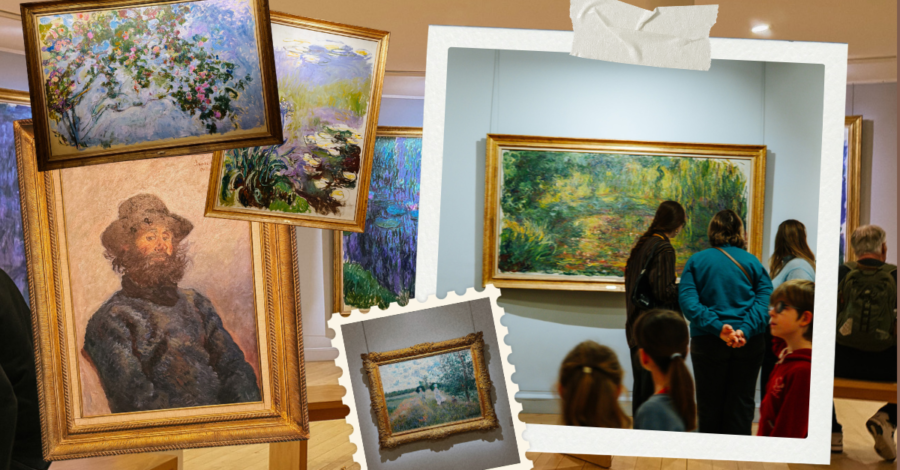
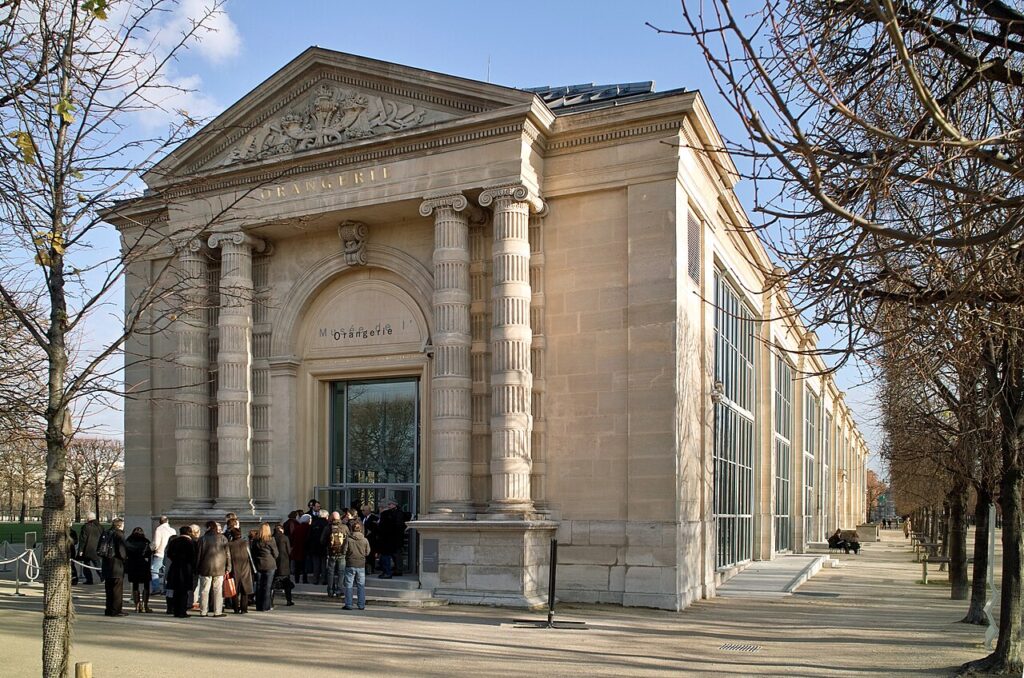
Paris is one of the best cities in the world for art lovers, but among the big-name museums, some true hidden gems fall by the wayside. Too many people queue for the Musée de l’Orangerie because they’re told they have to. It sits at the western edge of the Tuileries Garden, squarely on the tourist circuit, and the draw is Monet’s Water Lilies rooms. But 20 minutes away by metro is the Musée Marmottan Monet, which holds more than 100 Monet paintings, the largest collection in the world. It isn’t empty, but it’s the kind of place where you can stand in front of a painting, stay as long as you like, and hear yourself think.
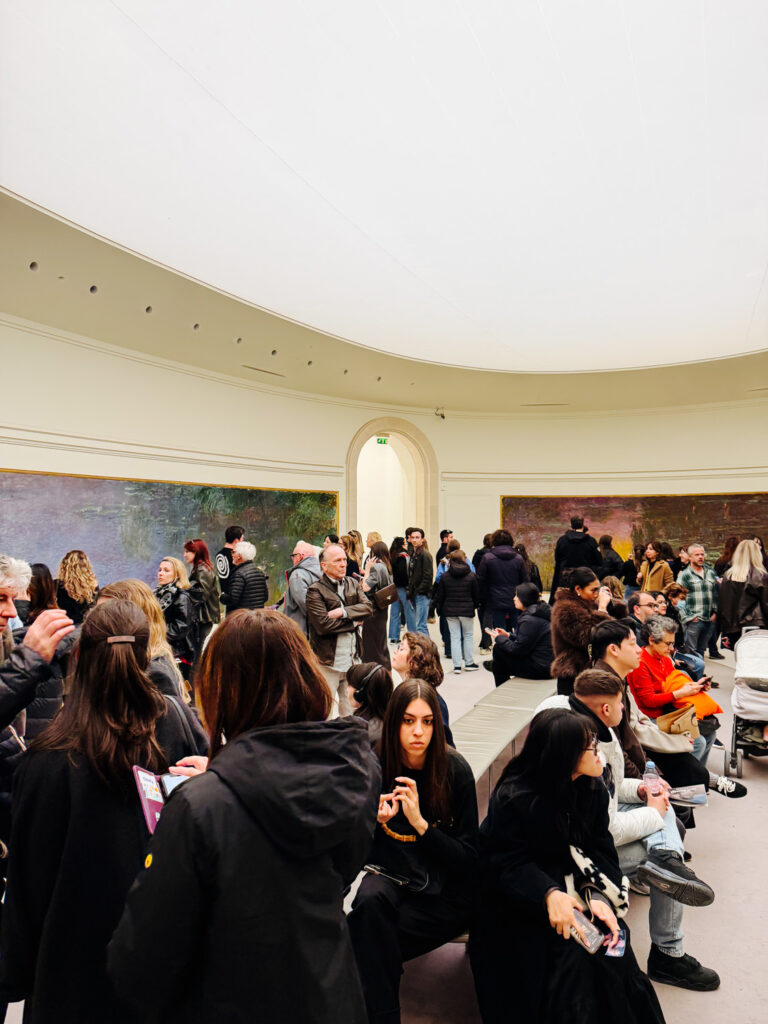
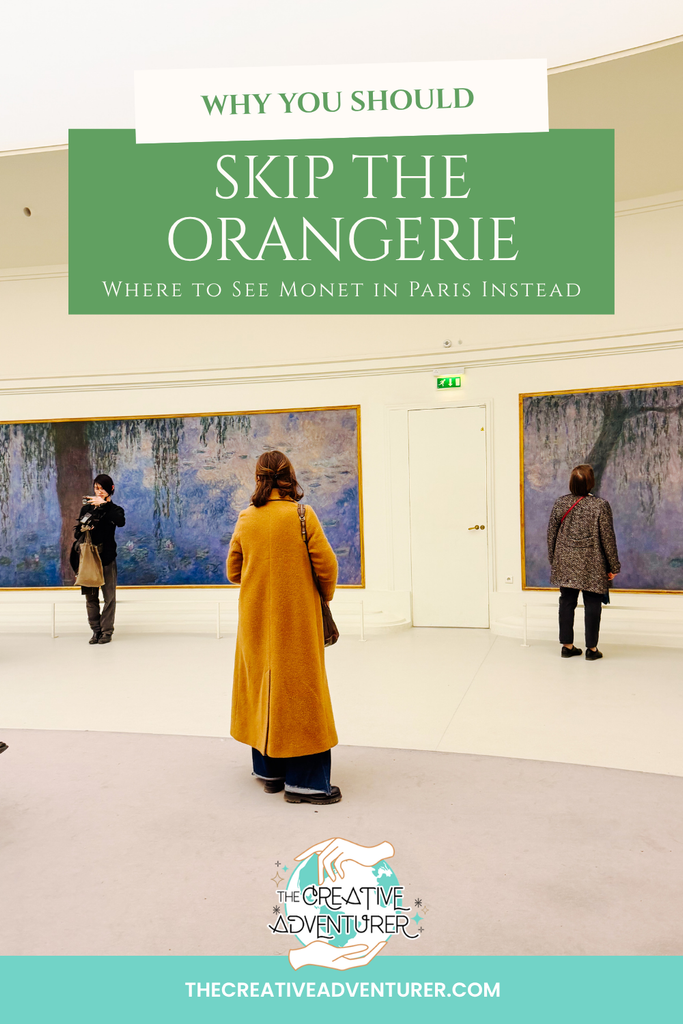
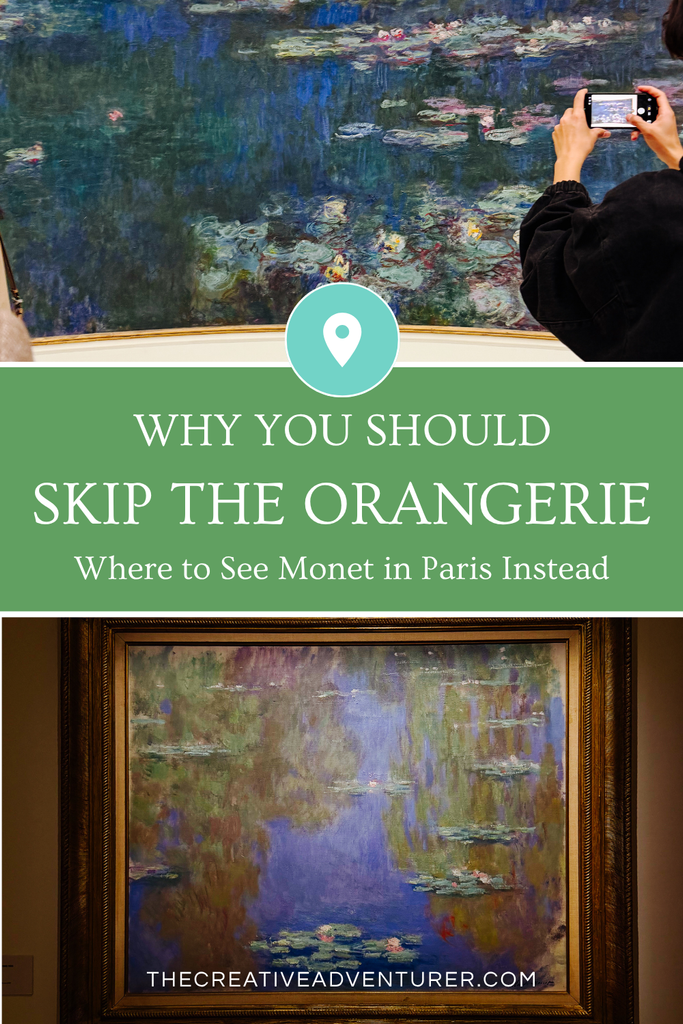
The Orangerie, by contrast, has been ruined by its own popularity. If Monet is why you’re in Paris, as he was for me, the crowds sting. The oval rooms are full of people talking at full volume, jostling for position, and holding phones aloft. The paintings are still there, but they’re much harder to appreciate.
What the Orangerie Is (and Why People Go)
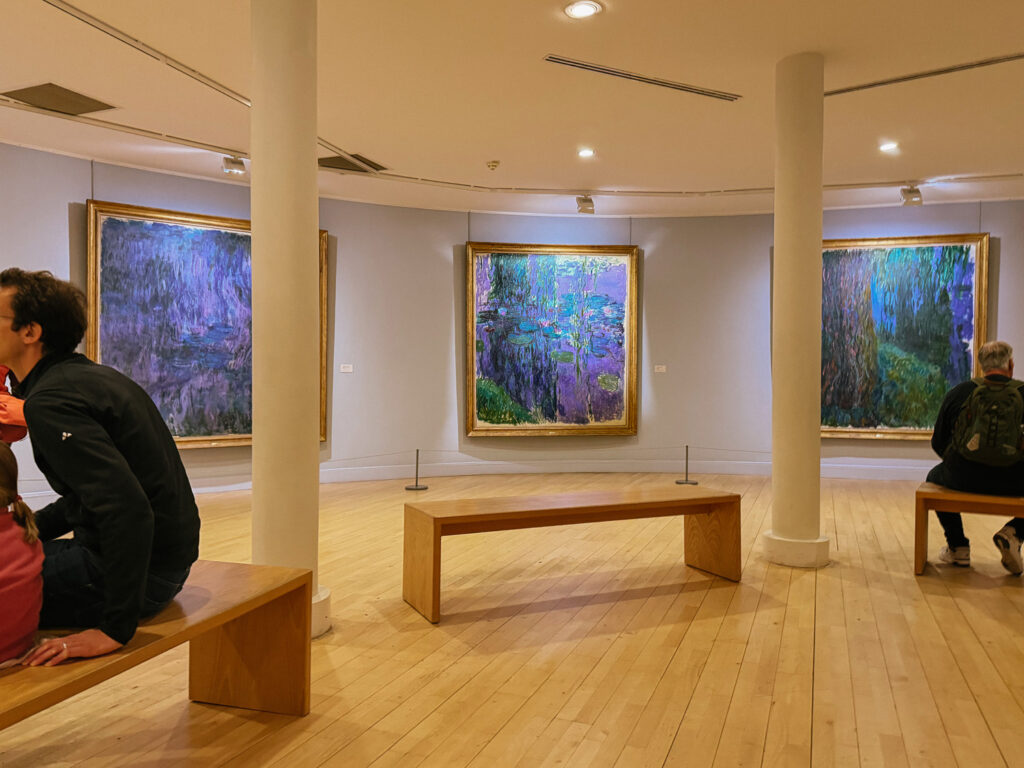
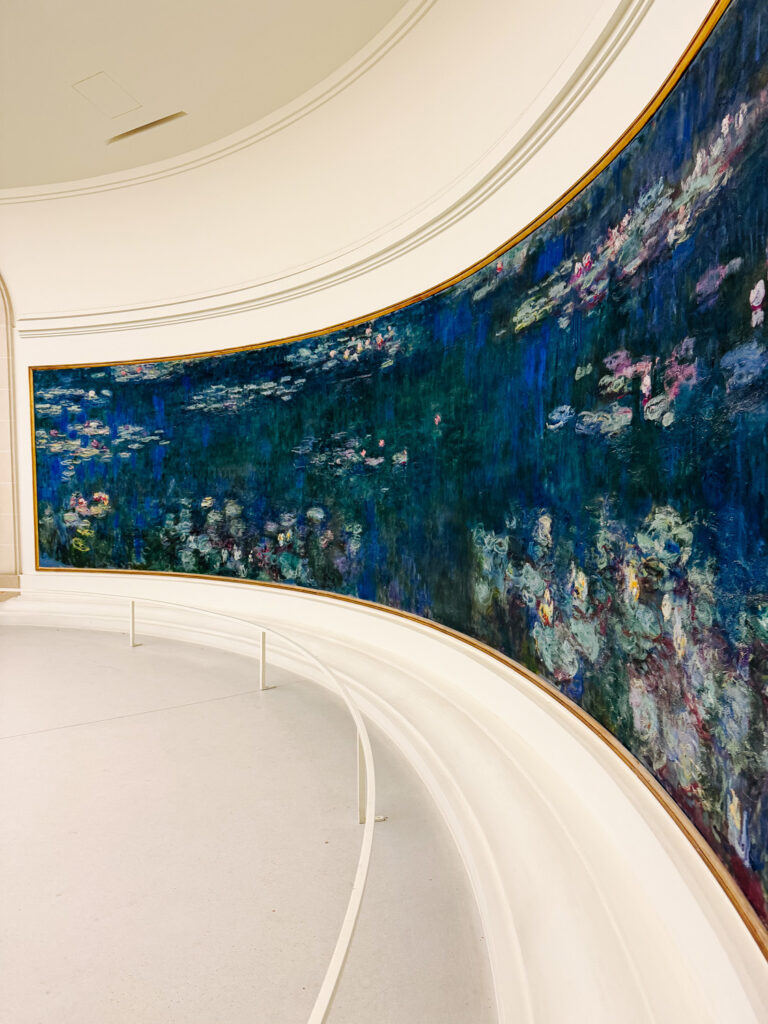
The Orangerie began as a greenhouse. In 1852, Napoleon III commissioned a structure in the Tuileries to shelter orange trees from winter: functional, unglamorous, a shed for citrus. After WWI, Monet donated a monumental series of water lily paintings as a peace offering, a meditation on beauty after catastrophe. He worked with the state to design two oval rooms built specifically for the panels, lit by natural light to encourage what the museum calls “endless contemplation.” Monet died in 1926, and the paintings were installed the following year, opening to the public in 1927.
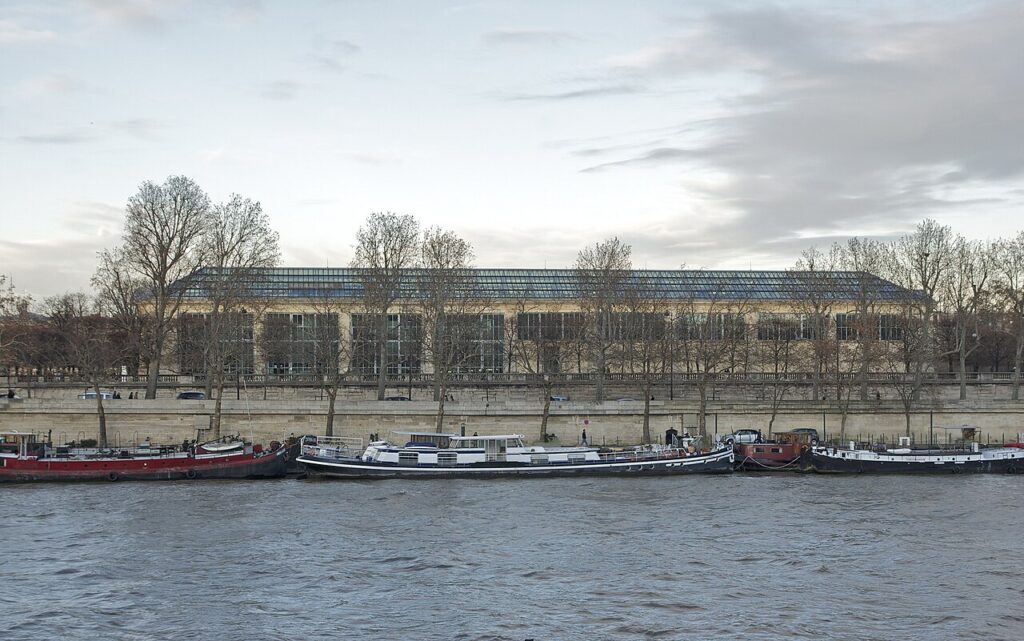
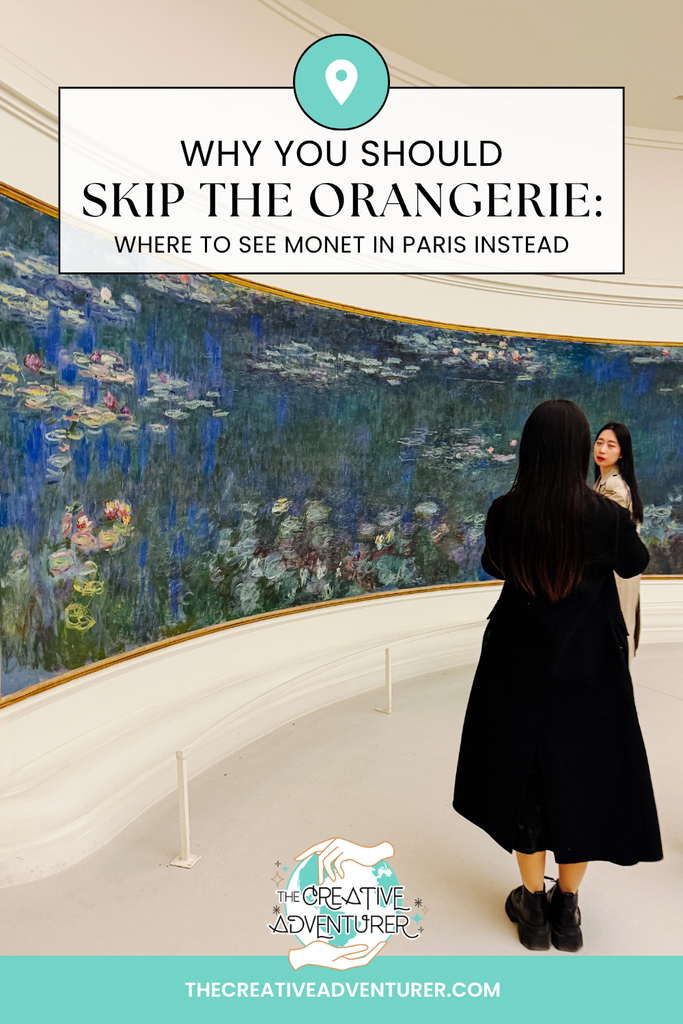
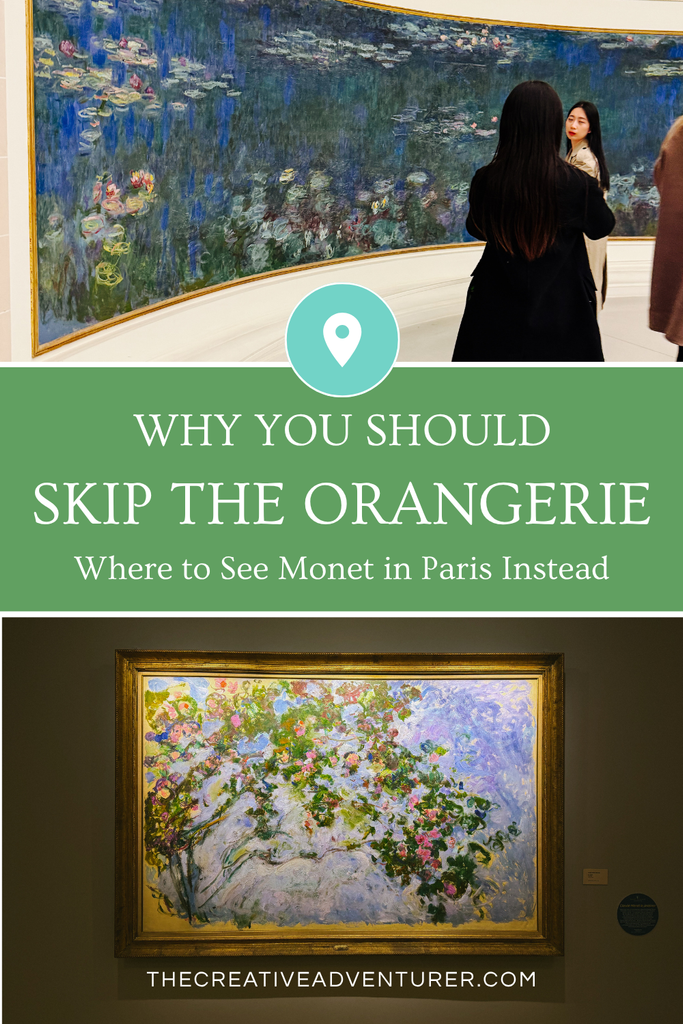
The design is genuinely extraordinary: eight panels, each two metres high, curving around you for more than ninety metres. It’s an immersive experience before anyone used that word for art, and because Monet designed the architecture around the paintings rather than the reverse, the rooms feel intentional even before you know the backstory.
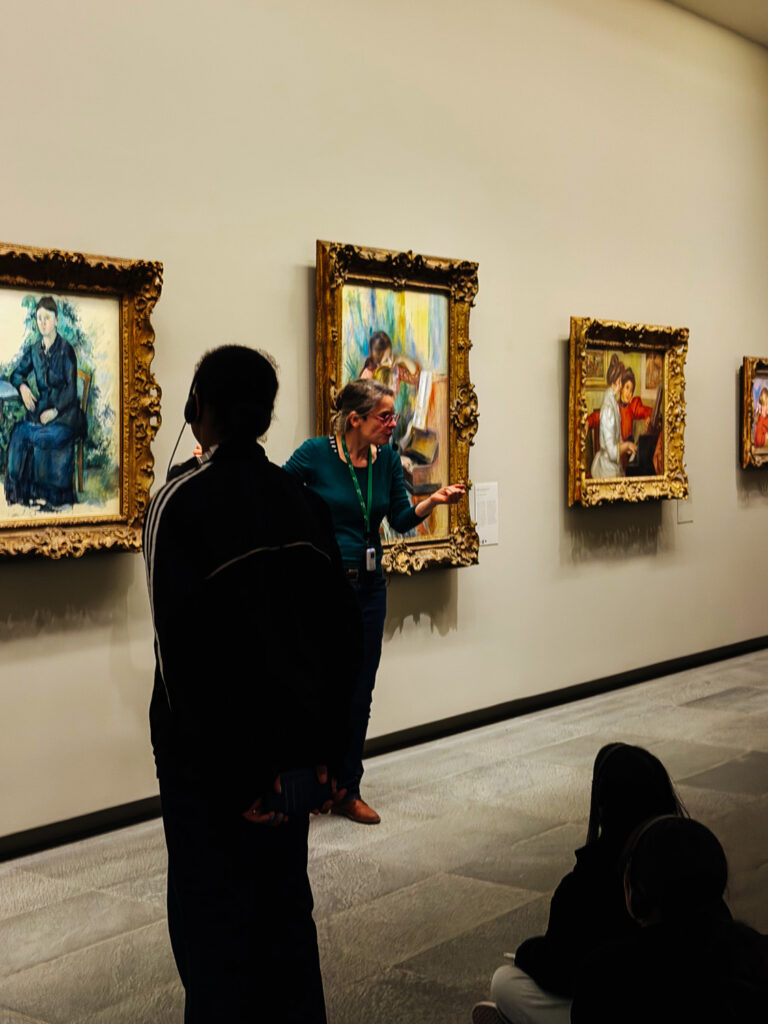
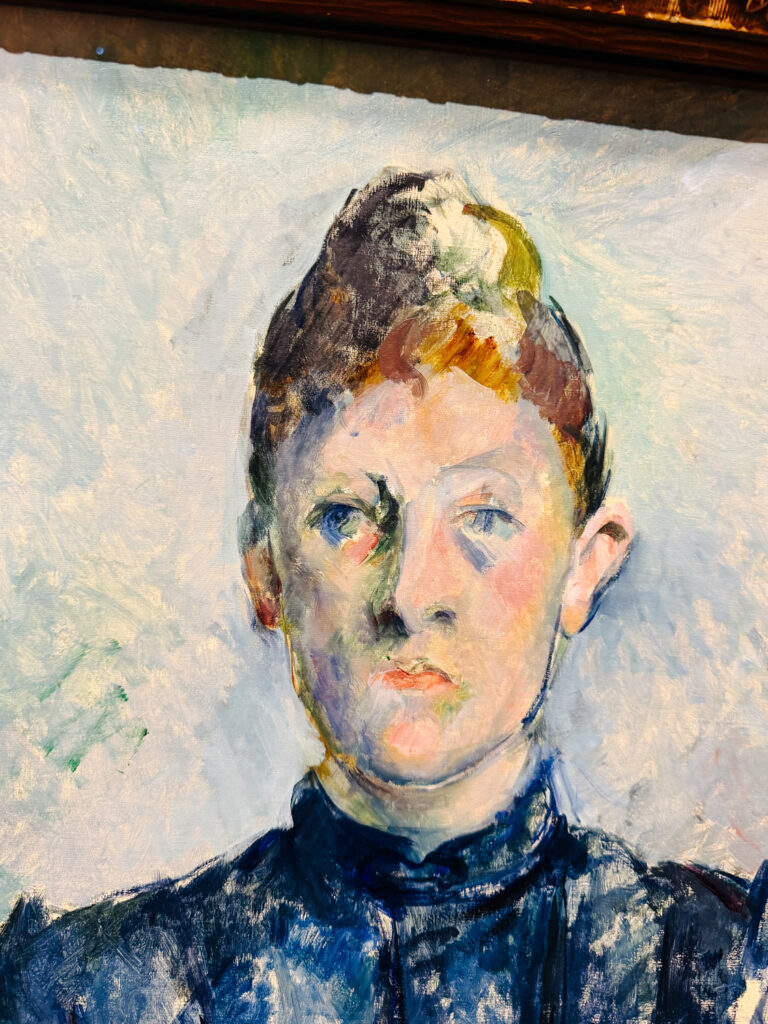
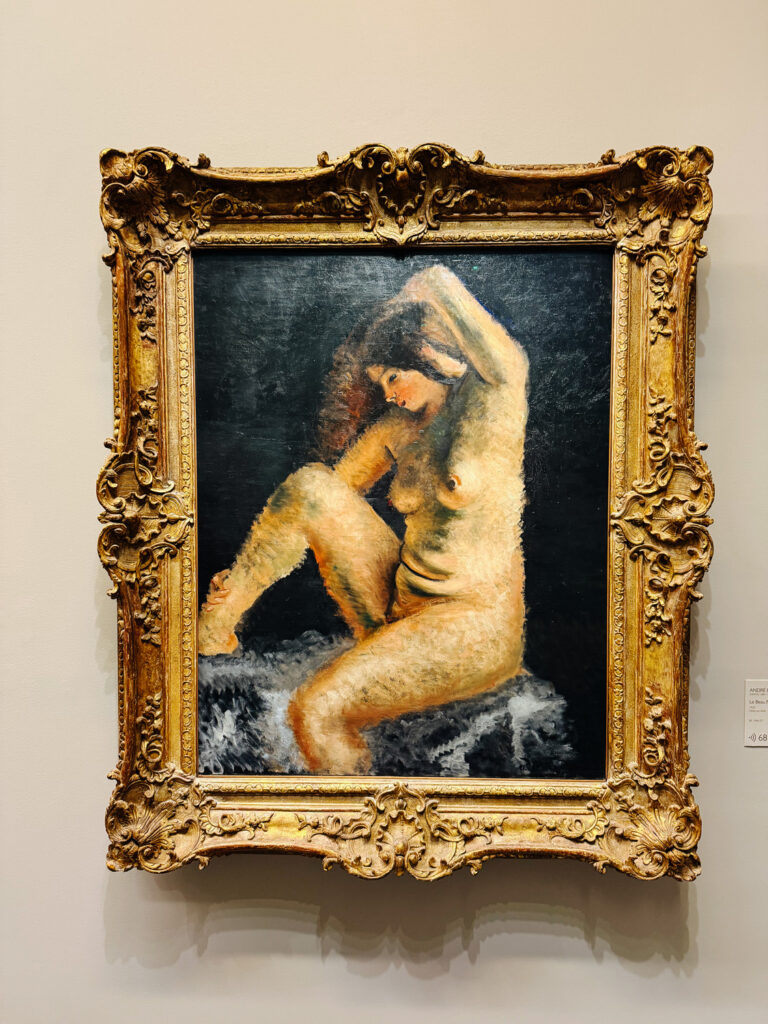
Downstairs, the Walter-Guillaume collection, acquired in the late 1950s and ’60s, includes works by Cézanne, Renoir, Picasso, Matisse, Modigliani, and Rousseau. It’s a world-class collection in its own right.
So why skip it?
The logistics are punishing, even when you do everything right. The Musée Orangerie sits in one of Paris’s most tourist-saturated corners, between the Tuileries, the Place de la Concorde, and a ten-minute walk from both the Louvre and the Musée d’Orsay. Every guidebook sends people here, and the museum’s own website warns against fraudulent “skip-the-line” tickets, which says plenty about demand.
Timed ticketing is meant to fix this, but it doesn’t. On an off-season visit, I booked a slot, arrived on time, and still waited 45 minutes outside. If that’s the off-season, I’ll leave you to imagine July.
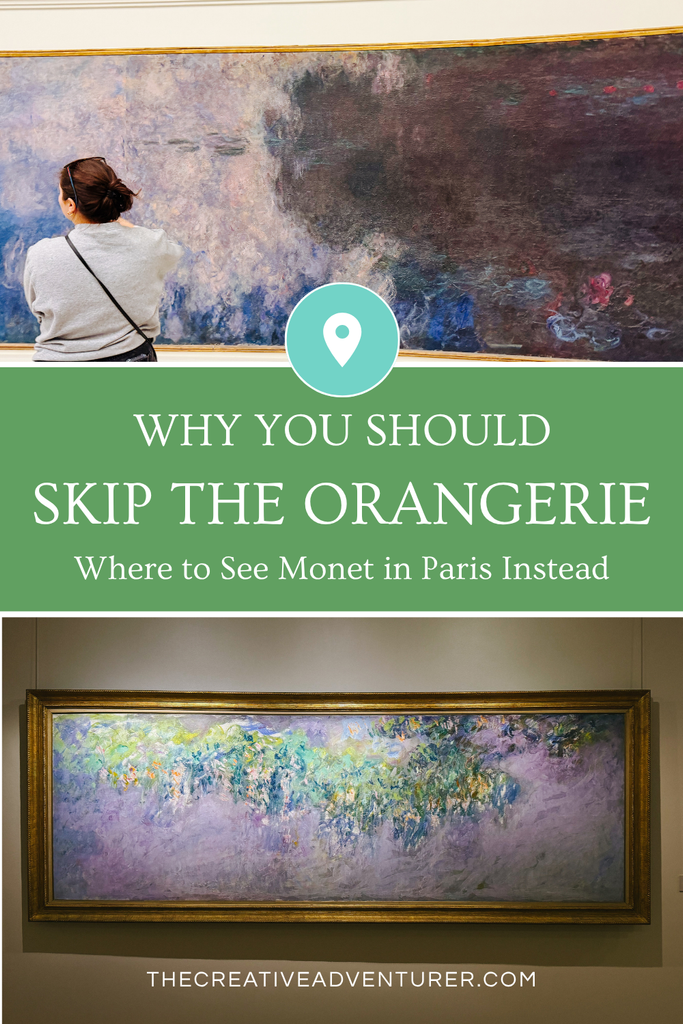
The Monet collection is also thinner than many visitors expect. Most reviews dance around this: the Water Lilies are magnificent, but they are essentially one work, eight panels of the same subject under changing light. If you want to understand how Monet developed over six decades, the Orangerie can’t show you. Two oval rooms and one installation are not the same as a museum.
Designing the Monet Rooms in the Orangerie
There’s an irony to the crowds, too. Monet designed these rooms with the architect Camille Lefèvre, using an oval shape to eliminate corners so the panels could wrap around the viewer uninterrupted. He called them “a refuge of peaceful meditation,” and placed benches in the centre so you could sit and let the paintings work on you. The whole design assumes stillness. What you get, most days, is a room of people talking at normal volume, holding phones overhead, and standing directly in front of panels that need considerable distance to be seen properly.
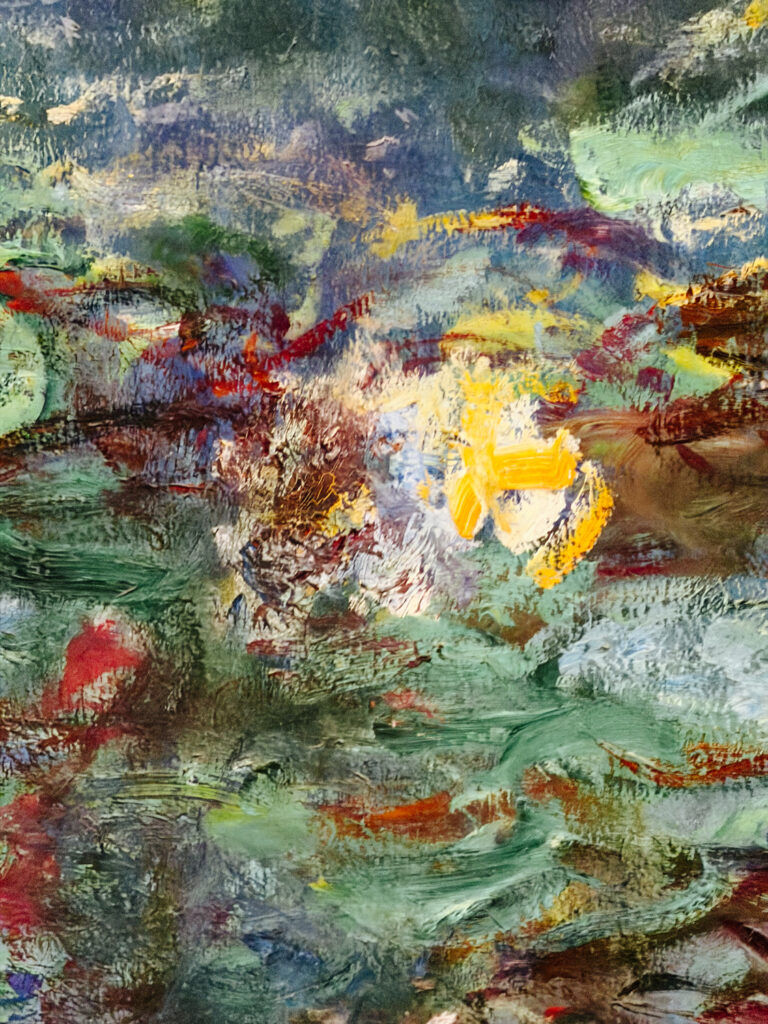
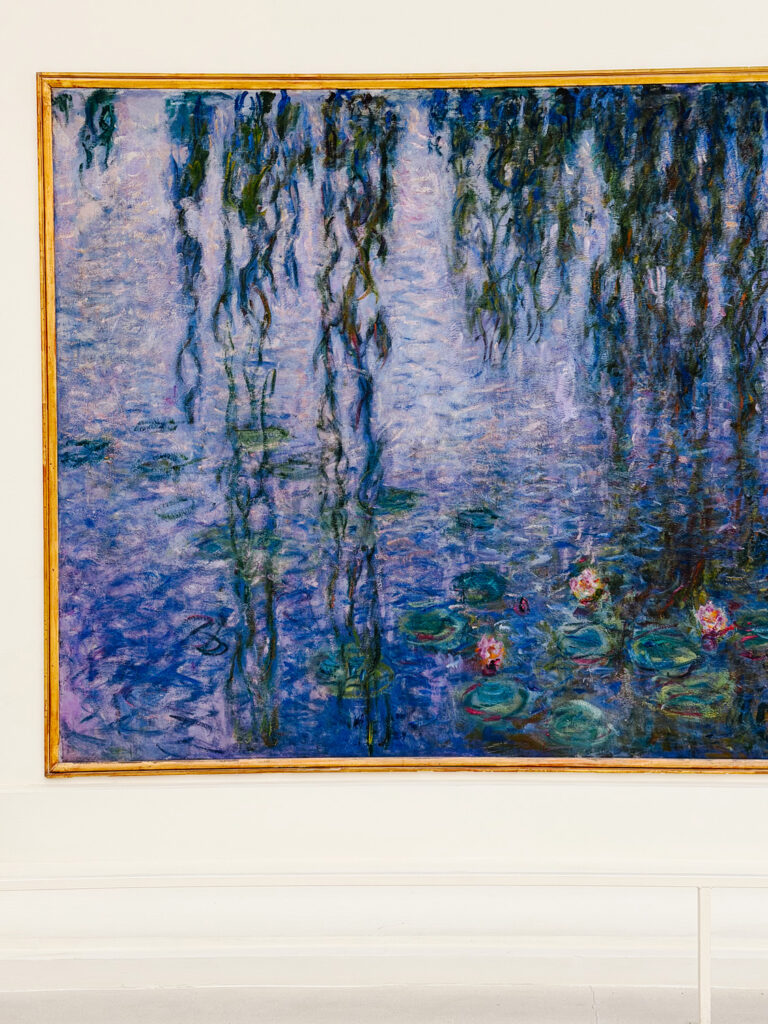
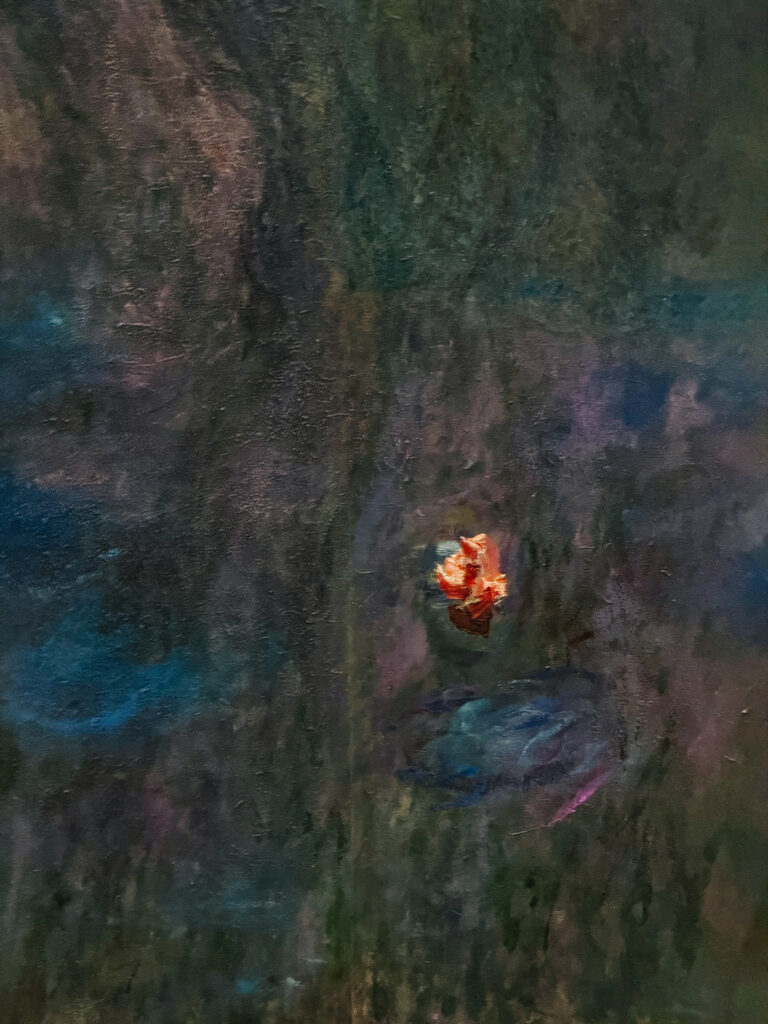
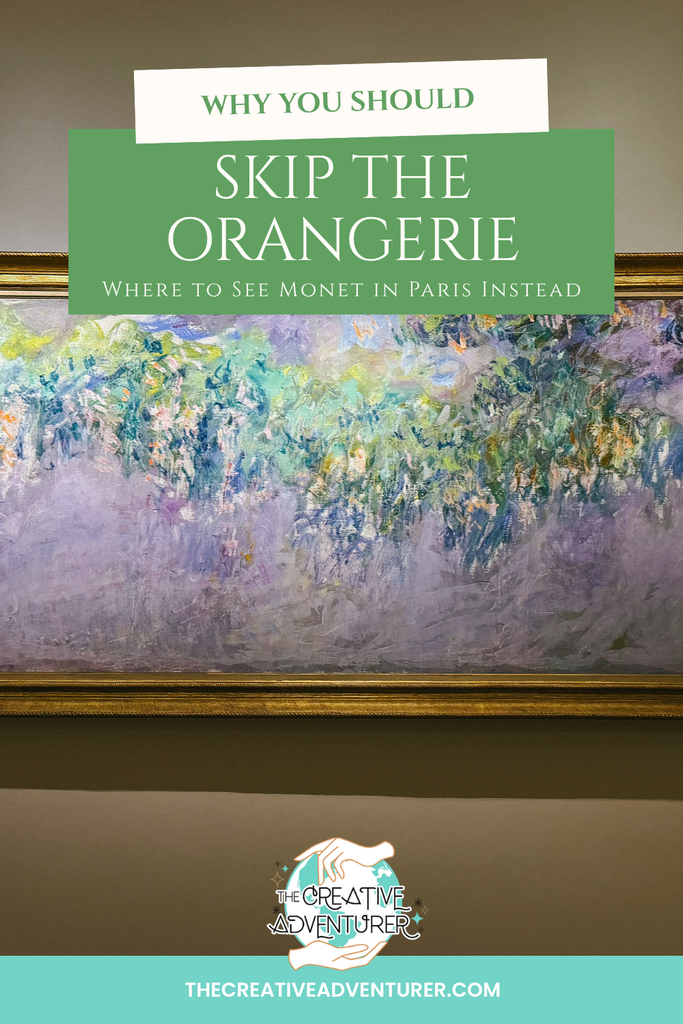
If Monet is the reason you came to Paris, the Orangerie seems like the obvious answer. But it isn’t. While there are also some very impressive paintings of his at the Musée d’Orsay, you have another spot, hidden away in a basement in the 16th Arrondissement, which possesses the largest, and often missed, collection of Monet paintings anywhere in the world: the Musée Marmottan Monet.
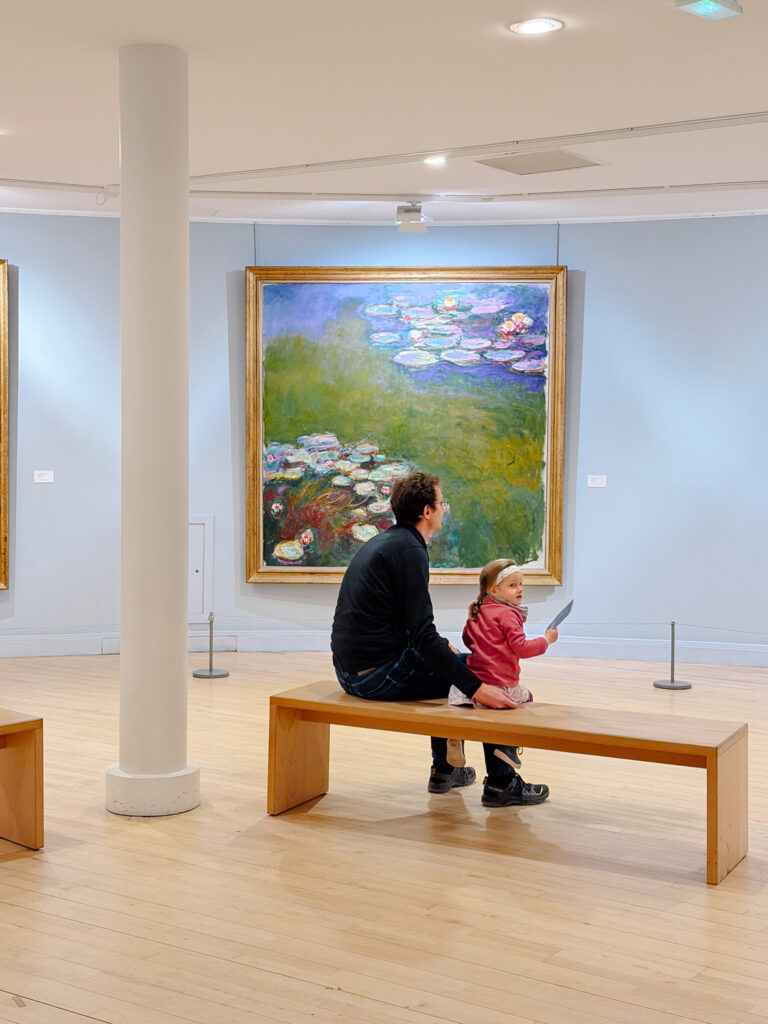
What is the Musée Marmottan Monet?
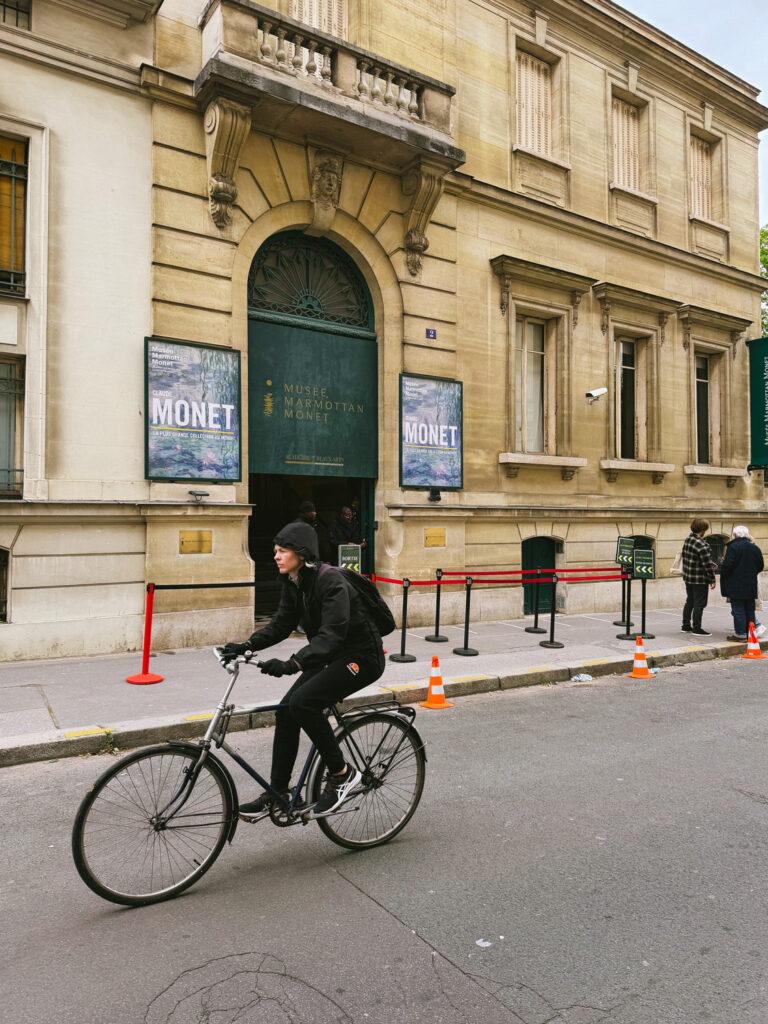
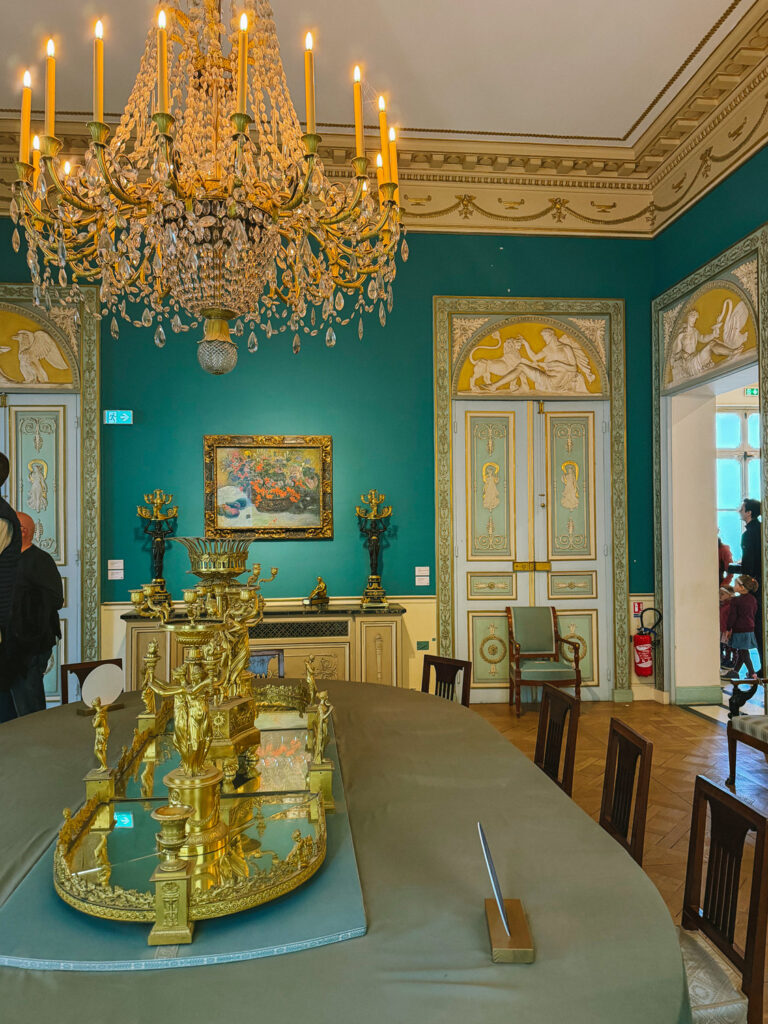
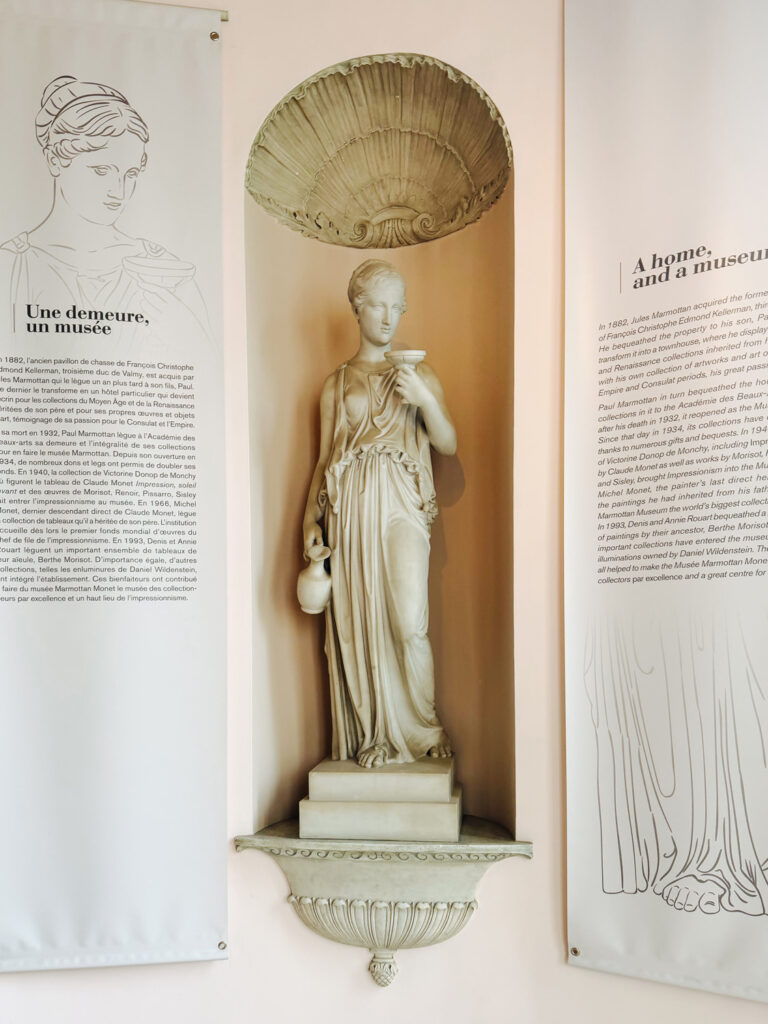
The building began around 1870 as a hunting lodge for the Duc du Valmy, on the edge of the Bois de Boulogne. Jules Marmottan bought it in 1882, and his son Paul turned it into a luxurious townhouse for his collection of medieval and Renaissance works alongside Empire and Restoration pieces. Paul died in 1932 without heirs and left everything to the Académie des Beaux-Arts, which opened the museum two years later.
It was then mainly a showcase for Empire decorative arts: Napoleonic furniture, porcelain, clocks. Two donations transformed it. In 1940, Victorine Donop de Monchy inherited a collection from her father, Dr. Georges de Bellio, one of Monet’s earliest patrons, which included eleven Monets and Impression, Sunrise. The irony is that the Académie, the very body now running the museum, had once refused to exhibit Impressionist work.
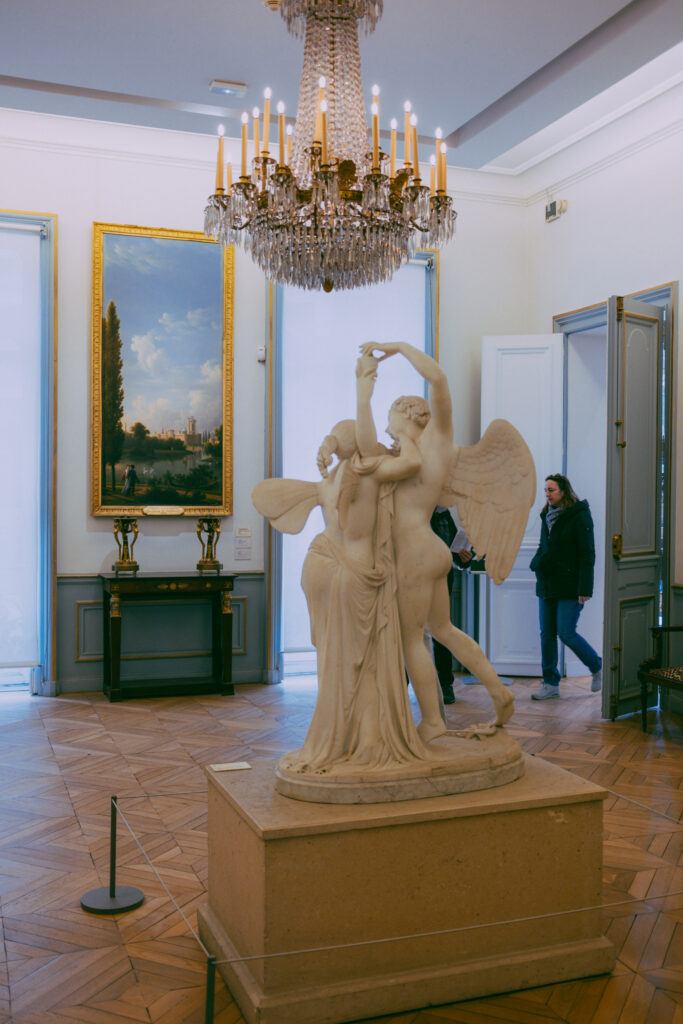
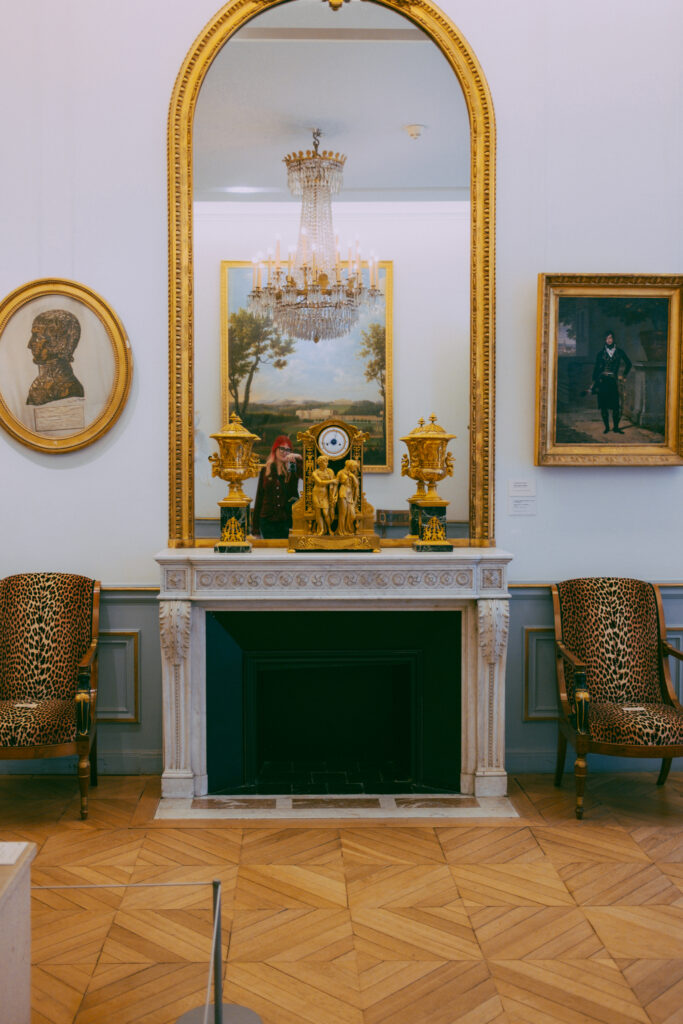
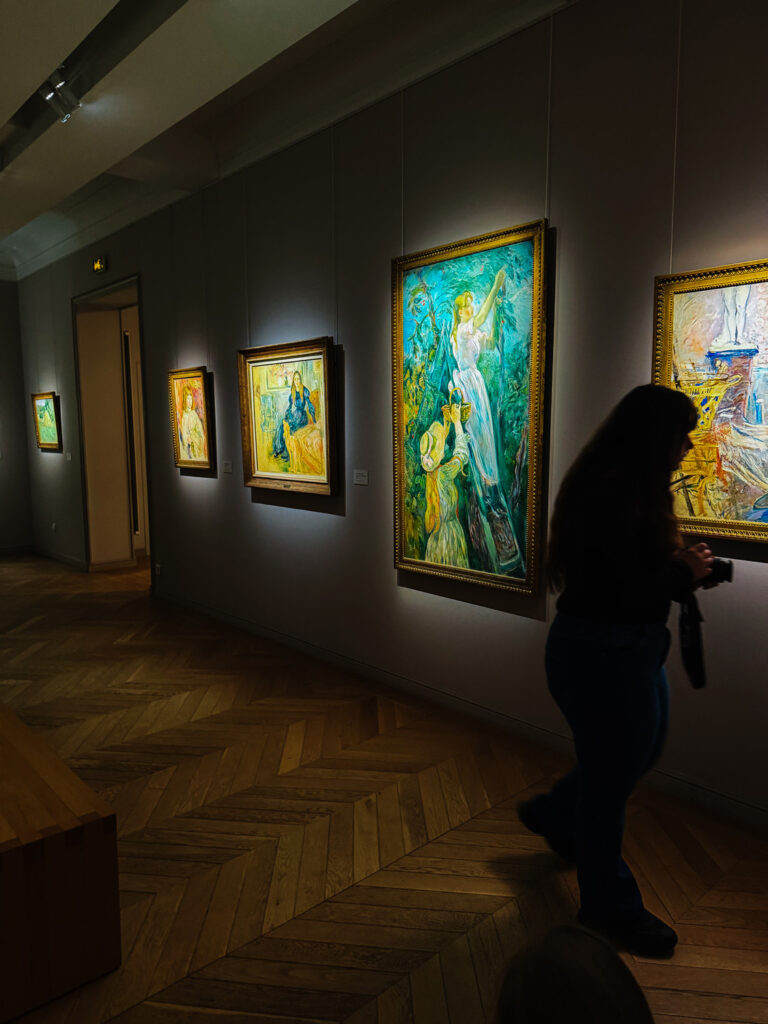
Then, in 1966, Michel Monet, the painter’s last surviving son, bequeathed his entire inherited collection: more than 65 canvases, plus works by Delacroix, Boudin, Renoir, and Morisot. A museum that had been indifferent to Impressionism became, almost overnight, its greatest repository.
Getting There (and When to Go)
The Marmottan takes more effort. Take Metro line 9 to La Muette or Ranelagh, then walk through a residential neighbourhood to the edge of the Bois de Boulogne. That effort is, in a sense, the point: the people who make it are there because they want to be.
- Address: 2 rue Louis-Boilly, 75016 Paris
- Hours: Tuesday to Sunday, 10 am to 6 pm, with late opening Thursdays until 9 pm
- Best time: Thursday evenings are reliably the quietest
- Admission: €14 for adults
- Time needed: 1.5 to 2 hours
What’s in the Collection at the Marmottan
The Marmottan holds more than 100 Monet paintings across three levels. If you only have an hour, go straight to the basement, where the Monets live.
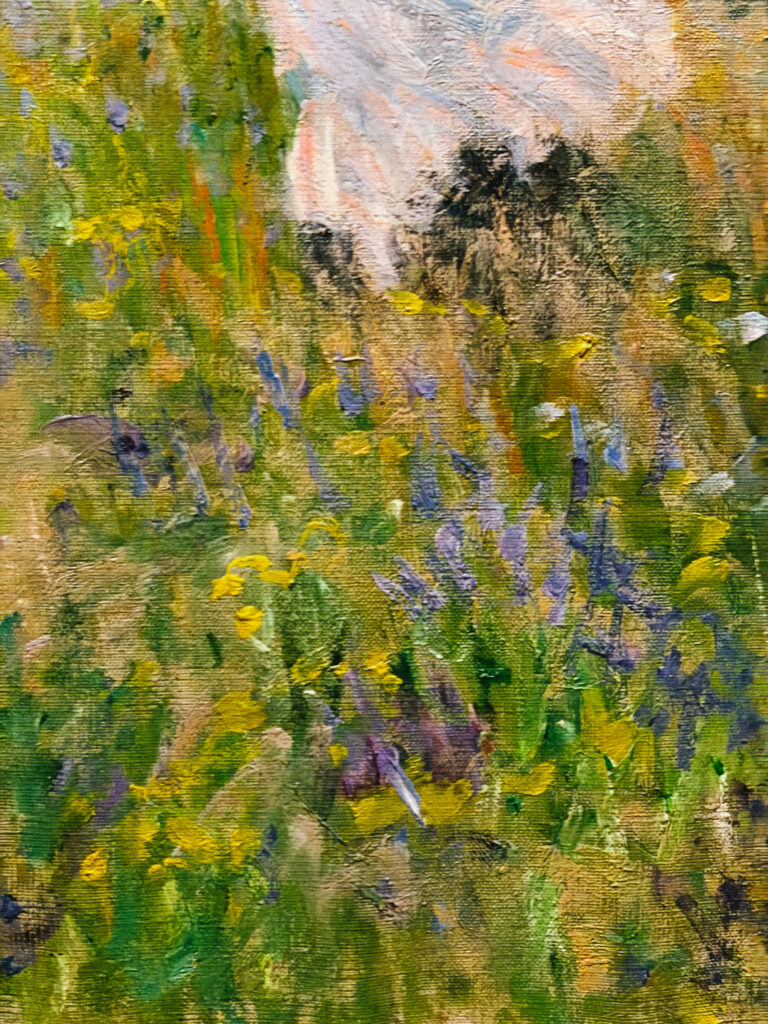
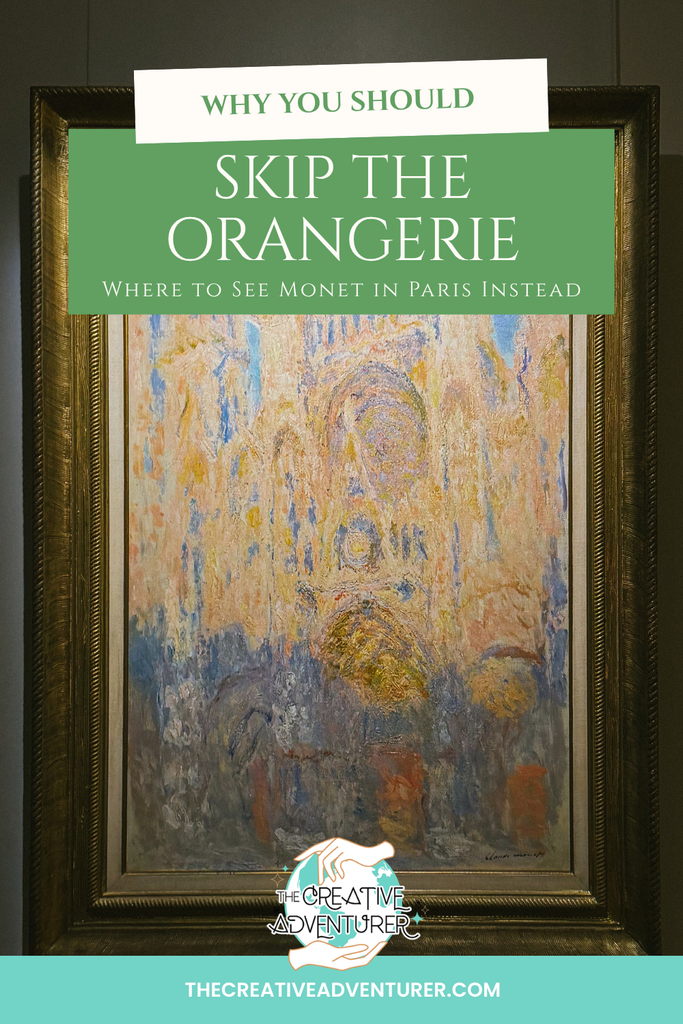
What you’ll find isn’t just the famous titles but the full arc of a career: early work, mid-career landscapes, the Giverny series in all its obsessive variation, and the late paintings after 1914, when Monet’s eyesight was failing and his style loosened into something that looks like Abstract Expressionism arriving thirty years early. No other museum holds more of his last-period work.
Highlights from the Collection
Impression, Sunrise (1872)
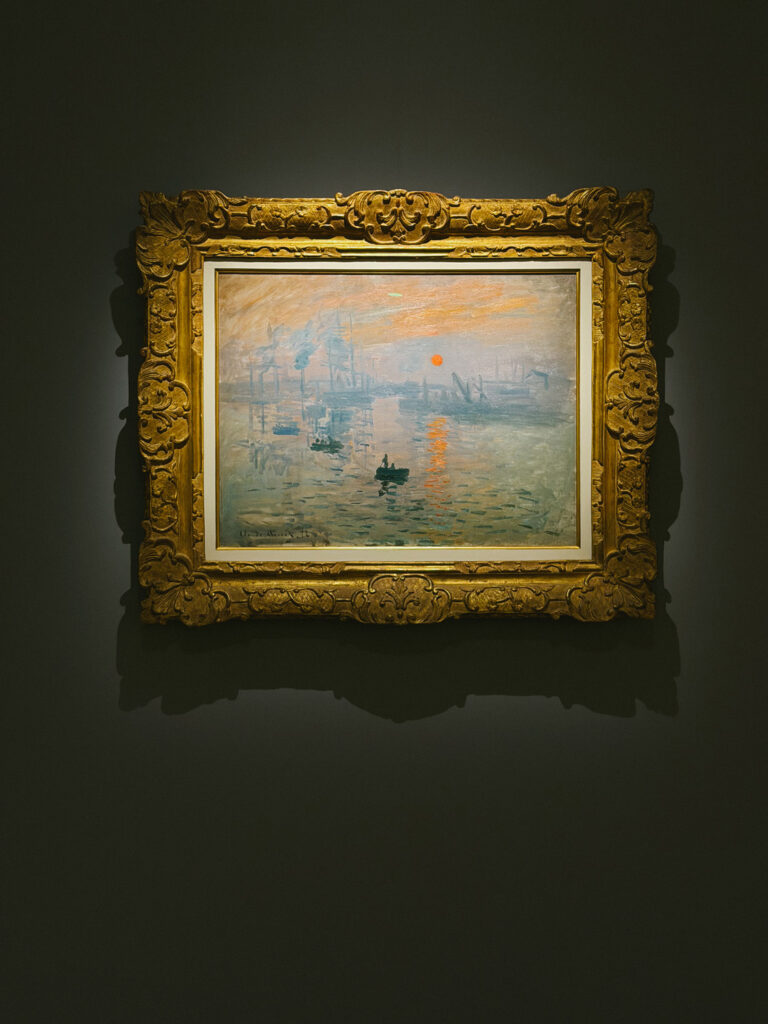
Painted from a hotel window overlooking Le Havre harbour in November 1872, it’s smaller in person than you expect, roughly 48 by 63 centimetres. A smear of orange sun sits above the waterline, with dark boat silhouettes in front and chimneys and cranes dissolving into haze behind. At a time when the Academy demanded polished, realistic scenes, Monet offered a loose, rapid sketch in quick, unblended strokes of blue and grey.
The orange sun anchors the composition, but run a grayscale filter over a photo of the painting and it vanishes: it has the same luminance as the sky around it. That lack of contrast is what makes the sun seem to vibrate when you see it in person.
When Monet submitted it to the first independent exhibition in 1874, he couldn’t pass it off as a literal view of Le Havre, so he called it simply an impression. The critic Louis Leroy wrote a sarcastic review claiming unfinished wallpaper was more polished, and titled it “The Exhibition of the Impressionists” as an insult. The artists adopted the name, and this single muddy canvas gave the most famous art movement of the 19th century its title. Armed thieves stole it from this very museum in 1985, and police recovered it five years later from a villa in Corsica. It’s safe now, though it does travel, so check online that it’s on display.
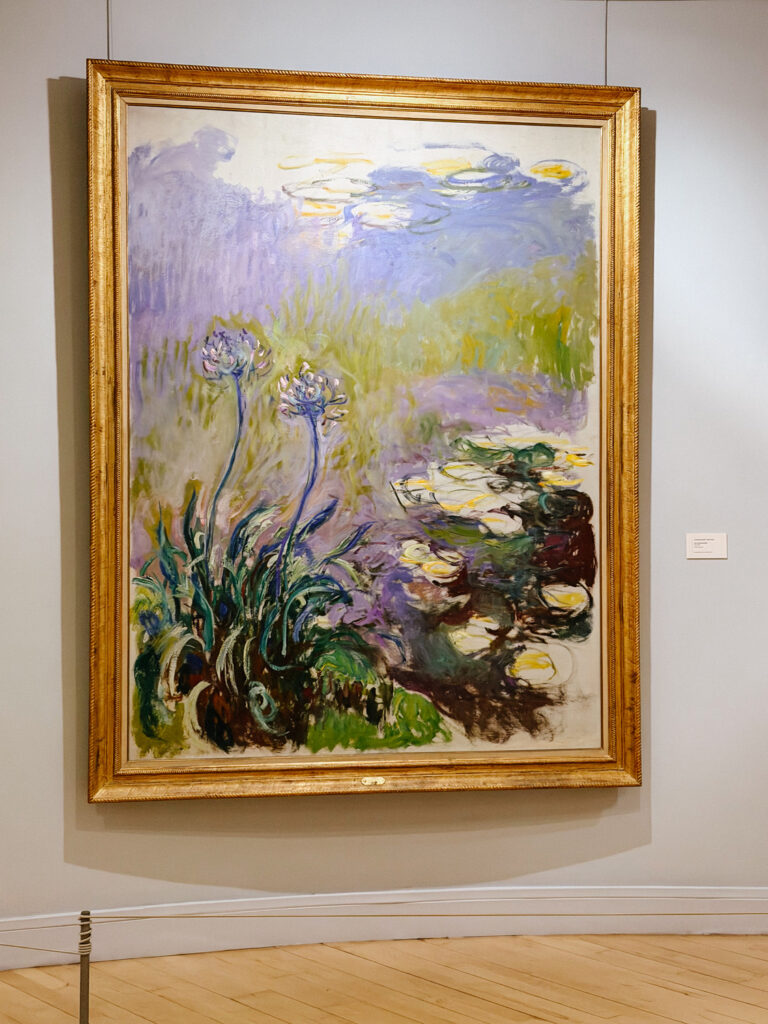
Water Lilies and Agapanthus (1914–1917)
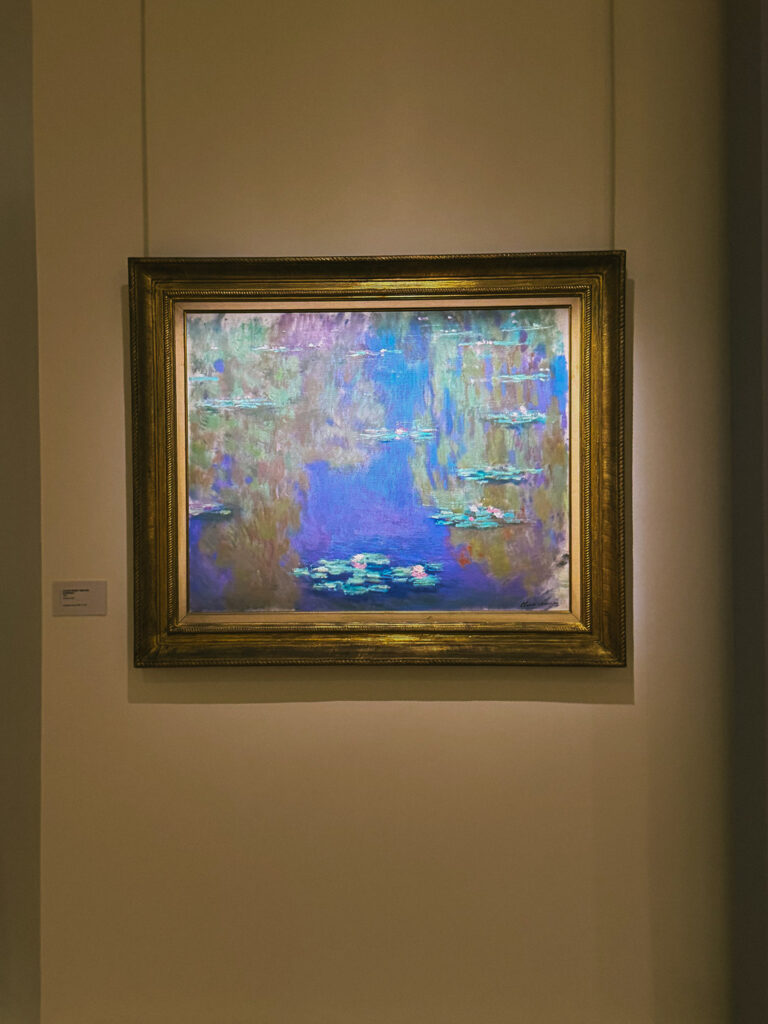
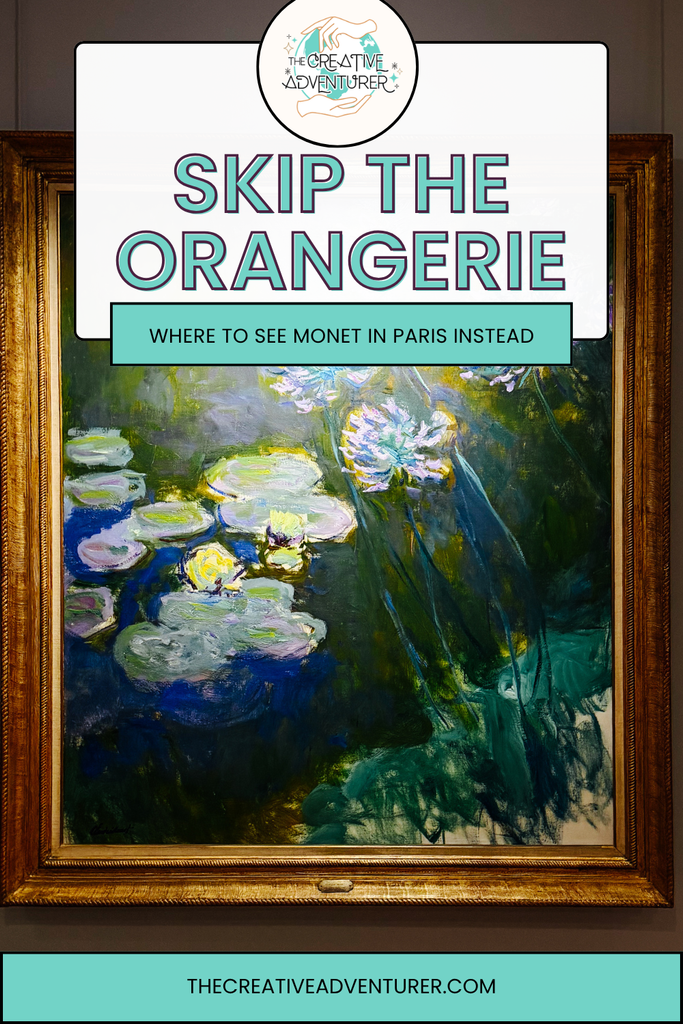
In later life, Monet poured his wealth into his gardens at Giverny, replacing utilitarian plantings with imported exotics and employing six full-time gardeners. Nymphéas et Agapanthes puts the agapanthus, a lily native to Africa, alongside his iconic water lilies. The name comes from the Greek for “love flower,” and the plant carried Victorian associations of secret admiration and enduring love. It adds quiet context to the canvas: a meticulously engineered garden, painted by an ageing man increasingly isolated in rural France. Like much of the collection, it stayed in his studio until his death, passing to Michel and then to the museum in 1966.
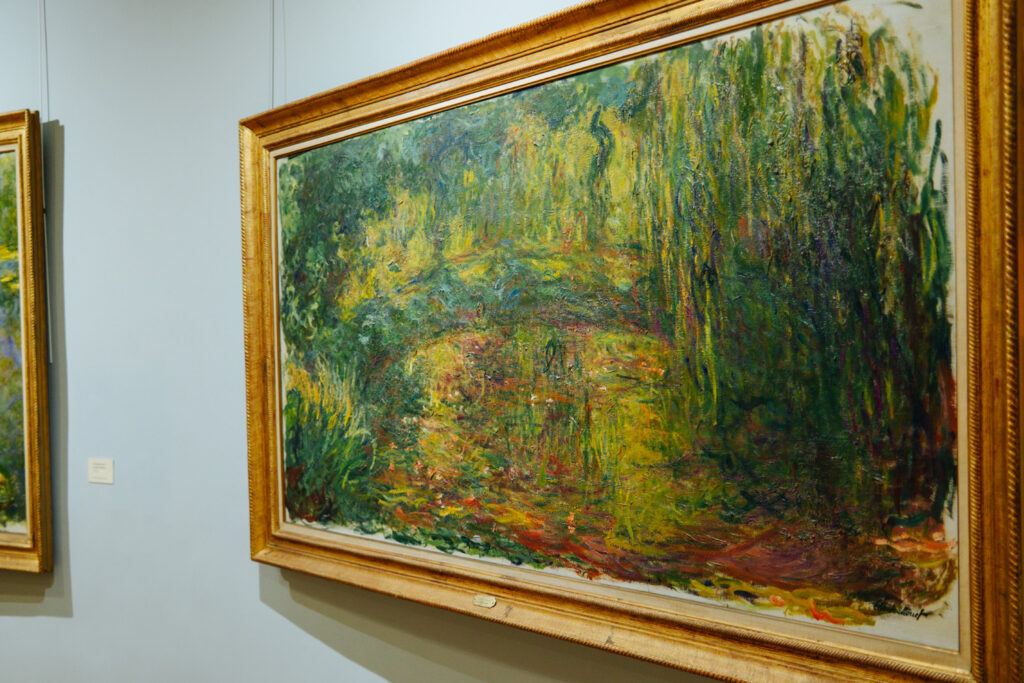
The Japanese Bridge (c. 1918–1919)
By 1893, Monet had bought land beside his house in Giverny. He diverted a tributary of the Seine, planted exotic water lilies, and built a Japanese-style arched bridge inspired by the woodblock prints he collected. He painted it dozens of times over the following decades. The early versions, from around 1899, are serene and representational, the bridge clearly visible above orderly lilies.
The Marmottan version, nearly twenty years later, is something else. By 1918 his cataracts had severely distorted his colour perception and blurred his vision, and he worked from memory and sensation as much as sight. The bridge is barely there, swallowed by dense, almost frenzied brushwork in yellows, greens, and reds, the garden consuming its own architecture. It looks like something de Kooning might have painted in the 1950s, made instead in 1918 by a man in his late seventies who could barely see. That it’s also beautiful is extraordinary.
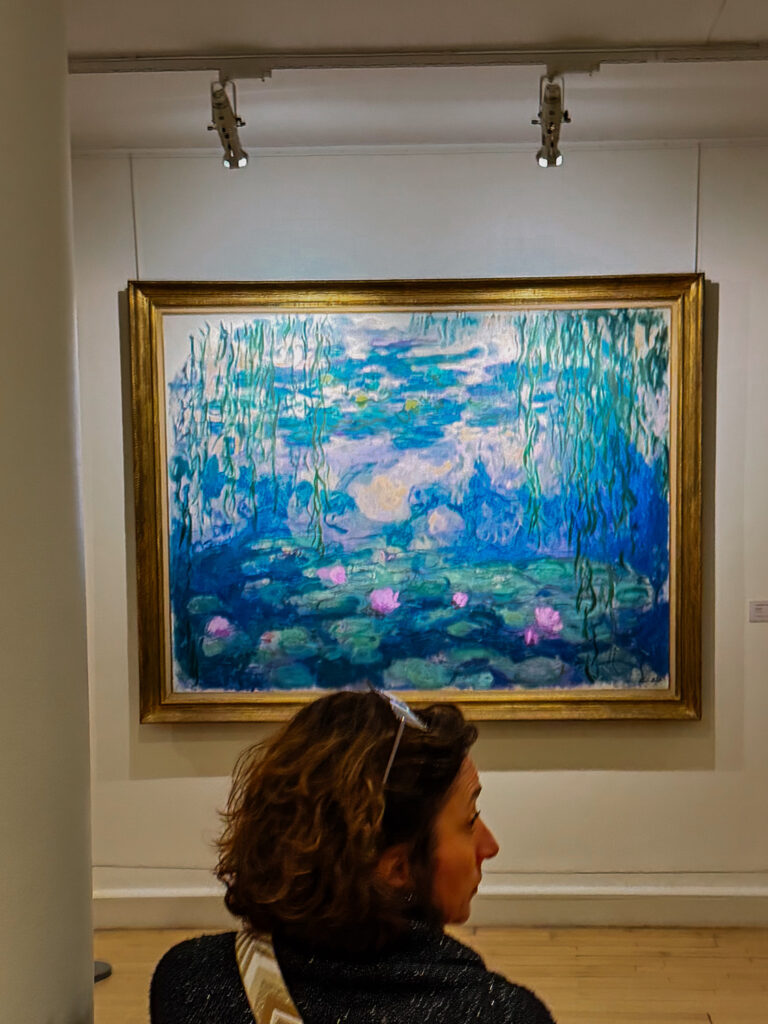
The Weeping Willows (c. 1918–1919)
The willows around Monet’s pond were long a background presence. In these late paintings they take over. Water, sky, and horizon disappear, leaving a near-vertical cascade of branches in long, dragging strokes, from grey-green to deep ochre. Scholars have linked them to the grief accumulating in his life: Alice died in 1911, his eldest son Jean in 1914, and the war ground on outside Giverny. He stayed through it all, painting as his staff left and shells sounded in the distance. Whether or not you read them as mourning, they are among the most psychologically raw things he ever made, and they are here, not at the Orangerie.
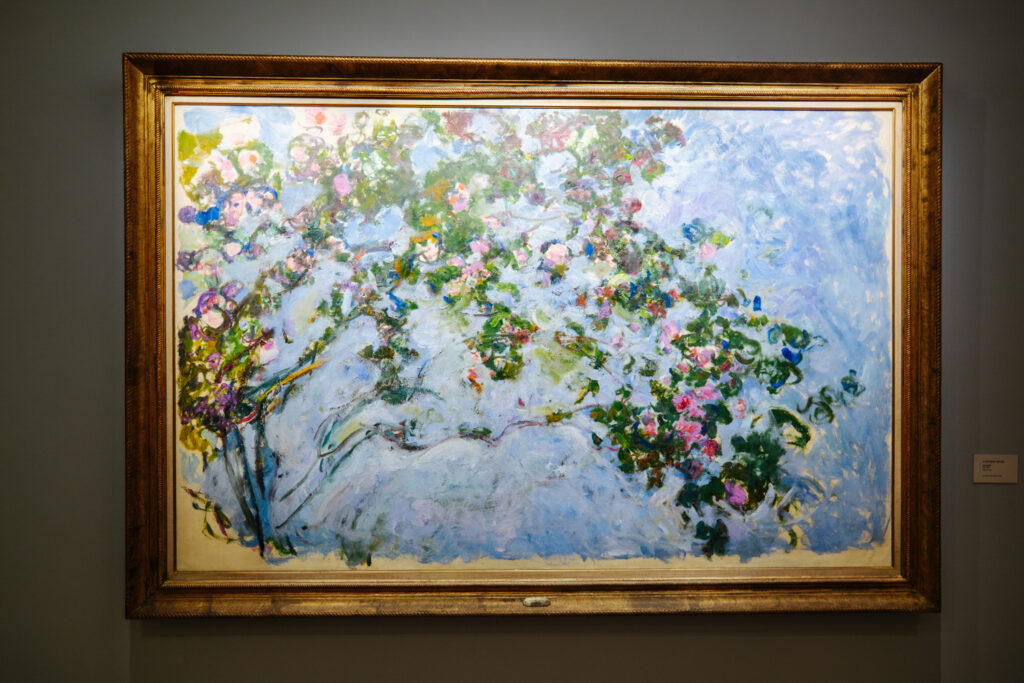
The Roses (Les Roses)
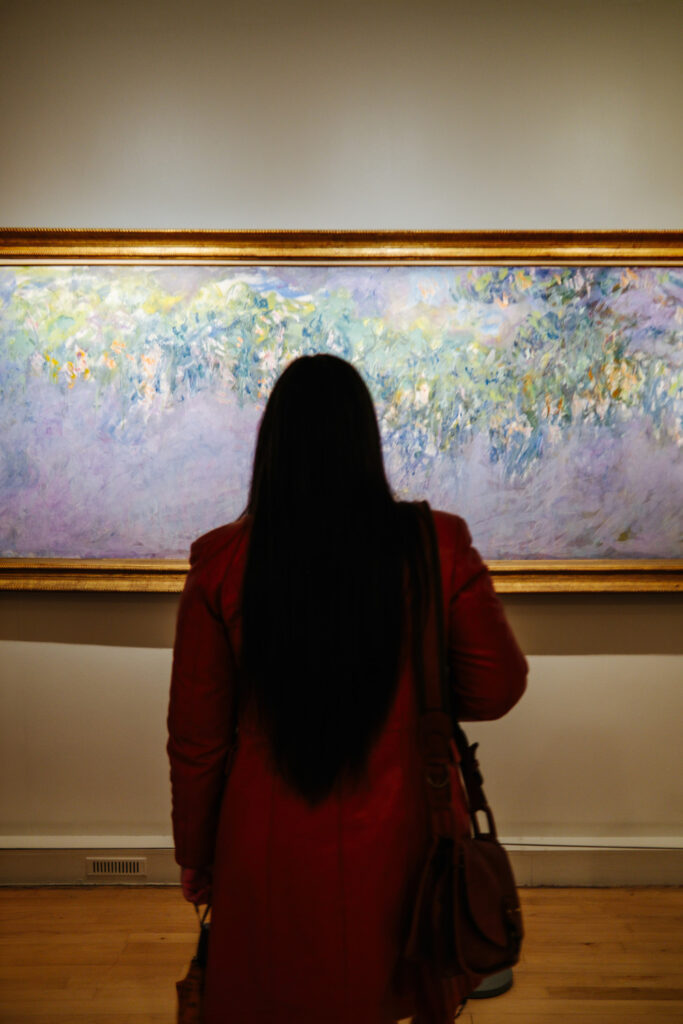
In his final years Monet painted the gardens he had engineered at Giverny. He had torn out the spruces lining the central path and replaced them with arches of climbing roses, and Les Roses records that canopy. It is one of the last canvases he finished before his death in December 1926.
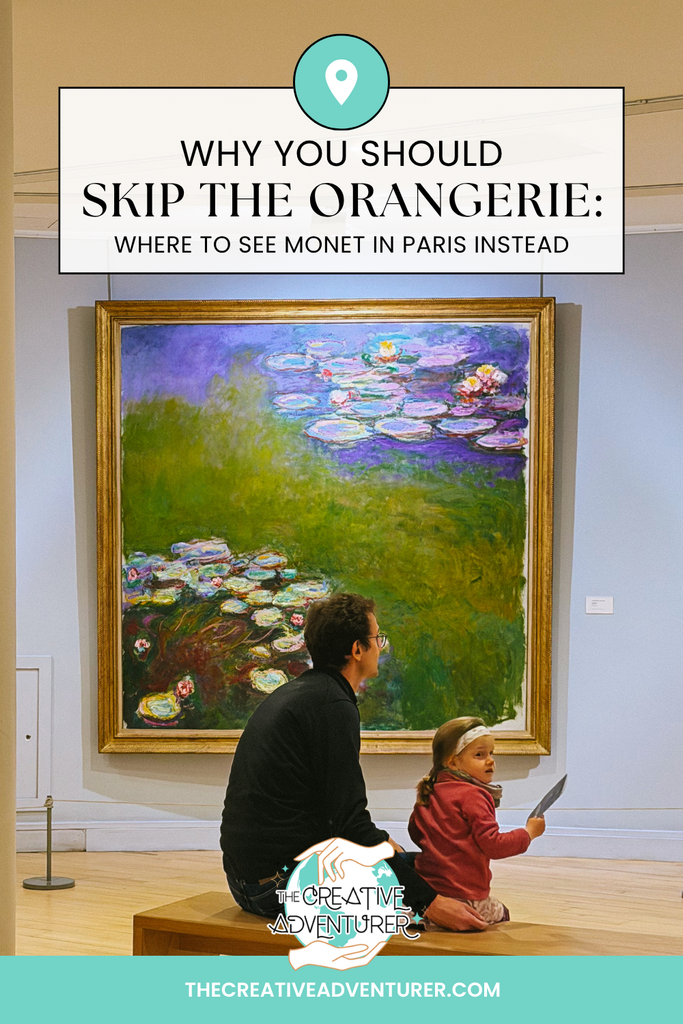
Unlike the water lilies, which make you look down at a reflective surface, this painting tilts your gaze up into the sky. The canvas is nearly two metres wide, but the subject has almost dissolved into thick, chaotic smears of pink, green, and blue. You are seeing the effect of his advanced cataracts: he wasn’t trying to invent abstraction, only to record the world as his failing eyes processed light. The result nonetheless broke from 19th-century realism and anticipated the abstract expressionists who followed.
None of this means the Orangerie isn’t worth seeing. The Water Lilies are extraordinary, and if you go, go early and expect to share the room. But if you want Monet the way he intended, with room to stand back, sit down, and let the paintings work on you, take the metro out to the 16th. At the Marmottan you get the whole arc of his life, from the smear of orange in Impression, Sunrise to the near-abstract Giverny canvases painted by a man who could barely see, and you get to look at them in peace. Paris will always have a queue to join. This is the rare stop where skipping the crowd gets you the better experience.

Leave a Comment