
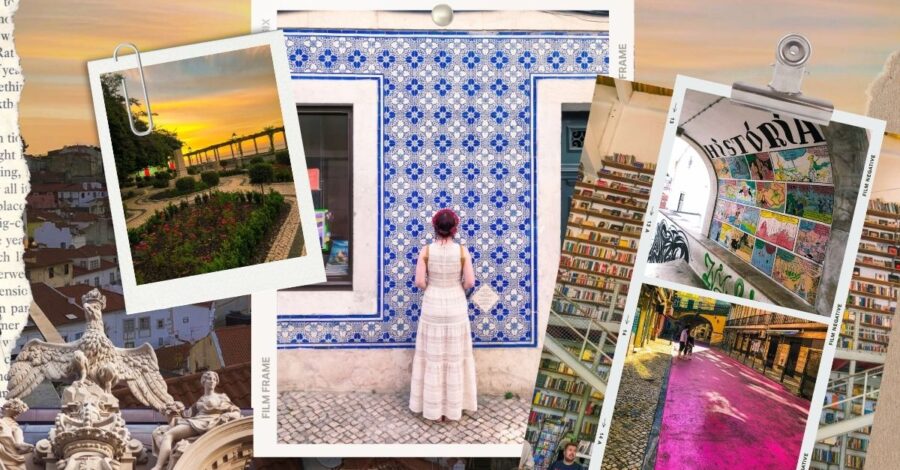
Few cities are as photogenic as Lisbon, and much of the reason is history layered on history and painted in one of the most colourful palettes you’ll find anywhere. There’s hardly a street you can walk down without being wowed by the hues and views along the way. The miradouros (viewpoints) found all over the city seem to open Lisbon up like a pop-up book, and the intricate tiled walls and buildings spread across it like a patchwork quilt.
Most of what you’ll be photographing was shaped by a single date, 1 November 1755, when an earthquake, a tsunami and fires destroyed much of the city. Some of the places below came through it (Alfama, the Jeronimos Monastery), some were rebuilt after it (Bertrand’s bookshop, the Baixa grid around the Arco da Rua Augusta), and one was never repaired at all (the Carmo Convent), so as you work your way through them you’re also reading the city’s recovery. For photographers and bloggers, this is a dream of a place, and you’ll want a few extra batteries, because you aren’t going to be able to stop snapping.

Bertrand Livraria
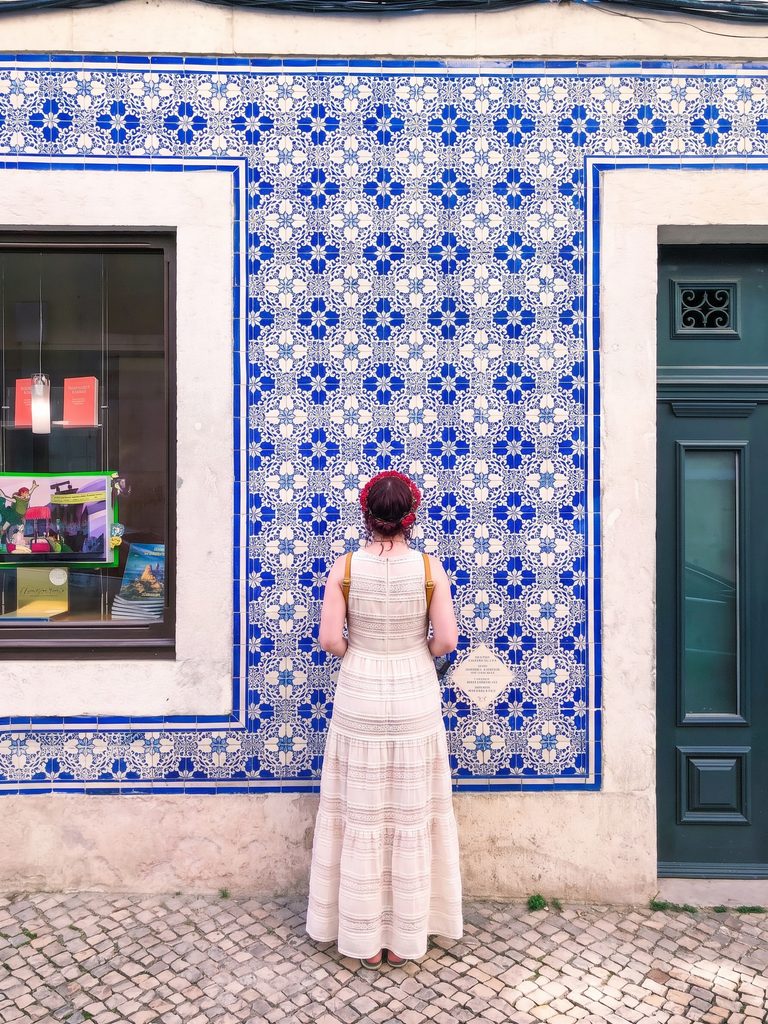
Bertrand Livraria on Rua Garrett, in Chiado, holds the Guinness World Record as the oldest operating bookstore in the world. It opened in 1732, though not quite on this spot: a French bookseller named Pedro Faure started it nearby, and the 1755 earthquake destroyed the original premises. The business reopened in 1773 on Rua Garrett and has stayed ever since, so what you’re photographing is a pre-earthquake business in a post-earthquake street. Today it stands like a quiet landmark in the middle of the busy city, with a plaque on the facade as the main sign of its status. Inside, the azulejo-tiled walls, in the blue and white so familiar across Lisbon, make a good place for a snapshot, and I love the way the patterns appear to bloom like flowers. Opening hours differ between published sources, so check bertrand.pt before you go.
Alfama District
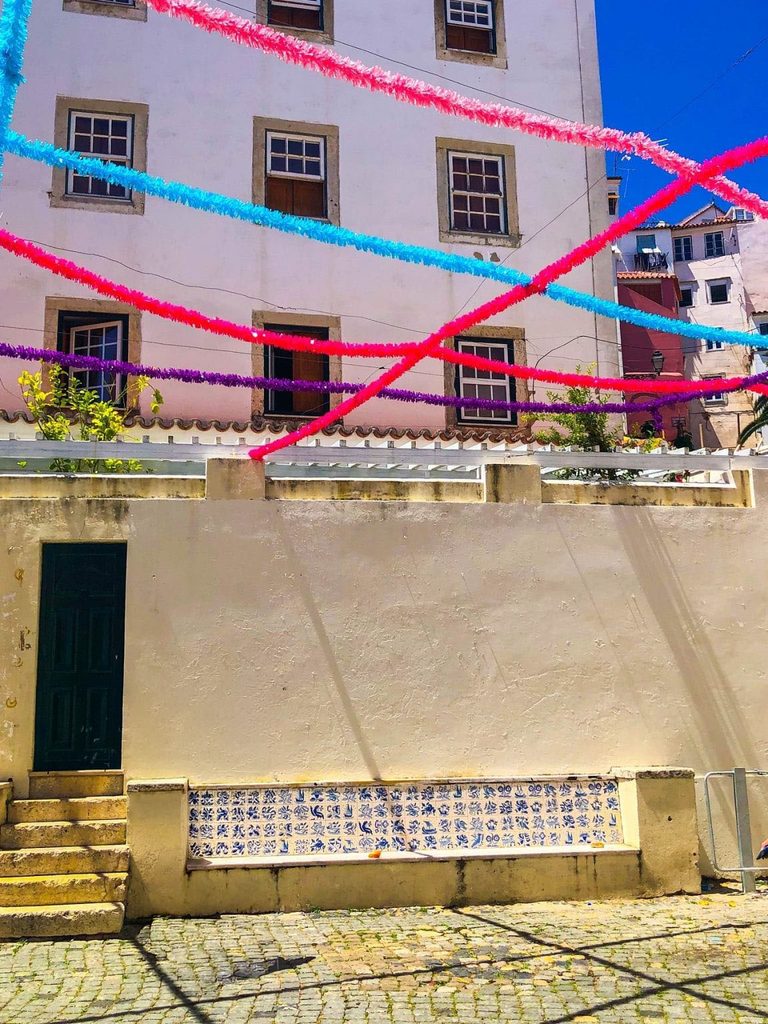
Alfama is one of the few parts of Lisbon that came through the earthquake of 1755 largely intact, and the district shows it: the streets are a tangle that dates to the Moorish and medieval city, in a town whose centre was otherwise redrawn on a grid. The name is usually traced to the Arabic al-hamma, meaning hot springs or baths. The district is littered with old houses along that street plan, cobblestone streets worn so smooth the stones are almost indistinguishable from one another, and some of the liveliest personalities the city has to offer. In June, during the Santos Populares festivities for Lisbon’s patron saint, Santo António, the squares of Alfama are alight with colourful banners and decorations, and there seems to be some sort of party happening almost every night. Set against the old stones and tiles, the colours and backdrops here are almost unreal.
Rua da Rosa in Bairro Alto
Bairro Alto is a neighbourhood that is quiet during the day, and yet at night it explodes with life. It took shape in the 16th century outside the walls of the old city, on a near-rectangular grid that was unusual for medieval Lisbon, and Rua da Rosa is one of its older streets. It’s where you’ll find many of the trendiest bars and the liveliest nightlife in the city. But during the daytime, it’s a peaceful place to explore, and to admire the iconic Portuguese tiles and brightly coloured apartment buildings. Walking down the streets, you’ll hear little beyond the sound of your own footsteps and the occasional resident sweeping off their front steps.

Bica Elevator
The Bica funicular, which most visitors call the Bica Elevator, is one of the most popular spots for a photo in Lisbon. It might seem overly touristy during the day, but in the early morning this part of the Bica neighbourhood is stunning and offers real photographic rewards. The line opened in 1892 to help residents of Lisbon get up the steep hills the city is built on, and it covers roughly 245 metres between Rua de São Paulo and Largo do Calhariz.
The cars and the surrounding streets are often heavily covered in graffiti, which somehow adds to the character of the area rather than detracting from it.
One caution for 2026: Carris suspended Lisbon’s historic funiculars after the Glória derailment of 3 September 2025, which killed 16 people, and the Bica was still closed in autumn 2026 with no reopening date announced. For now you’re photographing the street and the tracks rather than a moving car, and it’s worth confirming the current status on carris.pt before you plan your morning around it.

Rua da Condessa
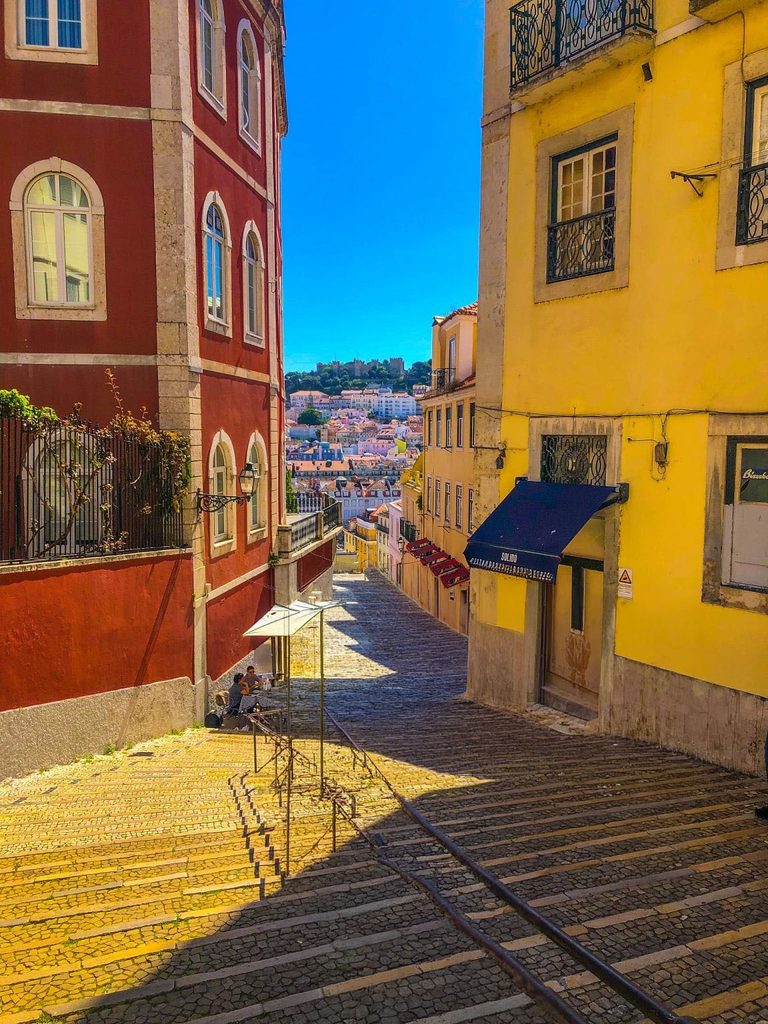
Rua da Condessa is one of the short streets near the top of the climb from Rossio into Bairro Alto, close to Largo do Carmo. Beside it, the Calçada do Duque falls away in a long staircase of a few hundred steps, flanked on either side by buildings that frame the view between them. Looking out, you’ll see the rooftops of the Baixa, the downtown grid that was rebuilt after 1755, and above them, high atop its hill, the Castelo de São Jorge, a Moorish fortress in origin, like the old guard looking down over the new city.
Miradouro de Santa Luzia
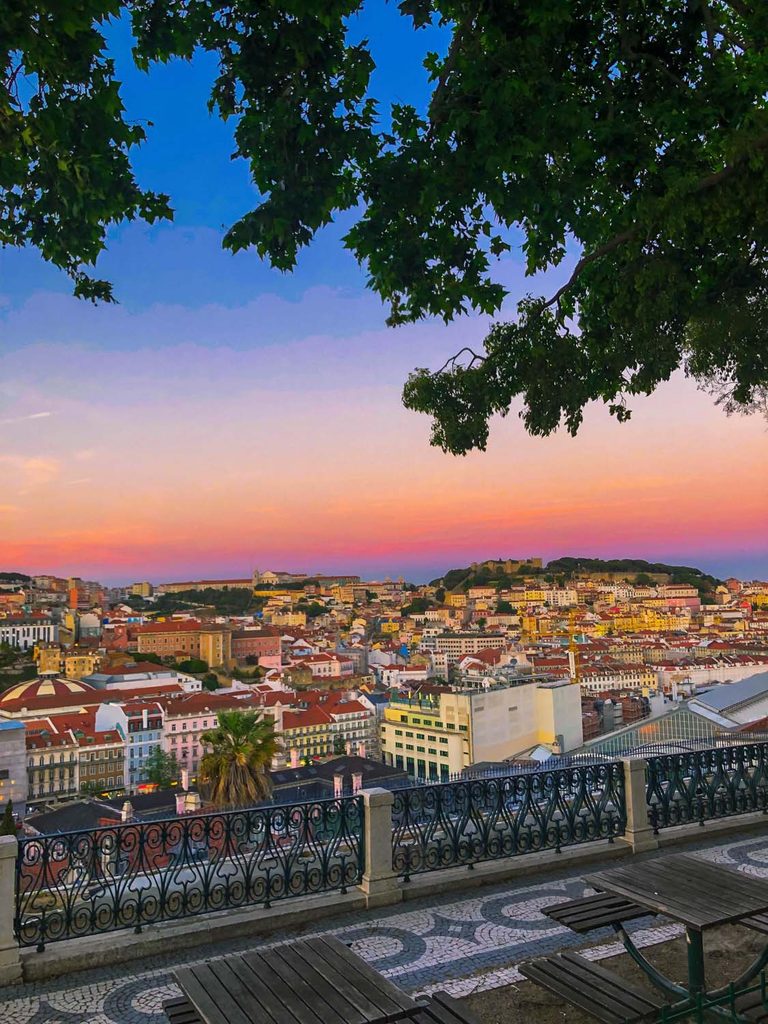
My favourite miradouro is the Miradouro de Santa Luzia. Not only does it have one of the finest views across Alfama and the Tagus, it also has a garden under a pergola draped in bougainvillea. The tile work is the real draw: two large azulejo panels on the wall of the neighbouring church show Lisbon’s past: Praça do Comércio as it looked before the 1755 earthquake in one, and the crusaders besieging the castle in the reconquest of 1147 in the other. No matter which way you’re looking, there is something to see here. This place gets crowded during the day, so arrive early, and come back around sunset if you can put up with the company.

Carmo Convent
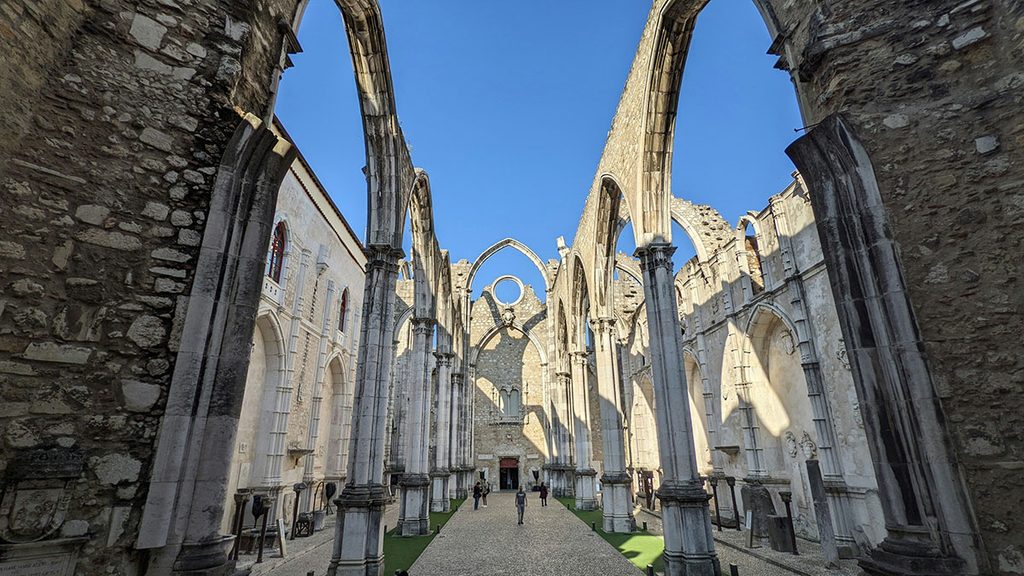
The Carmo Convent was once Our Lady of Mount Carmel, a Catholic convent in the heart of Bairro Alto, founded in 1389 by Nuno Álvares Pereira, the general who won the Battle of Aljubarrota four years earlier. Fire and earthquake in 1755 brought down the roof of the Gothic church, and its reconstruction was never completed, so the ruins were left standing as they are today. In 1864 the Association of Portuguese Archaeologists opened a museum on the site, and the former chancel is now enclosed to hold its collection. The interior of the convent, with its roofless view of the sky, is breathtaking.
If you’re there for one of the summer open-air concerts or an evening show, the ruins are lit up to pick out the architectural details, and the open nave leaves the stars above you. Admission was €7 for adults in 2026 listings, with the museum open Monday to Saturday (10:00 to 18:00 from November to April, 10:00 to 19:00 from May to October) and closed Sundays, but check the museum’s website for current prices, hours and evening events before you go.
Jeronimos Monastery
The Jeronimos Monastery was begun in 1501 by King Manuel I, who used money from the spice trade, largely raised through taxes on it, to fund its construction. Portugal was known for its explorers and made a fortune from what they brought home, which meant the builders worked with an extraordinary budget, and it’s for this reason that we find the opulent late Gothic building we see today, in the style named Manueline after the king. It also came through the 1755 earthquake with comparatively little damage, unlike most of Lisbon’s large buildings. No matter where you turn or where you look, there are exquisitely framed shots.
Hidden in the details throughout the building are oceanic elements, among them stone ropes, armillary spheres and coral motifs, reflecting this strong seafaring country, and they’re a joy to discover as you explore. The church is free to enter, while the two-storey cloister takes a paid ticket (€18 for adults in 2026 listings, ideally bought in advance for a timed slot). The monastery is closed on Mondays and on a handful of holidays, so confirm the current hours with the monastery before you go.

Tower of Belém
The Tower of Belém sits along the Tagus in the same district as the Jeronimos Monastery, and the two share a UNESCO listing. It was built between 1514 and 1519 for King Manuel I, to guard the mouth of the river and the approach to Lisbon’s harbour, and when it went up it stood on a rocky outcrop well out in the water, roughly 180 metres from the shoreline. The tower is both a military structure and an architectural gem of the city.
Standing on the riverbank and looking up at it is a magnificent sight. Inside, the tower reopened on 27 May 2026 after more than a year of restoration, with timed entry and a standard ticket of €15 in 2026 listings, so it’s worth confirming the current price and booking a slot before you go. You don’t need to go in to appreciate it, though: the view from the exterior is much prettier anyway, and exploring it from all angles along the banks of the river is more fun than waiting in line.

Arco Da Rua Augusta
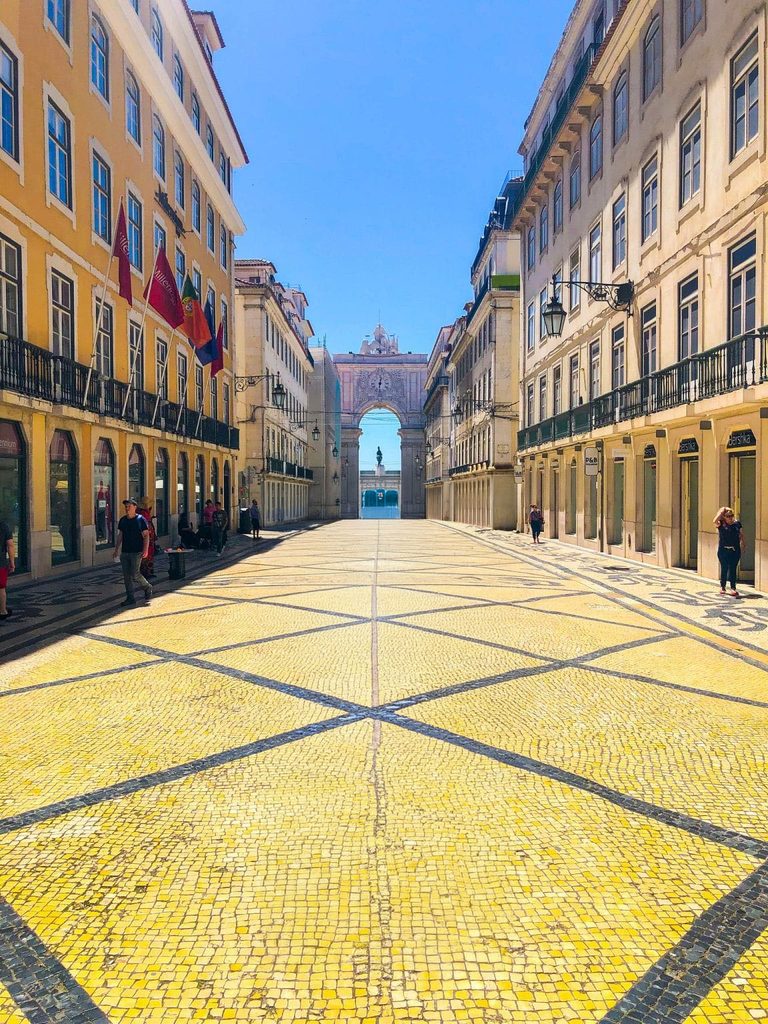
The entryway to Lisbon’s largest riverside square is the Arco da Rua Augusta. The gateway opens onto the Praça do Comércio, which looks out over the Tagus River on the site of the Ribeira Palace, destroyed in the earthquake of 1755. The arch was built to mark the city’s reconstruction and took well over a century to finish: work began in the decades after the earthquake (accounts of the start date differ) and ended in the 1870s, with 1873 the most commonly cited year. It stands at the end of one of the busiest streets in Lisbon, and sometimes it can get annoyingly touristy. But if you arrive early in the morning, you’ll be left with the elegant scene of the arcaded square laid out under the Marquis of Pombal after 1755. You can also go up the arch, by lift and then a narrow stair, for a view over the square and the Baixa grid; current listings give the ticket price as somewhere between €3 and €5, so confirm it at the entrance.
Taken together, these ten stops make a rough argument about Lisbon: the city you’re photographing is mostly the one that came after 1755, a mix of a medieval hillside that held up, a grid drawn from scratch, and a few ruins left as they fell. Whether it’s the tiled walls at Bertrand, the open nave at Carmo or the arcades of Praça do Comércio, the colour and the history are never far apart. Funicular service, tower entry and ticket prices have all changed since 2025, so check the current status of the places that matter most to you, and bring those extra batteries. Hopefully this helps in your search for the best Lisbon has to offer, and I’d like to hear in the comments which part of the city was your favourite, or which stop you’re most looking forward to seeing.
Happy Travel Adventurers!



Leave a Comment