
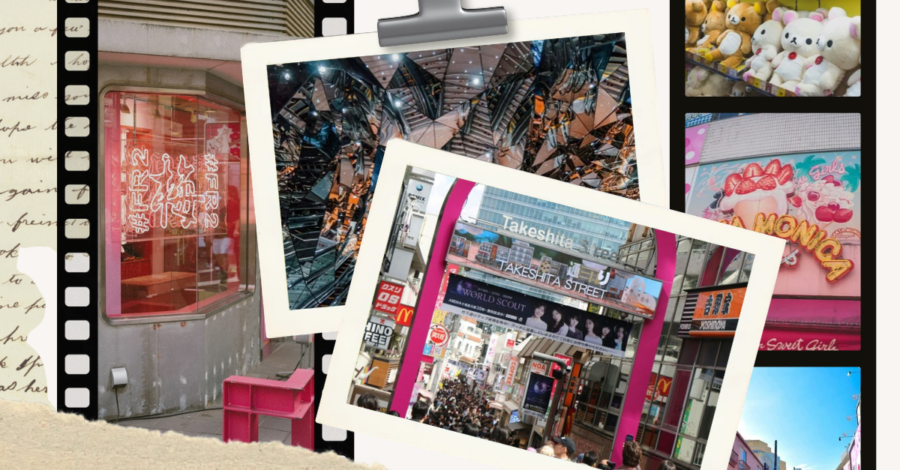
Let’s face it: travelling means seeing beautiful things, and for most of us that means taking a few pictures to bring home! Tokyo is one of the best cities in the world for photos, and nowhere in Japan is wilder, brighter or more colourful than Harajuku. But a word of warning first. Youth fashion has defined Takeshita Street since the 1970s, and for a long time Harajuku was the coolest place in Tokyo.
Then the crowds and the commercial polish arrived, the neighbourhood began to feel overrun, and it became much harder to tell the genuinely good spots from the tourist traps. Places also come and go quickly here, and a few stops from the original version of this walk have already closed.
So this guide is built as one early-morning walk for lovers of art, history and architecture, picking out what’s still worth your time: from a quiet forest shrine, past painted barrels, balloon archways, graffiti walls and giant rainbow candy, to a mirrored “stargate” on the Omotesando crossing. Follow the stops in order and you’ll have the best shots in the bag before the crowds arrive. For the first half of the walk you can shoot from the street without entering any shop or business, and by the second half most places will be open for interior photos.

Map of Harajuku Photography Walking Tour
Getting there
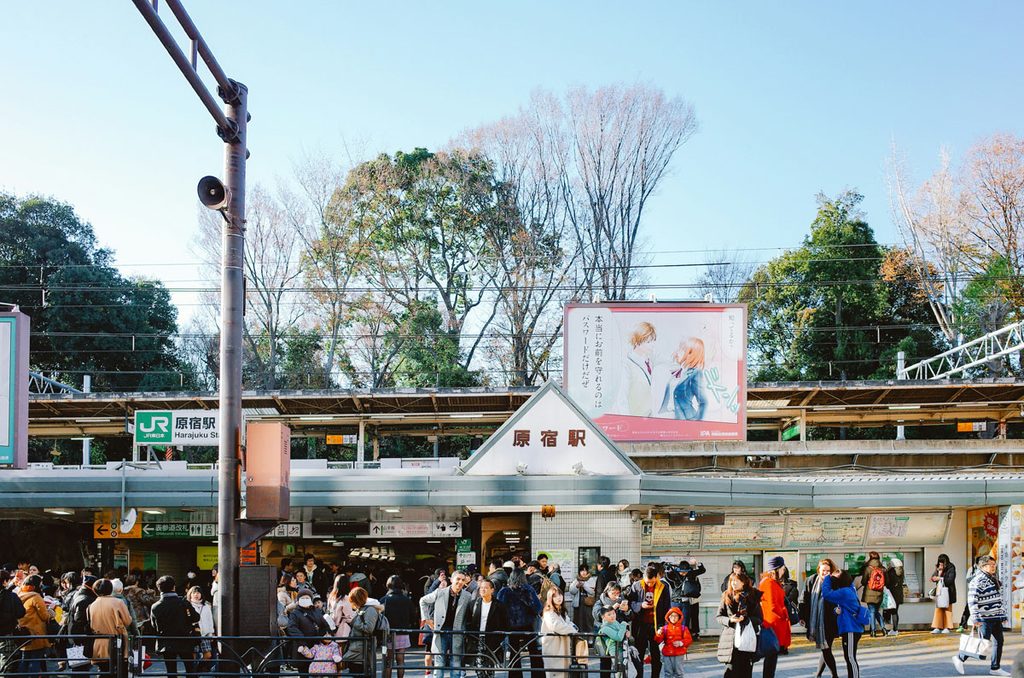
Take the JR Yamanote Line to Harajuku Station (Takeshita exit for the street; the shrine entrance is right beside the station), or the Tokyo Metro Chiyoda or Fukutoshin line to Meiji-jingumae.
Meiji Jingu Sake Barrels
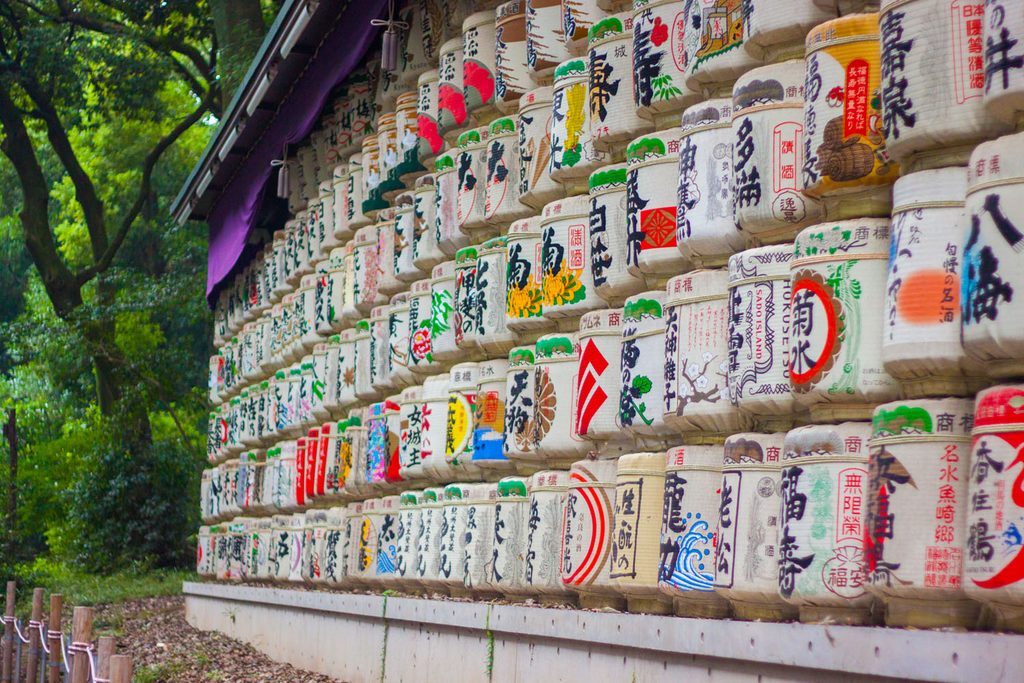
Right beside Harajuku Station, a peaceful forest path leads toward Meiji Jingu Shrine, and along it you’ll find a towering wall of colourful sake barrels, a rainbow backdrop for your first photos of the day. They’re called “kazaridaru” (decorative barrels), and brewers from all over Japan donate them as offerings to the enshrined spirits. Look closely and you’ll learn they’re empty, a symbolic gift rather than a real one. Opposite stand barrels of French wine, a nod to Emperor Meiji’s taste for Western culture. The shrine itself was dedicated in 1920 to Emperor Meiji and Empress Shoken. This is the most traditional stop on the walk, and a lovely way to begin your morning in this quiet little forest in the middle of the city.
Entrance to Takeshita Street
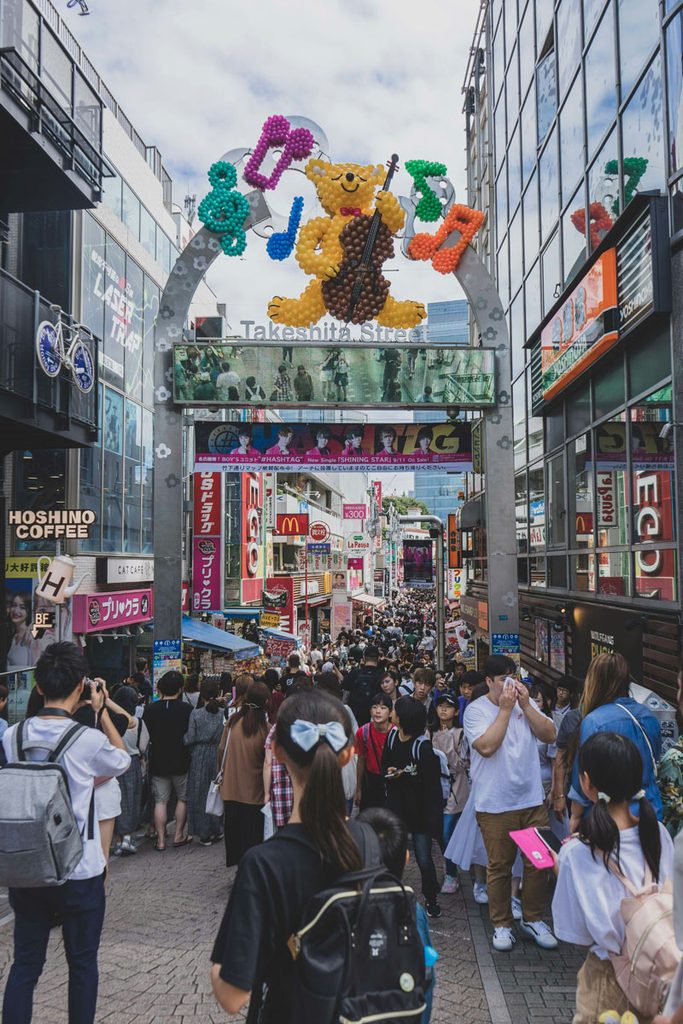
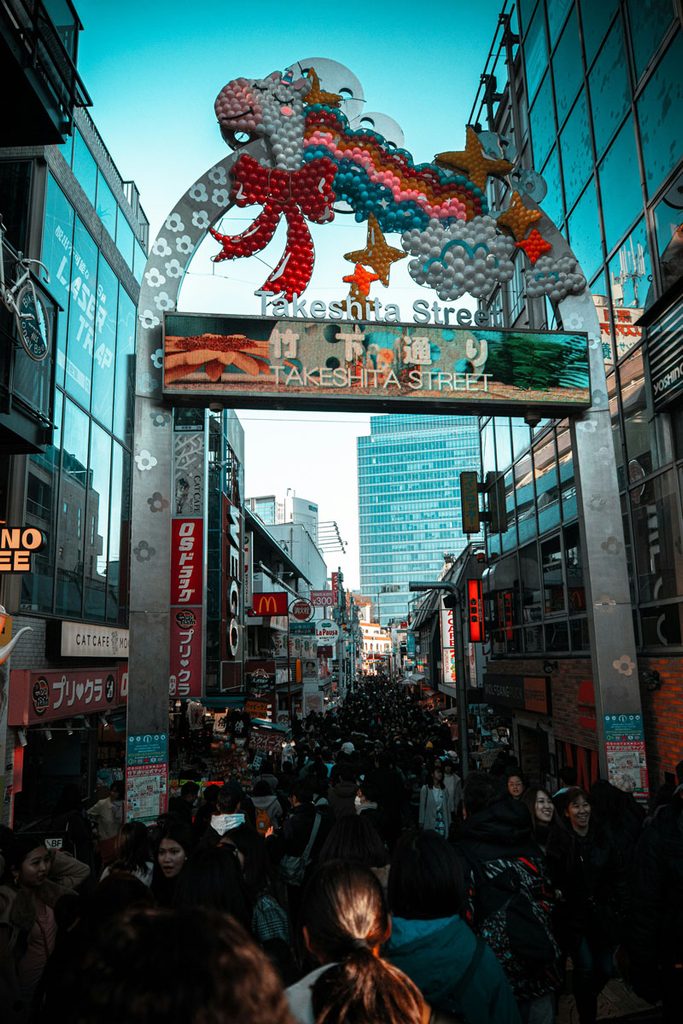
Takeshita Street is the main entrance into Harajuku, a pedestrian shopping lane that’s closed to vehicles from 11 am to 6 pm daily. Even without cars, it’s always filled with people, crowds so thick you’ll barely make out the pavement below. Arrive early, though, and it’s a different place: when I arrived around 7:30 am, the lane looked almost abandoned. Over the entrance, an archway is decorated with brightly coloured balloon designs that change often, and it makes the perfect frame for your photo into Har
Totti Candy Factory
If you’ve ever searched for photos of Harajuku, you’ve seen them: smiling girls holding GIANT rainbow cotton candy cones. These creations come from Totti Candy Factory, on the second floor of a building in the middle of Takeshita Street. There’s often a line-up, and while you wait you can watch the candy makers inside spin these sugary mountains of colour. The five-colour “Harajuku Rainbow” is sold only at this branch. Snap your photo quickly, since Japanese cotton candy is sensitive to humidity, then dig in!
Santa Monica Crepes
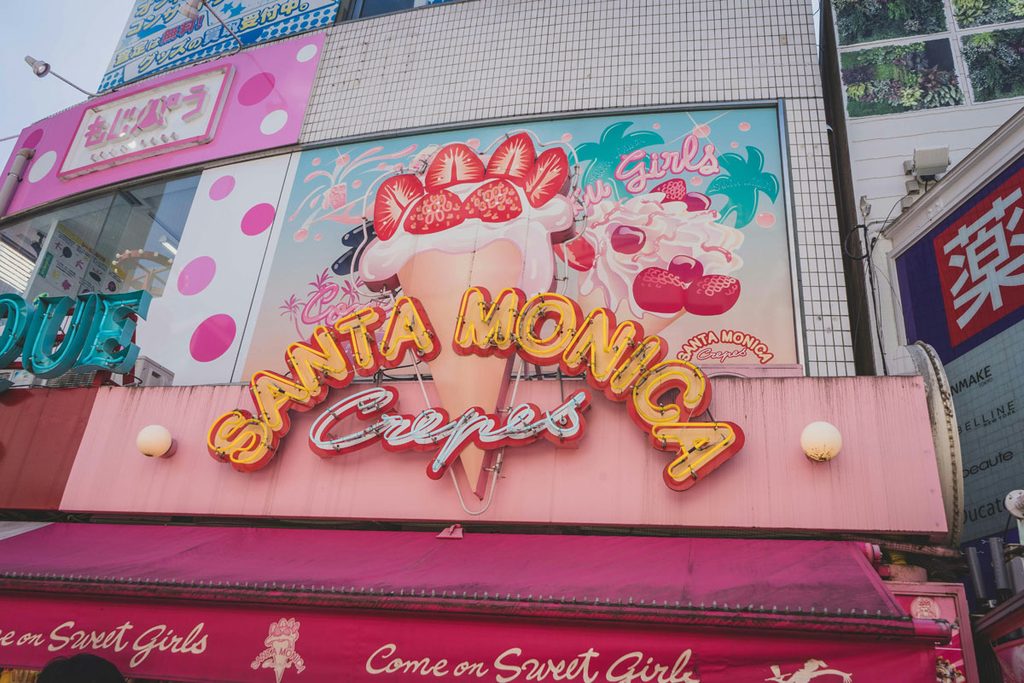
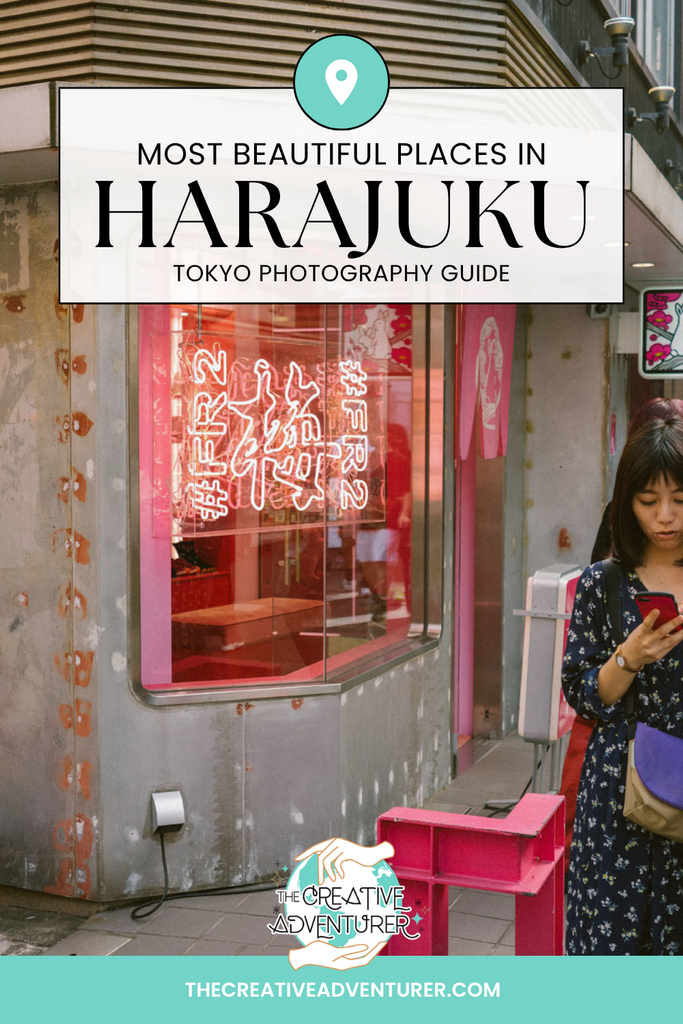
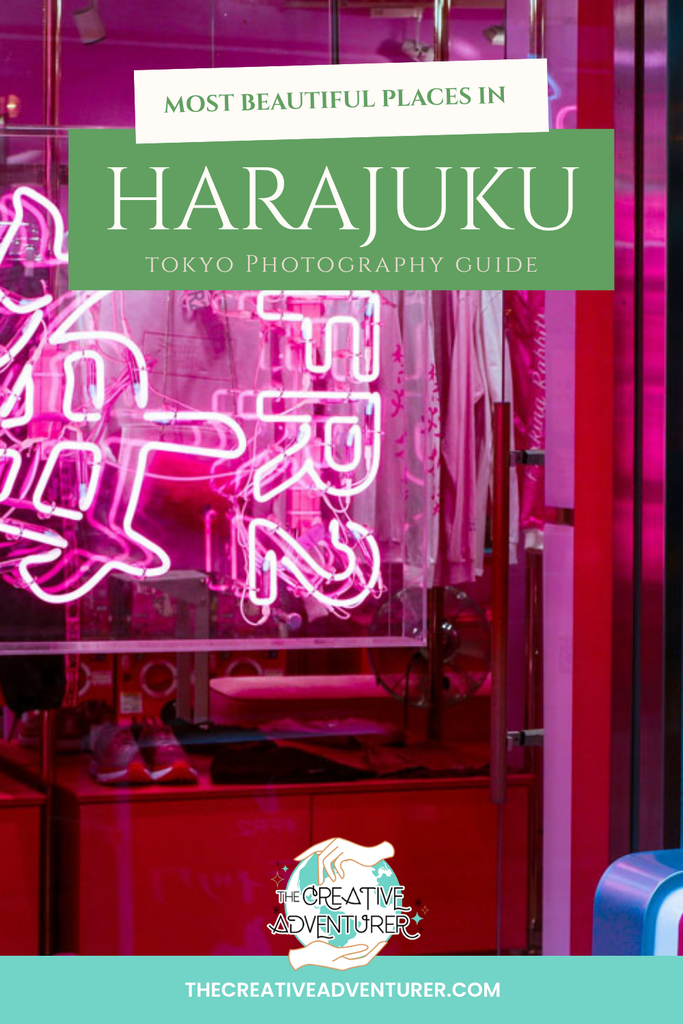
It might seem like a recent phenomenon, born of “food selfies”, but crepes have been a Japanese fascination for nearly 50 years: Marion Crepes, Japan’s first crepe shop, started life as a food truck in 1976 and moved to a permanent spot on Takeshita Street in 1977. Today you’ll pass many crepe shops, each showing off its dozens of flavours in elaborate displays and each seemingly determined to outdo the next, which makes them great photo stops. I love Santa Monica Crepes for its bright pink exterior and glowing neon signage.
Togo Shrine
Just off Takeshita Street, Togo Shrine is the quiet counterpoint to all that sugar and colour. It was established in 1940 to honour Admiral Heihachiro Togo, who led the fleet that defeated the Russian navy in the Russo-Japanese War, and it’s a compact sanctuary that many visitors skip. Look for the koi pond, wooden bridge, stone lanterns and little waterfall in the garden beside the main shrine; the pond is especially pretty when the lights of the shrine’s event hall shine on the water. It’s free to enter and has no closing days.
Design Festa Gallery
On the backstreets of Harajuku, about a nine-minute walk from the station, you’ll find the Design Festa Gallery, a free urban art space that opened in 1998 to give anyone with something to express a place to show it. Inside, two buildings and more than 20 exhibition rooms hold work by emerging artists from across Tokyo’s art scene, and the art spills onto the walls. But it’s the building itself that draws the crowds. A group of local artists reinvented these old apartments with hypnotic graffiti and a frenetic tangle of scaffolding that looks like an alien trying to swallow the building whole.
Now is Forever
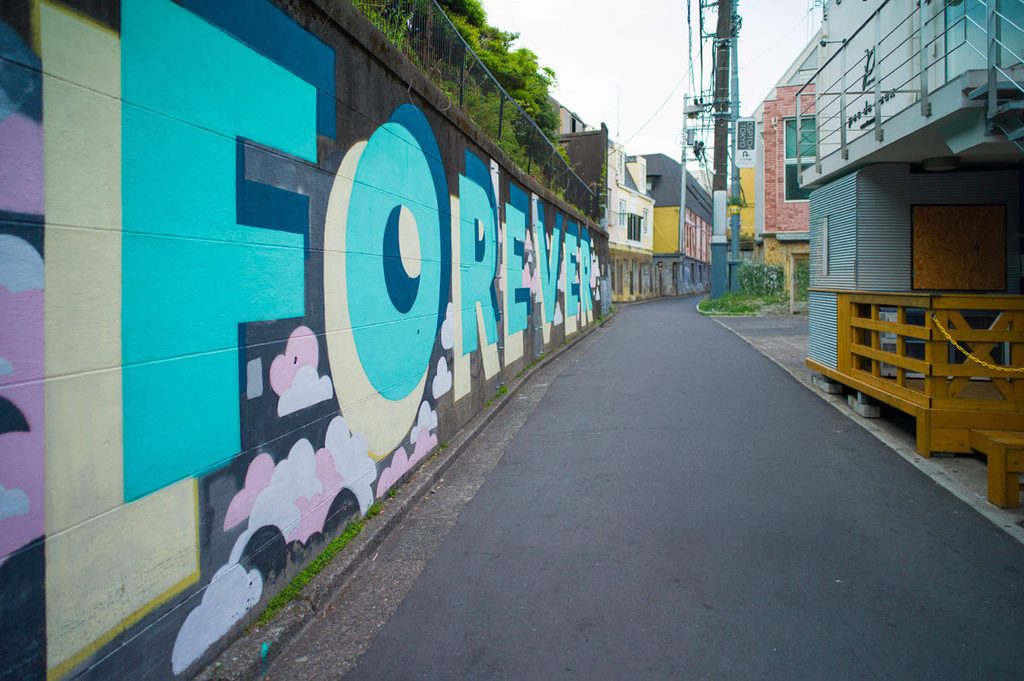
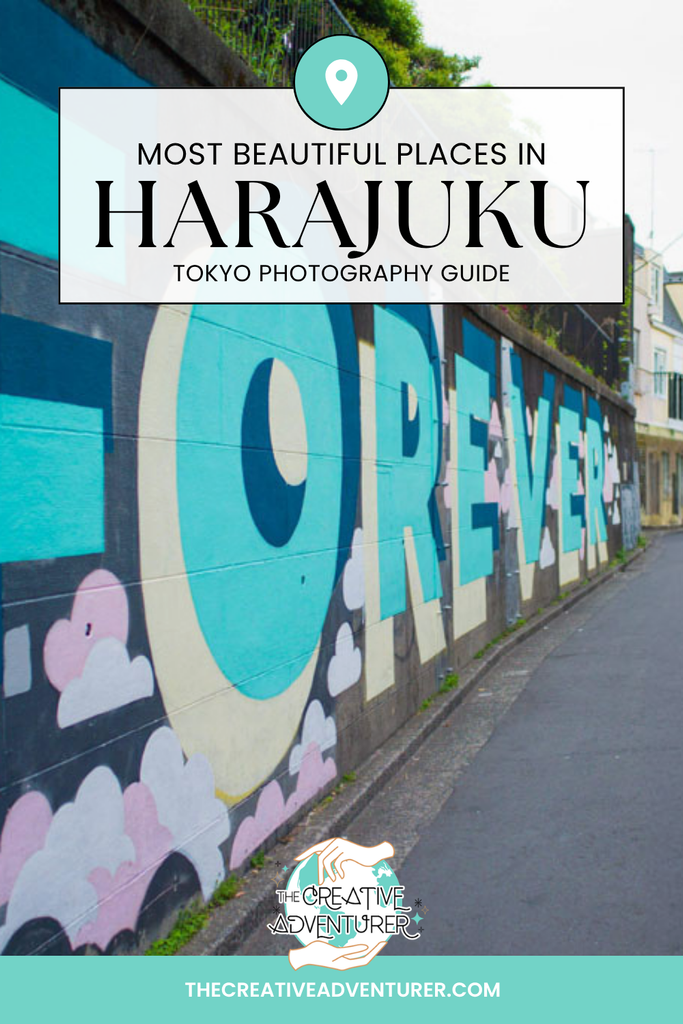
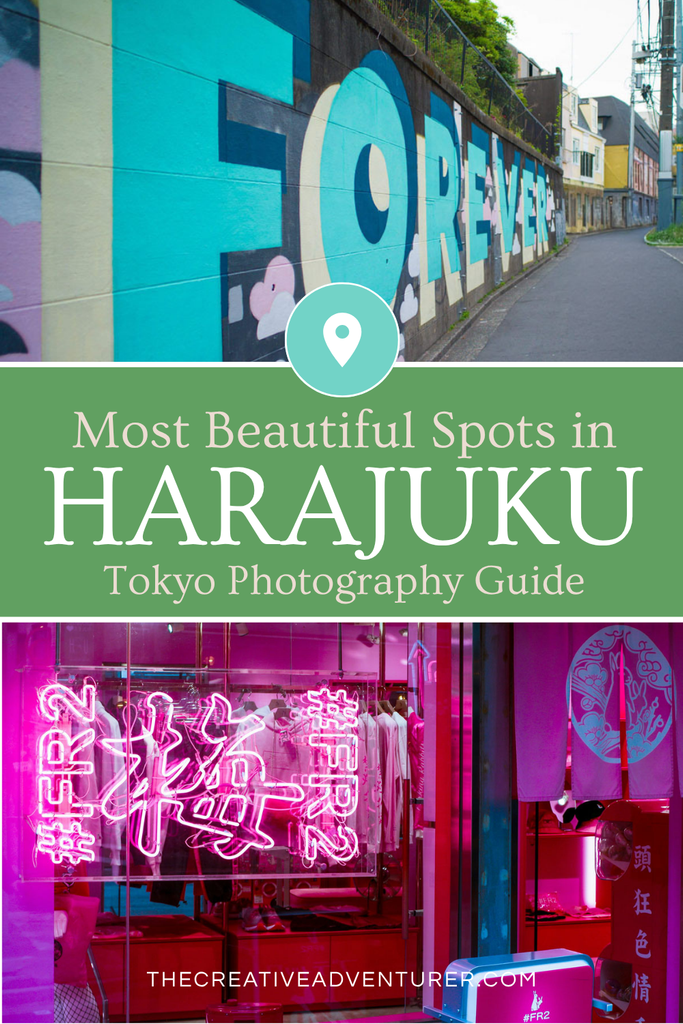
Further along the backstreets, near Cat Street, you’ll find the “NOW IS FOREVER” mural. American artist Stephen Powers (ESPO), who has painted love-letter murals in cities around the world, painted it in 2014, around the time of his first solo show in Japan. It was the largest of several walls he covered in Ura-Harajuku, and he has said the message grew from the pride and dedication he saw in the way Japanese people approach their work. It makes a great little photo op. Check recent photos before you detour, though: street art isn’t permanent, and one local guide reports that this mural was lost to construction.
Pink and Yellow Staircases (San To Nibun No Ichi)
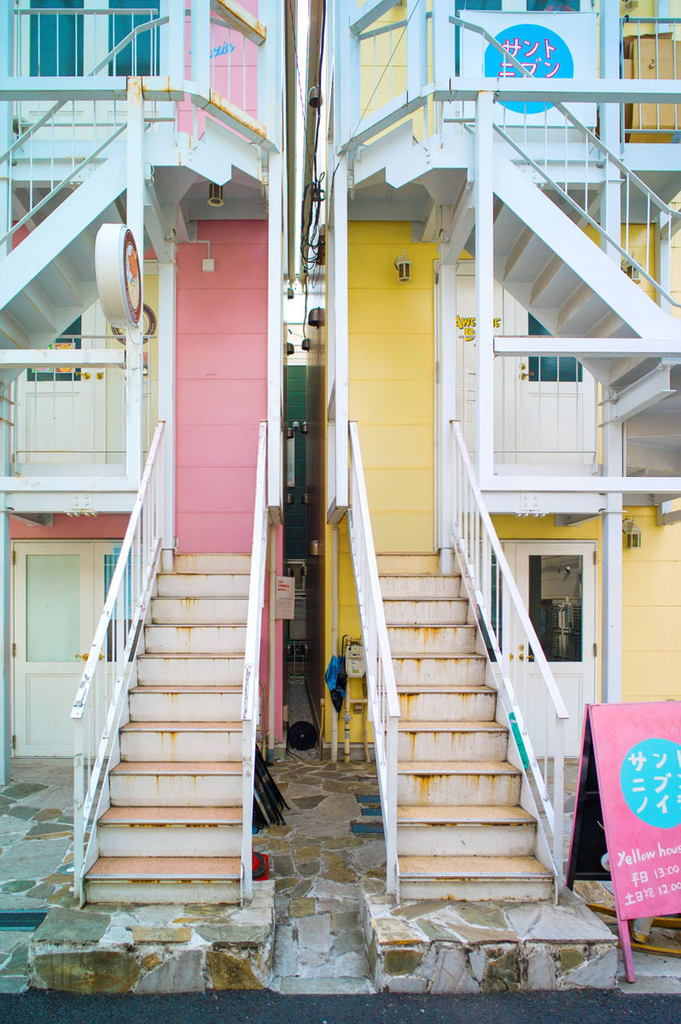
Tucked down a side street in Ura-Harajuku, near Cat Street, a pink building and a yellow one stand shoulder to shoulder, each with its own white outdoor staircase climbing to white-framed doors. Shoot straight up the gap between them and the two staircases mirror each other like a stage set, with stone paving at your feet. The yellow building (the “Yellow Building”, 黄色棟) is listed as home to San To Nibun No Ichi (サントニブンノイチ), an Osaka-born vintage and resale clothing shop known for oversized pieces and a storybook, children’s-room interior, on its third floor. A pink A-frame sign at the foot of the stairs points the way. It’s a street-level photo stop, so you don’t need to climb; if you do, the sign lists opening from 1 pm on weekdays and noon on weekends and holidays.
Tokyu Plaza Omotesando Harajuku
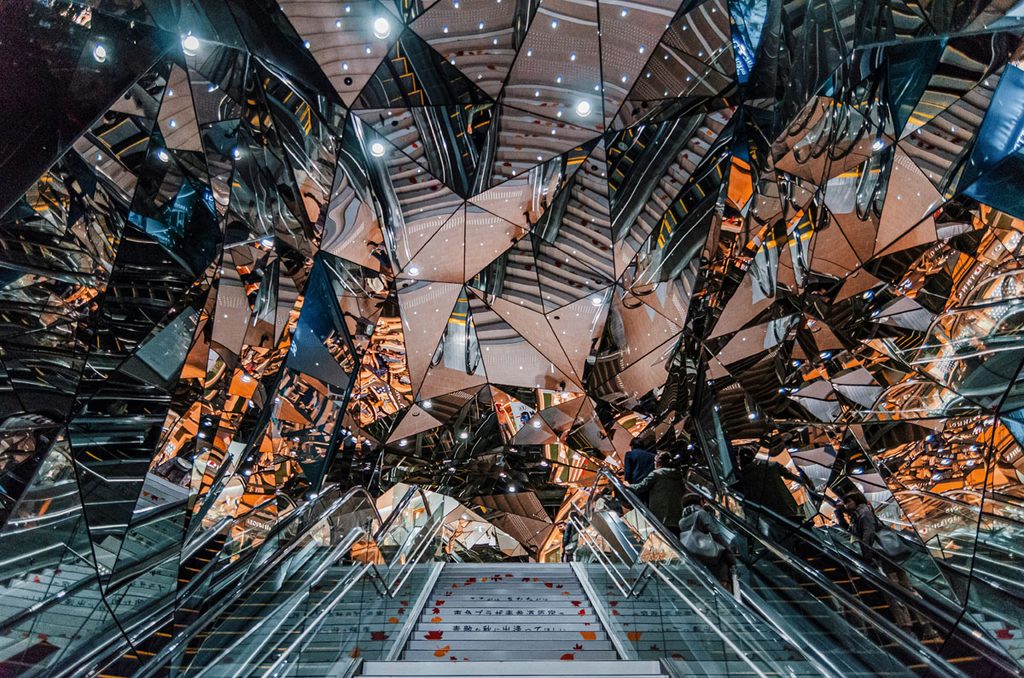
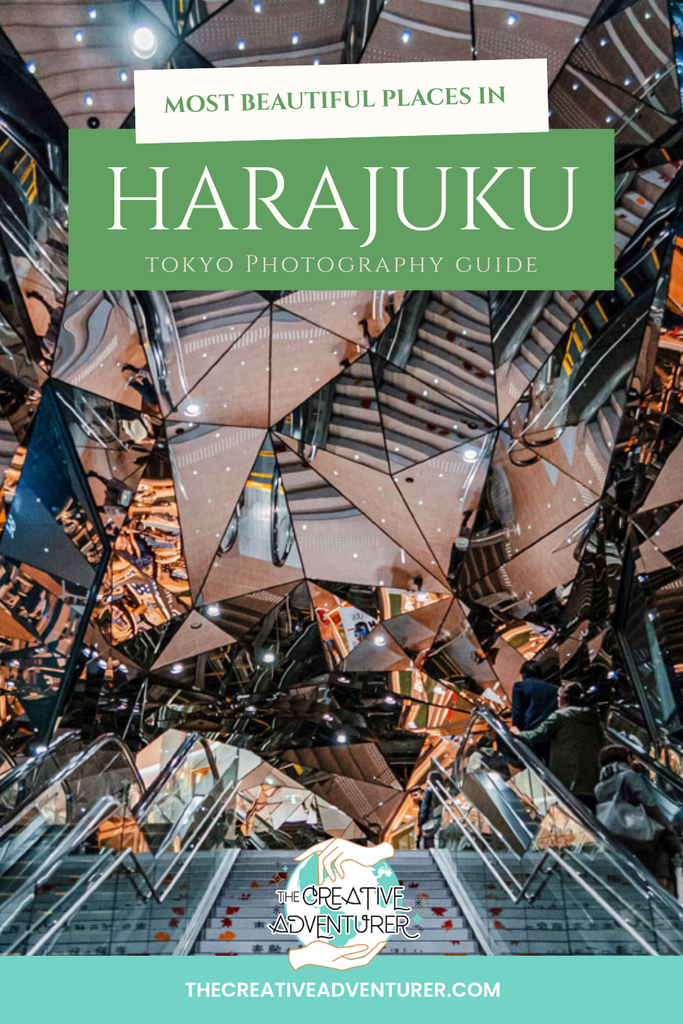
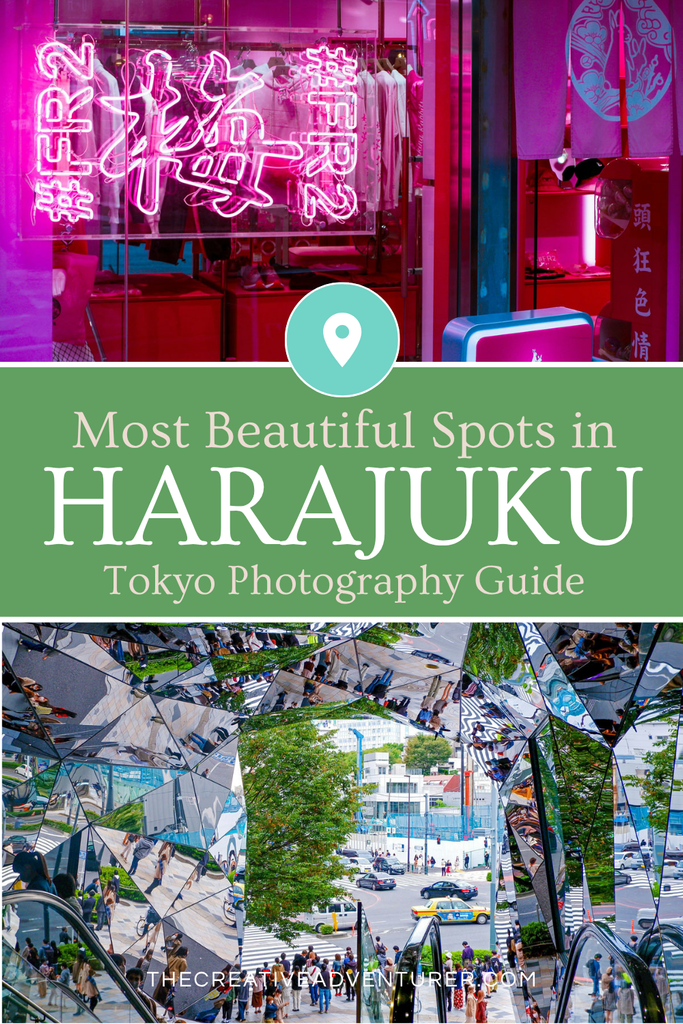
As you walk toward the crossing where Omotesando meets Meiji-dori, you can’t miss Tokyu Plaza Omotesando Harajuku, renamed Omokado in 2024. Architect Hiroshi Nakamura designed the building, which opened in 2012 and houses a mix of domestic and global fashion brands, but we aren’t here for the clothes. As you approach, the dazzling kaleidoscope of mirrors at the entrance will catch your eye, often likened to a stargate. Nakamura’s studio says the building echoes the memory of the mirrors at the old Central Apartments and the stone-wall patterns of Omotesando. Ride the escalators through the mirrored tunnel and you’ll see the crossing, the people and the colours reflected and changing all around you. Then head up to the sixth-floor rooftop garden, Omohara Forest, for a free view over Omotesando.
Tokyu Plaza Harajuku (Harakado)
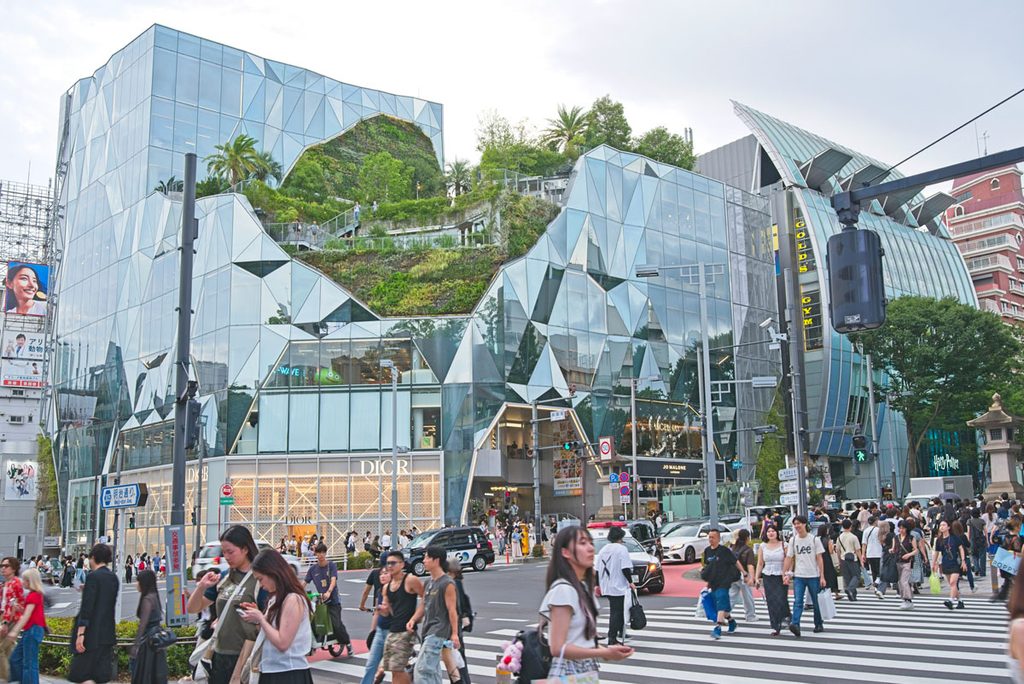
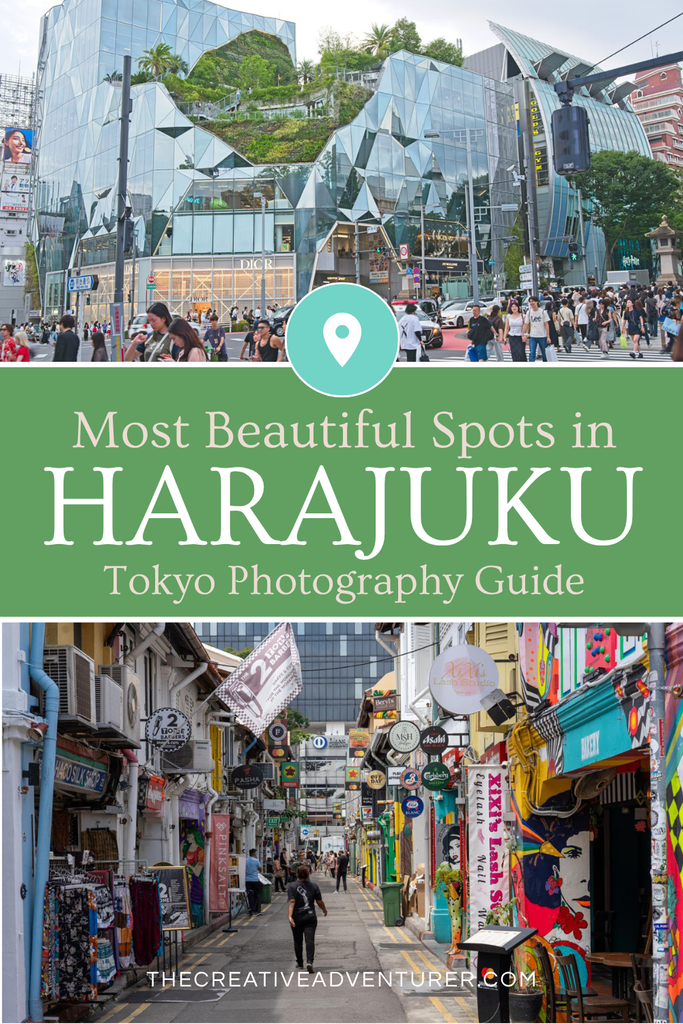
Directly across the intersection from Omokado stands its newer twin, Tokyu Plaza Harajuku, nicknamed Harakado (“hara” for Harajuku, “kado” for corner). It opened in April 2024, and architect Akihisa Hirata, working with Nikken Sekkei, gave it a faceted, reflective glass facade under the concept of “knitting” the city together, with a rooftop garden crowning the top. Stand on the crossing and you can photograph both mirrored corners at once, one from 2012 and one from 2024. The rooftop terrace, reached through the restaurant floors, has great views.
From a quiet forest path lined with sake barrels to a mirrored stargate on the Omotesando crossing, Harajuku rewards an early start. The same neighbourhood that’s shoulder to shoulder by midday gives you its art, history and architecture almost to yourself at 7:30 am. What were your favourite photo spots in Harajuku? Let me know in the comments!
Happy Travels Adventurers


Leave a Comment