
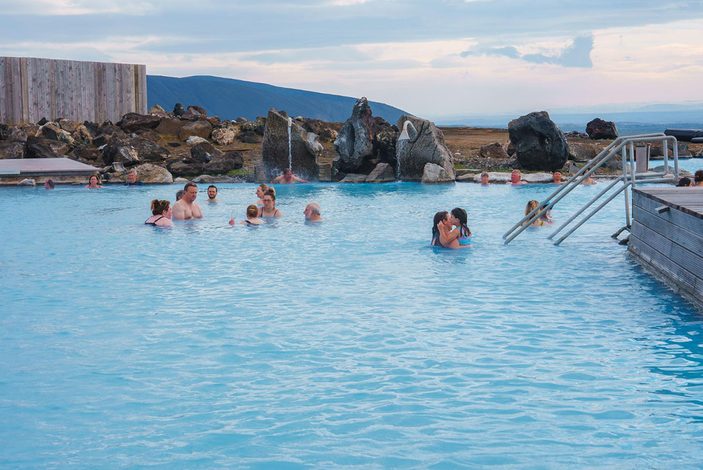
Going to Iceland without visiting the Blue Lagoon (or another geothermal spa) is a bit like going to Paris and skipping the Eiffel Tower, and it’s an outing almost anyone will enjoy, because it puts you in the water with a real piece of the country’s earthly power. The odd thing is that the lagoon isn’t a natural hot spring. It began in 1976 as the runoff pond of a geothermal power plant, and it became Iceland’s best-known bath because, a few years later, people decided to get in.
If you’ve never been to the Blue Lagoon before, this guide follows what I think makes for the best visit. Because Iceland is such a popular spot for airplane stopovers on their way from North America to Europe, many passengers choose to have a free 24-hour layover in Reykjavík. And when you land, usually it’s the first thing in the morning before any hotels have their check-in open yet. So, how better to spend the time than with a visit to the Blue Lagoon? Even if you’re visiting Reykjavík for a long trip, starting your day off with a dip in the water is the perfect start to the day. This guide covers everything from the airport shuttle to the steam cave, tickets, transfers and treatments. And includes the history because it’s stranger than the brochures let on…


How to Get to the Blue Lagoon?
If your flight arrives early in the morning, so early that even the cafés at the airport are shut, you can still board a shuttle at the airport that takes you and your luggage straight to the spa, where larger bags go into storage, and you can spend the rest of the morning in the water. It’s the perfect remedy for jet lag. If you’re coming to the Blue Lagoon from Reykjavík city center, operators such as Flybus and Destination Blue Lagoon run transfers to the Lagoon.
The trips from Reykjavík to the Blue Lagoon, Blue Lagoon to Reykjavík, Keflavík Airport to the Blue Lagoon, and Blue Lagoon to Keflavík Airport are each approximately $36.13 USD.

Driving to the Blue Lagoon
If you have rented a car, the Blue Lagoon is only about 20 kilometres from Keflavík International Airport (roughly a 20-minute drive). From the city center it is about 50 kilometres from Reykjavik, which takes 45 to 50 minutes by car.
Journey to the Lagoon
The drive out is a good part of the experience, and it gave us our first look at this gorgeous and strange country. The houses outside the city were unlike any I’d seen at home, with bright metal siding and colourful roofs set against an otherwise barren landscape. Along the water’s edge we passed what looked like stone figures carved from boulders, their bodies leaning into the surf, their hair seemingly blown back by the wind.
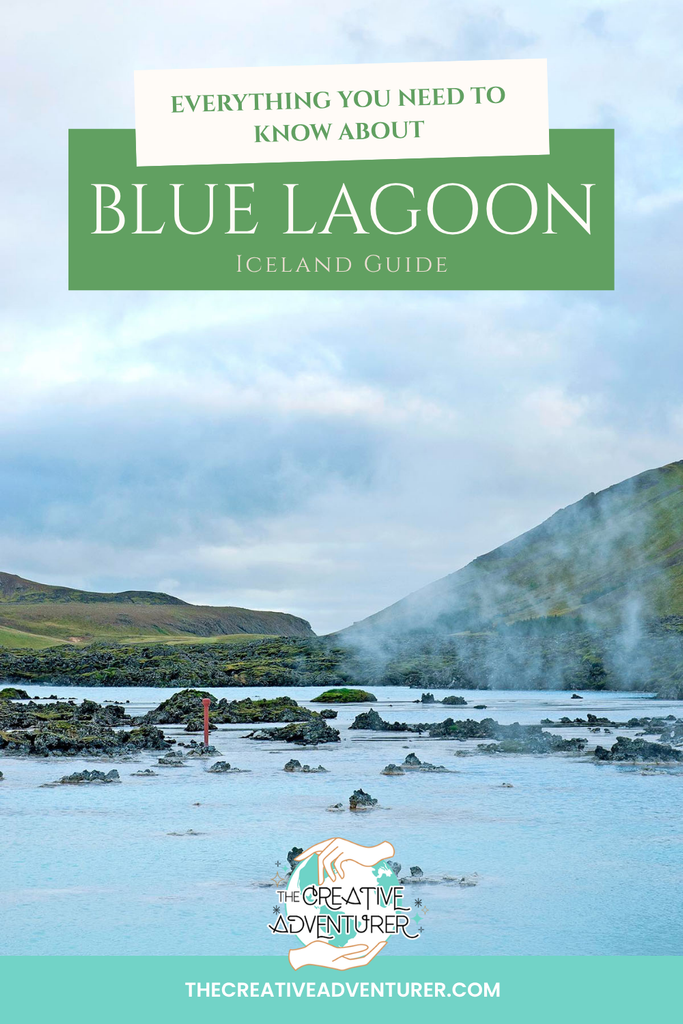
What held my attention most was the earth itself. It was such a strange colour, as if the whole landscape were made of nothing but moss, and that’s not far off: the lava fields of the Reykjanes Peninsula are blanketed in it. There were hardly any trees anywhere, just ground and mountains, so nothing obscures the view, and it felt a little like looking at the surface of Mars.


History of the Blue Lagoon
The Blue Lagoon is a happy accident. In 1976 the Svartsengi geothermal power plant began operating on the Reykjanes Peninsula, and its runoff water, rich in silica and other minerals, collected in a pool in the surrounding lava field. The minerals slowed drainage, so the water stayed. Around 1981 people began bathing in it, the first of them reportedly Valur Margeirsson, a plant employee with psoriasis who found that the water eased his skin. Word of that effect prompted research, the first official bathing facility opened in 1987, and the company behind today’s spa was founded in 1992. Visitors now come from all over the world, drawn in part by the lagoon’s reputation for soothing skin.
The setting has become less calm since 2023. The lagoon sits close to the Sundhnúkur crater row, which has erupted repeatedly since December 2023 (most recently from July to early August 2025), and the spa has closed at short notice during several of those eruptions. Earth barriers now surround the site. The most recent sources I found, from September 2026, report the lagoon open and no eruption under way, but it’s worth checking the Blue Lagoon’s own site and safetravel.is before you travel.

Booking Your Time Slot
Pre-booking is essential, because entry is by timed slot and the spa is popular. Other spas in Iceland offer a similar experience, but the Blue Lagoon is the one with the reputation. In winter, one of the best slots is around sunset: arrive about an hour beforehand and you’ll see the lagoon in daylight and in the dark, and watching the sun go down from the water is worth planning around. Opening hours shift with the season (recently roughly 08:00 to 22:00 outside the summer months, and longer in summer, though it’s worth confirming), so the sunset slot is a winter option. The northern lights season runs from about September to April, and on a clear night you might even see them from the water. The spa says it follows the aurora forecasts and dims its lights when the lights appear.

Choice of Package
Day visitors choose from three admission tiers, with the Retreat Spa sold separately. Comfort covers entry, a silica mud mask at the mask bar, a towel, a locker and one drink. Premium adds two more masks, use of a bathrobe, a drink of your choice at the in-water bar and a small take-home silica mask, and Signature adds skincare products to take home. Prices depend on the day and time you book, with less popular slots costing less, and the most recent starting prices I could confirm were ISK 11,990 for Comfort, ISK 14,990 for Premium and ISK 18,490 for Signature. The spa has revised both prices and inclusions more than once, so check the booking page before you commit. Any tier can be topped up with spa treatments for an additional cost. For a first visit I’d say Comfort is the best value.

Arrival at the Blue Lagoon
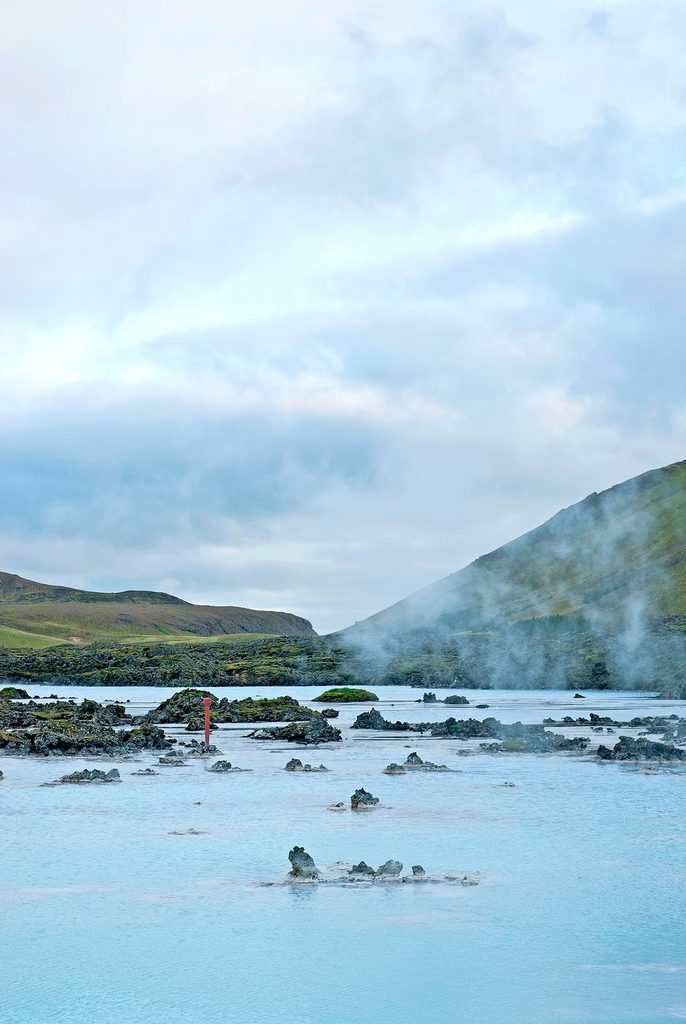
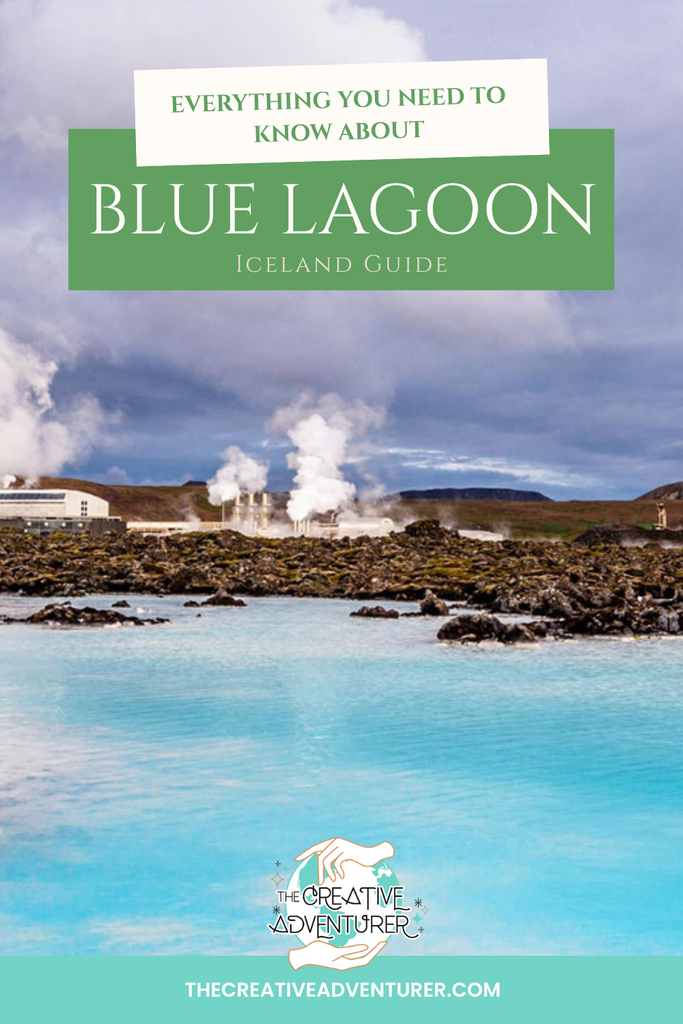
As we arrived, the hills parted in the distance and a faint trail of steam led up into the sky from where the lagoon sits. The Blue Lagoon is a geothermal spa, but unlike the natural hot springs found elsewhere in Iceland it is man-made, filled with geothermal seawater from the Svartsengi power plant next door. Don’t worry; it’s safe. The water is sampled regularly, the spa says foreign bacteria don’t thrive in it, and it renews itself roughly every 40 hours, so it needs no chlorine.
The black lava that frames the pools is natural, though the pools themselves are not. The water owes its reputation to silica, algae and other minerals, and its milky blue colour comes from silica particles scattering sunlight (the water itself is closer to white).


Checkin
At check-in you’re given a small blue wristband that lets you through to the pools and a bright blue towel to use all day. You can also buy or rent a robe or slippers, but we didn’t feel the need; in the colder months I can see why a robe would be a plus.
The changing rooms are communal, except in the Retreat Spa, which has private changing rooms (and a price to match), so be prepared to change around others. Arriving as early as we did, there weren’t many people, and it felt private enough. Before you put on your swimsuit, you need to take a cleansing shower. Icelandic hygiene rules require washing without a swimsuit, and some of the stalls have doors if you’d like more privacy.


Entering the Thermal Pools
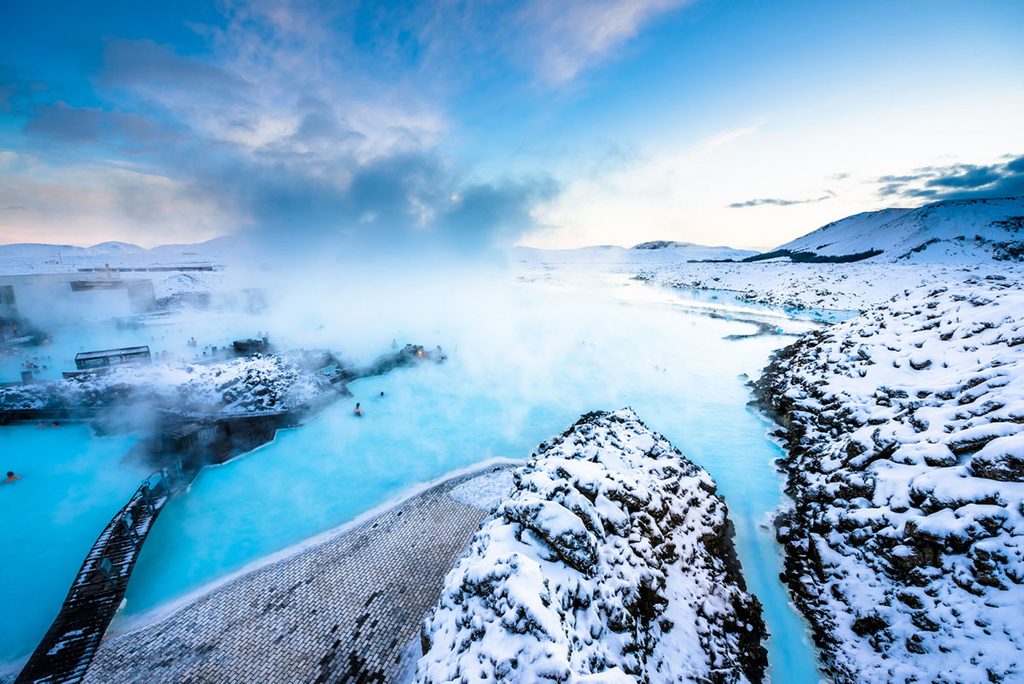
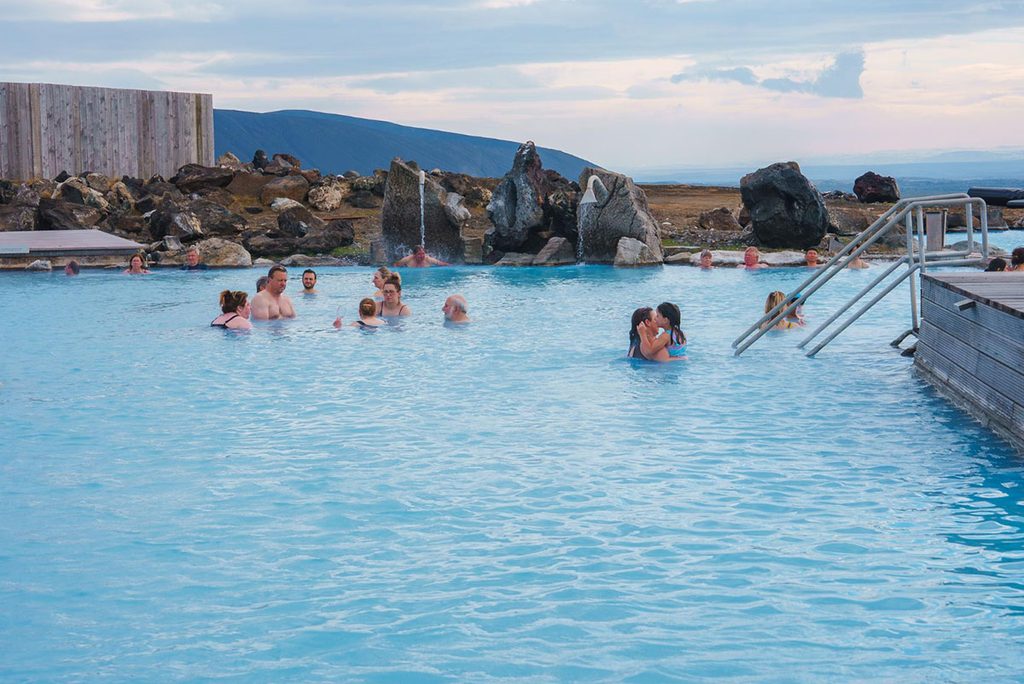
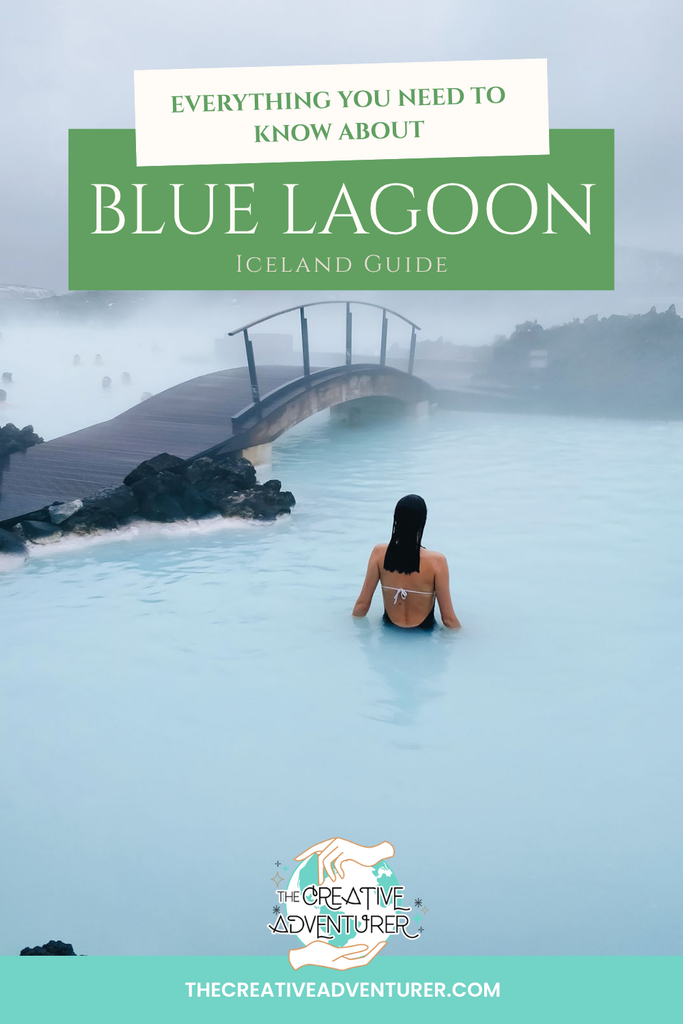
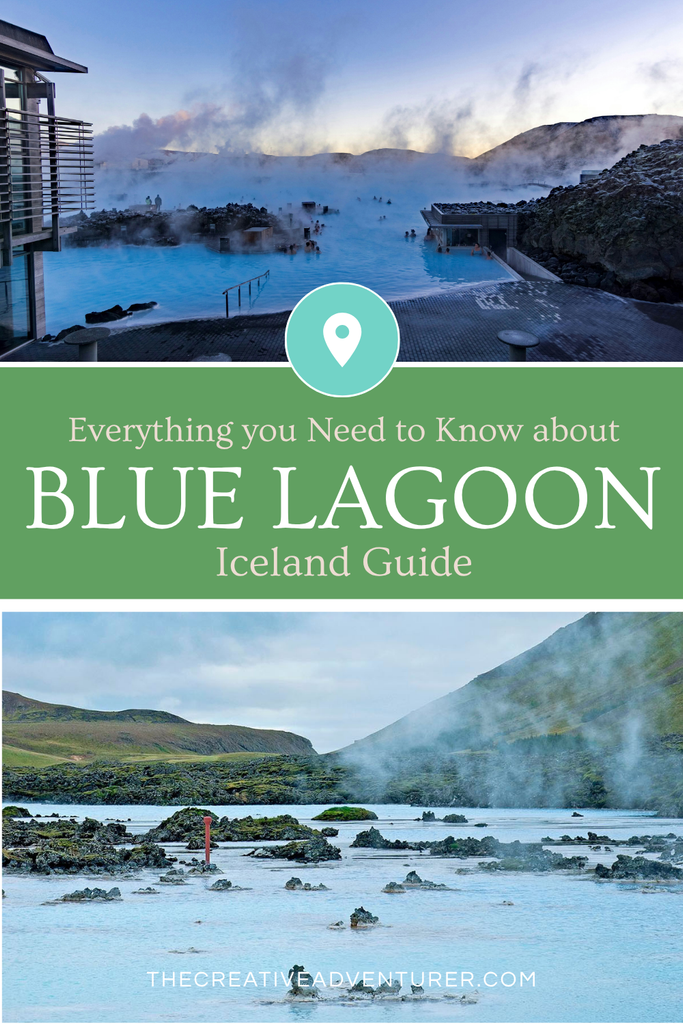
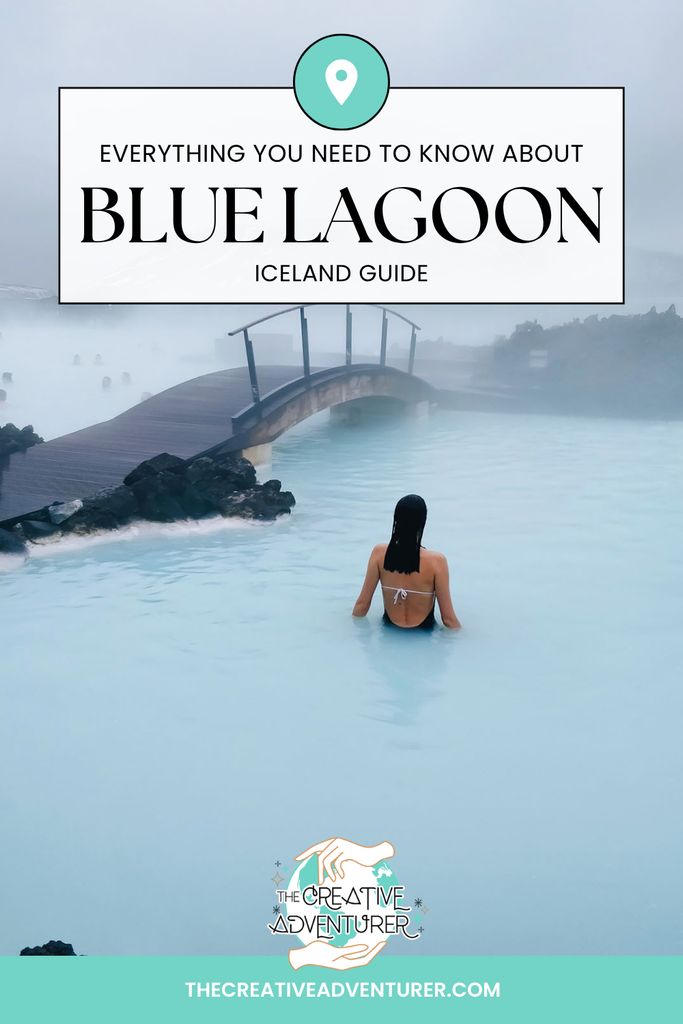
As soon as you walk through the doors to the outdoor pools, the sight stops you. The vivid blue water glowed in the sunlight, and puffs of steam rose off it like clouds. The pools were framed against rough, black, molten-looking rock, and it was hard to believe a power plant had produced something so beautiful. I was one of the only people outside that early in the day, and walking across the bridges and platforms toward the massage area, I felt lucky to be seeing something not many get to see: an empty Blue Lagoon.
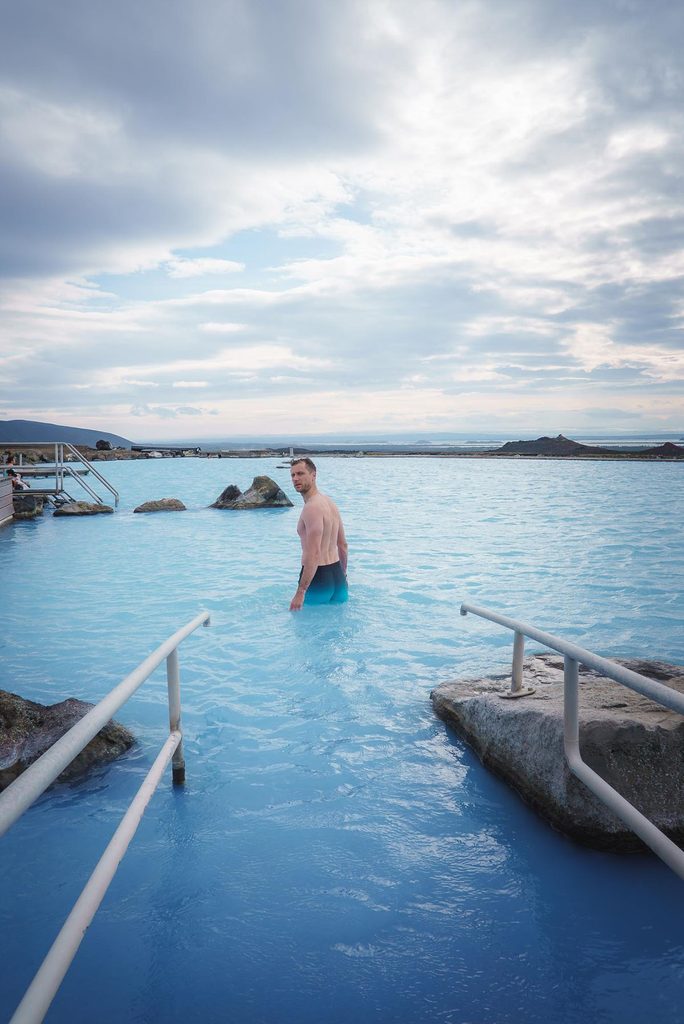
The water felt very hot when I dipped a toe in, but with the freezing Icelandic air around me I jumped in to escape the cold, and breathed a sigh of relief as the warmth closed over me. I swam gently around my tiny waiting pool and watched a man rub silica mud all over himself. After he’d left it on for a few minutes, the redness in his skin had all but disappeared when he washed it off. He rinsed in the showers and left without using the lagoon. I heard afterward (secondhand, and I haven’t been able to confirm it) that he was a regular whose doctor had arranged access for his severe eczema, since nothing else had brought him relief. It looked like magic.


Booking a Massage
One of the most unusual things you can book here is an in-water massage, which the spa describes as found nowhere else in Iceland. You float on a mat in a secluded section of the lagoon while a therapist works on you, so the massage, the warmth of the geothermal seawater and the volcanic landscape all arrive together. Recently listed prices start at ISK 20,900 for a 30-minute relaxing massage and ISK 52,900 for the 120-minute Signature massage, with the 60-minute treatment in between (listings I found put it at roughly ISK 27,000 to 29,000). Pages on the spa’s own site have differed, so confirm the current figures when you book.
My Experience
To get the complete experience I booked a 30-minute massage. When I arrived I was told to lie on a floating blue mat in the water, with a small pillow under my head and a large wet towel over my body to keep me warm. Unlike any massage I’d had before, this one leaves you weightless, and my masseuse could work on parts of the body that are harder to reach on a table.
Floating there, she could move around me like a fish. When she finished, she pushed my mat to another part of the lagoon, where I lay for a few minutes with my eyes closed, letting a sense of perfect calm settle over me. I almost fell asleep, but when I opened my eyes and sat up, I saw that the whole pool had filled with hundreds of people. I peeled my jelly-like limbs off the mat, went to find my friend, and swam in the milky blue water.
Benefits of the Waters
The water here is very salty. I also noticed that different parts of the lagoon had different degrees of warmth, which makes sense if you look at the spa’s own map: temperatures range from about 37 to 42°C, and the hottest water is near the spots where it flows in. Because the lagoon renews itself every 40 hours and foreign bacteria don’t thrive in it, there’s no chlorine to dry out your skin, though the minerals are hard on hair (more on that below). There were a few little nooks where you could sit and relax, and there was even a waterfall so powerful that standing under it felt like being crushed, though oddly enough it was great on sore muscles.
Silica Mud
We put silica mud on our faces at the mask bar, which the spa promotes as a skin treatment, and then swam around loving the feel of the silica squishing between our toes (the lagoon floor is powdery with it). We giggled and laughed like kids again, playing in the mud and splashing around the pool.
Steam Rooms
Besides the sauna and steam room, there’s a steam cave, an earthen chamber that looks like a little hobbit hole in the hillside. When you step inside it’s almost pitch black, with bursts of steam rising from the ground, and sitting on one of the benches felt like breathing in hot lava. It was a mysterious but enjoyable experience. I was too scared to stay for long, though we stayed long enough to decompress and let the hot air fill our lungs.
A Note About the Water on Your Hair
The water in Iceland’s Blue Lagoon will not permanently damage your hair, but its high silica content will make it extremely stiff, dry, and unmanageable for several days. To prevent this, coat your hair heavily with conditioner before entering the water and keep it tied up to avoid getting it wet. If your hair does get wet, washing it two or three times with a deep clarifying shampoo and conditioner will restore it to normal.


Before You Leave
Basking in these waters is relaxing, but take breaks. The heat is dehydrating, so drink water throughout your stay rather than waiting until you feel faint. Take the hair advice seriously too. The silica makes wet hair stiff and hard to manage, so the spa recommends putting conditioner on before you get in and leaving it in while you soak (long hair is better tied up), then rinsing and conditioning again afterward. Conditioner is provided free in the showers, and some people even leave it in while they get dressed.
The comparison with the Eiffel Tower only goes so far. The Blue Lagoon is a by-product of a 1976 power plant, and it’s man-made to the last pool, but the heat, the silica and the black lava field around it all come from the island itself, which sits on the Mid-Atlantic Ridge and runs much of its heating on the same geothermal energy. That makes a morning in the water a reasonable first lesson in how Iceland works, and a good argument for seeing the strange and mysterious sides of this great country with your own eyes. Book your slot ahead, check the volcano’s status before you travel, and put the conditioner in before you get in.







3 COMMENTS
Sarah Bell
3 years agoThank you for your informative review of the Blue Lagoon. My husband and I have booked a stop over in Reykjavik and it’s good to know about the early airport bus straight to the baths. Do they offer breakfast at the spa? Do you know if there are convenient buses going into the city from the Blue Lagoon? If so, do they make stops at different hotels or just at the bus center in town? Also do you recommend any hotels in Reykjavik?
The Creative Adventurer
3 years ago AUTHORYou can take the Destination Blue Lagoon bus back into the city, the same one you took from the airport. https://destinationbluelagoon.is/transport
The bus will take you back into the city to the Reykjavik Terminal. From there we simply walked to our hotel since Reykjavik is very small. But it depends where you’re staying. And yes the spa cafe does indeed offer and early morning breakfast option.
zidane
7 months agothanks for the information