Disclosure: I received this tour for free. The opinions here are entirely my own.
I love a guided tour. And I LOVE food, especially in a new city. However, over the years, I’ve found that many food tours disappoint me. Why? Because unless you’ve never been to the country in question, the food can be disappointingly boring and repetitive. In Spain, I’ve been on several food tours where you’re served a plate of manchego, a few slices of jamón, a glass of something red, and a guide reciting facts I’ve heard a hundred times before. And eaten the same menu in entirely different cities, despite their cultural differences, especially when it comes to cuisine. And sure, they might be traditional food, but they lack any personality, or frankly, the price tag you’re paying.
Having spent a great deal of time in Barcelona, and eating tapas dishes constantly, I went into Eating Europe’s Gothic Quarter VIP Tapas & Wine Tour with my guard up. BUT, I came out blown away! Not only was the food incredibly delicious, but they blended traditional ingredients with inventive techniques and flavours that gave classic dishes a fresh edge. I don’t want to spoil their locations, as I do think this tour is worth your time; I want to give you a sneak peek into what to expect and why you should be booking this tour for your next trip to Barcelona.
- The Tour at a Glance
- Why the Gothic Quarter Is Hard to Eat Well In
- The Guide Made the Difference
- A Small, Warm Group
- A Walking History Lesson
- Stop One: Spanish Classics, Elevated
- Stop Two: The Hidden Gem
- Dietary Needs: A Vegetarian’s Experience
- Stop Three: Dessert in a Room Full of History
- Is It Worth the Price?
- Practical Tips Before You Book
The Tour at a Glance
- Duration: about 3.25 hours
- Departures: daily at 12:00, 18:00 and 19:00 (I took the 7 p.m.)
- Group size: small, capped at 8
- Stops: 3, with 8 to 12 tastings and 3 drinks
- Price: from €137 per person, with all food and drink included
- Meeting point: Plaça de Ramon Berenguer el Gran, in the Gothic Quarter
Why the Gothic Quarter Is Hard to Eat Well In
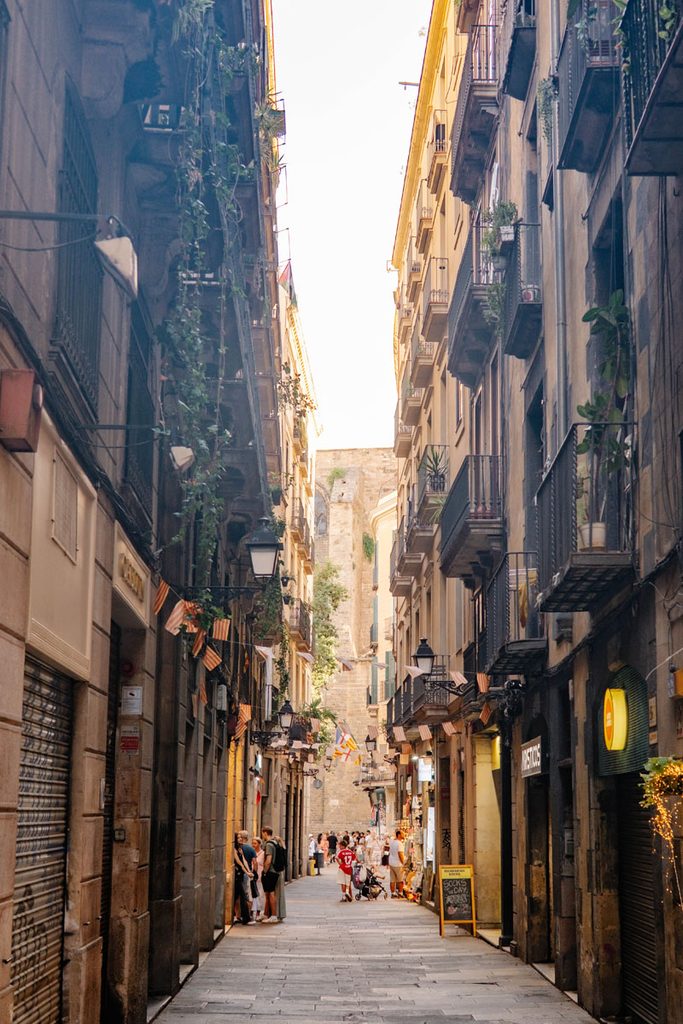
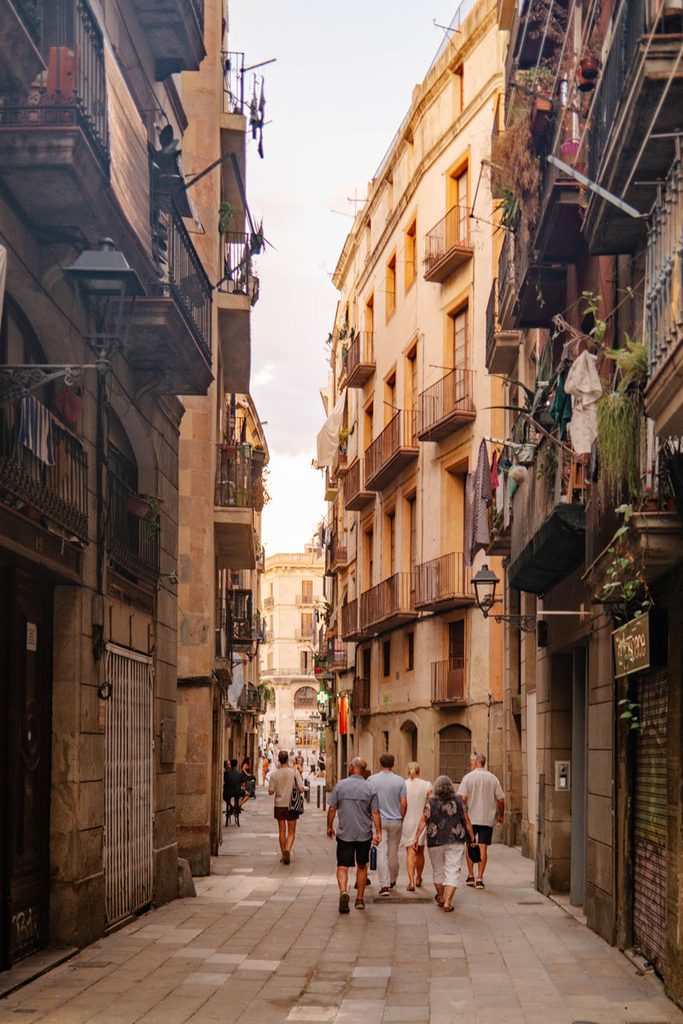
If you’ve only passed through the Barri Gòtic on your way somewhere else, you know the problem. It’s one of the most atmospheric neighbourhoods in Europe, a tangle of narrow lanes, Roman walls, medieval churches and hidden plazas, and it’s also one of the easiest places in the city to eat badly. Waiters wave at passersby from doorways, barking at them to get inside (one of my biggest pet peeves). Paella is too often promoted with AI-generated photos outside restaurants, only to arrive reheated from frozen. And more often than not, you’re paying through the teeth for sub-par, disappointing tapas, which can give people a bad taste in their mouth (quiet literally) about the Barcelona food scene.
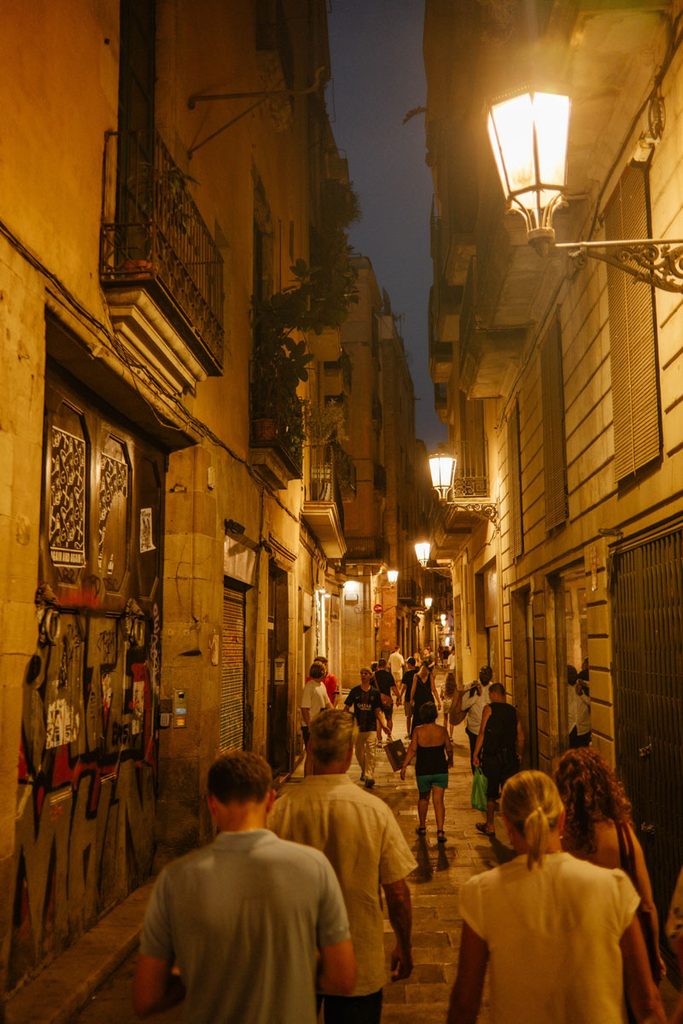
So, when I read that this food tour was taking place in the Gothic Quarter, I was skeptical. But after chatting with our guide Lindsay, I learned that she actually designed the tour and selected the restaurants, and she made it her mission to select genuinely excellent, family-run kitchens that do exist here. But they’re tucked behind unmarked doors and down side streets, and at the edges where the Gothic Quarter meets El Born.
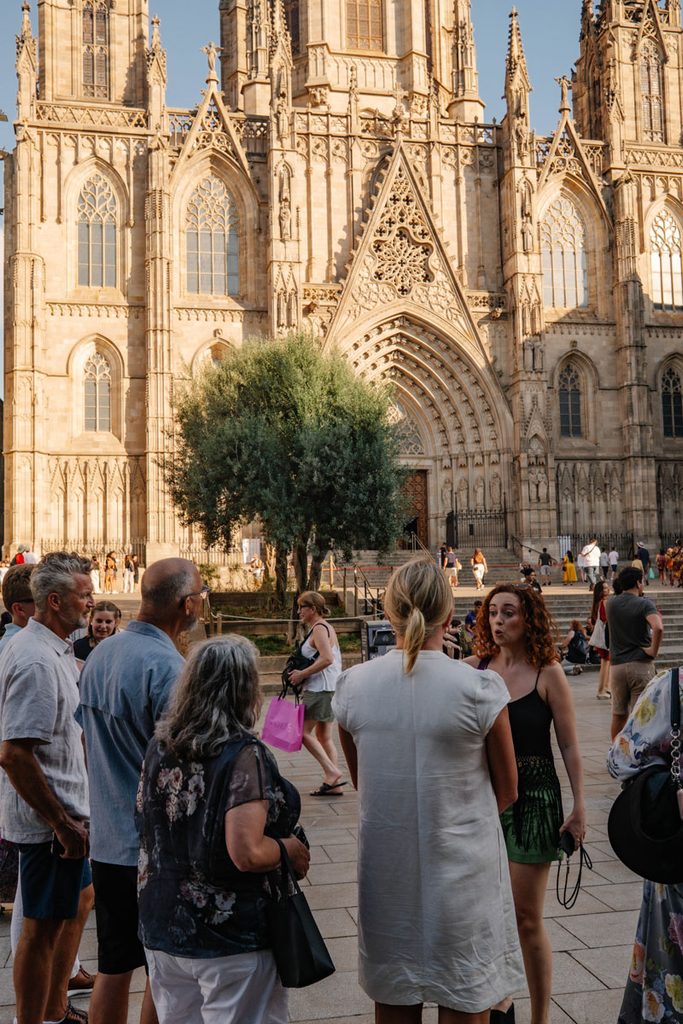
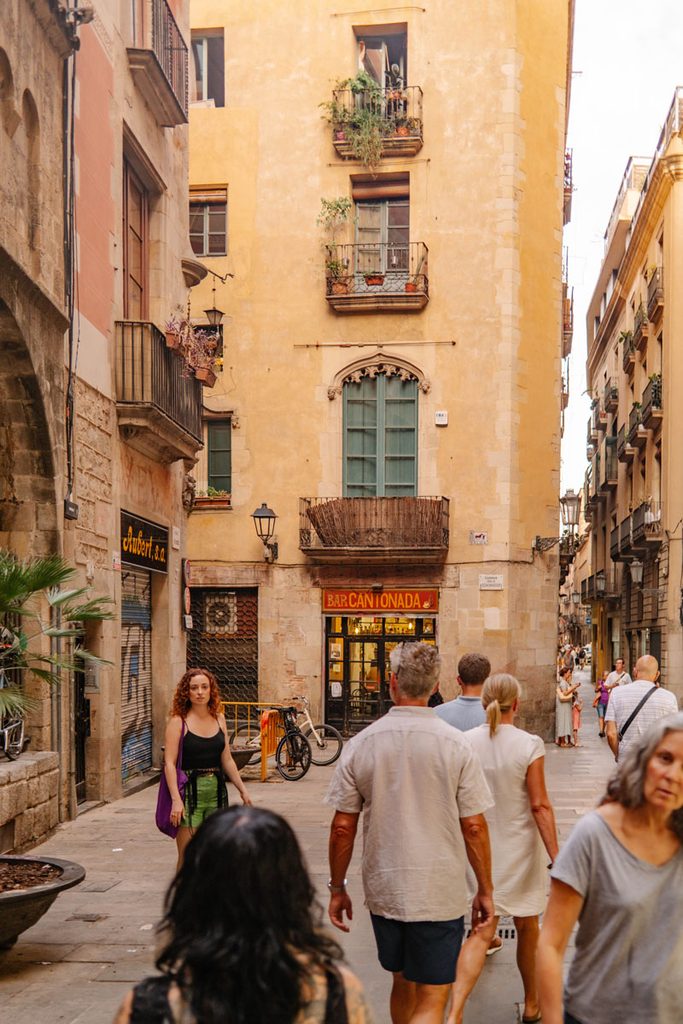
The old city rewards local knowledge and, luckily for you, this tour makes you feel like a local yourself, privy to the Gothic Quarter’s secrets. The incredible part of the quater is that history is layered right under your feet. This is the site of Roman Barcino, and the route passes the remains of the Roman forum at Plaça Sant Jaume and the streets of the Call, the medieval Jewish quarter. In this neighbourhood, eating and history are hard to separate, and the tour treats them that way.
The Guide Made the Difference
As I mentioned, our guide Lindsay is a Canadian who moved to Spain in 2015 and helped create this itinerary. Some might doubt a non-native leading the tour, but as a writer who covers the cities I visit, I find that long-term transplants often bring a fresh perspective on a city and its food. Lindsay talks about the food, the places and the people behind them with real passion, the way you talk about friends you’re proud of. That kind of enthusiasm can’t be faked, and it set the tone for everything that followed.
A Small, Warm Group
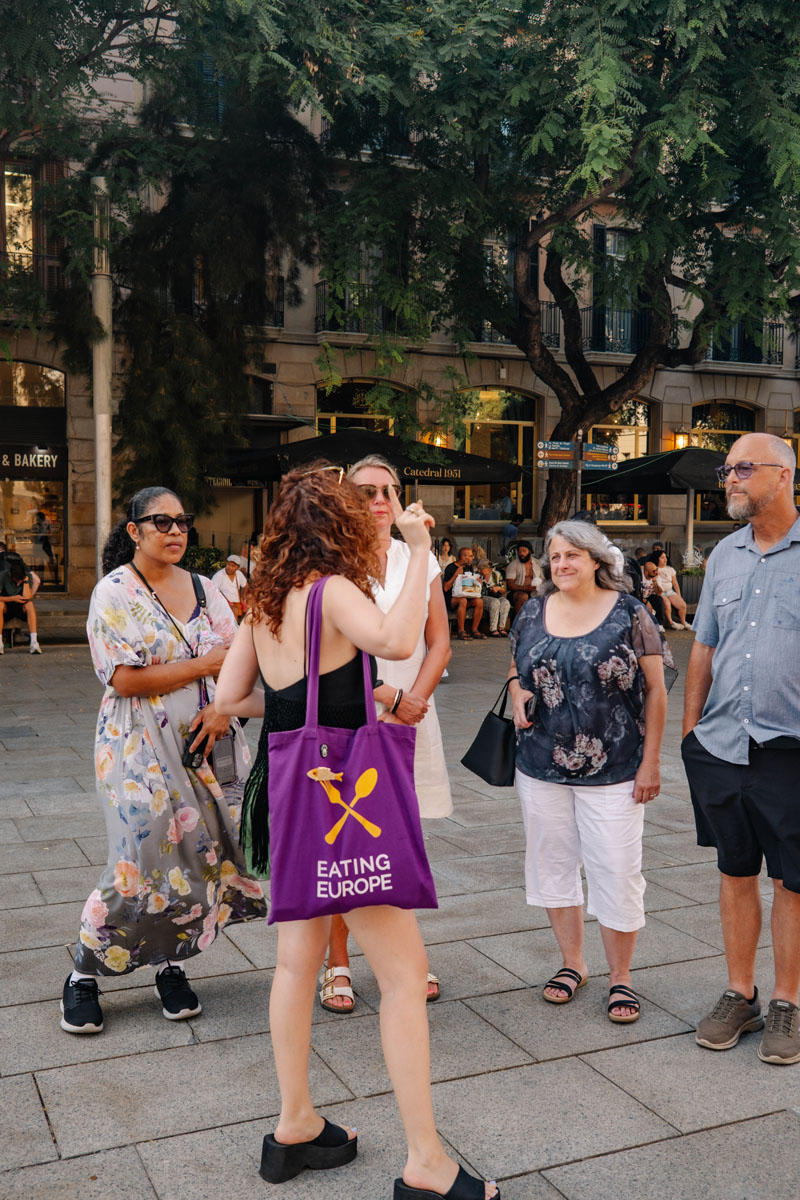
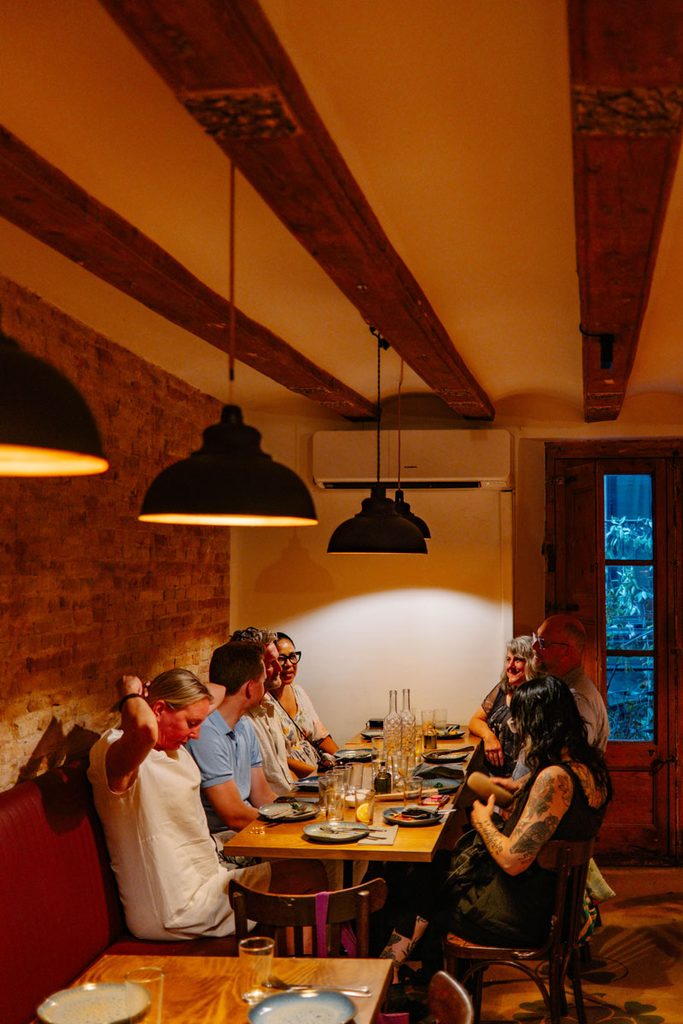
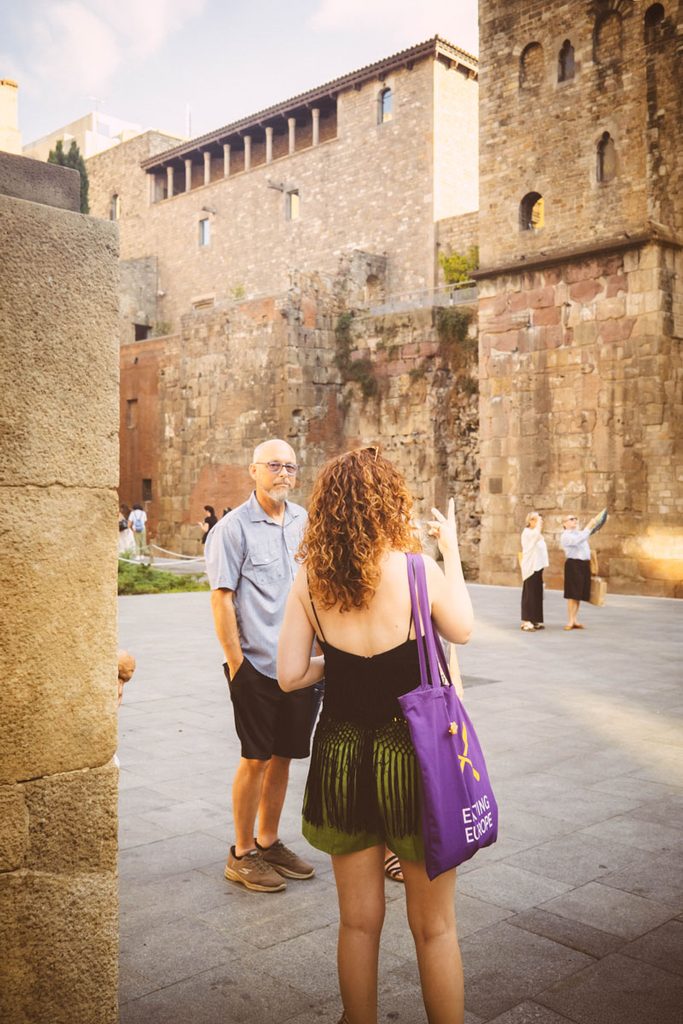
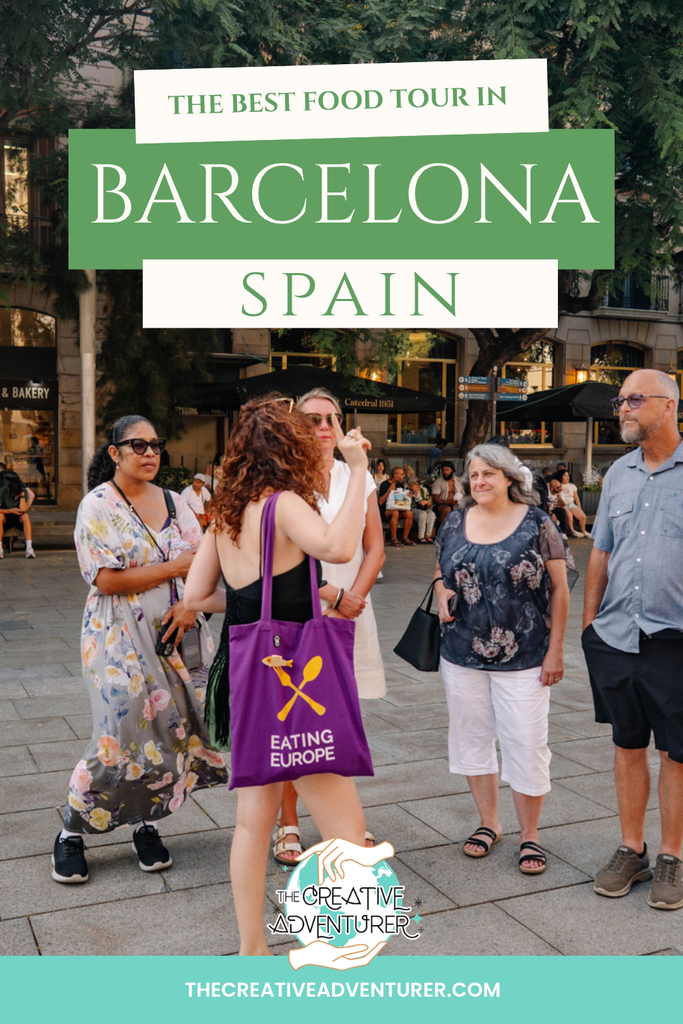
At the very start of the tour, we all were introduced to each other and you get a sense immediately of why capping the group at a small number is so crucial to having the best experience. It was small enough to feel intimate, and everyone had a chance to talk and get to know each other over the meal. At a table that size, nobody is craning over a shoulder or waiting for a plate, and the conversation flows as easily as the wine. That cap of eight is what turns the evening from a tour into something closer to dinner with a handful of new friends. Everyone seemed to feel what I did, that this was a cut above the standard experience, and that shared sense of discovery is part of what makes the night memorable.
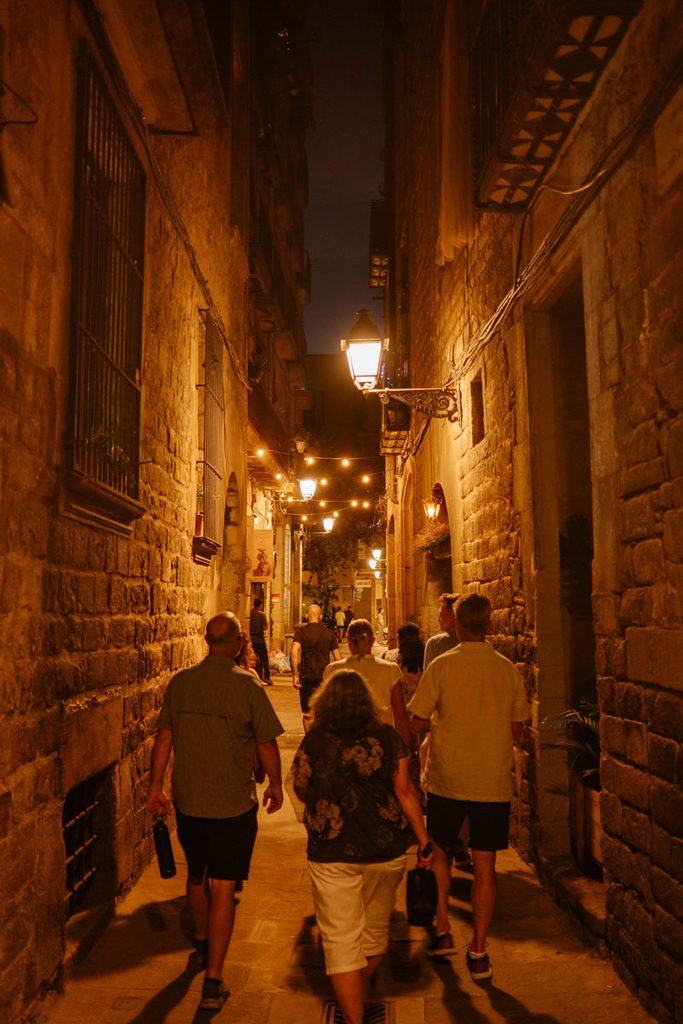
A Walking History Lesson
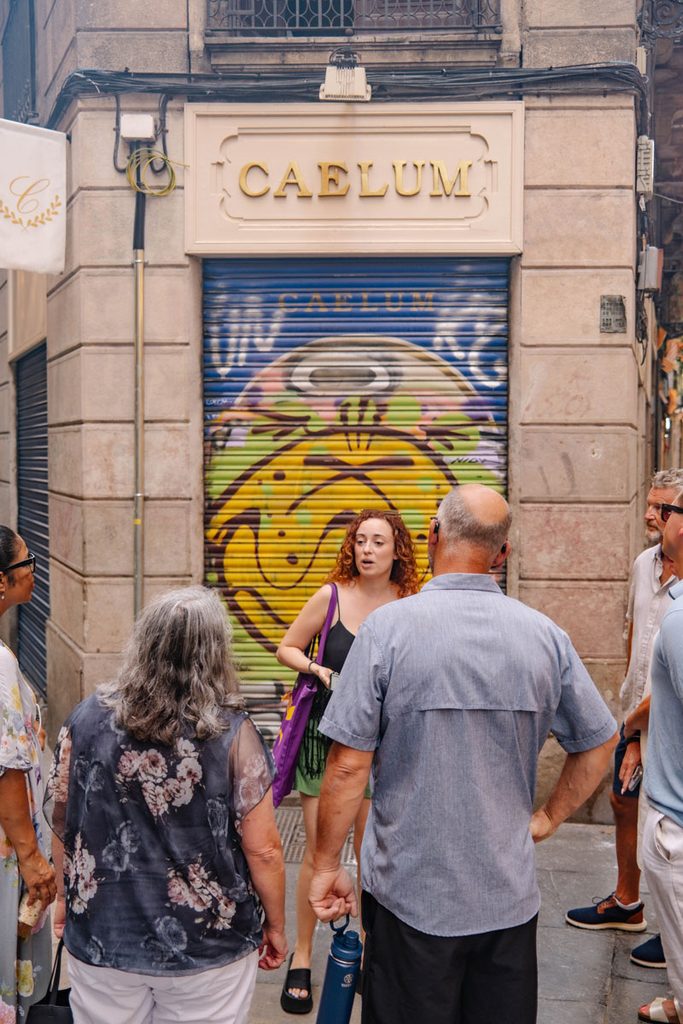
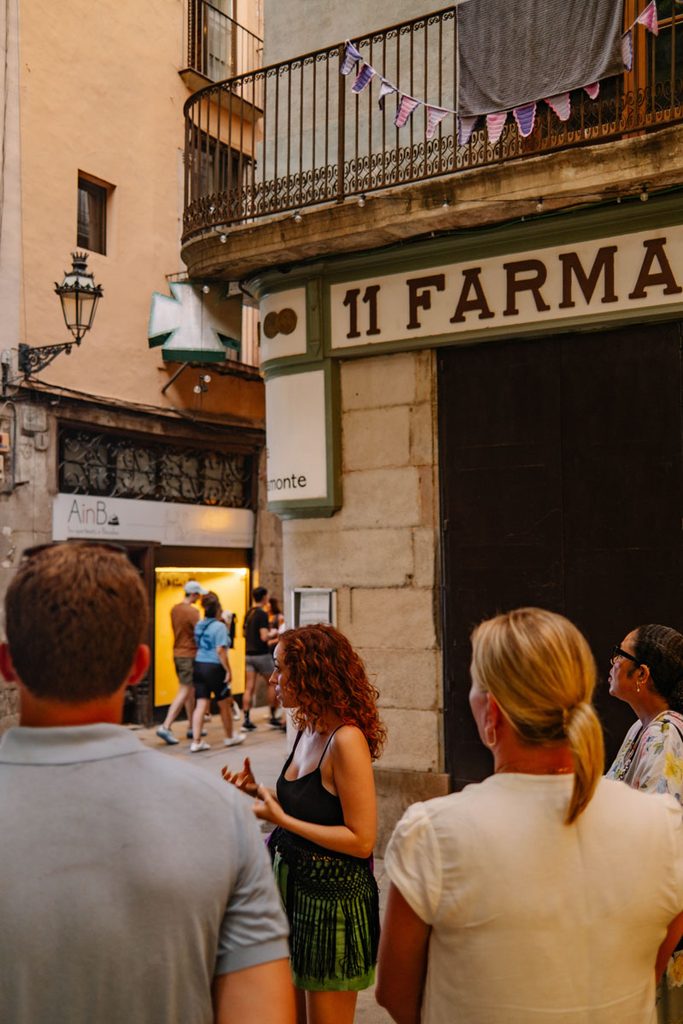
What I didn’t expect from a food tour was how much of it would happen on the street. The walks between stops weren’t dead time, they were some of the best parts of the evening. Lindsay would stop us at different points along the way, gathering our little group to the side of a lane or at the edge of a plaza, and tell us what we were standing on. She covered the history of the Gothic Quarter and of Barcelona as a whole, and it never felt like a lecture. The stories were short and vivid, and each was tied to the spot where we stood, so they stuck.
As someone who has spent four summer living in Barcelona, I’d walked those streets countless times, but never knew the secrets that she opened up for me. And now, whenever I walk done those lanes, I see this part of the city totally differently.
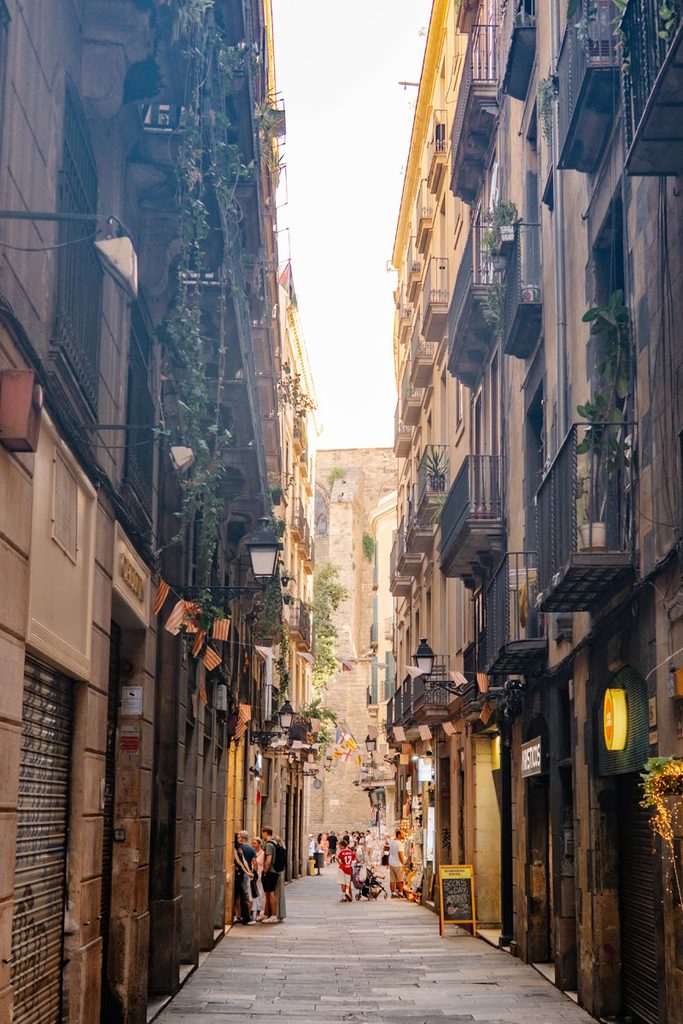
In the Gothic Quarter, the street signs are a record of who lived and worked there, and once you know to look for them, the map of the old city starts to read like a medieval trade directory. No guidebook had ever given me that, and it made every corner feel more alive.
Running through all of it was the evolution of food history in Barcelona: how the city’s cooking developed, what shaped it, and how the dishes we were about to eat connected to everything we’d just heard. By the time we sat down at each stop, the plate in front of us was the end of a story we’d been following through the streets.
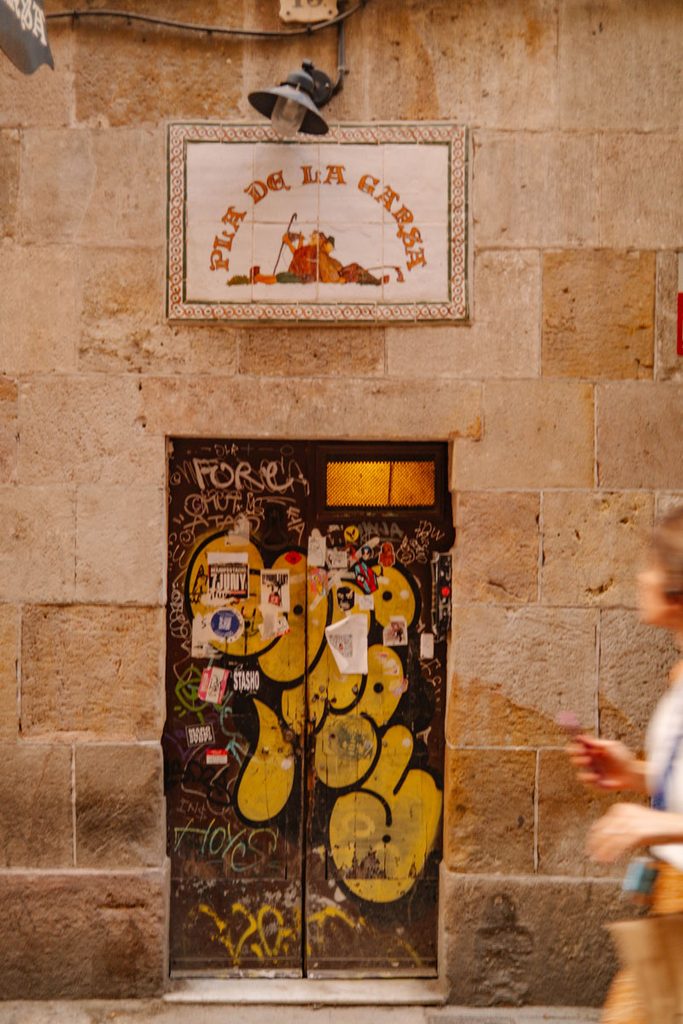
Stop One: Spanish Classics, Elevated
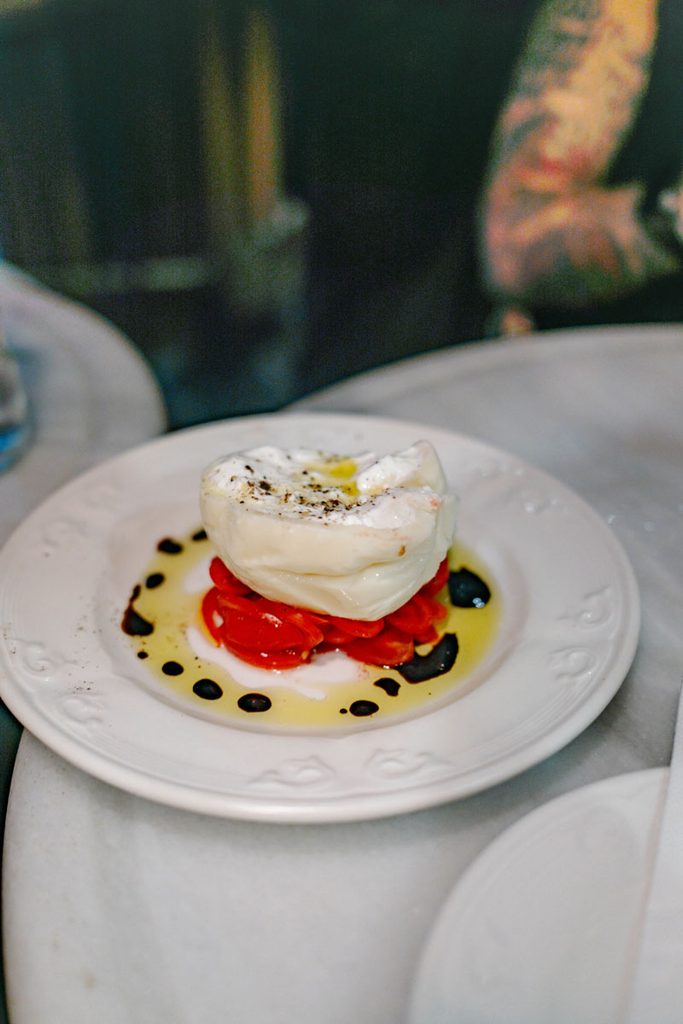
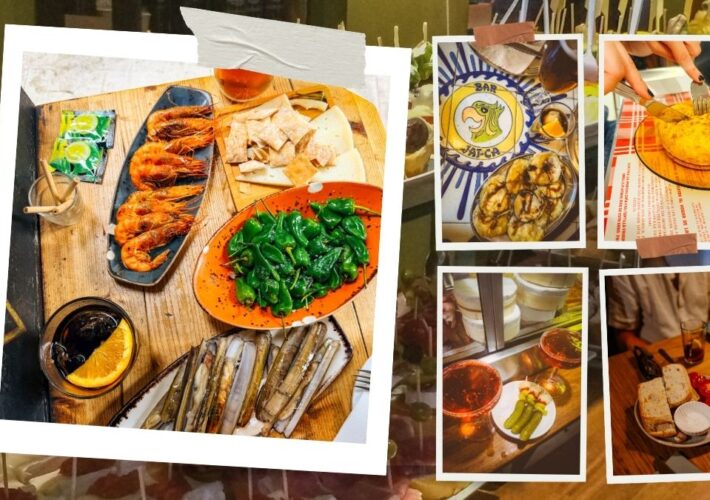
We began at a lovely sit-down restaurant serving upscale versions of Spanish classics, each with just enough of a twist to feel elevated. This is where the tour first separated itself from the usual. There was no plain plate of manchego and jamón, the kind of opener I’ve learned to expect from a lesser tour. Everything was familiar enough to recognise and inventive enough to make me stop and pay attention. These were dishes you think you know, treated with more care and imagination than you’d find at a standard tapas bar.
We began at a lovely sit-down restaurant. Starting somewhere comfortable and seated was a smart choice. It lets the group settle in, meet each other and start talking before the tour moves into smaller, more tucked-away spots.
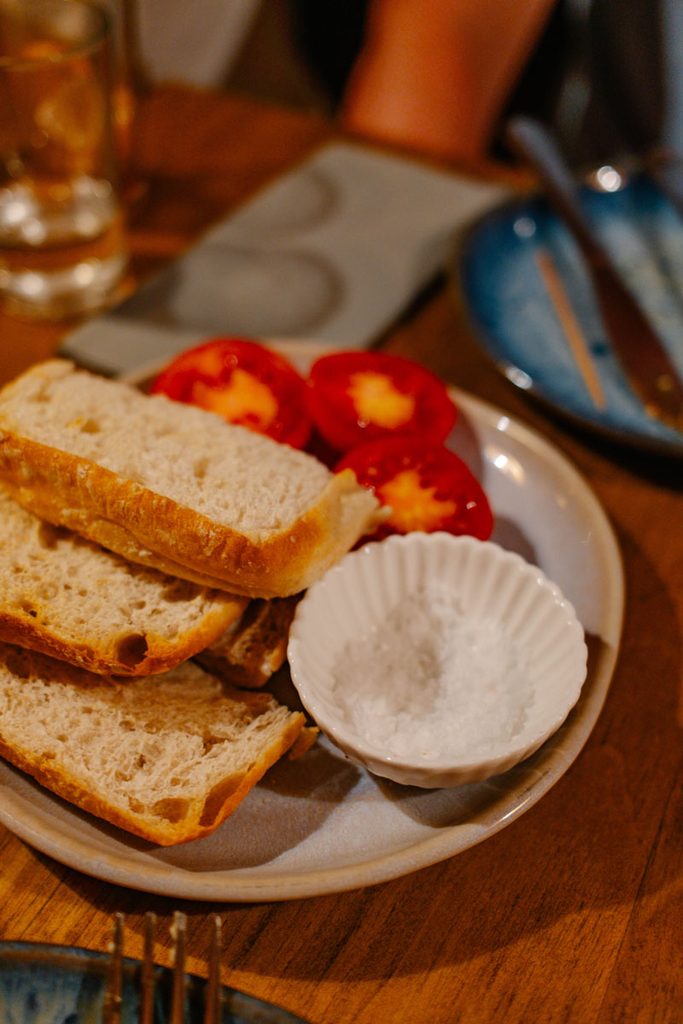
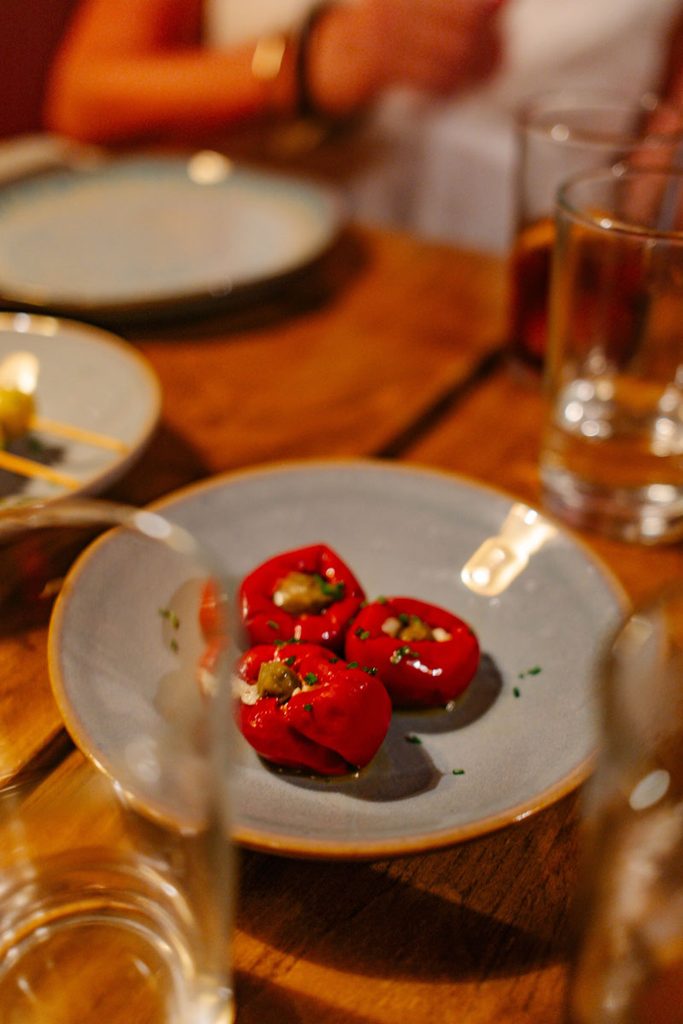
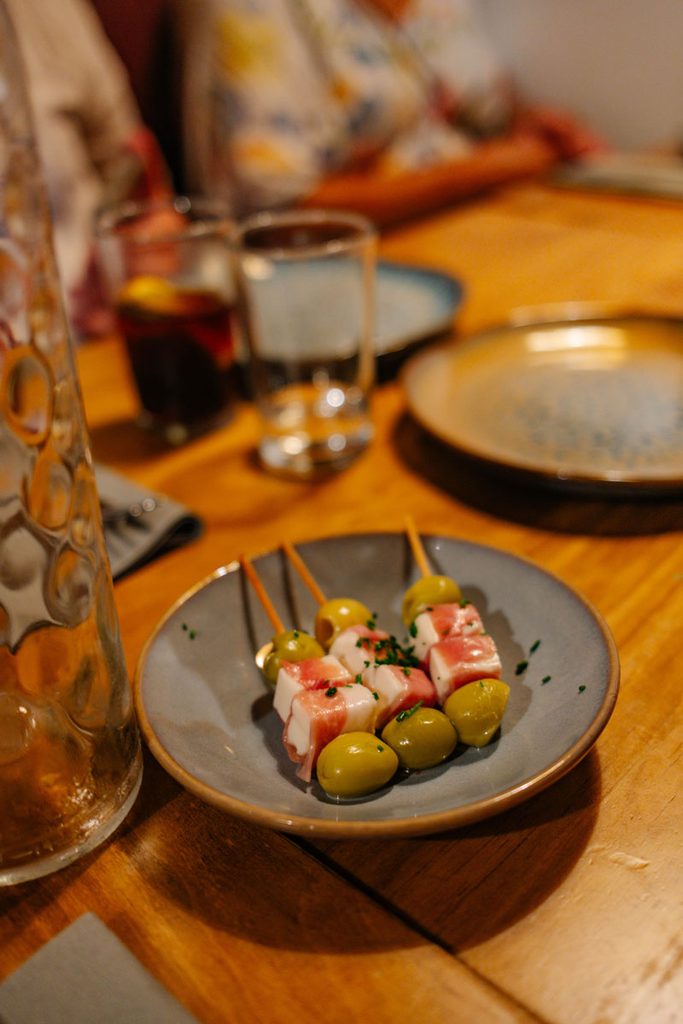
Elevated Tapas
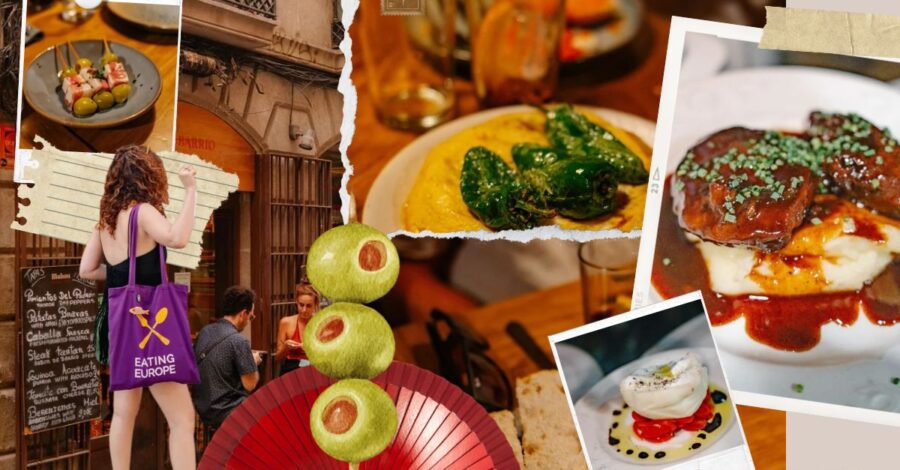
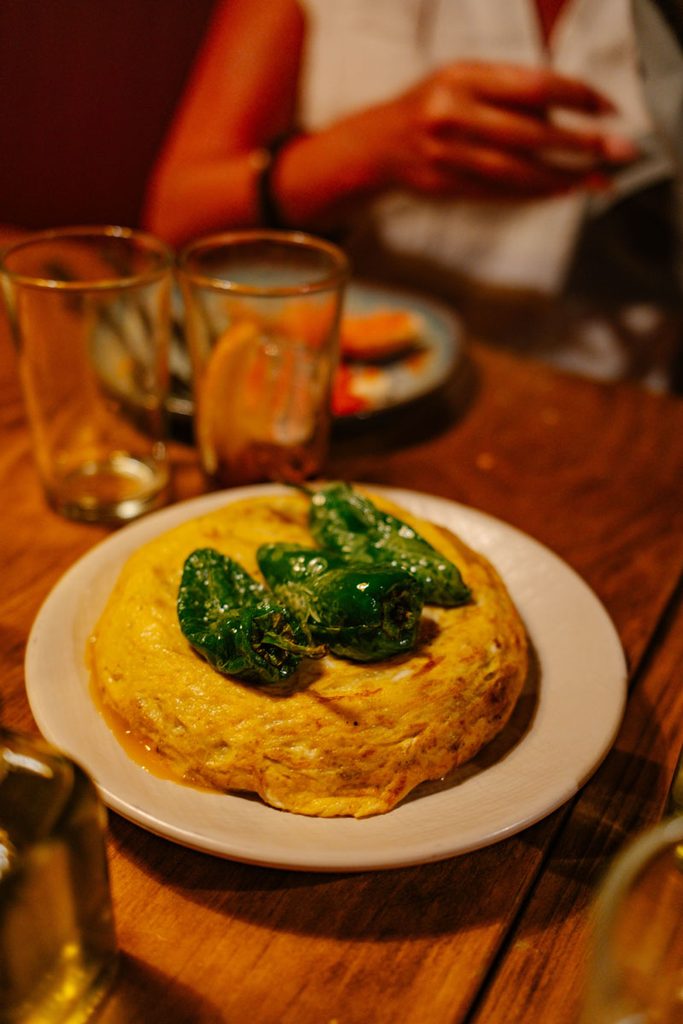
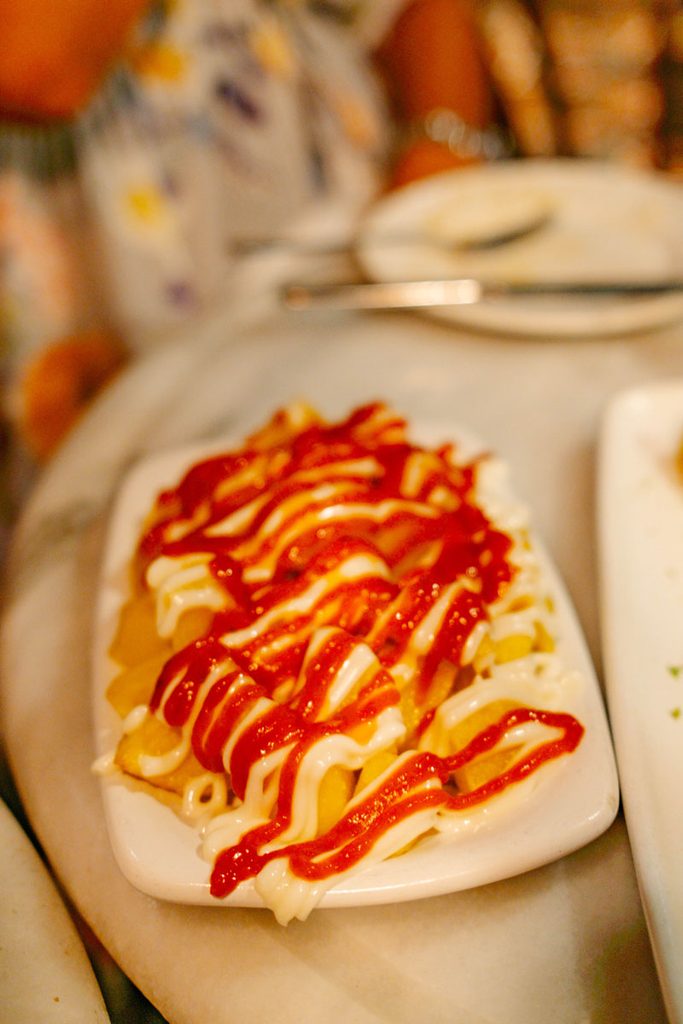
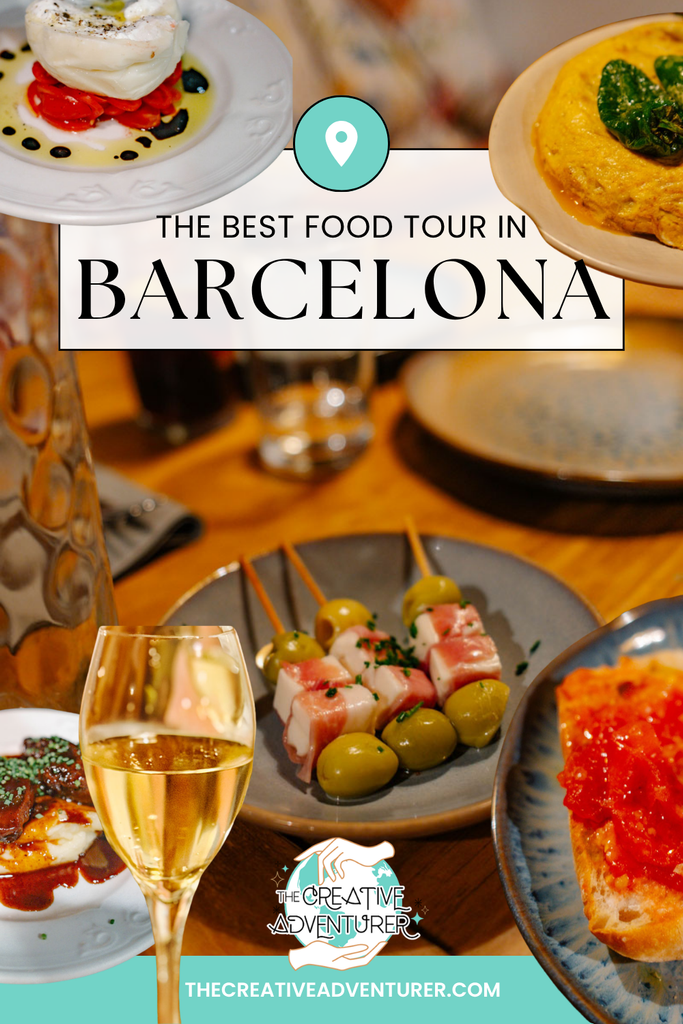
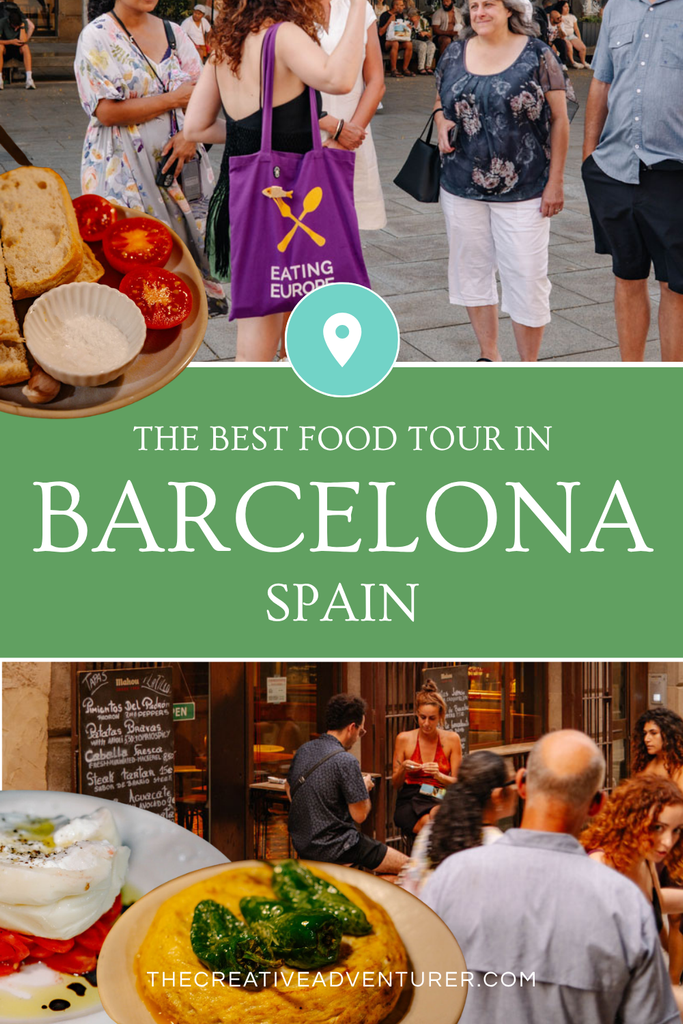
The restaurant served upscale versions of Spanish classics, each with just enough of a twist to feel elevated. This is where the tour first separated itself from the usual. There was no plain plate of manchego and jamón, the kind of opener I’ve learned to expect from a lesser tour. Everything was familiar enough to recognize and inventive enough to make me stop and pay attention. These were dishes you think you know, treated with more care and imagination than you’d find at a standard tapas bar. A standout for me was their tortilla, a thick Spanish omelette of eggs and soft, slow-cooked potatoes, nothing like the Mexican flatbread. It is such a simple dish, and one you’d think would taste the same everywhere, but I truly think the spot Lindsay chose has got to be the best tortilla I’ve ever had. And I’ve eaten a lot!
We were served a traditional glass of vermouth, and I loved hearing Lindsay explain hacer el vermut, the Catalan ritual of gathering with friends over a glass of this bittersweet aperitif and a few small bites.
Stop Two: The Hidden Gem
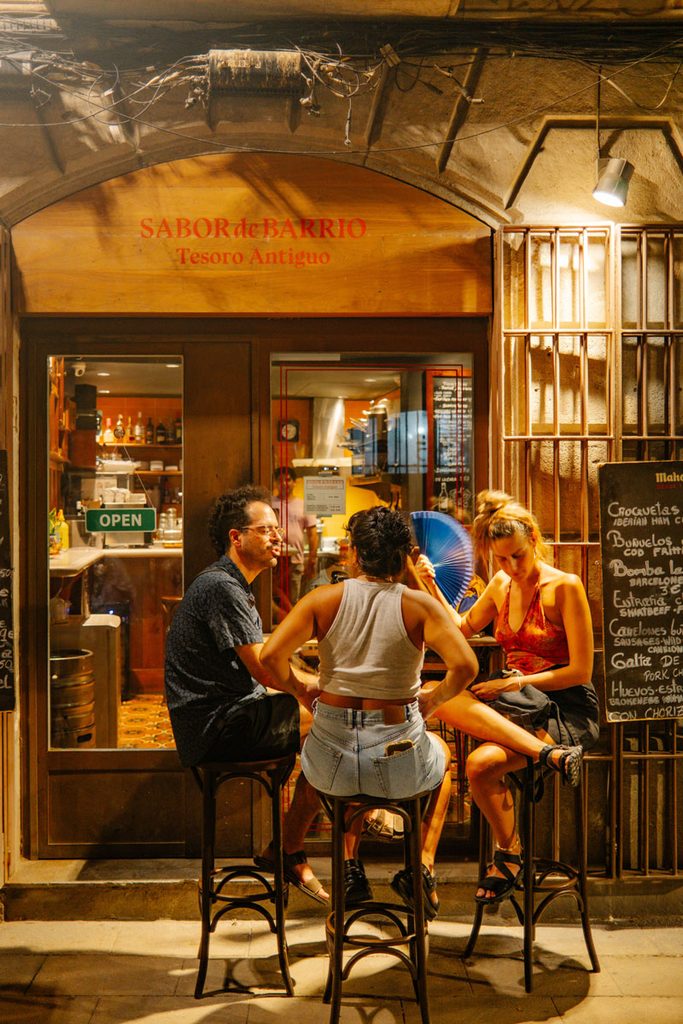
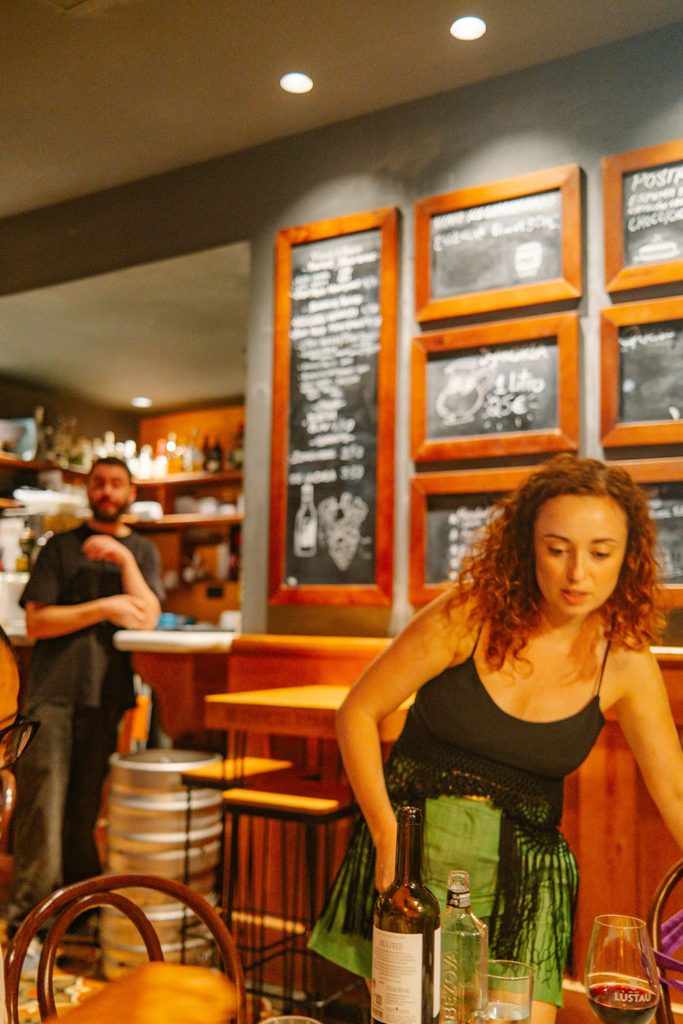
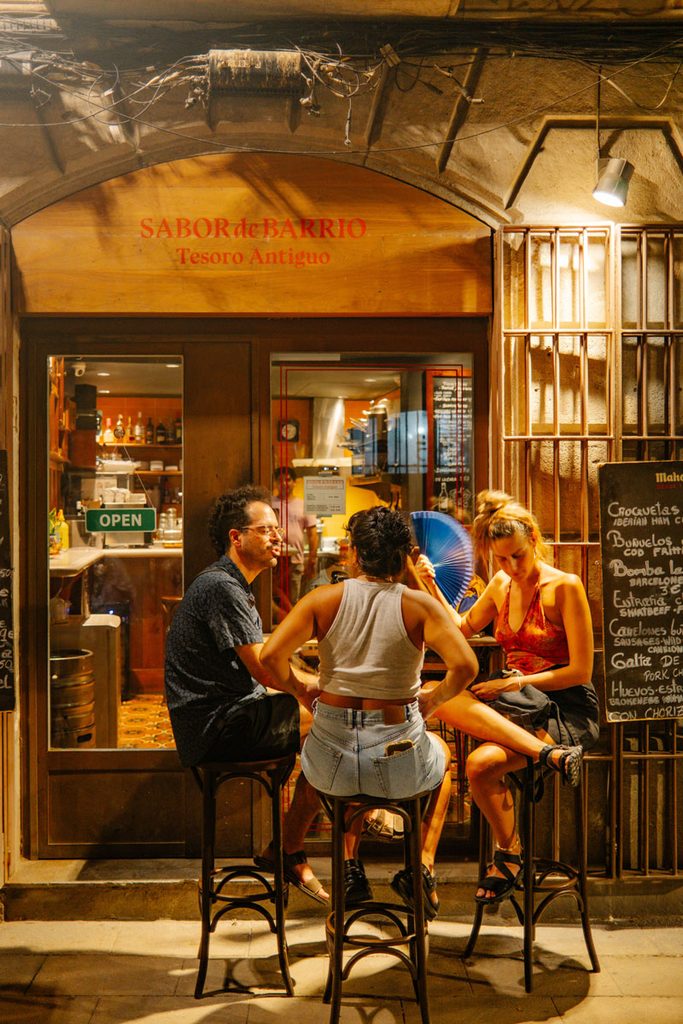
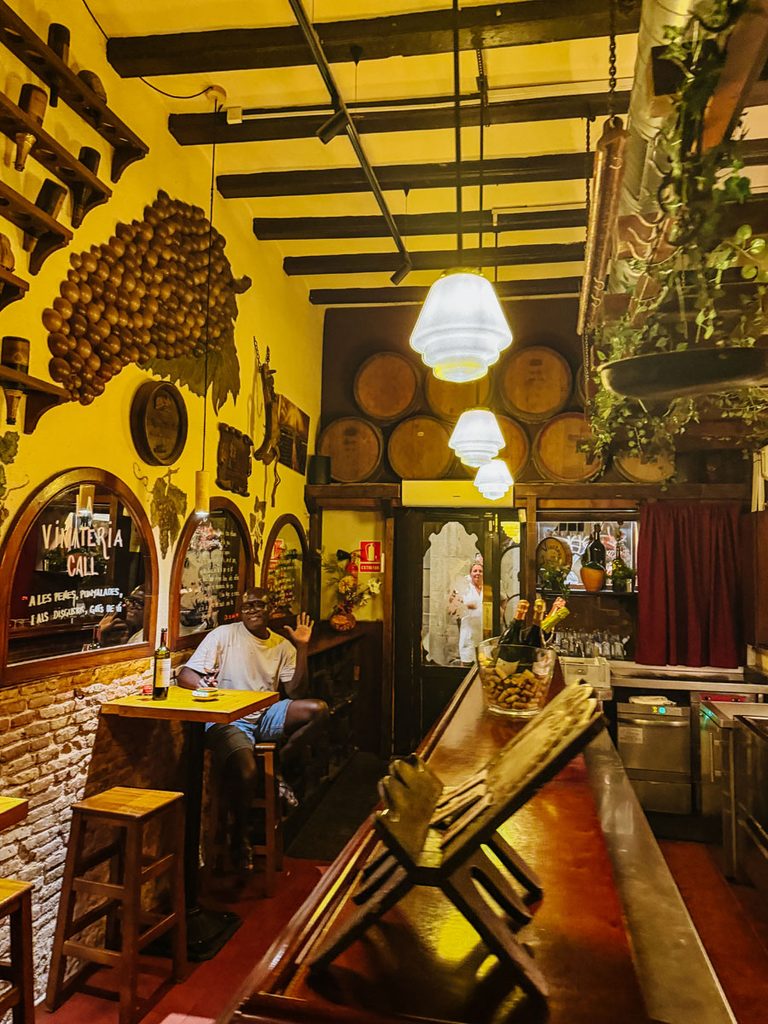
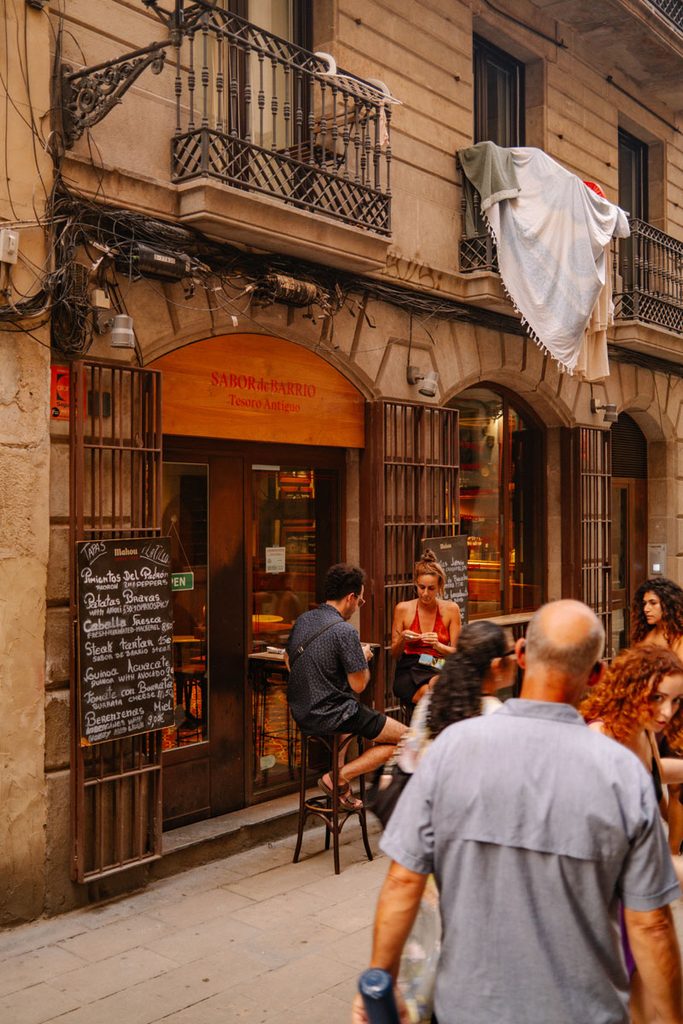
The second stop is the one I’d never have found on my own, and it’s the reason I’d book this tour again. It sits on the edge of the Gothic Quarter, near the newer, trendier side of El Born, and it is tiny. It’s a family-run spot in a part of the city where authentic places are genuinely hard to find. You walk past a dozen tourist-facing restaurants to reach it, then through a door that gives no hint of how good the food inside is. I’m not naming it, because I want you to book the tour, walk in with Lindsay, and discover it the way I did. And the wine we had here…just wow. I was blown away by the quality and sharing a bottle with everyone at the table felt like we were eating with family.
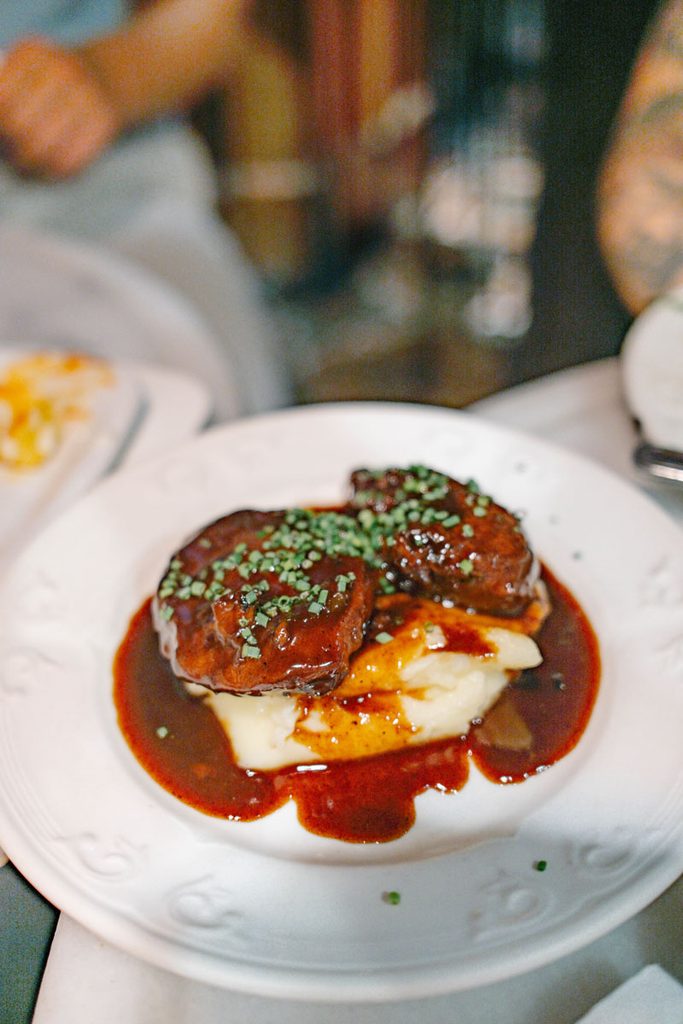
This is also where I ate my favourite dish of the night: slow-cooked beef cheek, so tender and deeply flavoured that it silenced the table. It takes hours of patient cooking and shows in every bite. I’ve eaten a lot of good food in Barcelona, and this was among the best slow-roasted cheek I’ve had anywhere. Cheek is a humble cut, and that’s part of the point. It rewards time and skill rather than expensive ingredients, which is very much in the spirit of traditional Catalan home cooking.
Dietary Needs: A Vegetarian’s Experience
I came with a vegetarian friend, and I was impressed by how the tour handled it. For almost every dish we ate, she was given a different option that was just as well made and just as worth the money as ours. It never felt like an afterthought, which is the most common problem for vegetarians on food tours.
A few things worth knowing, from the company’s own information: vegetarian options are available but more limited than the standard menu, vegan options are severely limited, and gluten-free and kosher options are also more limited. Tell them about any restrictions when you book, since the kitchens need advance notice. Guests with severe or life-threatening allergies can’t take part, for safety reasons.
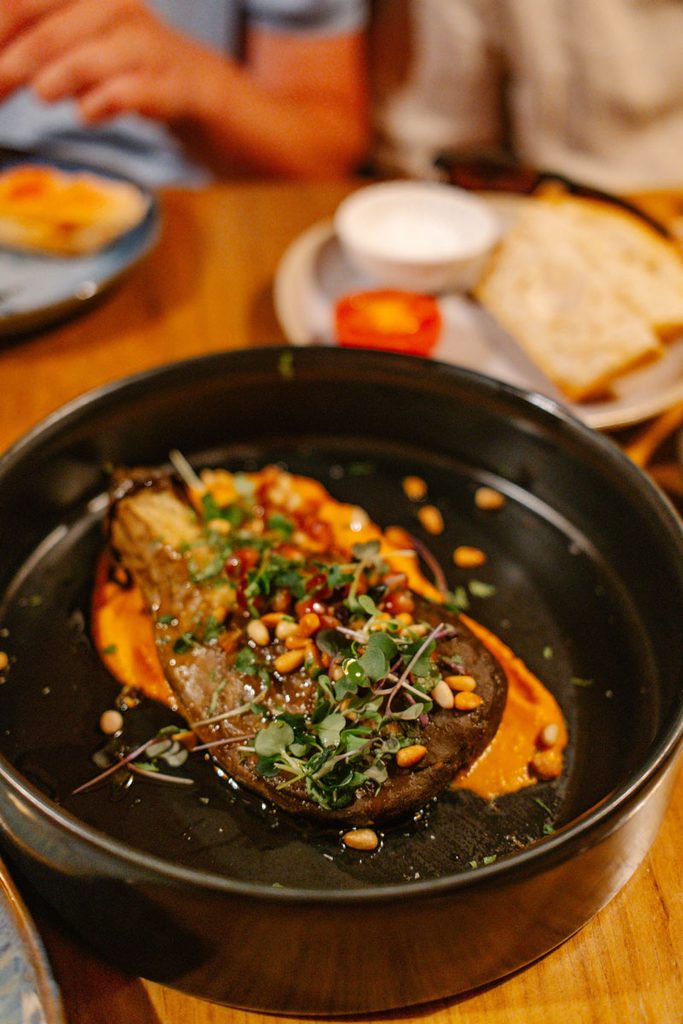
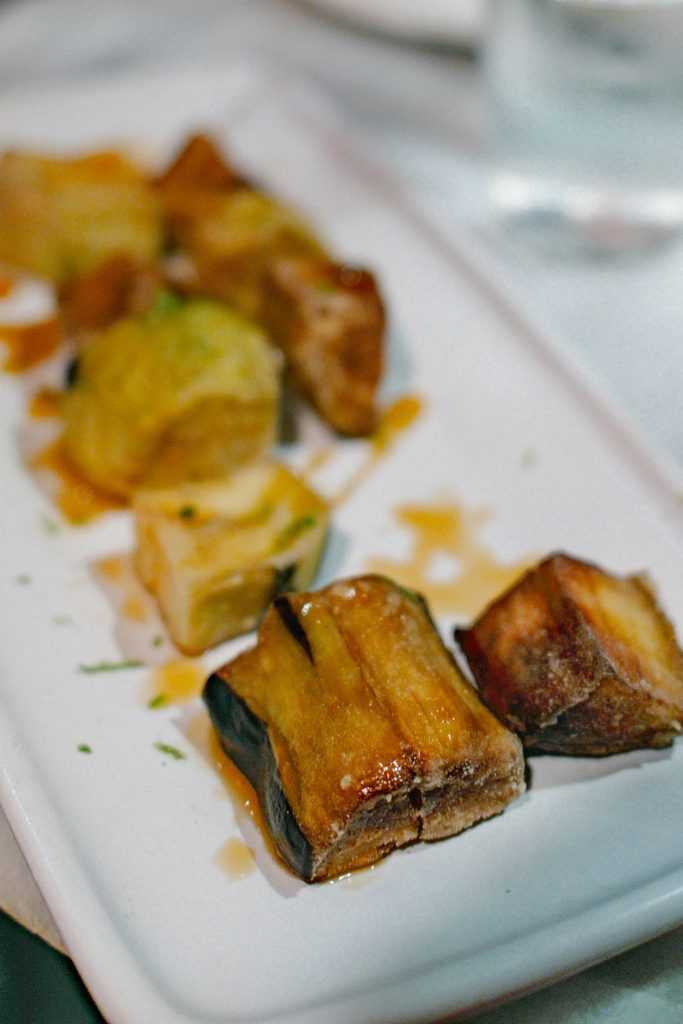
At our second stop, the vegetarian dish was served to everyone, eggplant with lime and honey. Aubergine (eggplant) is a staple of the local table, and I eat it all the time in Barcelona, but I’d never had it like this. The honey’s sweetness and the lime’s brightness turned a dish I thought I knew into something new. It was my vegetarian friend’s favourite dish of the night and shows that even the vegetarian dishes are full of flavour, history and care.
Stop Three: Dessert in a Room Full of History
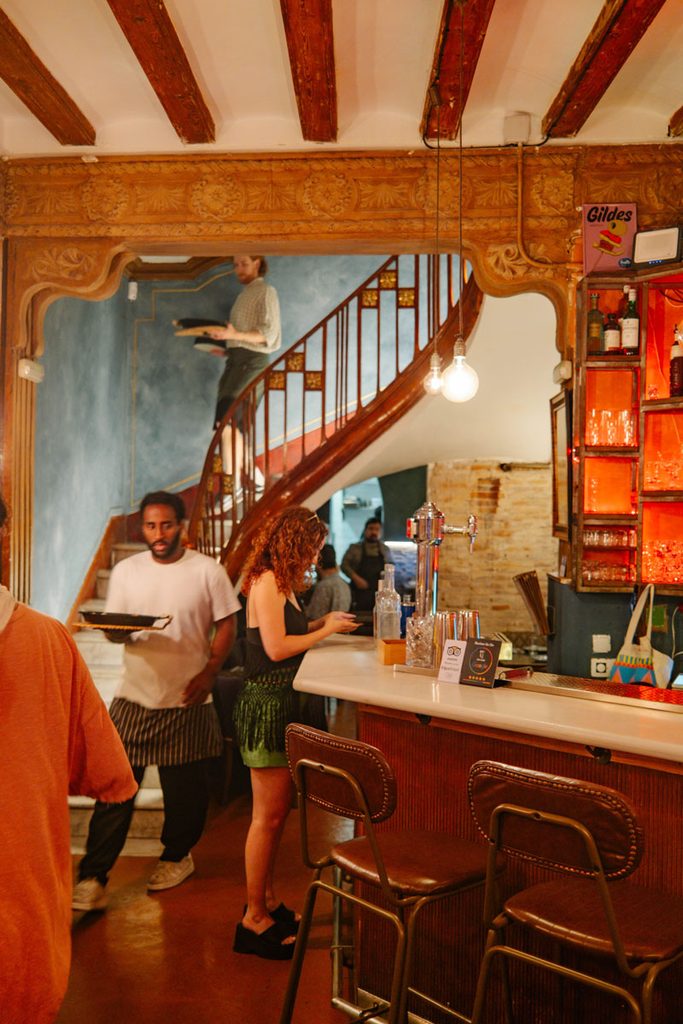
We finished in a historic restaurant that reeked of history and storytelling in the best possible way. You can feel the centuries in the room, and it was the right place to end the evening, with the pace slowing and the conversation settling into something warm.
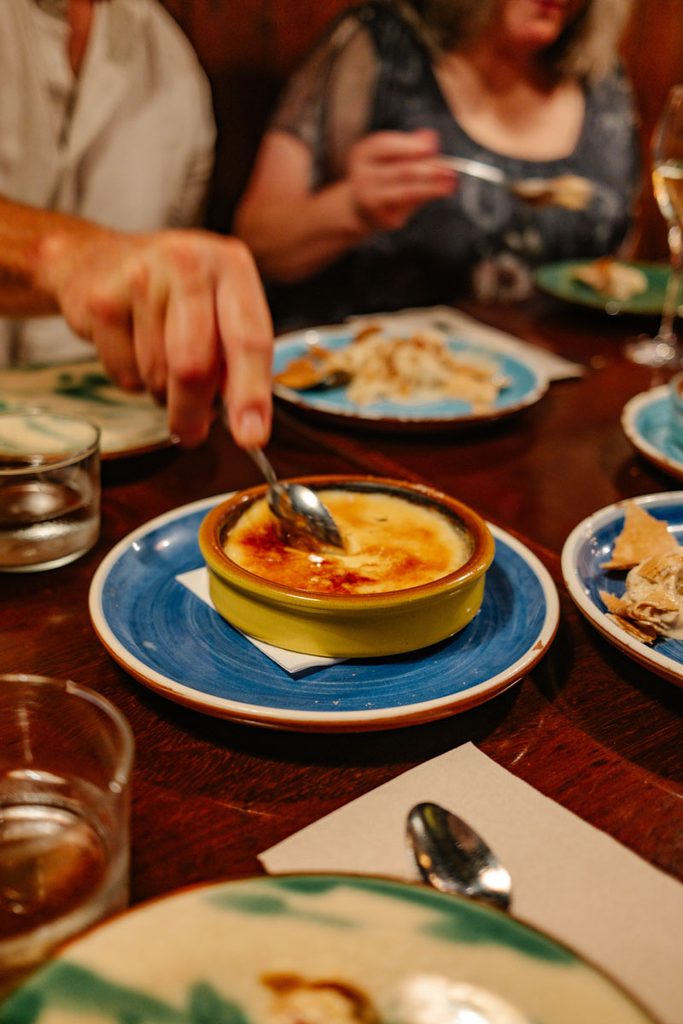
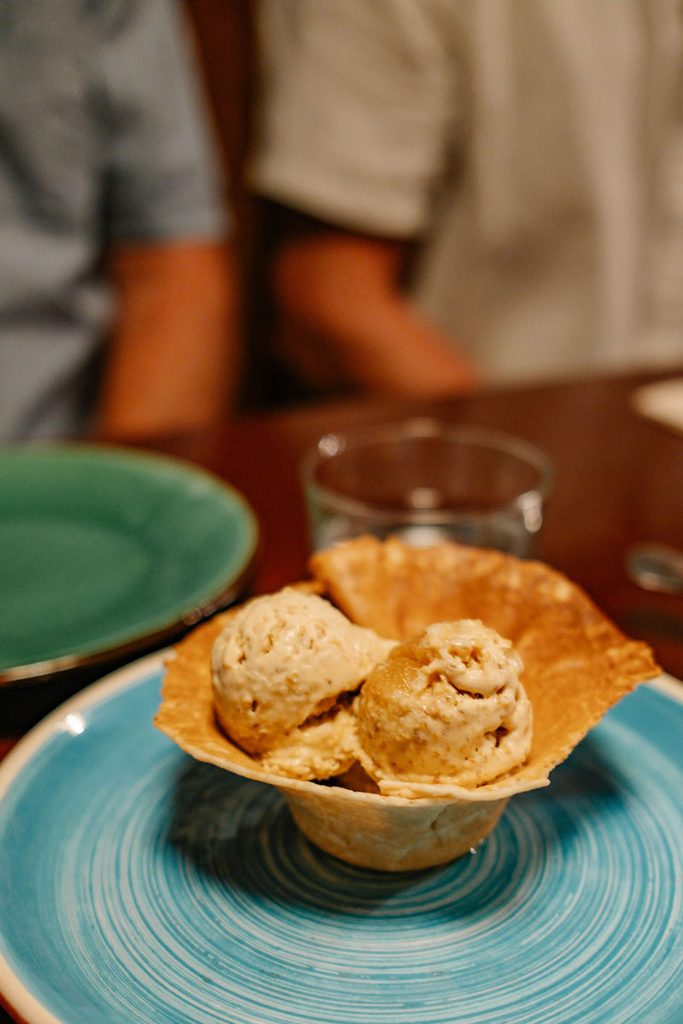
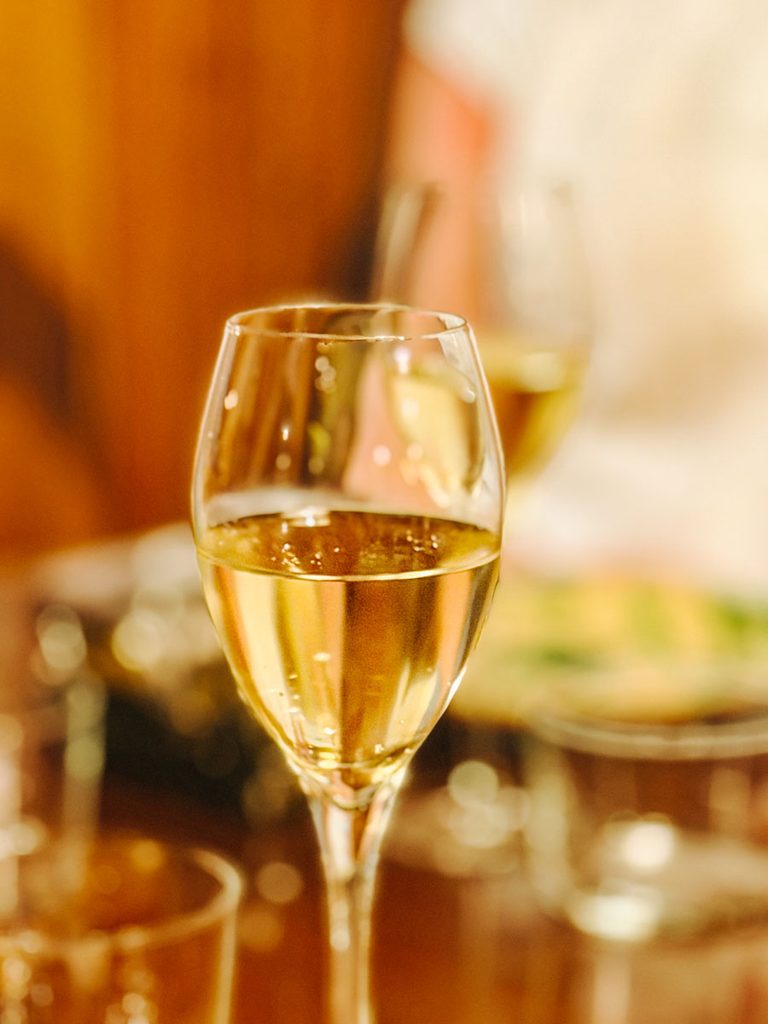
There was crema catalana, Barcelona’s answer to crème brûlée, with its crisp caramelised crust over silky custard. It was very good, but the real showstopper was the fig ice cream. I wasn’t expecting it to steal the spotlight, and it did. It’s the kind of dessert you keep thinking about on the walk home, and it made the last stop feel like a proper finale. The tour paired its closing desserts with cava, Catalan sparkling wine, which gives you a taste of how the city likes to finish a meal: sweet, lingering and unhurried.
Is It Worth the Price?
A resounding, YES. At around €137 per person with all food and drink included, it isn’t cheap, and most food tours aren’t worth what they charge. This is the only one in Barcelona I would recommend. You’re paying for real food, a knowledgeable guide, a small group, and access to places you’d struggle to find alone. By the end of the night I felt I’d received more than I’d paid for. Much more.
The one downside: I wish there had been one more stop. That’s partly greed, since I’m always looking for more places in Barcelona to return to, but it’s my only complaint, and really a compliment.
Practical Tips Before You Book
- Arrive early. The company recommends showing up 15 minutes before the start. Tours leave on the dot, and late arrivals aren’t refunded.
- Look for the purple bag. Your guide will be waiting at the meeting point with an Eating Europe purple bag.
- Wear comfortable shoes. It’s a walking tour through old, uneven streets, though most stops are indoors.
- Tell them about dietary needs when you book, not on the day.
- Come hungry. The company says you’ll eat at least the equivalent of a full meal.
- Mind the cancellation window. Small group tours can be cancelled for a full refund up to 24 hours before departure.
- Take the evening slot if you can. The 7 p.m. departure made a lovely start to the night. Lunchtime and 6 p.m. departures are also available.
- Expect some variation. The company notes that tastings change slightly by day and season, so your dishes may differ from mine.
I went in skeptical and came out a convert. In a neighbourhood full of places where you could easily eat badly, this tour finds the ones worth finding and puts a guide in front of them who clearly loves the work. It taught me as much about Barcelona’s history as about its food, and if you’re only going to do one food tour in Barcelona, make it this one. If you live here, as I do, it might still teach you something. It did for me.
Book it here: Eating Europe Gothic Quarter VIP Tapas & Wine Tour
Happy Travels, Adventurers


Leave a Comment