
While on our honeymoon, we tried to book a special dinner in each destination throughout our European adventure. For the most part, we’re not the fanciest of diners. We love a great meal, but for us, that great meal doesn’t have to cost a fortune. Some of the best food I’ve ever had has been on the side of the road or off the back of a truck. But since it was our honeymoon, and we’d been gifted some money for a ‘Dinner by the Danube’ we went all out, and I booked us a table at Halaszbastya Restaurant.
During the cherry blossom season, when many people make the pilgrimage to Tokyo to witness this natural phenomenon, festival food stalls crowd the pathways around the temple. Off-season, there are only a few, run down stalls on site, selling traditional Japanese street food to locals and tourists alike.
Sushi-Nova is a restaurant where diners can enjoy sushi delivered right to their seat via a high-speed conveyor. For travellers, you’ll be pleased to hear that all their tables of four provide outlets to charge your devices and they even have free wifi! (which yes is a big deal in Japan)
I think in retrospect we should have spent more time researching. But I will say, that this cafe, unlike many many other, ensures that the light inside is very dark, as the animal are nocturnal and sleep during the day. This cafe also didn’t allow you to pet all the owls, and some were only for observation.
Today, the gardens are the only accessible part of the Imperial Palace available every day. The Palace is still the primary residence of the Emperor. Their current home is a more modern building as it was finished in 1993 and located in the Fukiage Gardens. Much like Buckingham Palace, it is not accessible to the public except for private guided tours.
After walking around the Imperial Palace Gardens all morning, we were due for a bit of rest before facing the rest of the day. Half way towards our next destination we decided to take a rest in the next large park we came across. This turned out to be Hibiya Park.
Standing at the base of the stone staircase, looking up at the Atago Shrine, can be an intimidating sight. Atago hill is over 26 meters above sea level and atop this giant stone staircase is one of Tokyo’s hidden gems: the Atago Shrine.
There are hundreds of Shrines to see in Tokyo, and deciding which ones to see can be tough. I often feel like I’m missing out if I don’t make it to every big item on the “must-see” list. The Meiji Shrine was one of those locations you see on every list, and I thought I’d be remiss not to see it.
While wandering through the streets of Shinjuku at night, you are remiss not to take a walk down a dark and mysterious, hodgepodge row of bars called the “Golden Gai”.
Before we left for Japan, we decided that we wanted to have at least one big, blow-out meal. A dinner that would be as much of an experience as it was a culinary delicacy There are so many bucket-list sushi shops in Tokyo but based on looking thru a myriad of reviews, prices, location and availability, we decided on “Sushi Yasuda”.
While staying in Kyoto, I wanted to find a traditional Japanese Ryokan where we could relax and unwind after a busy week in Tokyo. A ryokan is a traditional Japanese inn that originated from the Edo period when inns were a home for weary travellers. Ryokans were once a fairly inexpensive option, but in recent years some Ryokans have become quite the luxury. So finding one with charm at an affordable price, that was also still available, was somewhat of a challenge. But then I came across Ryokan Shimizu.
One of the strangest things about Japan is that you can spend an entire day inside a shopping mall and have the best time! If it’s raining and gloomy out or if the air hot and humid, there is always sanctuary inside giant shopping centres like Kyoto Yodobashi! Inside you’ll not only find interesting shops to explore, but you can also eat at some delectable restaurants, have a gourmet coffee and play like a kid in the arcades.
After our <i>”Backstreet of Kyoto”</i> tour, we were starving for something substantial to eat. No one else on the tour seemed to be hungry, so we hadn’t had much of anything to eat all day and were ready to devour the world. Our guide pointed out a tiny, noodle shop near the <b>Otani Honbyo</b> Shrine. We B-lined immediately for the shop.
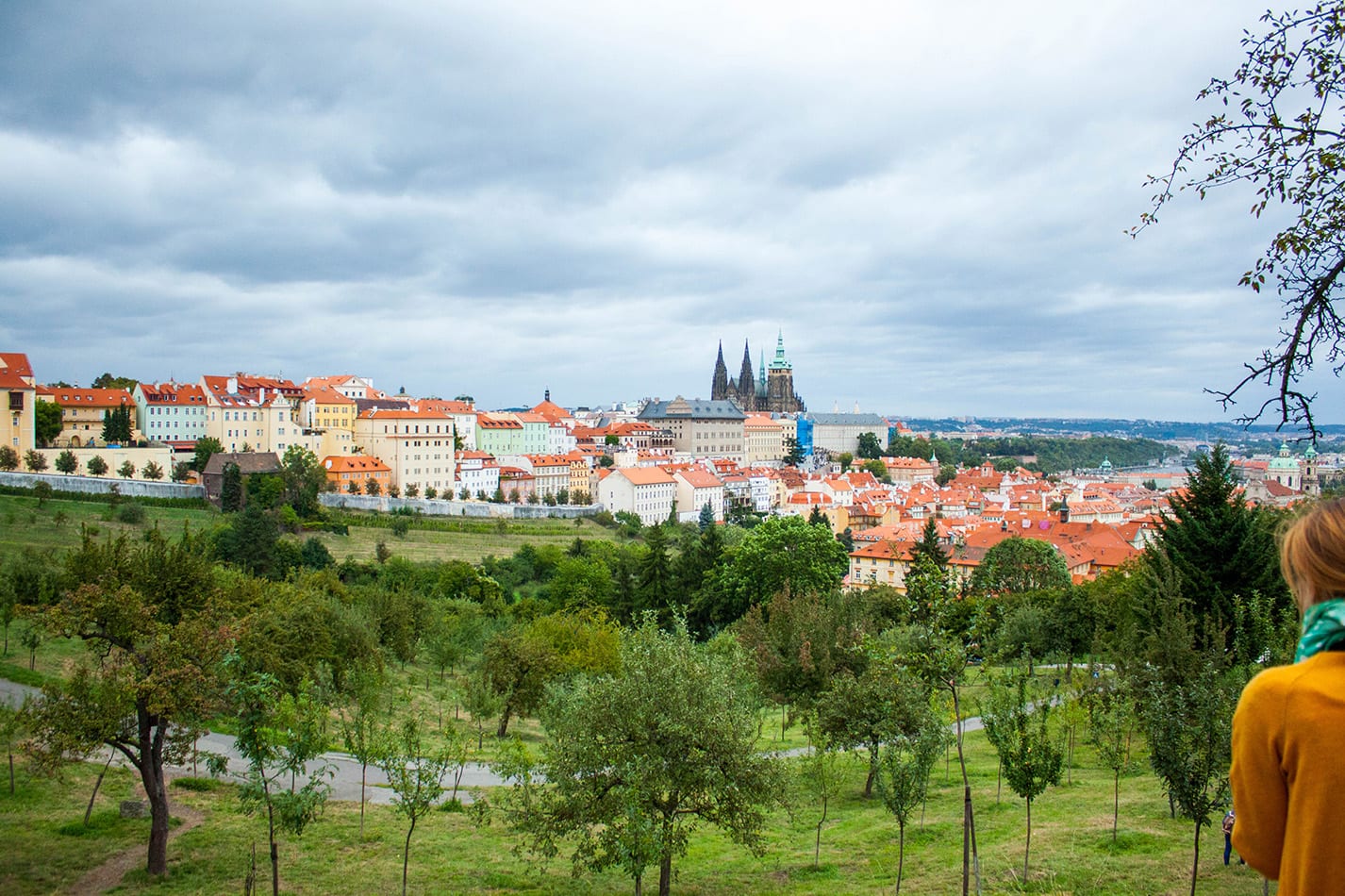
Prague Castle is in fact, more like a walled, medieval village, rather than one singular castle. Inside these walls are some of Prague’s most famous architectural masterpieces. Combined into compound, this mini-city was named, “Prague Castle”.


